Photo : Global Times
Photo : Global Times
China Reader Daily Wire | 29 June 2024, Saturday | Vol.1 No. 120
CHINA & AMERICA
China and Peru strengthen economic ties with FTA upgrade
On 28 June, China and Peru announced the substantial conclusion of negotiations to upgrade their 2009 free trade agreement. During a meeting in Beijing, Chinese President Xi Jinping and his Peruvian counterpart Dina Boluarte discussed enhancing cooperation in various sectors, including minerals and agriculture. The leaders signed several agreements, including one facilitating Peruvian grape exports to China. Boluarte emphasised China's crucial role in Peru's economy, stating: “China's interest in key sectors... is fundamental to national development plans.” As Peru's top investor and primary copper market, China's involvement is significant for the South American nation. The ongoing construction of the Chancay “megaport” by Chinese company Cosco Shipping further exemplifies this partnership. Xi is expected to visit Peru in November and inaugurate the new port, while attending the APEC summit. (“China, Peru completed 'substantial negotiations' to upgrade FTA,” Reuters, 29 June 2024)
CHINA & SOUTHEAST ASIA
China-Laos railway expands Chinese regional expansion strategy in Southeast Asia, says an editorial in VOA
On 29 June, according to an editorial in VOA, the USD six billion China-Laos railway project is expanding its regional strategic presence in Southeast Asia. The project connects China’s Kumming to the Gulf of Thailand through Laos. The project is managed by the the Laos-China Railway Company in Laos. Laos has a 30 per cent stake through the Lao National Railway State Enterprise, with Chinese state-owned enterprises, led by China State Railway Group Company Ltd., covering the 60 per cent stake. 60 per cent of the loan was funded by China’s Exim Bank. Daniele Carminati said that this project offers local employment and business growth but increases the risk of deepening dependence on China. He also mentioned the increased political influence by China on Laos government. The project’s long-term gains will put Laos in debt cycle. The vendors at the Laos railway station accepts Yuan due to increased Chinese tourists. The project is part of China’s vision for the Kunming–Singapore Railway, also known as the Pan-Asia Railway under BRI in Southeast Asia. (“China-financed Laos railway expands Beijing’s reach in Southeast Asia,” VOA, 29 June 2024)
INTERNAL
Xi Jinping calls for five principles for Peaceful Coexistence for global peace and security
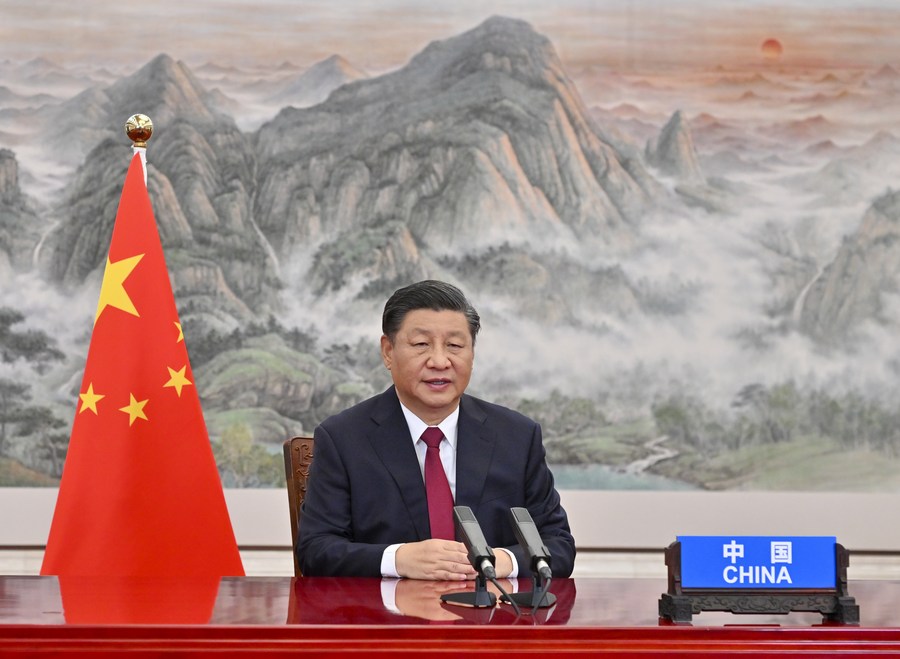
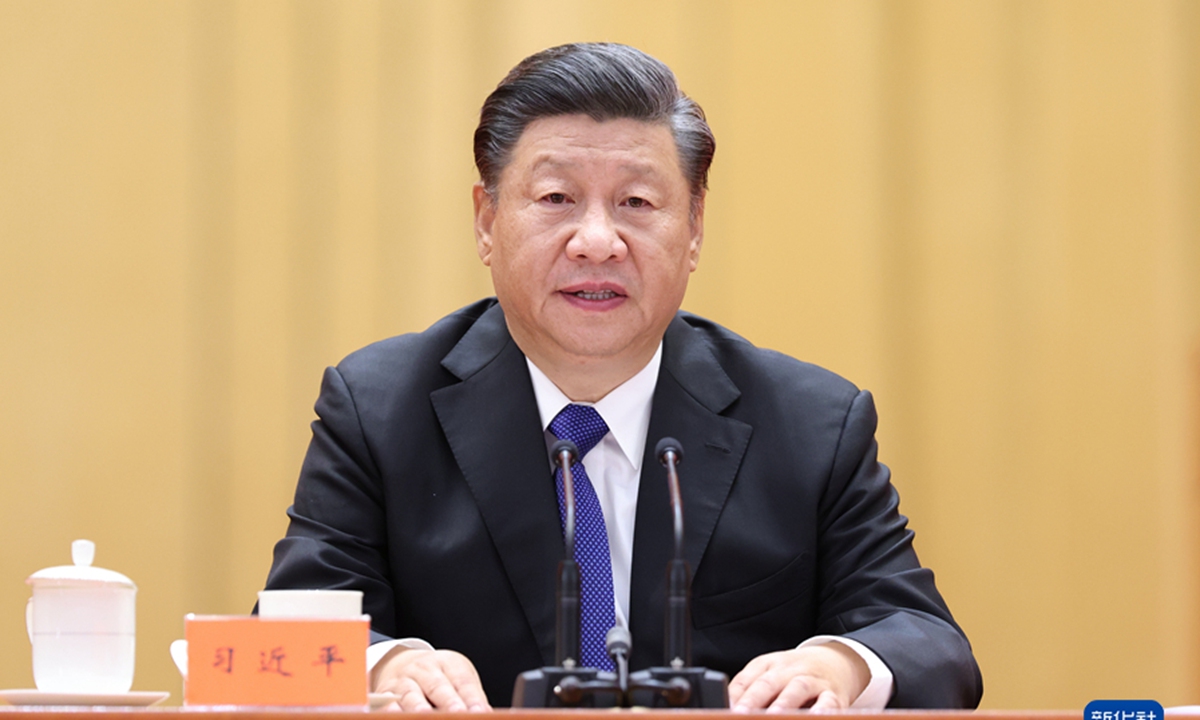
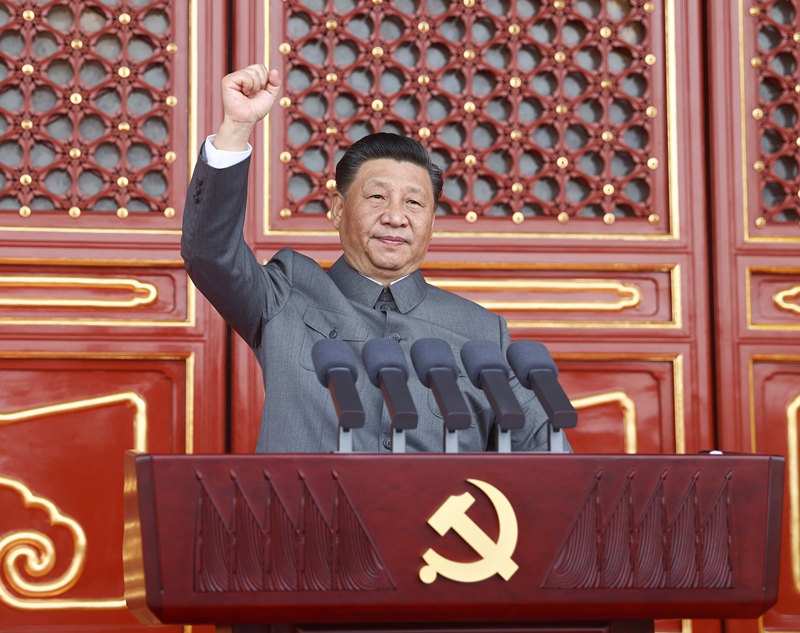
On 28 June, Chinese President Xi Jinping delivered a speech on the 70 years of the five principles for Peaceful Coexistence. He called for the principles to be carried forward to build a community with a shared future. The Five principles were put forth by then Chinese Premier Zhou Enlai in 1954, which talks about mutual respect for sovereignty and territorial integrity, mutual non-aggression, non-interference in each other's internal affairs, equality and mutual benefit, and peaceful coexistence. Xi describes this as an effective way to promote Chinese way of peaceful development. For China, the principles are gaining traction among the Global South countries to protect the interests and pursuits of small and weak countries from power politics. This is supported by Xi’s mentioning of BRI and Global Security Initiative to engage cooperation with Global South countries. (“For a community with shared future, China calls for five principles to be carried forward in new era,” CGTN, 28 June 2024)
China inaugurates the world’s first operational carbon fibre metro train
On 28 June, China Daily reports of China unveiling the world’s first operational and commercial metro train built with carbon fiber. This step is significant towards eco-friendly urban transportation technology. It is developed by CRRC, the CETROVO 1.0 train has reduced weight and energy consumption. CRRC designer Liu Jinzhu said that the new material usage will reduce 11 per cent weight and seven per cent energy consumption compared to traditional metal models. The train also incorporates advanced digital twin technology using SmartCare platform, which allows for to self-diagnose and detect potential problems. The innovation was meant to transform urban rail transit achieve carbon reduction goals. (“Carbon fiber metro train unveiled,” China Daily, 28 June 2024)
40 projects worth USD 16.62 billions of investments were agreed for Xinjiang
On 28 June, around 40 projects worth USD 16.62 billion investments were agreed on the sidelines of the ongoing 8th China-Eurasia Expo held in Urumqi, Xinjiang. The event was organized to develop the Urumqi sub-zone of the China (Xinjiang) Pilot Free Trade Zone (FTZ). It was themed “New Opportunities of Silk Road, New Vitality for Eurasian Cooperation.” It was hosted by the Urumqi government and attended by over 300 representatives from 200 enterprises and 10 chambers of commerce. Che Mingze highlights Urumqi’s geographic advantage of expanding into Central Asia and other overseas markets. (“Investment contracts worth over 16 bln USD signed for Xinjiang regional capital,” Xinhua, 29 June 2024)
CHINA & TAIWAN
Chinese government ask Taiwanese to visit China “in high spirits”
On 28 June, the Chinese government welcome Taiwanese people to visit China “in high spirits.” This comes after China’s Taiwan Affairs Office announced legal guidelines threatening prosecution death penalty for Taiwan independence separatists. In response, Taiwanese government raised travel warnings. The office blamed the Taiwanese people for intimidating its own people for “political means.” China considers Taiwan as part of its territory. Taiwan’s President Lai mentioned that he rejects China’s sovereignty claims and said that only Taiwanese people can decide their future. (“China tells Taiwanese to visit 'in high spirits', despite execution threat,” CNA, 29 June 2024)
China Reader Daily Wire | 28 June 2024, Friday | Vol.1 No. 119
INTERNAL
Former defence ministers from CPC expelled over corruption charges
On 27 June, Xinhua reports of CCP’s Politburo suspending the party membership of Wei Fenghe and Li Shangfu over corruption charges. The announcements come after the sudden removal of Li in October 2023, who served as the defense minister. Wei previously held the position from 2018 to 2023. The previous meetings of the Central Military Commission (CMC) have removed their positions as generals and membership from the People’s Liberation Army (PLA). On 31 August 2023, the investigation led to Li’s admission of corruption charges. On 21 September 2023, Wei accepted charges on accepting gifts and large amounts. SCMP reports of the first time that the two former defense ministers’ corruption charges are made in public. The report mentioned the trust betrayal of the party and the CMC. (Jun Mai and Liu Zhen, “In a first, China accuses former defence ministers Li Shangfu and Wei Fenghe of corruption,” South China Morning Post, 27 June 2024
CHINA & SOUTH ASIA
India imposes anti-dumping duties on Chinese products impacting domestic industry
On 27 June, India imposed anti-dumping duties on three Chinese products through a directive issued by the Ministry of Commerce’s directorate general of trade remedies (DGTR). The DGTR conducted a probe on Chinese goods which found China’s dumping of these goods at very low prices thereby impacting domestic industries. The directive was issued based on the complaints made by the domestic companies. The new notifications will impose the anti-dumping duties on hydraulic rock breakers, which earlier were charged between 4.55 per cent and 162.5 per cent of CIF (cost, insurance, freight) value. The duties will be now effective for five years. The new duties are imposed on imports from China of 'Easy open ends of tin plate, including electrolytic tin plate, measuring 401 diameter and 300 diameters in dimension. The duties are also imposed a provisional anti-dumping duty of $614 per tonne on imports of 'Telescopic Channel Drawer Slider' imported from China for six months. (“India imposes anti-dumping duties on three Chinese products,” Business Standard, 27 June 2024)
CHINA & EUROPE
China-Serbia FTA to enhance bilateral trade, says Chinese Ministry of Commerce
On 28 June, China’s Ministry of Commerce informed that the Free Trade Agreement (FTA) between China and Serbia, officially be effective from 01 July. The two sides have eliminated tariffs on 90 percent of the products in the tariff line while tariffs on 60 percent of the products have been suspended with immediate effect. The FTA was signed on 17 October 2023 and both countries have completed the procedures of approvals. The import tariffs applied by the Serbian Government will slowly reduce to zero from the current range of 05-20 percent. The final proportion of zero imports on both sides will reach 95 percent covering major traded commodities. The agreement will promote the growth of bilateral trade. The trade and economic exchanges between China and Serbia have deepened in various sectors. China’s Yuan Clearing Bank established its first international branch in Serbia earlier this month. The bank reported a transfer of remittances worth USD 275,224 to North China’s Hebei Province from Serbia. (“China-Serbia FTA to take effect on July 1, further facilitates bilateral exchanges” Global Times, 28 June 2024)
INTERNAL
Hong Kong officials blame two schools for signing Chinese national anthem “too softly”, reports BBC
On 27 June, BBC reports of Hong Kong government officials blame two schools for signing Chinese anthem “too softly.” The officials have directed the teachers to make the students sing the national anthem in full confidence. This move is part of China’s enforcement of patriotic education for Hong Kong since 2020. The two schools, Hong Kong and Macau Lutheran Church Primary School and the Yan Chai Hospital Lim Por Yen Secondary School were issued notice and mentioned it as “soft and weak.” The comments come after the Education Bureau conducted inspection on 20 schools and interview with teachers and parents. They found out the six schools were less patriotic in education curriculum and were asked to improve. The notification is part of China’s new law which was implemented in January and was meant to promote the leadership and ideology of the CCP. China states the reason as “unifying thoughts” and “gathering strength for building a strong country.” Despite the controversial national security law in 2020, China sees it as necessary. The law led to the introduction of new subject that covers China’s new national security law, which includes Chinese culture and history aligned with the CCP. (Kelly Ng, “School children sang anthem too softly - Hong Kong,” BBC, 27 June 2024)
CHINA & TAIWAN
Taiwan raises its travel warning against China, Hong Kong and Macau over new judicial law
On 27 June, Taiwan’s Mainland Affairs Council has raised the travel warning for its citizens to Mainland China including Hong Kong and Macau over Beijing’s new judicial guidelines. The council mentioned the warning as “severely threatened” for the Taiwanese people’s safety. The warning was raised from yellow to orange. These warnings are similar to the ones issued for countries such as Cambodia, Myanmar and Lebanon. They also advised its people to avoid getting involved in sensitive issues. China’s new guidelines will involve police and legal system to “severely punish Taiwan independence diehards for splitting the country and inciting secession crimes .... and resolutely defend national sovereignty, unity and territorial integrity.” The punishments will involve death penalty and 10 years to life prison imprisonment for separatist activities. Beijing’s Taiwan Affairs Office clarified the rules and said that it was meant for “few diehard separatists” and not against Taiwanese public. Taiwan also issued warning to travel to Hong Kong over 2020 National Security Law and the Article 23. (Hayley Wong, “Taiwan raises travel risk warnings for mainland China, Hong Kong and Macau over new anti-separatist rules,” South China Morning Post, 27 June 2024)
CHINA & SOUTHEAST ASIA
China and Vietnam: President Xi and PM Chinh meet in Beijing, push for a shared future
On 26 June, Chinese President Xi Jinping met Vietnamese Prime Minister Pham Minh Chinh in Beijing. Xi said that the initiative of the China-Vietnam Community with a shared future that they had agreed on during his visit to Vietnam has progressed well. He praised their bilateral relations and mentioned the resilience and strength of the socialist system of the two countries. Xi mentioned the need for this initiative to achieve the modernization needs of both sides for regional stability and for promoting the development of the global socialist cause. Both sides discussed cooperation opportunities in economic and trade, interconnectivity, and the digital economy. Xi also expressed hope for a fair, just, and nondiscriminatory business environment for Chinese companies. Chinh expressed Vietnam’s support towards China’s global initiatives and supported Beijing’s accession to the Comprehensive and Progressive Agreement for Trans-Pacific Partnership (CPTPP). (“Xi: China-Vietnam community with shared future’ off to a good start’,” CGTN, 26 June 2024)
CHINA & THE MIDDLE EAST
Jordan hopes for China’s strategic role in Middle East amid Gaza war, says Minister Hanandeh
On 27 June, Jordanian Minister of digital economy and entrepreneurship Ahmad Hanandeh, expressed hope for China’s larger strategic role in Middle East amid the ongoing war in Gaza. He highlights the need for security and stability to achieve growth. His remarks comes on the sidelines of his visit to Dalian for the 15th Annual Meeting of the New Champions, Summer Davos Summit. IMF predicted Jordan’s growth to decline to less than two per cent. He appreciated Beijing’s larger role in the region and praised Jordan’s economic relationship with China. He also expressed hope for China to stake greater responsibility in the region. He cited the peace deal between Saudi Arabia and Iran as a case of China’s influence in the region beyond economics to security. Despite its eagerness to mediate in the Gaza conflict, China has failed to implement them due to ground complexities. (Dewey Sim, “Jordanian minister banks on Middle East stability in courting Chinese investment,” South China Morning Post, 27 June 2024)
CHINA & EUROPE
China extends visa-free entry for 11 European countries till 2025, reports Euro News
On 25 June, Euro News reported visa-free entry by China for 11 European countries till the end of 2025. The countries include Austria, Belgium, France, Germany, Hungary, Ireland, Italy, Luxembourg, the Netherlands, Spain and Switzerland. Citizens from these countries are allowed to enter China without a visa. The Ministry of Foreign Affairs spokesperson Mao Ning said the aim is “to facilitate the high-quality development of Chinese and foreign personnel exchanges and high-level opening up to the outside world.” The visa-free entry will be granted for up to 15 days. Due to China’s strict pandemic measures, international travel has yet to rise. According to government statistics, in 2023, China recorded 35.5 million foreign entries and exits, which is less than 97.7 million in 2019. The data from travel agency Trip.com showed a 663 per cent increase in overall bookings from Europe to China compared to 2022 figures. The data also showed that the UK and Germany were among the top 10 sources of inbound travelers to China. Shanghai has emerged as the top destination for Europeans to visit in China. (Angela Symons, “China extends visa-free entry to Poland along with 11 other European countries,” Euro News, 25 June 2024)
China Reader Daily Wire | 27 June 2024, Thursday | Vol.1 No. 118
CHINA & SOUTHEAST ASIA
China and Vietnam: President Xi and PM Chinh meet in Beijing, push for a shared future
On 26 June, Chinese President Xi Jinping met Vietnamese Prime Minister Pham Minh Chinh in Beijing. Xi said that the initiative of the China-Vietnam Community with a shared future that they had agreed on during his visit to Vietnam has progressed well. He praised their bilateral relations and mentioned the resilience and strength of the socialist system of the two countries. Xi mentioned the need for this initiative to achieve the modernization needs of both sides for regional stability and for promoting the development of the global socialist cause. Both sides discussed cooperation opportunities in economic and trade, interconnectivity, and the digital economy. Xi also expressed hope for a fair, just, and nondiscriminatory business environment for Chinese companies. Chinh expressed Vietnam’s support towards China’s global initiatives and supported Beijing’s accession to the Comprehensive and Progressive Agreement for Trans-Pacific Partnership (CPTPP). (“Xi: China-Vietnam community with shared future’ off to a good start’,” CGTN, 26 June 2024)
CHINA & EUROPE
China extends visa-free entry for 11 European countries till 2025, reports Euro News
On 25 June, Euro News reported visa-free entry by China for 11 European countries till the end of 2025. The countries include Austria, Belgium, France, Germany, Hungary, Ireland, Italy, Luxembourg, the Netherlands, Spain and Switzerland. Citizens from these countries are allowed to enter China without a visa. The Ministry of Foreign Affairs spokesperson Mao Ning said the aim is “to facilitate the high-quality development of Chinese and foreign personnel exchanges and high-level opening up to the outside world.” The visa-free entry will be granted for up to 15 days. Due to China’s strict pandemic measures, international travel has yet to rise. According to government statistics, in 2023, China recorded 35.5 million foreign entries and exits, which is less than 97.7 million in 2019. The data from travel agency Trip.com showed a 663 per cent increase in overall bookings from Europe to China compared to 2022 figures. The data also showed that the UK and Germany were among the top 10 sources of inbound travelers to China. Shanghai has emerged as the top destination for Europeans to visit in China. (Angela Symons, “China extends visa-free entry to Poland along with 11 other European countries,” Euro News, 25 June 2024)
CHINA & AMERICAS
Peru signs deal with Huawei
On 26 June, the South China Morning Post reported on Peru signing a deal with China’s telecom company Huawei Technologies to train their citizens in new technology. The deal comes after Peruvian President Dina Boluarte’s visit to Huawei’s headquarters in Shenzhen as part of her weeklong trip to China. The agreement involves training 20,000 young professionals, women, and entrepreneurs from small and medium-sized entrepreneurs in new technologies, primarily artificial intelligence. ChinaDaily noted her visit to exchange cooperation and investment with China in key areas such as digital transformation, clean energy, AI, etc. Later, she plans to visit BYD headquarters in Shenzhen to build an EV plant in Peru before meeting Chinese President Xi Jinping. Her visit comes as Peru is their largest recipient of BRI investments, up to USD 2.9 billion in 2023. Furthermore, the Chancay Port, located near Lima under BRI, has become controversial as Peru seeks to build a rail line connecting the port with Bolivia and Brazil. Xi plans to inaugurate the Chancay port in November while attending the Asia-Pacific Economic Cooperation summit. (Kawala Xie, “Chinese telecoms giant Huawei signs deal to train thousands of Peruvians in new technology,” South China Morning Post, 26 June 2024)
INTERNAL
Chinese empty warehouses stressing the economy, says a commentary in Bloomberg
On 26 June, according to a Bloomberg commentary, the growing number of empty warehouses in China is affecting the rents and short-term leases amid the ongoing property sector crisis. Equity analyst Xavier Lee mentions that the average vacancy rate of logistical properties (warehouses) in east and north China has increased to 20 per cent. He noted the increased construction of warehouses as the main problem leading to a supply glut in logistics. However, the logistical properties in key cities are performing well with market fluctuations. China’s domestic e-commerce sector has lagged, reaching only 30 per cent. The shifting of foreign companies’ facilities to other countries due to geopolitical tensions and a decrease in cross-border trade has reduced the demand for warehouses in China. Overall, the data from Cushman & Wakefield indicates a 16.5 per cent vacancy rate for warehouses across China. The data also showed that out of 20 major Chinese cities, 13, including Beijing and Shanghai, witnessed a fall in rental rates by 4.2 per cent and 3.9 per cent, respectively. Luke Li mentions the increased flexibility landlords offer over rents and better amenities to tenants. (Shawna Kwan and Low De Wei, “A $100 Billion Bet on China’s Economy Sours as Warehouses Empty,” Bloomberg, 26 June 2024)
CHINA & TAIWAN
China’s Taiwan Affairs Office informs of the detained Taiwanese soldier in good health, reports SCMP
On 27 June, SCMP reported statements from the Chinese Taiwan Affairs Office, which mentioned the arrest of a former Taiwanese soldier three months ago. They said Hu was in good condition and could visit his family members. The Taiwan Affairs Office accused Taiwan of misleading the fact that Mainland China was using detained former soldiers for espionage. They mentioned that there is no need for Taiwanese people to worry about travelling to the mainland unless they do not engage in illegal or criminal activities. The Chinese Coast Guard arrested Hu and his companion Wu after their fishing boat got lost in the power of Weitou Bay, which separates the Taiwanese-controlled island of Quemoy from Fujian. Hu was released after five days, and Wu was detained for concealing information about his military service. The incident comes as China accused the Taiwanese Coast Guard of using “violent and dangerous methods” after a Chinese fishing vessel capsized while being chased away near Quemoy Island, killing two fishermen. (Hayley Wong, “Mainland China says it is still holding former Taiwanese soldier who was picked up while fishing,” South China Morning Post, 27 June 2024)
CHINA & EUROPE
UK’s Human rights law firm asks FCA to block Shein over exploitation of Uyghur Muslims
On 26 June, UK’s human rights law firm Leigh Day filed a legal complaint to the Financial Conduct Authority (FCA) to block Shein’s listing on the London Stock Exchange. The firm is concerned about the labour practices by Shein and the Uyghur genocide. Shein, in its statement, has rejected the accusations and mentioned its commitment to human rights and transparency across its supply chains. On 25 June, Amnesty International UK said that the listing of Shein would be a bad image for the LSE. Reuters reported the start of the listing process with the submission of papers by Shein. The FCA does not have any investigation or enforcement powers regarding the breaches of investigation. (“UK human rights group launches campaign to stop Shein’s potential London IPO,” Reuters, 27 June 2024)
Italian Police detains a network trafficking Chinese Migrants in luxury cars
On 26 June, The Guardian reported that the Italian Police busted a trafficking network that used luxury cars to smuggle Chinese migrants into Italy before confiscating their passports and treating them like enslaved people. According to the statement given by the police, “the smugglers had the migrants pose as unsuspecting Asian citizens, well-dressed with little luggage, travelling in powerful and expensive cars driven by Chinese citizens who were living in Italy and spoke Italian.” The investigators were alerted to a possible Chinese citizen who was stopped at the Italy-Slovenia border during regular checks in April and was found transporting four undocumented Chinese. They unearthed a regular flow of such Chinese citizens in small groups to countries where they entered with visa exemption. They were then smuggled into Italy, where they were transported to a safe house in Venice. They stayed there for a couple of days and would later be taken to other European countries like France and Spain. The statement said: “Their passports were taken at the safe house, and from then they were exposed to severe exploitation. Police have arrested 09 alleged members of the trafficking network and have identified 77 undocumented migrants, many of them are women and some are young people aged between 15-18. (“Police bust gang using luxury cars to smuggle Chinese migrants into Italy,” The Guardian, 26 June 2024)
CHINA & AMERICAS
The US set to welcome Pandas from China after 20 years
On 27 June, the South China Morning Post reported for the first time in 20 years, that two giant Pandas will fly to the US from China. The five-year-old male Panda, Yun Chuan, and the four-year-old female Panda, Xin Bao will be arriving at the San Diego Zoo anytime this week. The Pandas will be accompanied by their caretakers. The zoo authorities have said that once the Pandas arrive safely, they will be given time to acclimatize to their new home, and the public won't be allowed to see them until the wildlife health and care teams give their confirmation. The zoo welcomed its first Panda from China in 1996. Since then, there have not been any new ones welcomed for 20 years. The zoo authorities have the Pandas and their caretakers in April to discuss a special care and nutrition plan for the Pandas, (Khushboo Razdan, “2 giant pandas set off from China to the US – for first time in over 20 years,” South China Morning Post, 27 June 2024)
China Reader Daily Wire | 26 June 2024, Wednesday | Vol.1 No. 117
OUTERSPACE
China’s Chang’e-6 lunar probe returns to Earth with Graphene sample to study Moon’s origin, says a report in BBC and SCMP
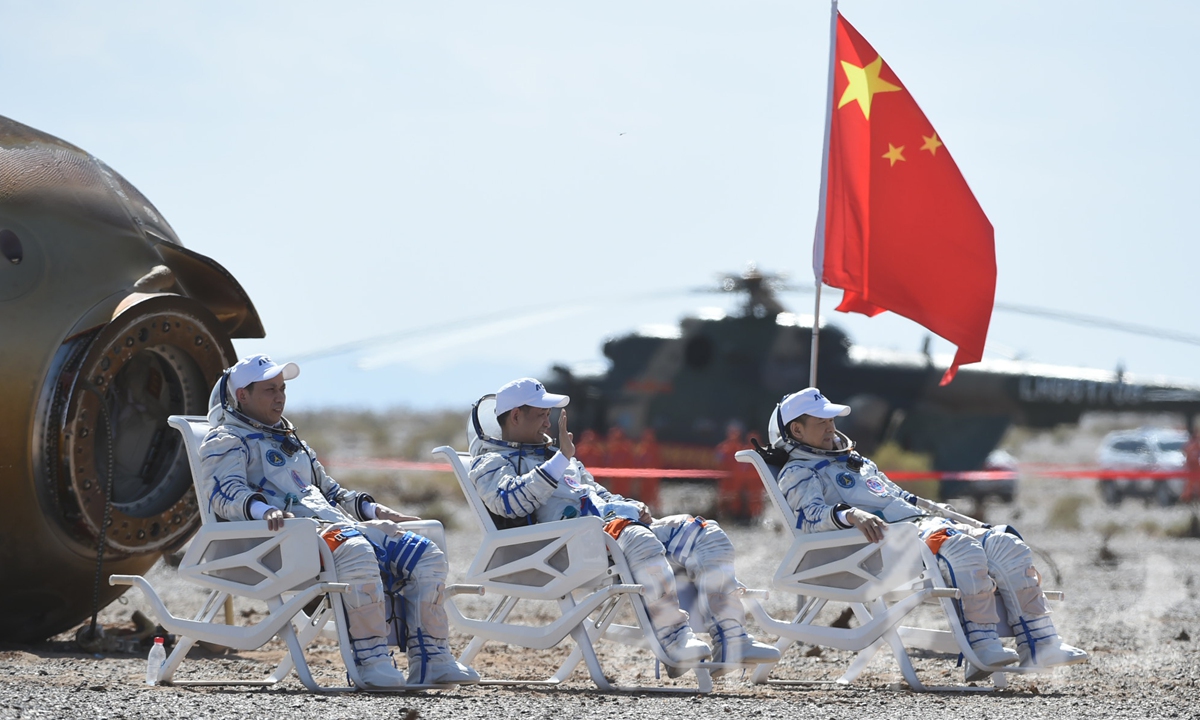
On 25 June, BBC reported that China’s Chang’e-6 lunar probe had landed back on Earth in the Inner Mongolia desert. The mission lasted for two months and was tasked to land and retrieve lunar samples from the far side. The Moon’s far side was challenging for the lunar probe due to its distance and the difficult terrain for the probe to navigate around huge craters. According to South China Morning Post reports, Chinese scientists discovered Graphene, a pure form of carbon. The discovery could challenge the formation of the Moon, which is commonly understood to have been formed in a collision between the Earth and another small planet. The theory was supported by the US Apollo 17 mission samples. Japanese scientists also challenged moons’ formation based on the presence of emission fluxes of carbon on the lunar surface. After studying, Chinese scientists concluded the potential of the lunar surface possessing a capturing process, leading to the formation of the Graphene sample. In 2010, NASA scientists found from the previous Apollo sample that they found graphite was formed by the impact of meteor strikes on the Moon and not solar winds. Chinese scientists noted the important role of natural Graphene in planetary and space science. The scientists compared the sample with the sample from Chang’e-5 mission to understand its structure and its formation. (Laura Bicker & Kelly Ng, “China space probe returns with rare Moon rocks,” BBC, 26 June 2024; Victoria Bela, “Graphene find in China’s Chang’e-5 moon samples challenges lunar origin theory,” SCMP, 26 June 2024)
CHINA & MIDDLE EAST
China’s UN envoy urges Israel for an immediate ceasefire in Gaza
On 25 June, China’s permanent representative to the United Nations, Fu Cong, at the UN Security Council session, urged Israel for an immediate ceasefire in Gaza. He urged Israel to “stop its collective punishment” for the people as the war drags on for more than eight months, affecting humanitarian aid. Citing the UNSC resolution 2735, he said that Israel has not agreed to a long-lasting ceasefire. He also mentioned massive civilian damage caused by Israel’s attempt to rescue hostages. Fu also criticized Israel’s settlements under the UNSC Resolution 2334. He also urged all sides to exercise restraint amid the ongoing tensions along the Lebanese-Israeli border and the Red Sea. (“Chinese envoy urges Israel to cease military action in Gaza,” CGTN, 26 June 2024)
INTERNAL
Gender discourse divides Chinese social media, says an opinion in East Asia Forum
On 25 June, according to an opinion in East Asia Forum by Jiannan Luo, a man’s suicide incident with his girlfriend led to increasingly divided opinions on Chinese social media where many criticized the girlfriend of money mentality. On 19 May, the Chongqing Public Security Bureau issued a statement that cleared the girlfriend of any accusations. Many Chinese media, such as People’s Daily and China National Radio called for rational decision and cyber violence against the girlfriend. Some people supported the government’s stance, while others criticized it as “extreme feminists.” Anti-feminist rhetoric opposes state-backed institutions on gender institutions such as the All-China Women’s Federation. Luo highlights the vulnerability of the Chinese government in controlling public opinion on gender issues. Modern China’s patriarchal rhetoric aligns with patriotic sentiments. The current state’s discourse and policies do not support women’s rights. However, President Xi, frequently mentions the need to address women’s employment discrimination and the importance of welfare system guarantees. Currently, the women’s proportion in the National People’s Congress has increased to 26 per cent. However, China does not discuss these issues in public discourse as it links women’s rights with “family harmony” and “reproductive support.” The Chinese government faces backlash from anti-feminist forces, leading to not addressing gender tensions. (Jiannan Luo, “Patriotism and patriarchy on Chinese social media,” East Asia Forum, 25 June 2024)
Chinese Premier Li advocates for open-mindedness in addressing development issues at Summer Davos
On 25 June, Chinese Premier Li Qiang called on countries worldwide to advocate open-mindedness in addressing development issues. He mentioned the need to avoid trade protectionism under the pretext of “promoting green and environmentally friendly development.” Li made his remarks at the opening plenary of the 15th Annual Meeting of the New Champions, also known as the Summer Davos, in China’s coastal city of Dalian, Northeast China’s Liaoning Province. The theme for the forum is “Next Frontiers for Growth,” and will run from 25-27 June. The remarks come as the world faces increasing climate change and food and energy security issues coupled with global geopolitical issues and weak economic recovery. Li’s remarks resonate with the EU’s recent decision to impose tariffs on Chinese EV exports. The forum signalled China’s intent to share its development with the world. He mentioned some countries pursuing a “small yard and high fence” policy will severely impact the global economy and intensify disputes. Experts such as Said AI Shanfari and Dominique V. Turpin highlighted the need for open communication between China and the world to reduce friction. Li also mentioned China’s intent to keep its markets open and to have a level playing field for all participants. He also highlighted China’s desire for tech innovation in areas such as renewable energy and AI to address sustainability issues. (Liu Yang, Yin Yeping and Tao Mingyang, “Premier Li calls for broader mind for development at Summer Davos,” Global Times, 25 June 2024)
CHINA & EAST ASIA
China’s Foreign Ministry requests South Korea to quickly identify the cause of the fire accident and assist victims
On 25 June, China’s Ministry of Foreign Affairs requests South Korea to quickly determine the cause of the fire accident and provide immediate assistance to the affected Chinese victims. This comes as a fire at a lithium battery factory in South Korea on 24 June killed 22 people, including 17 Chinese citizens. The Chinese Foreign Ministry immediately activated its consular emergency response and its embassy in South Korea. The Chinese embassy has asked the citizens to follow safety procedures and pay attention to any disasters. The Ministry also expressed China’s support to collaborate with South Korea on this matter. Da Zhigang, director of the Institute of Northeast Asian Studies, has raised questions about South Korean factories’ safety standards and urged Seoul to implement effective post-accident protocols against future disasters. (“China asks South Korea to determine cause of deadly fire,” Global Times, 25 June 2024)
CHINA & THE AMERICAS
Chinese AI firms capitalise on OpenAI's API restrictions, reports Reuters
On 26 June, Reuters reported OpenAI's plans to block API access in China and this spurred swift action by the Chinese AI companies. The ChatGPT maker confirmed it is: “taking additional steps to block API traffic from regions where we do not support access to OpenAI's services,” effective 9 July. In response, major Chinese tech giants are offering incentives to attract affected users. Baidu announced an “inclusive program” providing free migration to its Ernie platform, while Alibaba Cloud is offering free tokens and migration services. Zhipu AI introduced a “Special Migration Program,” emphasising their GLM model's compatibility with OpenAI's ecosystem. These moves highlight the competitive landscape of China's AI sector, where numerous companies have launched their chatbots over the past year. The situation underscores the growing importance of AI technology and the strategic manoeuvring of Chinese firms in response to international restrictions. (“Chinese AI firms woo OpenAI users as US company plans API restrictions,” Reuters, 26 June 2024)
Peru and China resolve Chancay Port dispute ahead of Presidential meeting
On 26 June, a USD 1.3 billion port project near Lima, constructed by China's Cosco Shipping, has overcome a legal hurdle just before a high-level meeting between Peruvian and Chinese leaders. The Peruvian government has withdrawn its lawsuit challenging Cosco's exclusive operating rights at the Chancay port, set to open in November. Peru's port authority chief Juan Carlos Paz confirmed the resolution stating: “Their exclusivity is now a fact and the issue of the lawsuit is history.” This development precedes President Dina Boluarte's meetings with Cosco officials and President Xi Jinping in China. The Chancay port, expected to significantly reduce cargo travel times between South America and Asia, will be inaugurated during the Asia-Pacific Economic Cooperation summit in Peru later this year. The project has become a focal point in US-China relations in the region. (“Peru resolves Chinese megaport dispute as president prepares to meet Xi,” South China Morning Post, 26 June 2024)
US probes Chinese telecom giants over data security concerns, reports Reuters
On 24 June, Reuters reports that the Biden administration conducted a previously undisclosed investigation into China Mobile, China Telecom, and China Unicom. The Commerce Department's probe focused on the potential exploitation of US data through the companies' cloud and internet operations in America. Despite previous FCC restrictions on their US telephone and retail internet services, these state-backed firms maintained a presence in cloud services and wholesale internet traffic routing. This access to American data raised national security concerns. The investigation, part of Washington's efforts to prevent Beijing from exploiting Chinese firms' access to U.S. data, could potentially block transactions allowing these companies to operate in U.S. data centres and route data for internet providers. An internet routing expert Doug Madory commented: “They are our chief global adversary and they are very sophisticated. I think (U.S. regulators) would not feel like they were doing their job if they weren't trying to shore up every risk.” The Chinese Embassy in Washington called for the US to: “stop suppressing Chinese companies under false pretexts,” while the companies themselves have not responded to requests for comment. (Alexandra Alper, “Exclusive: US probing China Telecom, China Mobile over internet, cloud risks,” Reuters, 26 June 2024)
China Reader Daily Wire | 25 June 2024, Tuesday | Vol.1 No. 116
MARITIME
China inducts fourth polar research icebreaker
On 24 June, China’s Ministry of Natural Resources in Guangzhou’s Nansha district inducted the fourth polar research icebreaker named Jidi, which translates to the polar region. It was designed and built by the CSSC Offshore & Marine Engineering Company. The ship was intended to support research and replenish supplies for China’s seven North and South Pole stations. Jidi has a displacement of 5,600 tonnes and is 17.8 metres wide and 89 metres long. It has a range of 26,000km and can carry up to 60 crew for 80 days. Cai Ruimou, Jidi’s chief designer, said that the ship could conduct its operations and break the ice in the Yellow and Bohai Seas during winter. The ship is designed to conduct polar and deep-sea surveys during summer. According to Beijing Daily, China built more than 30 marine research vessels between 2010 and 2022. The ship is designed to conduct other research, such as gathering data on atmospheric, geophysics, and sea ice. (Cyril Ip, “China’s expanding next-generation icebreaker fleet welcomes Jidi, its newest member,” South China Morning Post, 25 June 2024)
CHINA & SOUTH ASIA
President Xi hosts Poland's President in Beijing
On 24 June, Chinese President Xi Jinping met with Polish President Andrzej Duda in Beijing and addressed key issues including trade relations and the Ukraine conflict. Xi defended China's trade ties with Russia, stating: “China opposes the attempt by some people using the normal trade between China and Russia as an excuse to smear China and divert conflicts.” Xi reiterated China's stance of promoting peace talks and seeking a political settlement on matters of Ukraine. He emphasised China's willingness to play a constructive role in resolving the crisis. The leaders discussed strengthening bilateral cooperation, particularly in trade and the Belt and Road Initiative (BRI). Xi pledged to open the Chinese market to more Polish agricultural products and announced a 15-day visa-free entry for Polish nationals. Duda, acknowledging China's influence on Russia, expressed his intention to present Poland's view on the Ukraine situation to Xi. He also highlighted the impact of geopolitical turmoil on European economic cooperation, particularly affecting railway links in the Belt and Road strategy. (Orange Wang and Liu Zhen, “Xi defends China’s ‘normal trade’ with Russia in talks with Polish leader Duda,” South China Morning Post, 24 June 2024)
CHINA & AMERICAS
Canada likely to join the US and EU in tariff imposition on Chinese EV, reports SCMP
On 25 June, South China Morning Post reported that Canada sought public opinion on joining the US and the European Union in imposing tariffs on Chinese-made electric vehicles (EVs). On 02 July Ottawa will be starting a 30-day consultation on its policy responses to protect the auto workers of Canada and its growing EV industry. Deputy Prime Minister Vaughan Ontario and Finance Minister Chrystia Freeland said “The options of tariffs could include investment restrictions, import of EVs, and adjustment to the federal incentives for the EVs.” He also added that Canada’s auto sector faces unfair competition from China’s state-directed policy of over-capacity and lack of rigorous labour and environmental standards. The move came after the increased pressure from the domestic automobile industry to raise tariffs to protect their job. (Bochen Han, “Canada considers imposing new import tariffs on Chinese EVs,” South China Morning Post, 25 June 2024)
INTERNAL
China ramps up its flood control measures for 33 rivers across the country
On 24 June, according to the Ministry of Water Resources, China’s flood control measures were ramped up to tackle the water levels exceeding 33 rivers across the country. This comes as heavy rains affect 22 rivers in Jiangxi, Hubei, Anhui, Zhejiang, and Guizhou provinces, leading to waters exceeding flood warning levels. Also, 11 rivers in northeast China’s Heilongjiang Province witnessed similar cases. China’s State Flood Control and Drought Relief Headquarters increased the flood warning to Level III in Zhejiang, Anhui, Jiangxi, and Hunan provinces. According to the Changjiang Water Resources Commission of the Ministry of Water Resources, the situation in the Yangtze River basin has worsened with increasing water levels, thereby affecting its tributaries and the mainstream. The Ministry also reported heavy rains from 24 June to 30 June along the Yangtze and Huaihe rivers. (“China intensifies disaster control efforts amidst downpours and floods,” Xinhua, 25 June 2024)
CHINA & EAST ASIA
Fire incident in lithium battery factory in South Korea kills 22 mostly Chinese workers
On 24 June, According to the reports from the Chinese embassy in South Korea, 17 Chinese nationals were killed among the 22 people in the fire incident in a lithium battery factory plant in Hwaseong, Gyeonggi Province. The South Korean authorities are still investigating the final count. Chinese Ambassador Xing has urged the South Korean government to determine the accident cause along with the casualty details of the Chinese citizens. The Chinese embassy has expressed condolences for the victims’ families. According to media reports, the factory stored around 35,000 lithium batteries in a three-storey building. According to The Beijing News, 100 workers were working, mostly ethnic Korean women aged 30 and 40 from Northeast China. According to research fellow Lü Chao, many Chinese citizens of Korean ethnic groups choose to work in South Korea due to geographical proximity and cultural similarities. (“S.Korean plant fire kills 22, mostly Chinese nationals,” Global Times, 25 June 2024)
CHINA AND SOUTHEAST ASIA
The Philippines Foreign Minister proposes to work on resolving the dispute in South China Sea
On 25 June, the Philippines’s Foreign Minister said: “The Philippines is committed to working with China to develop confidence-building measures to manage tensions in the South China Sea after last week's clashes.” The Foreign Ministry has lodged a diplomatic protest against China’s illegal and aggressive actions during a routine resupply mission on 17 June. The Philippine Defense Secretary Gilberto Teodoro, backed the statement made by Philippine President Marcos, that “the country is not involved in the business of instigating war.” China has disputed the claims made by the Philippines on the clashes in the South China Sea calling the actions by the China Coast Guard lawful and beyond reproach. (Neil Jerome Morales, “Philippines says it wants to work with China to manage tensions in South China Sea,” Reuters, 25 June 2024)
CHINA & EUROPE
China and France joint satellite mission to unravel the mysteries of gamma-ray burst
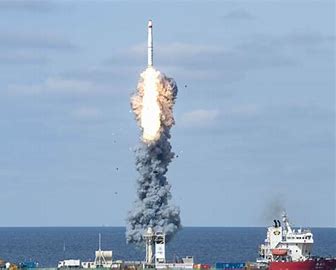
On 22 June, a satellite launched by France and China blasted. This has been the mightiest explosion in the universe in a case of cooperation between a Western power and an Asian giant. The 930 kg satellite carrying 04 instruments- 02 French and 02 Chinese, took off at 15:00 in a Chinese Long March 2C rocket from the Xichang province. Developed by engineers from both countries, the Space Variable Objects Monitor (SVOM) will seek out gamma-ray bursts. The gamma-ray burst generally occurs after the explosion of huge stars. Experts have said that the SVOM can explore and unravel several mysteries in the field of gamma-ray bursts. The satellite will send its data from the orbit 625 km above the Earth. Once it detects a burst it will send alerts to the team in the observatories. (“France, China launch a satellite in an attempt to explore the universe,” Al Jazeera, 22 June 2024)
China Reader Daily Wire | 24 June 2024, Monday | Vol.1 No. 115
CHINA & TAIWAN
“Democracy is not a crime and autocracy is the real evil,” says Taiwan’s President on death penalty threat by China
On 24 June, after China threatened to impose the death penalty in extreme cases for Taiwan's Independence separatists, Taiwan President, Lai Chang-te said: “Democracy is not a crime and autocracy is the real evil.” On 21 June, China ramped up its pressure on Taiwan by issuing legal guidelines to punish those it says support the island’s formal independence, though Chinese courts have no jurisdiction on the democratically governed island. At the conference at the Presidential office in Taipei, he said: “China has absolutely no right to sanction Taiwan’s people just because of the positions they hold. According to China, anyone who does not uphold reunification is therefore a Taiwan independence supporter. I also want to call to face up the existence of the Republic of China and have exchanges and dialogue with Taiwan’s democratically elected legitimate government.” (“Autocracy is 'evil', Taiwan president says after China threatens death for separatism,” CNA, 24 June 2024)
CHINA & SOUTH ASIA
Eight dead in Hunan province landslide
On 24 June, 08 people died in a landslide in Hunan province as extreme rains continued to batter southern China and extend to other parts of the country. More than 300 rescuers from local police, emergency workers, power and health authorities continue to rescue the victims. The 08 missing people were found and declared dead by the medical workers on the scene. Multiple cities in Hunan have been affected by the extreme weather with the heaviest rainfall recorded at Taoyuan County. Hunan’s Water Resources Department has reported the rise of multiple rivers to a record height of 314 feet. Six flood alerts have been issued in the provincial capital Changsha and neighboring cities as multiple river waters are still on the rise. More rainstorms are expected this week in other provinces. (Phoebe Zhang, “Landslide kills 8 in Hunan as extreme rainfall in China continues to wreak havoc,” South China Morning Post, 24 June 2024)
CHINA & SOUTHEAST ASIA
China urges UN Commission to decline Philippines' request to extend continental shelf
On 23 June, China urged the United Nations Commission on the Limits of the Continental Shelf, not to consider the Philippines' request to extend the legal outer limits of its continental shelf in the disputed South China Sea beyond the legal limit of 200 nautical miles. The note submitted by the Chinese Mission to the UN Secretary-General said: “The Philippines's claims have seriously infringed China’s sovereignty, sovereign rights and jurisdiction in the South China Sea. China claims almost all of the South China Sea but the Philippines, Vietnam, Malaysia, and Brunei also have competing claims on the waterway. The Philippines has asked the UN to recognize the outer limits of its continental margin extend beyond 200 nautical miles in the West Palawan region. According to the submission made by Manila, the new proposed limits cover the Palwan -Mindoro microcontinent. The document summary made available last week said: “It served as the basis for determining the natural prolongation of the Palawan and Mindoro landmasses.” The submission made by the Philippines overlaps with similar claims made by Malaysia and Vietnam in 2009 and is willing to discuss maritime border disputes with them. “Alyssa Chen, “South China Sea: Beijing urges UN not to consider Philippine request to extend continental shelf,” South China Morning Post, 24 June 2024
INTERNAL
China to quarantine Taiwan and cripple the island without military confrontation, reports Center for Strategic and International Studies
On 23 June, CNN cited a Washington-based think tank which said: “China’s military could isolate Taiwan, cripple its economy, and compel the democratic island to submit to Beijing’s Communist Party without firing a shot.” According to military strategists, there are two ways for China – a full-scale invasion or a military blockade. Meanwhile, the Center for Strategic and International Studies in Washington highlighted a third option of quarantine. The method includes the use of grey zone tactics like cutting off access to ports and essential supplies. Recently, China’s Minister of National Defence, Admiral Dong Jun warned external forces for “emboldening Taiwan Independence separatists in an attempt to contain China with Taiwan and these malicious intentions are dragging Taiwan into a dangerous situation.” (“China could take control of Taiwan without firing shot: US think tank,” Business Standard, 23 June 2024)
CHINA & EUROPE
EU and China to negotiate tariff imposition on Chinese EVs
On 22 June, China and the European Union agreed to start talks on the planned imposition of tariffs on Chinese-made electric vehicles and their import into the European Union. Germany’s Economy Minister Robert Habeck said that he was informed by the EU Commissioner Valdis Dombrovskis that “there would be concrete negotiations on the tariffs with China.” The German Minister has expressed great hope from these dialogues and looks forward to the resolution of the dispute through dialogues. Habeck is currently in Shanghai and said: “The doors are open for discussions and I hope that this message was heard.” He is the first senior European official to visit China since Brussels decided to impose hefty duties on Chinese EVs to combat excessive subsidies. (Maria Martinez, “EU and China set for talks on planned electric vehicle tariffs,” Reuters, 22 June 2024)
China Reader Daily Wire | 22 June 2024, Saturday | Vol.1 No. 114
CHINA & THE AMERICAS
US-China resume nuclear arms discussion after five years
On 21 June, the United States and China restarted informal nuclear arms discussions in March after a five-year hiatus. During these Track Two talks in Shanghai, Chinese representatives assured their American counterparts that they would not resort to nuclear threats over Taiwan. The US organizer, David Santoro reported that the Chinese delegation expressed confidence in prevailing conventionally without nuclear weapons in a Taiwan conflict. The Pentagon estimates China's nuclear arsenal grew by over 20 per cent between 2021 and 2023, projecting it to reach 1,000 warheads by 2030. Despite this expansion, Chinese delegates maintained their commitment to a “no-first-use” policy and minimal deterrence strategy. US participants sought clarification on China's nuclear policies, given its modernisation efforts. Chinese representatives emphasised the need for a survivable second-strike capability, citing concerns about improved US missile defences and alliances. While these Track Two discussions offer a channel for dialogue, the State Department spokesperson noted they cannot replace formal negotiations, highlighting China's “refusal to substantively engage” in official talks about its nuclear build-up. (Greg Torode, Gerry Doyle and Laurie Chen, “U.S. and China hold first informal nuclear talks in five years,” Reuters, 21 June)
CHINA & SOUTH ASIA
India reluctant to restore China-India flights, an editorial in Global Times
On 22 June, an editorial in the Global Times looked into India-China relations. The op-ed stated that direct passenger flights between China and India are halted for four years, with India reluctant to restore air links due to border tensions. An Indian official stated: “Unless there is peace and tranquillity on the border, the rest of the relationship cannot move forward.” India implemented strict visa restrictions on Chinese citizens, affecting businesses, students, and journalists. Despite these challenges, bilateral trade reached USD 118.4 billion in fiscal year 2023-24, with over half of Indians purchasing Chinese-made products. Some Indian politicians argued that normalising relations depended on resolving border disputes, while others advocated for “decoupling” from China. However, experts suggest that reducing economic ties with China is neither practical nor beneficial for India. In 2019, there were over 1 million trips between the two countries, highlighting the potential for tourism and business exchanges. India's approach to China appears to be driven by a mindset of “demanding” and “coercion,” using bilateral actions as leverage in border negotiations. This stance extended to India's recent statements on the Taiwan question, with some experts suggesting using it as a bargaining chip in discussions with China. (“New Delhi should do correct math on direct flights between China, India: Global Times editorial,” Global Times, 22 June 2024)
CHINA & AFRICA
Chinese Foreign Minister and his Nigerian counterpart call to strengthen diplomatic ties
On 22 June, Chinese Foreign Minister Wang Yi and Nigerian Foreign Minister Yusuf Maitama Tuggar met in Beijing to strengthen bilateral relations. The meeting which included the inaugural China-Nigeria Inter-governmental Committee session, emphasised the strategic importance of their partnership. Wang highlighted Nigeria's significance in Africa, stating that their relationship could serve as a model for China-Africa relations. Nigeria reaffirmed its commitment to the one-China principle, while both nations agreed to enhance cooperation in various fields. The ministers discussed China-Africa collaboration, anticipating productive outcomes from the upcoming Forum on China-Africa Cooperation. Wang stressed the need for both countries, as major developing nations, to build consensus and promote cooperation. He emphasised the importance of maintaining strategic partnerships and achieving coordinated development that benefits their citizens. Tuggar expressed Nigeria's willingness to deepen mutual trust and expand cooperation with China, aiming to unite Global South countries and uphold multilateralism. (“Chinese, Nigerian FMs hold talks, attend 1st plenary session of inter-governmental committee,” CGTN, 22 June 2024)
INTERNAL
Devastating floods in Southern China claim 47 lives
On 21 June, Southern China's Guangdong province was ravaged by catastrophic floods and landslides, resulting in at least 47 fatalities. State broadcaster CCTV reported that 38 additional deaths were confirmed in Meizhou city, adding to the previously known nine casualties. The disaster, dubbed a “once-in-a-century” event, affected over 55,000 people and caused extensive damage to homes and infrastructure. The economic loss is estimated to be 3.65 billion yuan in Jiaoling County and 1.06 billion yuan in the Meixian district. Rescue efforts continue, but authorities warn of the challenges ahead, stating: “Due to the severity of the disaster... the search and rescue of trapped people is difficult and time-consuming.” As southern regions grapple with floods, northern China faces scorching temperatures exceeding 35 degrees Celsius. The National Meteorological Centre issued warnings for several provinces, predicting rainfall of up to 80 mm in some areas within 24 hours. Scientists attributed the increasing frequency and intensity of extreme weather events to climate change, highlighting China's role as the world's largest greenhouse gas emitter. (“Death toll from southern China floods reaches 47,” Al Jazeera, 21 June 2024)
CHINA & TAIWAN
Chinese Ministry of Public Security calls for the death penalty for Taiwanese separatist leaders
On 22 June, China intensified its stance against Taiwan's independence by introducing guidelines that threatened the death penalty for “diehard” separatists in Taiwan. This move comes amid heightened tensions following the inauguration of Taiwan's President Lai Ching-te, whom China labels a “separatist.” The new guidelines call for severe punishment of those advocating Taiwan independence, with the death penalty applicable for “ringleaders” causing “particularly serious harm to the state and the people.” An official from China's Ministry of Public Security, Sun Ping stated: “The sharp sword of legal action will always hang high.” Taiwan's Mainland Affairs Council swiftly denounced the measure, asserting: “The Beijing authorities have no jurisdiction over Taiwan, and the Chinese communists' so-called laws and norms have no binding force on our people.” While China claims these guidelines align with existing laws, including the 2005 anti-secession law, their practical impact is limited as Chinese courts lack jurisdiction in Taiwan. The move is seen as part of a broader pattern of increased pressure on Taiwan, including military actions, trade sanctions, and coast guard patrols. President Lai stated that only Taiwan's people can decide their future by consistently offering dialogue with China despite repeated rebuffs. (“China threatens death penalty for Taiwan independence ‘diehards’,” The Guardian, 22 June 2024)
CHINA & THE AMERICAS
China is strategically shifting towards nuclear submarines, an opinion in SCMP
On 21 June, an opinion in the South China Morning Post reports that China's People's Liberation Army (PLA) Navy is prioritising the development of nuclear-powered submarines to enhance its long-distance combat and deterrence capabilities. This strategic shift, aimed at modernising the military by 2027, was publicly acknowledged for the first time by Navy official Wen Xuexing, who stated: “Our nuclear submarines are routinely patrolling at sea.” The move comes amid growing tensions in the South China Sea and Taiwan Strait. China currently operates six Type 094 ballistic missile submarines and six Type 093 attack submarines, with plans for the advanced Type 096 by decade's end. These submarines can potentially launch missiles capable of reaching the US mainland from the mid-Pacific. Former PLA instructor Song Zhongping described this shift as “a move towards an ocean-going and strategic navy,” emphasising the need to strengthen nuclear capabilities due to rapidly changing international situations. The focus on nuclear submarines also complements China's expanding aircraft carrier fleet, with a fourth carrier, rumoured to be nuclear-powered expected soon. This naval strategy update occurs as China faces increased maritime security challenges, particularly with the US deploying nuclear-powered submarines in Guam and patrolling contested waters. (Zhao Ziwen and Coy Li, “Chinese military focusing on nuclear-powered subs with an eye on US Navy: analysts,” South China Morning Post, 21 June 2024)
Chinese Navy to increase nuclear capacity to target high-sea confrontation with the US, an opinion in SCMP
On 21 June, an opinion in SCMP cites military analysts, that China increased its focus on nuclear submarines and aimed at boosting long-distance naval combat and deterrence power amid rising concerns of high seas confrontation with the US Navy. The People’s Liberation Army for the first time announced a strategic shift away from conventional submarines and pushed to build a modernized military by 2027. Beijing has also ordered the PLA Navy to strengthen battle readiness. According to the Pentagon, the PLA Navy has six Type 094 nuclear submarines, two advanced Type 094A variants, and six nuclear submarines of Type 093 attack submarines. The Pentagon said: “Type 094 can fire JL-2 submarine-launched ballistic missiles which could reach the US mainland if operated from the mid-Pacific.” China also has two aircraft carriers in service and Shandong. The third carrier, Fujian, is under trial. China has yet to unveil the fourth aircraft carrier, which is expected to be nuclear. Song Zhongping, a former instructor of the PLA, said: “China’s nuclear-oriented submarine force was seen as a move towards an ocean-going and strategic navy with the heavy presence of aircraft carrier formations, which was a major shift in China’s naval strategy.” (Zhao Ziwen and Coy Li, “Chinese military focusing on nuclear-powered subs with an eye on US Navy: analysts,” South China Morning Post, 21 June 2024)
China-US restore dialogue to tackle drug trafficking
On 21 June, the Minister of Public Security, Wang Xiaohong met the US National Drug Control Policy Director Rahul Gupta to address the shared threat of synthetic drugs. The two countries have agreed to establish a direct line of communication and to continue regular exchanges between scientists. The Whitehouse said: “The meeting was intended to follow up on the commitment to counteraction cooperation made by the US President Joe Biden and Chinese President Xi Jinping at the Woodside Summit in California. The meeting was the latest effort by Beijing and Washington to stabilize ties. The two sides restarted talks on counternarcotics and law enforcement cooperation. The Chinese Ministry of Public Security cited this as a prime example of recent China-US anti-drug cooperation. Counternarcotics cooperation between China and the US started in 1985, and by 2003 the two countries established a mechanism for exchanging information to tackle drug trafficking. (Laura Zhou, “China and US agree to scientist exchanges in the fight against synthetic drugs trade,” South China Morning Post, 21 June 2024)
China Reader Daily Wire | 21 June 2024, Friday | Vol.1 No. 113
CHINA & EUROPE
China objects EU’s “unprecedented” investigation into Chinese EV
On 20 June, the Chinese Ministry of Commerce said that the European Union had asked for unprecedented types, scope, and amount of information in its anti-subsidiary probe into Chinese Electric Vehicles (EVs), which has far exceeded the necessary request for such an investigation. The European Commission required massive information covering the production, planning, and technical processes of EV and battery makers. The EC has also demanded details on battery composition and formulation, production costs, sales and pricing, customer information, and supply chain. The Commission has also threatened that failure in cooperation would result in an unfavourable ruling. The move by the EU lacks factual and legal basis, disregards the rules of the World Trade Organization, and undermines fair competition as well as global green transition and cooperation. (“China says EU's demand for information in EV probe far exceeded its scope,” CGTN, 20 June 2024)
INTERNATIONAL
International Human Rights groups jointly call for UN intervention in Xinjiang
On 20 June, Human Rights groups called for the United Nations to act and provide more updates on a report published nearly 02 years ago on the violation of rights in China’s Xinjiang province. The report issued in 2022 found actions taken in the region may include crimes against humanity and credible abuses including torture, forced sterilization, sexual violence, and forced separation of children. China has called the report a farce and politically motivated. Two years later, with few updates, multiple international agencies like the Human Rights Watch, Amnesty International, the International Service for Human Rights and the World Uyghur Congress called for action by the UN High Commissioner for Human Rights Volker Türk. In his presentation on global updates at the 56th UN Human Rights Council session, he mentioned the case of Xinjiang. He said: “Continued to engage with China on a range of Human Rights issues, including serious concerns my office identified in the Xinjiang region.” In their statement, the rights groups said: “Türk did not provide any specifics about his engagement with the government, a substantive update on the situation in Xinjiang nor an assessment of the implementation of the report recommendations by his office. (“Human rights groups call for UN update, action on China's Xinjiang,” VOA News, 20 June 2024)
CHINA & EAST ASIA
Japan imposes trade sanctions on China for abetting Russia
On 21 June, the Japanese Foreign Ministry informed that Japan will impose trade restrictions on China-based companies as a part of a fresh round of sanctions against individuals and groups supporting Russia’s war on Ukraine. It is the first time Japan has imposed sanctions on China-based firms in connection with the war in Ukraine. The new sanctions have also targeted firms in India, Kazakhstan, and Uzbekistan. The targeted firms include Hong Kong-based Asia-Pacific Links Ltd which provides microchips for Russian drones, and China-based Yilufa Electronics Ltd. The sanctions are in line with previous measures imposed by other countries. The US has also broadened sanctions on Russia and has targeted China-based companies selling semiconductors to Moscow. (“Japan imposes trade curbs on China-based firms for supporting Russia's war in Ukraine,” Reuters, 21 June 2024)
INTERNAL
Xi Jinping stresses “national unity” on his visit to a Tibetan temple in Qinghai
On 19 June, Chinese President Xi Jinping visited a middle school for Golok Tibetans and a Tibetan Buddhist temple in Xining, the capital of Qinghai. He called for national unity at a Tibetan Buddhist temple as Tibet became a point of contention again in its relations with the US. The temple has been a key to Beijing’s communication with Tibetan Buddhist leaders since 1951. Xi’s visit was reportedly focused on local efforts to deepen education to forge a strong sense of community for the nation. It also aimed to strengthen love for country and religion. He met government officials and provincial members of the Communist Party and stressed building national unity in the province concentrated with ethnic minorities. He also discussed the mission of the province to preserve ecological security as the Qinghai-Tibetan plateau has a rich, diverse but fragile ecosystem. The President said: “Provincial leaders should accelerate the construction of a world-class Salt Lake industrial base and make the province a national clean-energy industry highland, an international ecotourism destination, and green energy and agricultural and livestock product export base.” (Hayley Wong and William Zheng, “Xi visits Tibetans and temple in western China, calls for ethnic unity,” South China Morning Post, 19 June 2024)
CHINA & EAST ASIA
The Chinese embassy in Japan’s spokesperson warns Tokyo against interfering in SCS
On 21 June, in a statement, the spokesperson of the Chinese embassy in Japan said: “Japan is not a party to the South China Sea issue between China-Philippines and has no rights to intervene in the maritime matters between the two countries.” During this week, the Foreign Ministry of Japan has made accusations about China’s recent actions towards Filipino vessels that intruded into waters near China’s Ren ’ai Jiao in the South China Sea. The spokesperson also stated that the Philippines was attempting to occupy China’s Ren ’ai Jiao by repeatedly sending shipping supplies to reinforce its stranded warship. The control measure taken by the China Coast Guard was lawful and controlled.” (“China urges Japan to stop meddling in China-Philippines maritime issues,” CGTN, 21 June 2024)
Russia-North Korea defence pact creates worries for China, an opinion in NYT
On 20 June, an opinion in The New York Times looked into Russia's mutual defence pact with North Korea and called for immediate military assistance to each other in the event of war, which is a kind of bloc building China has accused the US of. China’s only treaty allies – Russia and North Korea are now heightening Cold War-like tensions in Northeast Asia. The pact has created more headaches for Beijing by appearing to deepen the semblance of a trilateral axis between China, Russia, and North Korea which China has sought to avoid. Possible retaliatory actions taken by the US, Japan, and South Korea have created worries for the Chinese leadership. For this reason, Xi Jinping would not accept the budding bromance between Vladimir Putin and Kim Jong-Un. The pact has also exposed the limitations of China’s partnerships with both countries. With promising complete and unwavering support to the countries, Xi is also at risk of falling out from the actions of their unpredictable leaders. (David Pierson and Choe Sang-Hun, “Russia and North Korea’s Defense Pact Is a New Headache for China,” The New York Times, 20 June 2024)
Australia aims to resume defence talks with China, says Australian Defence Minister
On 21 June, Australian Defence Minister, Richard Marles said that Australia would like to restart the annual dialogue with China’s Chief of Defence to reduce misunderstandings between the militaries with the matter raised with China’s Premier Li Qiang. After the meeting with the Chinese Premier, Albanese said that the two countries would take steps to improve military communication. In a radio interview, Marles said: “Australia wants to resume annual meetings between the two nations’ chiefs and department secretaries. Although some defence dialogues have started, it wasn’t at the level it was 10 years ago when the defence chiefs met regularly. (Kirsty Needham, “Australia seeks defence chiefs dialogue with China to reduce military incidents,” Reuters, 21 June 2024)
China Reader Daily Wire | 20 June 2024, Thursday | Vol.1 No. 112
CHINA & EUROPE
Germany urges China to participate in global climate finance
On 20 June, State Secretary Jennifer Morgan stated that Germany would drive China to participate in global climate finance by helping poor countries with their mitigation and adaptation measures. She also expressed that it is “very important” for the group of seven developed countries and other large economies including China, to take the lead and make contributions. Germany has been having talks with China to “have the capacity to contribute, especially to multilateral funds.” Morgan stated: “The representatives will be looking to see how we can be working together to accelerate the implementation of China's measures to help keep global warming below 1.5 degrees Celsius from the pre-industrial level in sight.” Germany is cooperating with China on a stable grid and energy efficiency. Morgan commented that Germany has been working on bilateral collaboration with Japan and also mentioned that Germany has been trying to avoid over-reliance on Chinese production and technologies. Japan’s trade minister Ken Saito and EU energy commissioner Kadri Simson stated their cooperation in in hydrogen in areas such as technology development and standardization. The use of “unabated” coal was agreed on to end recently in the G7 countries by 2035 which would allow for the use of coal combined with emission-reducing technologies such as carbon capture and storage (CCS) and ammonia. (Akane Okutsu, “Germany to push for Chinese contributions to climate finance,” Nikkei Asia, 20 June 2024)
CHINA & EAST ASIA
China and South Korea aim to enhance political trust at 2+2 dialogue
On 19 June, Beijing and Seoul agreed to more dialogue to build political trust and promote practical cooperation. The Chinese Foreign Ministry said: “The two sides had a candid and in-depth exchange of views on bilateral relations and international regional issues of mutual interest and outlined their diplomatic and security policies.” The dialogue coincided with the visit of Russian President Vladimir Putin’s visit to North Korea. Beijing clarified that the dates for the 2+2 dialogue with South Korea were decided earlier and had nothing to do with the visit of Russian President Vladimir Putin to North Korea. The Chinese Foreign Affairs Ministry informed, “Beijing and Seoul have agreed to carry out dialogue and exchanges at various levels and fields to enhance communication and political trust and to promote practical cooperation through high-level strategic dialogue. This also included the 2+2 dialogue and the track 1.5 dialogue.” The two sides have also discussed the Korean Peninsula issues to which China has said: “safeguarding peace and stability on the peninsula was in line with the common interests of all, including China and South Korea.” (Vanessa Cai “In ‘2+2’ talks, China and South Korea agree to push for more ‘political trust’,” South China Morning Post, 19 June 2024)
INTERNAL
Chinese President Xi calls for “no hiding place for corrupt elements in the army”
On 19 June, Reuters reported that the Chinese President Xi Jinping said: “There were deep-seated problems in the Chinese military’s politics, ideology, work style, and discipline” amid an ongoing military anti-corruption purge. At a military-political work conference, he said, “There must be no hiding place for corrupt elements in the army.” In a keynote speech to the military cadres, Xi said: “The political tests currently faced by the People’s Liberation Army (PLA) are complex and the national situation is also going through complex and profound changes.” The Chinese military has undergone a sweeping anti-corruption purge since last year with nine PLA generals being removed from the National legislative body, including from the strategic PLA Rocket force. A handful of other defence industry bosses have also been dismissed from the advisory body of the country. Former Chinese Defence Minister, Li Shangfu was also removed from the website of the Central Military Commission in February after being investigated for corrupt procurement of military equipment. This time also, Xi has vowed to build a toolbox for punishing corruption and strengthening the supervision of senior cadres. (Laurie Chen, “China's Xi says army faces 'deep-seated' problems in an anti-corruption drive,” Reuters, 19 June 2024)
South China’s Guilin city worst hit by floods, reports SCMP
On 20 June, the South China Morning Post reports that the city of Guilin experienced its worst floods since 1998. Authorities in Guilin have issued an emergency alert of level-1 floods on 19 June. By the evening of the same day, the water levels at the Lijiang River had risen 08ft above the alert level and over the peak of the 1998 level of 486.87ft. The floods in 1998 lasted for two months and wreaked havoc in 24 provinces killing a total of 3004 people. According to CCTV “multiple parts of Guilin, in the Guangxi Zhuang autonomous region are affected by the latest rains. So far, 69 residents have been rescued from their homes while others remain trapped.” Local authorities have provided food and emergency materials for those trapped. Rainstorms have lashed and caused floods in neighbouring Guangdong and Fujian provinces. These floods are expected to ease over a few days. (Phoebe Zhang, South China’s Guilin city hit by worst floods since 1998 devastation,” South China Morning Post, 20 June 2024)
INTERNATIONAL
China at the Human Rights Dialogue affirms to safeguard fundamental rights
On 18 June, The Chinese representatives presented China’s views on Human Rights and reiterated China’s position during talks with EU diplomats in the 39th session on the Human Rights discussion. Chinese Assistant Foreign Minister Miao Deyu gave a comprehensive introduction to the concept and achievements of human rights in China during talks with Paola Pampaloni, Deputy Director General for Asia and Pacific of the European External Action Service. Miao stressed that the Communist Party of China adheres to the fundamental purpose of serving the people wholeheartedly. He also added that China believes developing and safeguarding its people's fundamental interests is the greatest human right. He lodged solemn representations with the EU in the dialogue over the recent release of its annual report on global human rights and democracy and firmly refuted the groundless accusations made by the EU on China’s human rights situation, judicial processes, death penalties, labour rights, and ethnic and religious issues. (“China stresses its stance at China-EU Human Rights Dialogue,” CGTN, 18 June, 2024)
ENERGY AND ENVIRONMENT
China’s hydropower generation likely to set new record, reports Energy World
On 19 June, Energy World reported that China’s heavy rains have enabled the country to use its massive cascade dams more fully, boosting hydroelectric output sharply and reducing the need for coal-fired generation in May. Hydro generation was the second highest for the time of year in the last decade and not far below the record 122 billion kWh following heavy rainfall in the spring of 2022. Stations at Wudongde, Baithetan, Xiluodu, Xiangjiaba, Three Gorges, and Gezhouba can meet the annual electricity needs of 54 million people and save up to 15 million metric tons of coal fuel. Prolonged drought between the middle of 2022 and the end of 2023 meant the generation was sharply reduced including at the newly finished Baithetan, the second-largest hydroelectric project in the world. Heavy rains across Southern China, raising volumes of river water have enabled increased use of hydro stations. If the monsoon rains are average or higher, generation through hydro stations is likely to set new records. (“Opinion: China's hydropower generation surges and coal ebbs,” Energy World, 19 June 2024)
CHINA & SOUTHEAST ASIA
Chinese Coast Guard met and engaged in an armed confrontation with the Philippine soldiers
On 20 June, the Philippines accused the Chinese Coast Guard of acting like pirates saying, “personnel armed with knives and spears boarded their resupply vessel at Second Thomas Shoal in the latest confrontation in the South China Sea.” The Chief of the Armed Forces, General Romeo Brawer said: “The incident took place on the 17 June as Filipino soldiers attempted to resupply sailors stationed on the Sierra Madre which Manila grounded on the reef in 1999. These Chinese Coast Guard personnel had bladed weapons and our personnel fought with bare hands.” The Philippines reported that one of their sailors was badly injured and the boats were damaged. The situation at the Second Thomas Shoal, which lies in the Philippines” Exclusive Economic Zone, has become increasingly fraught in recent months as China attempts to disrupt the Philippines’ regular missions to the Sierra Madre. Beijing has denied any inappropriate act by its personnel. Spokesman of the Chinese Foreign Affairs Ministry, Lin Jian said: “The law enforcement action taken by the China Coast Guard was restrained and professional.” (“China Coast Guard accused of behaving ‘like pirates’ in South China Sea,” Al Jazeera, 20 June 2024)
China-Malaysia celebrate 50th anniversary of diplomatic ties
On 20 June, the Chinese Premier on his visit to Malaysia said: “China-Malaysia ties are at the forefront among relations between regional countries and have set a benchmark. China hopes to celebrate the 50th anniversary of the establishment of diplomatic ties with Malaysia. “The two leaders have agreed that China and relevant countries should independently solve the disputes in the South China Sea, manage disputes and differences, and promote dialogue and cooperation. Li also met the King of Malaysia, Sultan Ibrahim, and attended a ground-breaking ceremony at a construction site for the East Coast Rail Link, part of China’s Belt and Road initiative. China-Malaysia relations have been playing a pioneering role and exemplary role for other ASEAN countries. Li’s visit comes as tensions in the South China Sea have escalated due to the continued provocations by the Philippines with support from the US. As one of the claimant countries in the South China Sea dispute, Malaysia is focused on properly managing the situation and controlling disputes. On 19 June, China-Malaysia signed a range of agreements and renewed a five-year economic cooperation pact, and allowed fresh durians. (Chen Qingqing, “China-Malaysia ties exemplary for region,” Global Times, 20 June 2024)
CHINA & SOUTH ASIA
Cobalt-race in South Asia over Chinese presence, an opinion in Al-Jazeera
On 19 June, an opinion in Al Jazeera looked into the scramble to procure cobalt in South Asia, as Chinese presence increased in the region. India was scrambling to secure rights to explore a cobalt-rich underwater mountain in the middle of the Indian Ocean. Its bid has come up against competing claims of Sri Lanka which also is looking to mine the region for precious minerals. The urgency behind India’s application comes from fears over China’s presence in the region at a time when the world’s second-largest economy already dominates the global cobalt supply chain. In January, India approached the Jamaica-based International Seabed Authority (ISA), seeking approval to explore the Afanasy Nikitin Seamount which is in the Central Indian Ocean, about 1350 km from the Indian Coast. In its application, India mentioned its desire to conduct extensive geophysical, geological, biological oceanographic, and environmental studies in the area over 15 years. The ISA has put India’s application on hold due to the territorial claims and will review its application once India responds to their raised questions. Meanwhile, Sri Lanka applied for the extension of the limits of its continental shelf from 200 nautical miles to a much larger area, in 2009. If the claim is accepted by the Commission on the Limits of Continental Shelf (CLCS), then the Afanasy Nikitin Seamount would fall in the Sri Lankan territory. (Rejimon Kuttappan, “China fears spark Indian race forcobalt in contested ocean water," Al Jazeera, 19 June 2024)
CHINA & THE AMERICAS
China and US anti-narcotics cooperation is based on mutual trust, says Chinese Ministry of Public Security
On 19 June, China detained a person surnamed Tong suspected of being involved in drug-related money laundering in the US, following a tip-off from the US. China’s Ministry of Public Security reported that Tong’s car showroom in the US later “evolved into criminal activities” that included the illegal trade of foreign exchange. According to the ministry, this case was a “prime example of recent China-US anti-drug cooperation.” The director of the ministry’s Narcotics Control Bureau, Wei Xiaojun, stated that China was only informed in April despite the US investigation of the case starting in 2019. Wei stated from the US tips on the case: “that China has a huge underground banking system is not convincing, at least at this stage.” We also commented on the campaign against fentanyl by the Chinese police which resulted in the shutdown of 14 websites, suspension of 332 businesses and 1016 online shops. Wei stated: “China has made efforts to help the US effectively deal with its domestic fentanyl crisis.” Chinese ambassador to Washington Xie Feng stated: “But out of humanitarian considerations, China has been doing its utmost to help the US side deal with the fentanyl issue,” and “demonstrated its sincerity for cooperation.” (Cyril Ip and Yuanyue Dang, “China says US tip led to suspect in ‘prime example’ of cooperation amid fentanyl crisis,” South China Morning Post, 19 June 2024)
China Reader Daily Wire | 19 June 2024, Wednesday | Vol.1 No. 111
INTERNAL
Inequalities in the Chinese education system, an opinion in Foreign Policy
On 18 June, an opinion in Foreign Policy looked into the inequalities in the Chinese education system. The op-ed cites an unexpected result in a math competition that made a Chinese student a hero. Jiang Ping, 17, stood in the 12th position in the preliminary round of the 2024 Alibaba Global Mathematics Competition last week. Jiang was the only girl in the top 30 and was a fashion design student at a vocational school in China. The story highlighted the inequalities in the Chinese education system. The Chinese university entrance exams are rigorous, the high school exams conducted are when the students are just 16 years old. This exam marks the creation of the division of Chinese students into haves and have-nots. The exam combines academic evaluation, physical education, and questions that require politically correct answers. Nationally only 60 per cent of students can pass the exam and are allowed to attend high schools. The other 40 per cent either attend vocational high schools or drop out of the education system. The vocational schools are underfunded, lack qualified teachers, and are often stigmatized. These programs often require exploitative internships which have led to the abuse and suicide of a student in 2021. The educational system creates a distinction between classes where students who got to vocational school often did not get to go to good universities which in turn affects their job prospects. Students from wealthy families can bribe their way in or apply to private universities that are unaffordable to most students. (James Palmer, “China’s Secondary Schools Are Not Equal,” Foreign Policy, 18 June 2024)
CHINA & EAST ASIA
China and South Korea conducts 2+2 dialogue to ensure stability in the region
On 18 June, China and South Korea held the first 2+2 vice-ministerial diplomatic and security dialogue in Seoul. Observers have expressed hopes that this upgraded mechanism will address China-South Korea differences, tackle risks, and increase mutual political trust to stabilize bilateral relations and inject stability in Northeastern Asia. Chinese Vice Foreign Affairs Minister, Sun Weidong and Deputy Director of the Office for International Military Cooperation of the Central Military Commission, Zhang Baoqn met their counterparts from South Korea. For the dialogue, South Korea’s priorities have been the worsening situation in the Korean Peninsula in recent months. China, on the other hand, wants South Korea to respect its core interests and understand its concerns, mainly the Taiwan question. Holding the 2+2 dialogue was among the agreements reached between China and South Korea on the sidelines of the Trilateral Leader’s meeting in May. (Zhang Han and Zhao Juecheng “China, SK hold 2+2 dialogue as ‘new buffer’ to stabilize ties, ‘meaningful for NE Asia,” Global Times, 18 June 2024)
INTERNAL
Chinese authorities rename villages and towns with Uyghurs cultural references, reports Human Rights Watch
On 19 June, A report by Human Rights Watch found that the Chinese authorities had renamed several Uyghur towns and villages to remove cultural and religious references. The new names of these places reflect the ideology of the Communist Party. Research published by the Human Rights Watch and the Norway-based organization, Uyghur Help documents have shown that about 630 communities have been renamed in this way by the government. The name-changing has been happening since 2009, and major changes happened from 2017-19. Any mentions of the Uyghur cultural or religious practices were removed. “Hoja”, a title of Sufi teacher, was removed from at least 25 village names. The authorities have also changed names that referenced Uyghur kingdoms, republics, or leaders before 1949. Elaine Pearson, the Director of the Human Rights Watch, Asia division said: “This is a part of broader efforts by the Chinese government to conflate Islam terrorism.” (“China has renamed hundreds of Uyghur villages and towns, say human rights groups,” The Guardian, 19 June 2024)
Chinese President Xi Jinping calls for “all-out effort” for disaster relief measures after floods
On 18 June, Chinese President XI Jinping urged all-out efforts to fight floods and droughts and ensure solid work in disaster relief to safeguard the lives of people’s lives, property, and social stability. Concerning the heavy rainfall in many parts of Southern China and droughts in Northern and central China, Xi said: “No efforts should be spared to search and rescue those who are missing or trapped. Make proper arrangements for the victims and maintain normal order in the work and life and minimize the damage.” Several provinces have initiated or upgraded their emergency response for flooding after experiencing downpours and rising river levels. Meanwhile, Northern and Central China is baking in scorching heat as the national weather stations are recording extremely high temperatures daily. (“President Xi Jinping urges all-out efforts to fight floods, droughts,” CGTN, 18 June 2024)
Polarity in space exploration, an opinion in VOA
On 18 June, an opinion in VOA looked into the growing polarity in space exploration as China's Chang'e-6 probe is expected to return to Earth next week from the far side of the moon, carrying rock and soil samples that could reveal valuable insights into the differences between the near and far sides of our celestial neighbour. This milestone mission has garnered international attention and participation, but it also underscores the deepening divide in space exploration efforts between China and Russia on one side, and the United States and its allies on the other. While the European Space Agency (ESA) and several European countries have contributed to Chang'e-6, the mission comes amidst heightened geopolitical tensions, with China and Russia collaborating on the planned International Lunar Research Station (ILRS). A space policy expert, Namrata Goswami, noted that China is portraying the ILRS as a “strategic high ground” for nations seeking space resource utilisation benefits. In contrast, the US-led Artemis Accords, joined by over thirty countries, promote principles of civil exploration and cooperation in outer space. As the Chang'e-6 prepares to return with its lunar bounty, the future of space cooperation remains uncertain. The ESA has indicated it may not participate in China's subsequent lunar missions or the ILRS due to the embargo on Russian space cooperation following the Ukraine invasion. Meanwhile, China's space ties with Russia continue to deepen, further solidifying the emerging divide in space exploration efforts. (Adam Xu, “Russian involvement in China's moon exploration divides space research camps,” VOA News, 18 June 2024)
ECONOMY
IMF plans to set up a Shanghai Regional Center
On 19 June, the International Monetary Fund (IMF) announced that it is opening a regional center in Shanghai to strengthen its engagement in the Asia-Pacific region. The Shanghai Regional Center will serve as a hub to promote research that can inform policies in areas of interest to emerging-market and middle-income countries. A statement released by the IMF said: “The centre will help deepen the IMF’s dialogue with several countries and stakeholders in the region, including international financial institutions, academics, think tanks, civil society organizations, and private sector.” The Managing Director of IMF, Kristalina Georgieva welcomed “this important initiative with the People’s Bank of China to establish the Shanghai Regional Center.” “We believe the Shanghai Regional Center will deepen cooperation between the IMF and China, enhance macroeconomic policy exchange and coordination among Asia-Pacific countries, and support regional and global financial stability.” (Ji Siqi and Alice Li, “IMF unveils plan for China-based regional centre in Shanghai, moving closer to Asia-Pacific,” South China Morning Post, 19 June 2024)
INTERNATIONAL
Chinese Deputy representative to the UN stressed on resolving arms trade issue
On 18 June, China’s Deputy permanent representative to the United Nations, Geng Shuang, stressed resolving the issue of the trade of small arms and light weapons. He called this move essential to combat terrorism and transnational organised crime. At the debate of the Fourth Review Conference of the Programme of Action on Small Arms and Light Weapons, Geng said: “All countries should, per their national conditions, establish and improve relevant laws, regulations and institutional systems while enhancing law enforcement and control efforts.” He called on the international community to take measures for economic development and social stability to eliminate the root cause of conflict. He highlighted the importance of upholding a common and sustainable concept of security, jointly addressing global and regional security threats, and preventing new sources of conflict. He added, “China has continuously improved laws and regulations, strengthened institutional safeguards, and continued cooperation among different institutions to improve law enforcement capabilities.” (“China urges global action against illicit small arms trade,” CGTN, 18 June 2024)
CHINA & SOUTHEAST ASIA
“A strategic mutual trust has been continuously consolidated,” Chinese Premiere Li arrives in Malaysia
On 18 June, Chinese Premier Li Qiang arrived in Malaysia after his talks in New Zealand and Australia regarding an official visit. Li commented on the sound development of China-Malaysia relations stating: “A strategic mutual trust has been continuously consolidated, cultural and people-to-people exchanges have become ever closer, and high-quality Belt and Road cooperation has yielded fruitful results, which have brought tangible benefits to the two peoples and contributed to regional peace and development.” Li also stated that creating a China-Malaysia community based on Chinese President Xi Jinping and Malaysian Prime Minister Anwar Ibrahim’s joint consensus would give rise to better China-Malaysia relations. According to Li, China showed great enthusiasm in cooperating with Malaysia to promote peace, stability, development, and prosperity regionally and globally. Li will be conducting talks with Malaysia’s King Sultan Ibraham Sultan Iskandar and Prime Minister Anwar. He will also be attending an event celebrating the 50th anniversary. (“Chinese premier arrives in Malaysia for an official visit,” XinhuaNet, 18 June 2024)
CHINA & THE PACIFIC
“Share a common desire for the development of China-Australia relations,” says Chinese Premiere to Australian Prime Minister
On 18 June, Chinese Premiere Li Qiang attended a welcome banquet with Australian Prime Minister Anthony Albanese prepared by the Chinese community in Australia. Li stated that the Australian leaders and people share a common desire for the development of China-Australia relations from the various meetings and talks with the different Australian leaders over the years. He also stated that both states have a positive outlook on the development of bilateral ties, strategic partnerships and cooperation in fields of common interest. Li stated: “China's economy has continued to rebound and improve against the backdrop of sluggish global economic growth, with its new growth drivers gaining momentum.” He commented on the new opportunities for cooperation between the two states from the development of a prosperous, healthy and stable economy of China. Albanese expressed his gratitude in the banquet for the overseas Chinese in Australia contributing to multicultural prosperity. (“Chinese premier says stable China-Australia ties serve common interests of the two peoples,” CGTN, 18 June 2024)
CHINA & THE AMERICAS
US crackdown on Chinese ‘Underground Bankers’ tied to Mexican Sinaloa Cartel, reports The Guardian
On 18 June, the US Justice Department unveiled a major operation targeting a criminal network that facilitated the laundering of over USD 50 million in drug proceeds for Mexico's notorious Sinaloa cartel. According to an indictment unsealed in California, 24 individuals, including Chinese nationals, have been charged with conspiracy to distribute cocaine and methamphetamine, as well as money-laundering offences. Drug Enforcement Administration chief Anne Milgram stated that the years-long investigation, dubbed Operation Fortune Runner, uncovered a partnership between Sinaloa cartel associates and a Chinese criminal syndicate operating in Los Angeles and China. This partnership enabled the cartel to transfer drug profits from the United States to Mexico through an underground banking system. The department stated: “Drug traffickers increasingly have partnered with Chinese underground money exchanges to take advantage of the large demand for US dollars from Chinese nationals.” During the operation, authorities seized USD 5 million in narcotics proceeds, 302 pounds of cocaine, 92 pounds of methamphetamine, and 3,000 ecstasy pills. (“US accuses Chinese ‘underground bankers’ of laundering $50m in cartel drug money,” The Guardian, 18 June 2024)
Chinese Foreign Ministry warns the US delegation against meeting Dalai Lama
On 19 June, tensions between China and the United States escalated as a US congressional delegation, including former House Speaker Nancy Pelosi and Representative Michael McCaul, arrived in Dharamshala, India, to meet with the exiled Tibetan spiritual leader, the Dalai Lama. Beijing has issued a stern warning, vowing “resolute measures” if Washington fails to honour its commitment to recognise Tibet as part of China. Chinese Ministry of Foreign Affairs spokesperson Lin Jian stated: “It's known by all that the 14th Dalai Lama is not a purely religious figure, but a political exile engaged in anti-China separatist activities under the cloak of religion.” He urged the US “to have no contact with the Dalai group in any form, and stop sending the wrong signal to the world.” Specifically, Lin warned President Joe Biden against supporting the recently passed congressional legislation, the Promoting a Resolution to the Tibet-China Dispute Act, which challenges China's claim of control over Tibet. The delegation is scheduled to discuss the China-Tibet legislation during their meeting with the Dalai Lama on 19 June. Representative McCaul asserted: “Yes, he [Biden] will” sign the bill when asked about the president's stance. According to an international relations professor at King's College London, Harsh V Pant, the delegation's meeting with the Dalai Lama will add complexity and tension to the already fraying US-China relations. Pant stated: “It signals that there is bottom-up pressure on the Biden administration – that is trying to stabilize the relationship with China – to relook at the question of Tibet.” He added that the wider political establishment in the US remains focused on elevating issues like Tibet and Taiwan, which were previously considered less important. (Khushboo Razdan, “China warns US over lawmakers’ India trip to meet Dalai Lama, including Nancy Pelosi,” South China Morning Post, 19 June 2024)
China Reader Daily Wire | 18 June 2024, Tuesday | Vol.1 No. 110
CHINA & TAIWAN
Xi congratulates the Huangpu Alumni association
On 17 June, Chinese President, Xi Jinping sent a congratulatory message to the alumni association of the Huangpu Military Academy on the centennial of the academy and the 40th anniversary of the alumni association. In the letter, Xi said: “The Huangpu Military Academy, was born out of the first cooperation between the Chinese Kuomintang (KMT) and the Communist Party of China. This stood as the first cultivating military officers for the Chinese revolution.” The Alumni Association connects the academy’s alumni and their relatives at home and abroad. It has served the overall development of the Party and the country and positively expanded exchanges and cooperation across the Taiwan Strait. He urged the association to carry on the patriotic and revolutionary tradition of the Huangpu Military Academy and oppose the separatism seeking “Taiwan Interdependence.” (“Xi sends a congratulatory message on centennial of Huangpu Military Academy,” Xinhua, 17 June 2024)
CHINA & THE PACIFIC
Australian Prime Minister expresses hope over improved China-Australia relation
On 17 June, Chinese Premiere Li Qiang asserted that China is willing to work with Australia to create a “mature, stable, and fruitful China-Australia comprehensive strategic partnership to better the two peoples.” Li also announced that China will include Australia on the list of unilateral visa-free countries. Meanwhile, Prime Minister of Australia Anthony Albanese stated: “Australia is pleased to see that current Australia-China relations are stabilizing and improving. Australia adheres to the one-China policy and does not support Taiwan independence.” Li has also expressed great hopes that the Australian side can provide a fair, just, and non-discriminatory business environment for Chinese enterprises. A Statement on Joint Outcomes of the China-Australia Annual Leaders’ Meeting reaffirmed mutual respect, equality, mutual benefits stable development, and Australia’s commitment to the One-China policy. (Zhao Yusha, “Premier Li meets Albanese; 'visit shows China’s sincerity in improving ties with Australia',” Global Times, 17 June 2024)
CHINA & SOUTH ASIA
Indian Government eases visa rules for Chinese professionals
On 17 June, the Modi government addressed the issue by permitting Chinese tech workers into the country as part of the“Atmanirbhar Bharat” initiative. Domestic manufacturing firms have been raising concerns about delays in obtaining visas for the Chinese technicians essential for tasks such as machine installation, repair, and training of Indian workers. The Indian government’s efforts to streamline visa approval for Chinese professionals are crucial for realizing the vision of Atmanibhar Bharat. Ensuring the viability of necessary expertise will help domestic manufacturing units enhance production capabilities. Escalating tensions with China have reportedly cost Indian electronics manufacturers USD 15 billion in production losses and 100,000 jobs over the past four years. (“Let the Chinese come, for Aatmanirbhar Bharat's sake,” The Economic Times, 17 June 2024)
CHINA & EUROPE
NATO chief warns of sanctions against China
On 17 June NATO chief Jens Stoltenberg accused China of “get it both ways” by supporting Russia’s war effort and also trying to maintain relationships with the European allies. In a long interview with the BBC, he also addressed the concern of nuclear weapons and defense spending. Ahead of the Peace Summit in Switzerland and what NATO members would do about China’s support to Russia he replied there was an ongoing conversation over the possible sanctions. Beijing is already under some sanctions for its support to Russia, last month the US announced restrictions that would target about 20 firms based in China and Hong Kong. (Sumi Somaskanda & Tiffany Wertheimer, “China should pay for propping up Putin's war - Nato chief,” BBC, 17 June 2024)
China’s MOFCOM launches anti-dumping investigation into EU’s pork imports
On 17 June, China’s Ministry of Commerce (MOFCOM) announced its anti-dumping investigation into particular pork and pig by-products imported from the European Union (EU) at the request of the Chinese domestic industry. MOFCOM reported that the investigation will occur based on relevant Chinese regulations and World Trade Organisation (WTO) rules. According to the MOFCOM, the investigation is said to be completed by 17 June 2025, however, the time taken could be extended by six months. Authorities reviewed the application submitted by the Chinese domestic industry and confirmed that it met the requirements for launching an anti-dumping investigation by the relevant Chinese regulations and the WTO rules. However, Chinese officials were faced with harsh criticism of its speculated relation with the EU imposed additional 38.1 per cent tariffs on Electric Vehicles (EVs) from China. Chinese officials refuted the allegations stating the contrast between the Chinese probe, which was launched at the legitimate request of the Chinese domestic industry in line with relevant Chinese regulations and WTO rules. In contrast, the EU imposed additional tariffs on China’s EVs lacked legitimacy and were in potential violation of WTO rules. The investigation is said to have major implications for the EU meat industry as more than half of China’s pork imports are exported by Spain (6.04 billion yuan), the Netherlands (1.86 billion yuan) and France (1.07 billion yuan). Beijing Foreign Studies University’s professor in the Academy of Regional and Global Governance, Cui Hongjian, stated: “As for the EC's investigation, there was no application from the EU industry, and the EC took the initiative. This actually shows that the EC is increasingly viewing economic and trade issues through a so-called security and political lens, which is completely different from a reaction based on market conditions.” In addition, China is also looking into raising the temporary tariff rate on imported cars with large-displacement engines. (Wang Cong and Qi Xijia, “China launches anti-dumping probe into EU pork, pig by-products,” Global Times, 17 June 2024)
Chinese electric carmaker BYD expands into Europe
On 18 June, the Chinese electric car company BYD surprised many by being the only carmaker to sponsor Europe’s premier international tournament instead of German company BMW or its rivals Volkswagen or Mercedes-Benz. Auto Trader stated that the advertising campaign during the first weekend (14 June to 16 June) generated a 69 per cent weekly increase in views of BYD models on its website. BYD is now competing with Tesla as the world’s largest electric carmaker. The company is faced with EU-imposed tariffs on its vehicles however, it faces lower tariff rates (17.4 per cent) compared to other carmakers like SAIC (38.1 per cent) and Geely’s (20 per cent). It is speculated to be due to its cooperation with the European Union (EU). Kiel Institute for the World Economy stated: “BYD receives particularly high subsidies.” A Berlin-based electric vehicle (EV) analyst, Matthias Schmidt stated that BYD sold less than 10,000 cars in Western Europe in its first four months of 2024 due to its: “Ambitious pricing, presumably designed to soak up any rise in European tariff increases.” However, BYD is also expanding its market into the electric bus market in the UK as well as Canada. BYD’s pioneering in the usage of the cheaper lithium iron phosphate (LFP) chemistry has given it an important manufacturing advantage. The director of global powertrain at LMC Automotive, Al Bedwell stated: “BYD invested in [LFP] heavily and optimised it to the point that it can compete.” (Jasper Jolly, “BYD: China’s electric vehicle powerhouse charges into Europe,” The Guardian, 18 June 2024)
CHINA & THE AMERICAS
“The US should behave the way a major country should,” stated Chinese Foreign Ministry spokesman Lin denouncing the US’ misinformation on vaccines
On 18 June, China strongly condemned the United States for spreading misinformation and tarnishing the image of other countries, in response to a recent report revealing a covert US military campaign to discredit Chinese-made COVID-19 vaccines. The Minister of Foreign Affairs spokesman Lin Jian stated: “It has always been the practice of the US to manipulate social media to spread false information, poison the public opinion environment, and smear the image of other countries. China firmly objects to this.” The report by Reuters revealed that the US military launched a secret programme during the pandemic's peak, utilizing social media platforms to sow doubt about the efficacy and safety of vaccines developed by Chinese company Sinovac Biotech, among other Chinese medical supplies. Lin stated that when the U.S. seeks to contain and suppress a country, it disregards truth and “coordinates resources” to smear and discredit it, citing examples such as defaming China's Belt and Road Initiative and spreading rumours about the country's new energy vehicles. Sinovac Biotech expressed concern over the spread of misinformation and rumours online during the pandemic, suspecting organised campaigns aimed at attacking the company. In a statement, the company emphasised that such misinformation not only affects its reputation but also undermines public trust in vaccines, warning that long-term stigmatisation could impair trust in science, public health institutions, and governments. Global health experts have denounced planting scepticism over vaccines and called for concerted efforts to build public trust. The Taskforce for Global Health’s Epidemiologist Joseph Bresee stated: “Vaccine hesitancy and suspicion have become more serious compared with before the COVID-19 pandemic, with many populations less willing to be vaccinated. Tackling this issue will require lots of resources, lots of tailored strategies for different people, lots of complexity, but obviously it cannot be ignored.” (Wang Xiaoyu and Zhang Yunbi, “China slams US misinformation on vaccines,” China Daily, 18 June 2024)
China Reader Daily Wire | 17 June 2024, Monday | Vol.1 No. 109
CHINA & THE AMERICAS
On nuclear power: China is 15 years ahead of the US, reports Reuters
On 17 June, Reuters reported that the US is as many as 15 years behind China in developing high-tech nuclear power as Beijing’s state-backed technology approach and extensive financing. A study by the Information Technology and Innovation Foundation showed that China has 27 nuclear reactors under construction with an average construction timeline of about seven years, far faster than other countries. The US has the world’s largest fleet of nuclear power plants and President Joe Biden’s administration considers the virtually emissions-free electricity source to be critical in curbing climate change. After two large plants in Georgia came online in 2023 and 2024 billions of dollars over budget and delayed by years. China’s state-owned banks can offer loans at 1.4 per cent, far lower than available in Western economies. Its nuclear power industries have benefitted from the sustained state support. (Timothy Gardner, “US as many as 15 years behind China on nuclear power, report says,” Reuters, 17 June 2024)
CHINA & SOUTHEAST ASIA
Philippine’s ship collides with a Chinese vessel in the South China Sea
On 17 June, a collision in the disputed South China Sea escalated tensions between China and the Philippines. According to the Chinese Coast Guard, a Philippine supply ship illegally intruded into waters adjacent to the Second Thomas Shoal and dangerously approached a Chinese vessel, resulting in a slight collision. The Coast Guard stated that the Philippine ship ignored repeated warnings and deliberately manoeuvred in an unprofessional manner, leading to the collision, though no injuries or damages were mentioned. This incident adds to the ongoing maritime dispute between the two nations over the Second Thomas Shoal, an atoll within the Philippines' exclusive economic zone (EEZ). For months, both countries have accused each other of dangerous manoeuvres and collisions during the Philippine’s resupply missions to Filipino soldiers stationed on an ageing warship grounded in the area to assert Manila's maritime claims. The situation is further complicated by China's claims over almost the entire South China Sea, a crucial shipping route valued at over USD 3 trillion annually. China has recently implemented new rules, effective 15 June, that allow its coast guard to use lethal force against foreign ships in waters it claims and detain suspected trespassers for up to 60 days without trial, based on a 2021 law. (“China coast guard: Philippine supply ship bumped Chinese ship at Second Thomas Shoal,” Reuters, 17 June 2024)
The Philippines builds a BrahMos missile base in the South China Sea to deter China, says Naval News
On 14 June, recent satellite images revealed that the Philippines has built the first BrahMos anti-ship missile base and is taking installations facing the South China Sea. Manila’s order of the Indian supersonic missiles in 2022 has marked a significant milestone in its defence modernization program. The missile deal worth USD 375 million includes three batteries of BrahMos missiles and technical support for the system to the Philippine Marine Corps Coastal Defence Regiment. Compared to the Indian bases, the Philippine Navy’s installation seems smaller. Western Luzon's first Philippine BrahMos missile base positions the supersonic anti-ship cruise missile to strike targets 290-300 km away. Another potential deployment site for BrahMos may be the Philippine Marine Corps 4th Marine Brigade, at its headquarters in Camp Cape Bojeador in Burgos, Ilocos Norte. The Coastal Defense Regiment, the Philippine Marine unit responsible for the operation, has also donated land from local officials in Lubang and Calayan. Defence officials have called these islands strategic locations. (Aaron-Matthew Larios, “Philippines Builds First BrahMos Anti-Ship Missile Base Facing South China Sea,” Naval News, 14 June 2024)
INTERNAL
China issues severe heat alert due to scorching temperatures
On 16 June, China’s National Meteorological Centre issued an alert for scorching temperatures. Many regions throughout China are experiencing scorching heat, while the southern provinces are facing heavy rains and have issued severe flood warnings. The centre reported maximum temperatures of 37 to 39 degrees Celsius in Xinjiang, Inner Mongolia and Henan regions. Northern China and areas between the Yellow and Huaihe Rivers are expected to experience a drop in the high temperatures. China’s state television CCTV reported the rising temperatures of up to 40 to 42 degrees Celsius in China’s northeastern province of Liaoning. The southeastern province of Fujian experienced heavy rainfall for seven days and is expected to continue with some rivers exceeding warning levels. CCTV reported that some local rivers in the Guangxi province have exceeded warning levels and the death of a student from the floods in the southern city of Guilin. (“Flooding hits China's south, temperatures sizzle elsewhere,” Reuters, 16 June 2024)
CHINA & TAIWAN
“We cannot accept defeatism,” Lai states against China’s pledge to “smash any separatist plots”
On 16 June, Taiwan's President William Lai Ching-te visited the Whampoa Military Academy on the 100th anniversary of its founding. He stated in his speech that China’s national cause is the “annexation” and “elimination” of Taiwan. China branded Lai as a “separatist” upon his swearing-in last month. Lai faced China’s major military drill in Taiwan’s airspace during his inauguration. He stated in his speech on 16 June: “The biggest challenge is to face the powerful rise of China, [which is] destroying the status quo in the Taiwan Strait and regards Taiwan’s annexation and the elimination of the Republic of China as the great rejuvenating because of its people,” and “The highest mission is to bravely take up the heavy responsibility and grand task of protecting Taiwan, and safeguarding the peace and stability in the Taiwan Strait.” The fourth-ranked leader in China’s ruling Communist Party Wang Huning at a Saturday forum stressed on “reunification is a historical necessity for the great rejuvenation of the Chinese nation,” regarding China-Taiwan relations. Lai stated at the event attended by senior military officials and also the top United States diplomat in Kaohsiung, Neil Gibson: “We really must be able to distinguish between ourselves and our enemies and between friend and foe, and absolutely cannot accept the defeatism of ‘the first battle is the last battle’.” (“‘Elimination’ of Taiwan is China’s great national cause, Lai says,” Al Jazeera, 15 June 2024)
CHINA & THE PACIFIC
Chinese Premier offers to send Pandas to Australia
On 16 June, China's Premier Li Qiang offered to send Australia two new pandas, replacing the existing pair, Wang Wang and Fu Ni, whom he referred to as “friendly messengers of China-Australia relations,” during his visit to Adelaide Zoo. This gesture comes as Li's four-day trip marks the first visit by a Chinese leader to Australia in seven years, signalling improving ties between the two nations. The practice of “panda diplomacy,” or sending pandas as diplomatic gifts, dates back to the Tang Dynasty, which ruled from 618 to 907 CE. It has long been an instrument of China's diplomatic efforts. Li stated that while Wang Wang and Fu Ni will return to China by the end of the year: “China will soon provide another pair of pandas that are equally beautiful, lively, cute and younger to the Adelaide Park [Zoo].” Li's visit is seen as crucial for addressing outstanding trade and consular issues between China and Australia. He emphasized that “mutual respect, seeking common ground while shelving differences and mutually beneficial cooperation” are key to the relationship. However, despite the improving ties since Australia's Labour Party took power in 2022, differences remain, including the removal of remaining trade barriers and the release of imprisoned Australian democracy blogger Yang Hengjun. Yang's supporters released a statement saying Beijing's High Court had upheld his suspended death sentence on espionage charges on 16 June. They urged Australian Prime Minister Anthony Albanese to use his meeting with Li to directly demand Yang's release on medical parole, stating: “Our most immediate concern is that Yang's medical conditions remain serious and unaddressed.” (Lipika Pelham, “Beijing offers pandas as ties with Australia thaw,” BBC, 17 June 2024)
CHINA & AFRICA
Zimbabwe seeks debt relief but China unlikely to grant ‘deep haircuts’, says a SCMP opinion
On 15 June, an opinion in the South China Morning Post reported that Zimbabwe found itself grappling with a crippling USD 19.2 billion debt crisis, comprising USD 13 billion in external debt and USD 6.2 billion in domestic debt. Zimbabwe’s Finance Minister Mthuli Ncube is actively seeking debt relief from creditors, including China, requesting “deep haircuts” and the “elimination of all penalties,” stating: “We are looking for a lot of haircuts … very deep haircuts and elimination of all penalties.” However, analysts suggest China, a major creditor owed USD 2 billion by Zimbabwe, is unlikely to accept debt reduction. The head of macro strategy at asset management firm FIM Partners, Charlie Robertson remarked: “China is always reluctant to accept a cut in debt it is owed, but is amenable to suspensions of interest and principal repayments.” The head of Zimbabwe's Public Debt Management Office, Andrew Bvumbe clarified: “I checked with the embassy when it was reported. They didn't say anything about debt cancellation,” contradicting earlier reports of China writing off interest-free loans from the Mugabe era. To address the crisis, Zimbabwe has initiated reforms, including introducing a new currency, the ZiG pegged to a currency basket and backed by foreign exchange assets, and a planned USD 3.5 billion compensation program for evicted white farmers, with USD 55 million allocated in the 2024 budget. China, a major investor in Zimbabwe's mining industry, has expressed commitment to helping resolve the debt issues, with Ambassador Zhou Ding stating: “China firmly opposes any unilateral sanctions and supports Zimbabwe in safeguarding its sovereignty and its right to development.” Zhou also stated: “China attaches great importance to resolving Zimbabwe's debt issues,” expressing hope for continued Chinese investment in Zimbabwe's mining sector. (Jevans Nyabiage, “China ‘not in the business of haircuts’ as Zimbabwe asks for debt reduction from creditors,” South China Morning Post, 15 June 2024)
CHINA & EUROPE
German firms anticipate positive results from the EU-China talks after tariff imposition
On 17 June, German firms in China have yet to revise their business plans in response to the European Union’s new tariffs on Chinese electric vehicles. Political negotiations are underway and German firms have held hopes with them. Maximillan Butek, executive director of the German Chamber of Commerce in China said: “The tariffs on Chinese EVs, can’t offer protection to German carmakers or increase their competitiveness.” Germany is affected to be the worst hit by possible retaliation from Beijing. Has lobbied intensely against the duties. For German carmakers, China has been one of the most important markets. Their close involvement with local partners and Chinese governments has deeply shaped economic relations between Beijing and Berlin. Many German auto giants have also bet heavily on the new-energy industry in China for their green transformations. (Ji Siqi, “German firms hope EU-China tariff talks can help dodge shake-up in EV business,” South China Morning Post,17 June 2024)
China and the European Union holds a Human Rights Dialogue
On 16 June, China held human rights dialogues with the European Union in Southwest China’s Chongqing Municipality. Experts have said that maintaining a high-level dialogue will help the European countries gain a more comprehensive understanding of China’s human rights achievement. Zhu Ying, a professor at the Baize Institute said: “Maintaining the dialogue between both sides is beneficial for both countries in Europe to have a more thorough understanding of the current development of human rights in China, and is sure to help eliminate certain misunderstandings.” China hopes to leverage the channel to present its views on human rights more comprehensively. The last Human Rights dialogue between China and the EU was held in February 2023. (Zhang Yuying, “China, EU kick off human rights dialogue in Chongqing,” Global Times, 16 June 2024)
China Reader Daily Wire | 15 June 2024, Saturday | Vol.1 No. 108
CHINA & THE AMERICAS
“American For Free Trade” calls for a hearing to discuss Chinese tariff imposition
On 14 June, The 173 pro-trade American business groups called “American For Free Trade” consisting of manufacturers, retailers, technology firms etc asked the US Trade Representative’s Office to hold a public hearing on the matter. President Biden’s announcement of the tariff hikes on Chinese imports by quadrupling duties on Chinese EVs to over 100 per cent and a doubling of semiconductor duties to 50 per cent to protect the US manufacturers in strategic sectors was given a 30-day public comment period by the USTR, scheduled to start on 1 August. The Alliance for American Manufacturing stated that the US should reinstate a long-expired legal tool to halt Chinese import surges. The Semiconductor Industry Association, the Information Technology Industry Council, the American Chemistry Council, the Beer Institute, the National Retail Federation, the Halloween and Costume Association and the American Trucking Association all took part in signing the letter, however, it did not include trade groups representing auto and EV manufacturers. The groups stated in the letter: “We are actively surveying our collective membership to gather feedback on the projected impacts of the proposed (tariff) modifications and document them in a manner that is most helpful to USTR.” (David Lawder and David Shepardson, “US industry groups seek hearing, more on Biden's China tariff hike,” Reuters, 15 June 2024)
CHINA & TAIWAN
KMT leaders meet leaders from Beijing at the Strait Forum
On 15 June, the Kuomintang Party (KMT) and the Chinese Communist Party organized the 16th Strait Summit in Xiamen. At the start of the forum, the KMT Deputy Chair, Sheng-wen met with the Chair of the Chinese People’s Political Consultative Conference Wang Huning. During the meeting, Lian affirmed the KMT’s acceptance of the 1992 consensus and that the KMT remains opposed to Taiwan’s independence. The ruling Democratic People’s Party has never accepted the 1992 consensus which Beijing asserts is the prerequisite to the official talks between the governments of Taipei and Beijing. Wang said: “The Strait Forums demonstrates the desire of both sides to improve cross-strait relations.” (“KMT delegation from Taiwan meets China’s Wang Huning at Straits Forum,” Taiwan News, 15 June 2024)
INTERNAL
Chinese archaeologists find ancient trading ships in the South China Sea
On 13 June, a team of archaeologists hauled up more than 900 artefacts from 02 ancient shipwrecks in the South China Sea. The researchers have investigated the Ming Dynasty on the northwest continental slope at a depth of 1.5 km in three phases over the last year. Archaeologists believed that the shipwrecks were merchant vessels and belonged to the Ming Dynasty period. From the first shipwreck 890 objects were recovered including pottery and copper coins. From the second shipwreck, 38 artefacts were recovered including ebony logs from the Indian Ocean Region. the National Cultural Heritage Administration (NCHA) called these discoveries important evidence of Chinese trade and cultural exchanges along the Maritime Silk Road. (Kamun Lai, “South China Sea: Ming dynasty shipwreck treasures offer new clues to ancient trade route,” South China Morning Post, 14 June 2024)
OUTER SPACE
Chinese moon rocket successfully tests sublevel propulsion system
On 14 June, China’s new Moon rocket Long March 10 made a successful test on its sublevel propulsion system. This marked the first large-scale ground test at a system-wide level. During the test, the engine started and operated as expected, and it shut down on time. All parameters have been tested normally. The Long March 10 series carrier rocket is designed for sending spacecraft and moon landers for China’s manned moon landing mission. It has a total length of about 92.5 meters and a weight of 2189 tons. This also marks the series of rockets entering the fast lane for large-scale ground test development. (Fan Wei, “China's moon landing rocket successfully tests sub-level propulsion system,” Global Times, 14 June 2024)
INTERNATIONAL
G7 vows collective action against China, reports SCMP
On 14 June, leaders of the G7 nations vowed to take collective action against the Chinese industrial overcapacity, unfair state subsidies, and state-led dominance of strategic industries. The nations have threatened sanctions against the Chinese financial institutions that support Russia’s wartime economy. On 13 June, the US treasury targeted the Moscow Exchange, Russia’s main financial marketplace, and broadened the risk of secondary sanctions. The member also vowed to end allegedly unfair lending practices by China whereby the World Bank and other Western multilateral institutions inject money into developing countries. The leaders’ statement, the group stressed that it welcomed constructive and stable relations with China and was not trying to undercut its development and its role in global trade.” (Mark Magnier, “G7 vows to counter ‘economic and national security threats’ posed by China,” South China Morning Post, 14 June 2024)
CHINA & SOUTHEAST ASIA
China warns against the escalatory marks by the Philippines
On 14 June, China’s Ministry of National Defence spokesperson Zhang Xiaogang said in a press conference that Beijing will take necessary countermeasures against dangerous and escalatory acts by the Philippines in the South China Sea. The Philippines side is a peace destroyer and instability maker in the region. Zhang made the comments in response to the reports that the Philippines side denied that its soldiers pointed guns at China Coast Guard vessels and said: “stationed aboard the BRP Sierra Madre only held on to their weapons to defend themselves.” (“China slams Philippines' 'dangerous, escalatory' acts in South China Sea,” CGTN, 14 June 2024)
CHINA & PACIFIC
Chinese Premier jets off on his visit to Australia
On 15 June, Premier Li Qiang visited Fonterra’s Headquarters in Auckland. After the Headquarters visit, he departed for his visit to Australia. He was shown Fonterra’s food service, ingredient products, milking systems, robotics, and genetic innovations. Miles Hurrell said the company had built strong relationships with its partners in China over the years. The Greater China executive of the company appreciated the visit of the Chinese premier, and said: “It gave them a chance to talk about close business relations.” Fonterra continues to invest in innovation in China’s dairy sector with a sixth application centre opening in Wuhan. (Liu Chen, “Chinese Premier Li Qiang departs for Australia after Fonterra visit,” RNZ, 15 June 2024)
CHINA & THE AMERICAS
“He wouldn’t travel to China if there was another alternative,” reports SCMP on future Xi-Milei meeting
On 15 June, the South China Morning Post reported on a possible visit of Argentinian President Javier Milei to China. The local news in Argentina reported 04 July as a tentative date for the visit, however, Milei’s spokesman denied it stating: “Not only is there no date, there is nothing, absolutely nothing confirmed.” However, such reports surfaced upon Beijing’s agreement to extend the activated part of the Renminbi currency-swap agreement with Buenos Aires. This currency swap agreement was seen as an essential element for Argentina in continuing its duties to the International Monetary Fund (IMF). The talk of Milei’s visit to China had started after a meeting between the Chinese diplomat Wang Wei and Argentinian Chief Cabinet Minister Guillermo Francos on 12 June. Sino-Argentine Observatory’s Patricio Giusto stated: “I think if he ends up travelling it’s because there is no other option. If he had one, he would return all the swaps, but Milei knows he can’t do that.” Giusto believes that China is likely to reaffirm Argentina’s participation in the Belt and Road Initiative (BRI) during Milei’s visit. However, he also predicts sensitive issues like China’s investments in infrastructure development will not be addressed. Milei has frozen negotiations to build a nuclear power plant in partnership with China and declined the proposal to buy Chinese fighter jets since he swore into office. Giusto stated: “Under Milei, Argentina will not collaborate with China on strategic projects, nor will there be any military cooperation,” and “China is aware of this. They will not try to exert pressure because that is a losing battle and could jeopardise other things they can achieve.” This visit could be used to revitalise the trade between the two states. (Igor Patrick, “China and Argentina in early talks over Javier Milei’s possible visit to Beijing: sources,” South China Morning Post, 15 June 2024)
China Reader Daily Wire | 14 June 2024, Friday | Vol.1 No. 107
INTERNATIONAL
UNCTAD “promoted a new international economic order,” says Chinese President at the 60th anniversary
On 12 June, Chinese President Xi Jinping delivered a video speech at the opening ceremony of the celebration of the 60th anniversary of the United Nations Conference of Trade and Development (UNCTAD). Xi pointed out that over the past sixty years, the UNCTAD has vigorously advanced South-South cooperation, advocated North-South dialogue, promoted a new international economic order, and made important contributions to global trade and development. Xi said that all sides need to follow the trend toward open development, and called for advocating a universally beneficial and inclusive economic globalization, promoting trade and investment liberalization. He also stressed the importance of building an inclusive and non-discriminatory environment for the digital economy, the AI-for-good principle, and strengthening AI-related governance. This year also marks 75 years since the formation of the People’s Republic of China, he added that China will always be a member of the Global South and will actively work with other countries in the Global South. (“Xi delivers video speech to the opening ceremony of UNCTAD 60th anniversary celebration,” Xinhua, 12 June 2024)
CHINA & THE PACIFIC
“New Zealand in the list of countries eligible for unilateral visa exemptions,” says Chinese Premier on 10 years of strategic partnership
On 13 June, China and New Zealand are poised for an upsurge in the tourism industry of both countries with increased collaborations indicating a promising future for the tourism industries of both countries. Chinese Premiere Li Qiang met the New Zealand Prime Minister Christopher Luxon. Li said: “China will include New Zealand in the list of countries eligible for unilateral visa exemptions.” In a meeting with the country’s Governor-General, Cindy Kiro, Li hailed the progress facilitated in bilateral relations and the multiple firsts achieved in cooperation. This also coincides with the 10th anniversary of the comprehensive strategic partnership between the two countries. Li added that “this trip to New Zealand is a trip of friendship and cooperation.” As a result of this cooperation, China is New Zealand’s largest trading partner and export destination. (“China seeks win-win cooperation with New Zealand, Australia,” CGTN, 13 June 2024)
CHINA & EUROPE
China objects EU’s increased tariffs on Chinese EV exports
On 13 June, China expressed dissatisfaction with the EU tariffs imposed on the Chinese Electric Vehicles (EV). Chinese Ministry of Foreign Affairs spokesperson, Lin Jian stated: “We urge the EU to listen carefully to the objective and rational voices from all walks of life, immediately correct its wrong practices, stop politicising economic and trade issues, and properly handle economic and trade frictions through dialogue and consultation.” The EU’s increased tariffs at 38.1 per cent set to be applied by 4 July, brought dissatisfaction not only to Chinese automobile companies like BYD but also to Western automobile companies like Tesla, BMW and Volkswagon. This was due to the fear of China’s retaliation against the increased tariffs. Companies like Chery Auto, BYD, and Great Wall Motor have planned to set up manufacturing and assembly plants in Europe to offset the impact of the tariffs. Chery Auto has recently set up its first manufacturing site in Europe. Beijing has expressed its dissatisfaction and disapproval towards the increased tariffs from both the EU and the US, where the US quadrupled tariffs on the Chinese EVs. However, the mixed Chinese auto industry (public and private) helps relieve tension through government subsidies. The automobile companies like BYD charge more than double for their models in China whereas Tesla is also expected to increase its model price due to the increased tariffs. Many speculate the increased tariffs by the EU were a retaliation to China’s anti-dumping investigation on EU brandy imports. ( Liz Lee, Laurie Chen and Nick Carey, “China urges EU to reverse EV tariffs, Chery undeterred,” Reuters, 14 June 2024)
INTERNAL
Chinese activist for #MeToo and Labor movement sentenced for state subversion
On 14 June, a leading Chinese activist Huang Xueiqn was sentenced to five years of jail after she was found guilty of state subversion. Huang is a 35-year-old independent journalist and plans to appeal her sentence. Wang Jianbing, a 40-year-old labour activist, also stood trial with her and was sentenced to three years and six months. The pair were detained in September 2021 and were put to trial last year. The pair denied any wrongdoing during the trial which happened behind closed doors. The charges of sedition against the pair were based on the gatherings they would often conduct with the youth and discuss social issues. The charge of subversion of state power is frequently used by the Chinese government against dissidents and carries a maximum prison term of five years. This term can be extended if the suspect is considered a ringleader or to have committed serious crimes. There have been widespread protests and campaigns by their supporters outside the Guangzhou People’s Intermediate Court. (David Kirton and Laurie Chen, “China #MeToo activist Huang sentenced to five years on subversion charges, supporters say,” Reuters, 14 June 2024)
Beijing sends emergency relief to Central and Eastern provinces facing severe drought
On 13 June, Beijing sent task forces to provide relief to the people in Central and Eastern China. The regions have been the epicentre of severe drought. Nearly 300 million people in several regions have been affected by it. In a meeting on 12 June, the Chinese Ministry of Emergency Management stressed that local governments must ensure there is water for crops and that residential water is safe. The Ministry said: “In recent weeks extreme heat has persisted in Northern and Central China with rainfall down by 50 per cent,” China’s weather forecast department has informed that the drought will further develop. Xinhua news agency reported, “More than 290 million people have been affected across the country.” In response to the drought, China has launched a level-4 emergency, which requires the experts to be sent within 24 hours. To relieve the damage, China has called for irrigation in artificial rain, changes in irrigation methods, and constant monitoring of the farmland. (Phoebe Zhang, “China sends emergency relief to central and eastern provinces battling extreme drought,” South China Morning Post, 13 June 2024)
Chinese Ministry of State Security held two officials for selling confidential military documents
On 13 June, China’s Ministry of State Security disclosed that two personnel sold confidential military documents as scrap for a mere USD 2.76. A retired person named Zhang found those documents outside the recycling station. Zhang reported to the local state security department and handed over the books to them. In its investigation, the department found the two suspects surnamed Guo and Li, who worked at a military-related unit had sold those documents. Instead of following the destruction process, these two sold more than 200 classified documents as scrap paper. After the incident, the unit promptly addressed the security management loopholes under the guidance of the security authorities, and the individuals were held accountable according to the law. (“Two secret-related personnel dealt with for selling confidential military documents as scrap,” Global Times, 13 June 2024)
CHINA & SOUTHEAST ASIA
Philippines hikes patrol in South China Sea as China plans to detain “trespassers”
On 14 June, The Philippines stepped up patrols in the South China Sea as China brought out a new regulation to detain foreigners for trespassing. The new regulation will be effective from 15 June 2024. This marks a further escalation in the tensions in the waterway as this is one of the busiest trade routes. The new legislation will allow the Coast Guard to detain foreign trespassers to be detained for 60 days without trial. The President of the Philippines, Ferdinand Marcos Jr. has expressed his concerns about the new legislation and called them worrisome. China claims almost 90 per cent of the Sea though the International Tribunal at The Hauge has rejected it. Other neighbouring countries also have overlapping claims. The Philippines has accused China previously of dangerous behavior including the firing of water cannons and disrupting the missions of the Philippine Coast Guard. A spokesperson of China’s Foreign Ministry said: “Individuals and entities do not need concern as long as they have not done anything illicit.” (Rebecca Ratcliffe, “Philippines increases South China Sea patrols as Beijing set to roll out new trespass laws,” The Guardian, 14 June 14, 2024)
CHINA & AFRICA
Chinese renewable energy plant in South Africa nears completion
On 14 June, the construction of the biggest renewable energy plants in South Africa is nearing completion. The plant is being constructed in the semi-arid regions near Postmasburg. The Redstone Concentrated Solar Thermal Power Project is expected to begin trial operations soon. The Power Plant will be generating power to provide power to 200,000 households in South Africa. Energy has been one of the major areas of cooperation between China and South Africa over the past years. Since Xi’s visit in August, the work on the Redstone Power Plant has accelerated. The Steam generation system and solar receiving system are already completed. Trial operations will start by the end of this month and full operation is scheduled before the end of this year. (Wang Xiaodong “Chinese tech to light up homes in South Africa,” China Daily, 14 June 14, 2024)
CHINA & AMERICAS
China-US Track 1.5 Dialogue on "Sharing perspectives and finding solutions on key and urgent issues"
On 13 June, the second China-US Track 1.5 Dialogue was held in Beijing on: “sharing perspectives and finding solutions on key and urgent issues.” In the dialogue China and the US agreed to strengthen communication, properly handle differences, avoid confrontations, peaceful coexistence, and enhance mutual understanding and trust. In addition to the Chair of the Board of Trustees of the Asia Society John Thorton, around 30 representatives were present from both China and the US. Both sides mutually agreed to deepen cooperation and collaboration in the fields of economy, trade, climate change, health, and artificial intelligence and promote people-to-people interactions. The International Department of the Communist Party of China Central Committee and the Asia Society of the United States conducted and co-hosted this dialogue to be a success. (“China-U.S. Track 1.5 Dialogue agrees to step up talks, avoid conflicts,” CGTN, 14 June)
Microsoft President testifies over Chinese breach and hacks into federal networks
On 13 June, Microsoft President Brad Smith faced criticism over repeated breaches and hacks into federal networks and documents. He testified before a House panel on Homeland Security over the company’s link with China and its lack of transparency. The company disclosures state that the China-linked hackers stole 60,000 US State Department emails by breaching the company’s system and the Russians spied on the company’s senior staff emails this year. Democratic Congressman Bennie Thompson stated: “Microsoft is one of the federal government’s most important technology and security partners, but we cannot afford to allow the importance of that relationship to enable complacency or interfere with our oversight.” The Cyber Safety Review Board (CSRB) analysed the data from reports to accuse Microsoft of a lack of transparency in its system over the Chinese hack. However, Smith responded to its report by stating that they had already started their work on the findings. He also justified: “We’re dealing with formidable foes in China, Russia, North Korea, Iran, and they’re getting better,” and “They’re getting more aggressive … They’re waging attacks at an extraordinary rate.” Upon questions on the company’s presence and investments in China, Smith responded that they were working on reducing its engineering presence there. (“Microsoft president testifies before US House over security lapses after China-linked hack,” South China Morning Post, 14 June 2024)
China Reader Daily Wire | 13 June 2024, Thursday | Vol.1 No. 106
MARITIME
China’s third aircraft carrier Fujian completes its second sea trials
On 11 June, China’s third aircraft carrier, Fujian completed its second sea trial where it returned to the Jiangnan Shipyard in Shanghai after 20 days of intensive tests. Observers noted that Fujian’s second test validation test started on 23 May 2024 and finished on 11 June 2024 from the analysis of the two restriction notices released by the maritime safety administration of Shanghai. The second sea test took place in the Yellow Sea unlike the first sea test which took place in the East China Sea where the Chinese People’s Liberation Army (PLA) Navy has its carrier-based aircraft training base and the region is also safe from the surveillance of the US intelligence. The long duration of the second test suggests intensive and additional tests for an increase in the speed of the trial progress. (Liu Xuanzun, “China's third aircraft carrier's reported second sea trial attracts media attention,” Global Times, 12 June 2024)
CEAP Analysis: (Vetriselvi Bhaskaran, “The Fujian: China’s third aircraft carrier,” 05 May 2024)
“Shadowy Chinese militias” in the South China Sea, an explainer in The Guardian
On 13 June, an editorial in The Guardian looked into the Chinese maritime militia and overlooked its existence. The editorial notes that the Chinese fishing boats in the reefs of the South China Sea were not regular fishing boats but Chinese maritime militia which the government hardly recognizes. The author stated that they have been seen floating around the Philippines' exclusive economic zone from around mid-May and that are a shadowy militia used to defend or protect the disputed land in the South China Sea. The seizure of the Scarborough Shoal in 2012 is speculated to be one of the militia’s operations. The piece explained that the shadowy militia is divided into two main forces, one consists of professional fleets of a minimum of 100 boats similar to fishing vessels containing mechanisms and the other is known as Spartly Backbone Fishing Vessels (SBFV) consisting of actual fishing boats to stay out of surveillance or radars and operate out of ports across Hainan and Guangdong. Asia Maritime Transparency Initiative (AMTI) stated: “Militia is primarily funded through various government subsidies, and some personnel receive full-time salaries from state-owned companies.” The militia operates across the region which includes the Yellow Sea, EEZ of Indonesia, Vietnam, Malaysia and especially in the South China Sea where the disputes between China and the Philippines keep increasing. (Helen Davidson, “China’s maritime militia: the shadowy armada whose existence Beijing rarely acknowledges,” The Guardian, 13 June 2024)
CHINA & EUROPE
European Union imposes 38 per cent tariffs on Chinese EVs
On 13 June, it was provisionally concluded that Chinese electric vehicle (EVs) manufacturers would be facing 38 per cent tariffs by the European Union from 04 July if the discussions with the Chinese authorities do not lead to an effective solution. The announcement came from the European Union as it continues to investigate the flood of cheap, government-subsidized Chinese cars into the trade bloc. China alleged that the tariffs have violated international trade laws and described the investigation as protectionism. The non-Chinese car brands that produce their EVs in China like BMW will also face the tariffs. The decision made by the EU leaders has been facing criticism from the Chinese leadership but also from several politicians and industry figures within Europe. German Transport Minister, Volker Wissing said: “The European Commission’s punitive tariffs hit German companies and their top products, and risked a trade war with Beijing.” (Mitchell Labiak, “EU threatens China EVs with tariffs of up to 38%,” BBC, 13 June 2024)
INTERNAL
China’s anti-corruption campaign investigates medical sector fraud
On 13 June, the South China Morning Post reported on yet another senior health official joining the list of leaders for “serious violations of discipline and laws.” The party chief of the Guizhou Provincial Health Commission Yang Hui is currently under investigation due to the crackdown on medical sector corruption. During the pandemic period, pharmaceutical companies and other healthcare sectors received billions worth of funding from the US. This investigation is part of the corruption crackdown project in the medical sector and was launched last August in Beijing due to the repeated misuse of funds, ‘rent-seeking’ and other types of corruption. China’s News Service reported that more than 300 hospital chiefs and party secretaries have been held accountable for corruption, power abuse and embezzlement since January 2023. (Xinlu Liang, “China’s health system anti-corruption drive nets another senior official in Guizhou,” South China Morning Post, 13 June 2024)
China faces severe heatwaves and droughts in the northern provinces of Hebei and Henan
On 12 June, authorities from China’s National Meteorological Center (NMC) declared an orange alert due to the scorching temperatures and intense heatwaves in the northern regions of China until 14 June. The provinces of Hebei and Henan had a red alert for declaring high temperatures on 12 June. The chief forecaster from the NMC, Fu Jiaolan stated: “The joint effect of the high pressure and the clear sky with subsidence of warming has facilitated the development of high temperatures.” However, authorities have stated that La Nina has very little involvement with the current scorching temperatures in China. The continuous high temperatures have strengthened droughts in major crop-producing provinces like Henan. China is currently facing a rise of 1.4C compared to the previous years, making it the highest on record since 1961. (Du Qiongfang, “Authorities take actions to respond to droughts caused by heat waves in central, northern China,” Global Times, 12 June 2024)
Overseas pro-democracy activist passports cancelled under the new Hong Kong national security law
On 12 June, pro-democracy activists and lawmakers had their passports cancelled by the Hong Kong government. The individuals include former lawmaker Nathan Law, unionist Mung Siu-tat and activists Simon Cheng, Finn Lau, Johnny Fok and Tony Choi. These actions by the government are supported by Hong Kong’s new national security law, which upped the crackdown on the protestors and activists who moved abroad. HKD 1 million was offered as a reward for the information on these activists by the police which drew criticism from Western Governments. The Secretary for Security, Chris Tang clearly stated: “We have to combat, deter and prevent those people who have committed the offences relating to endangering national security through absconds.” He also stated these activists were given shelter in the UK and accused British officials of their attempt to violate the rule of law. Lau stated on X that he never owned a Hong Kong passport and expressed: “It is ridiculous to cancel something that never exists.” (Kanis Leung, “Hong Kong invokes a new law to cancel passports of 6 overseas-based activists, including Nathan Law,” AP News, 12 June 2024)
ECONOMY
China shows signs of steady domestic demand recovery
On 12 June, China’s Consumer prices displayed signs of a steady domestic demand recovery by gaining for the fourth straight month in May. The National Bureau of Statistics (NBS) stated: “The consumer price index (CPI), a main gauge of inflation up 0.3 per cent year on year last month.” The core CPI deducting food and energy prices, went up 0.6 per cent to maintain the upward trajectory. (“China's consumer prices up for 4 consecutive months,” Xinhua, 12 June 2024)
CHINA & THE PACIFIC
China’s Premier Li Qiang visits New Zealand
On 13 June, China’s Premier Li Qiang had a rare visit to New Zealand to discuss concerns about South Pacific Security on Wellingtonn’s agenda. China is the largest trading partner of New Zealand and New Zealand’s Prime Minister Christopher Luxon is expected to salute trade links with China later this week. They had signed a bilateral free trade agreement in 2008 and Li’s current visit marks the 10th anniversary of a pledge signed in 2014. China’s Foreign Ministry also announced Li’s visits to Australia and Malaysia later. However, despite Luxon’s positive remarks on Li’s visit, the government seeks to diversify its market through expansion. (Ken Moritsugu, “China’s Premier Li is visiting New Zealand, where security fears vie with trade hopes on the agenda,” AP News, 13 June 2024)
CHINA & EUROPE
China likely to impose retaliatory tariffs on dairy products, reports Reuters
On 13 June, Reuters reported that Global Companies from Dairy to pork exporters are on high alert for potential retaliatory tariffs from China following the decision of the EU. Chinese media has reported that domestic companies are preparing to request investigations into some EU dairy and pork imports over anti-subsidiary or anti-dumping concerns. The EU was the second-largest source of dairy products with at least 36 per cent of the total value of its imports in 2023. It is unclear as of now, what products could be targeted for retaliation. The top export items in the EU’s USD 1.8 billion worth of dairy exports to China in 2023. France, Germany, Netherlands, Ireland, and Denmark are some European countries with exposure to the Chinese dairy markets. Meanwhile, producers in New Zealand are already doing a roaring trade with China. (Casey Hall, Lucy Craymer, and Mei Mei Chu, “European dairy, pork producers wary of Chinese retaliation for EV tariffs,” Reuters, 13 June 2024)
China Reader Daily Wire | 12 June 2024, Wednesday | Vol.1 No. 105
CHINA & SOUTH ASIA
India to release a new map after renaming 30 Tibetan territories across the LAC
On 11 June, the Narendra Modi government decided to rename 30 places in Tibet across the Line of Actual Control (LAC) as a response to the action of the Chinese in Arunachal Pradesh. The new names have a key place in the Tibetan culture and will be released by the Indian Army on their updated maps. These areas include 11 residential areas, 12 mountains, 04 rivers, 01 lake a mountain pass, and a piece of land presented in Chinese characters. Despite China’s repeated claims, India has consistently affirmed Arunachal Pradesh as an integral and inalienable part of the country. The Ministry of External Affairs, India has maintained that assigning invented names does not alter this reality.” This response by India follows the global disapproval of China’s expansionist policies. India’s External Affairs Minister, Dr. S Jaishankar reaffirmed that border-related issues with China will be dealt with firmly. (Nandini Singh, “India retaliates to Chinese aggression: Renames 30 Tibetan sites across LAC”, Business Standard, 11 June 2024)
CHINA & MIDDLE EAST
China votes in favour of UNSC resolution on complete ceasefire in Gaza
On 10 June, the United Nations Security Council came up with the resolution to reach a comprehensive ceasefire deal drafted by the US in three phases to end the war in Gaza. China has voted in favour of the resolution and called for the resolution to be implemented comprehensively and effectively. China has also expressed its concern that the US-drafted text is still ambiguous in several aspects. The resolution was adopted with a large majority with 14 votes in favour and Russia abstaining. The resolution also urges both parties to the conflict to fully implement the proposal terms without delay and conditions. The three phases include an immediate, full, and complete cease-fire with the release of the hostages including women, the elderly, and the wounded. The return of the remains of the hostages who were killed and the exchange of Palestinian prisoners. The resolution also called for the withdrawal of the Israeli forces from populated areas of Gaza. (Yang Sheng, “China calls for 'comprehensive, effective implementation' of UNSC resolutions for Gaza cease-fire,” Global Times, 11 June 2024)
CHINA & SOUTHEAST ASIA
Chinese Foreign Minister Wang Yi meets his Thailand counterpart
On 11 June, Chinese Foreign Minister Wang Yi met his Thai counterpart Maris Sangiampongsa in Nizhny Novgorod, Russia. Wang wished Maris on his new term in office and said: “China and Thailand are good neighbours, good friends, and are as close as family, vowing to enhance cooperation in various fields.” He also mentioned many bilateral prospects, including constructing the China-Thailand railway and the larger connectivity of China-Laos-Thailand. He also expressed gratitude to Thailand for supporting China in the Taiwan issue. Wang reaffirmed his stance of supporting Thailand for a larger China-ASEAN relations. He also expressed China’s support towards ASEAN centrality and warned of any external interference in the region. Maris mentioned Thaialnd’s support and collaborations on the sidelines of the 50th anniversary of establishing diplomatic ties between Thailand and China in 2025. Furthermore, Thailand expressed a willingness to join BRICS and actively contribute to South-South cooperation. (“Wang Yi: China, Thailand to further enhance
INTERNAL
Chinese police arrest suspect involved in the US college instructor stabbing, reports The Guardian
On 11 June, The Guardian reported the arrest of a suspect named Cui, aged 55 years, by the Chinese police for stabbing four US college instructors. The attack occurred in Beishan Park in the Jilin province of north-eastern China. The instructors belonged to Cornell College in Iowa and were accompanied by a faculty member from Beihua University. According to the police, the suspect collided with the Americans before attacking them. Iowa state representative Adam Zabner said that his brother, David Zabner, was one of the visiting faculties in Beishan Park and got wounded in the attack. The attack comes as the US and China are trying to maintain people-to-people ties despite tensions in bilateral relations. The Guardian noted Chinese President Xi Jinping’s plan to invite 50,000 young Americans to China in the next five years. Currently, the US State Department has issued a level 3 travel advisory, the second highest warning level for mainland China, that mentions “reconsider travel.” According to US data, around 9,000 students study in China, whereas 290,000 Chinese students study in the US. (“Man arrested after four US academics stabbed in park during China visit,” The Guardian, 11 June 2024)
CHINA & TAIWAN
Taiwan Coast Guard arrests a Chinese citizen for illegally entering Taipei harbour
On 09 June, the Taiwanese Coast Guard said that they had arrested a Chinese person who had illegally entered Taipei harbour close to the Tamsui River via a speed boat. He mentioned to the authorities that his name was Ruan, and he was a former officer in China’s People’s Liberation Army Navy. He expressed his desire to defect to Taiwan. Head of Taiwan’s Ocean Affairs Council (OAC), Kuan Bi-ling, said that his credentials proved his previous service history under the PLA Navy. Taiwan Defense Minister Wellington Koo said in the parliament that such a boat incident could be a part of China’s “grey zone” tactics against it. Kuan mentioned that around 18 similar cases have taken place in a year. She suggested plans to boost Taiwan’s security measures by enhancing radar operations and monitoring stations. (“Taiwan arrests former Chinese navy captain over illegal speedboat arrival,” AlJazeera, 11 July 2024)
CHINA & THE PACIFIC
Chinese Premier to visit New Zealand, Australia, and Malaysia
On 11 June, the spokesperson of the Chinese Ministry of Foreign of China informed about the official trip of the Chinese Premier Li Qiang. He will visit New Zealand, Australia, and Malaysia between 13 and 20 June. These visits will concentrate on enhancing communications and friendships with these countries. The Foreign Ministry of China spokesperson informed: “In New Zealand, he will be meeting the Governor General Dame Cindy Kiro and Prime Minister Christopher Luxon and will be exchanging views on the bilateral relations between the countries.” China has high expectations for Li’s visit to Australia as both countries are important in the Asia-Pacific region and share high economic complementarity. China aims to restore and enhance its bilateral relations with Australia through this visit. With the visit to Malaysia, China aims to deepen its friendship and expand cooperation. (“Premier to visit New Zealand, Australia, and Malaysia”, Global Times, 11 June 2024)
CHINA & EUROPE
Chinese Embassy protests over racist and sexist comments passed on to Chinese women
On 11 June, the Chinese embassy in Spain protested with Real Madrid after a blogger reported being the subject of racist and sexist remarks during a postgame street interview. On 02 June a Chinese blogger on a TikTok account about soccer culture, was conducting a post-match interview on the streets of Britain. The fan had approached Real Madrid fans who were celebrating, on learning that the reporter was from China, the fan sang racist and sexist songs towards the Chinese women to the camera in Spanish. According to the Chinese embassy in Spain, Real Madrid expressed opposition to the remarks and the actions of the individual fan saying he did not represent the general attitude of Real Madrid. The embassy said Real Madrid also expressed thanks to Chinese fans and was hopeful of playing a positive role in friendship between the West and China. (Coy Li, “Chinese embassy protests to Real Madrid after fan’s ‘racist and sexist’ video interview,”South China Morning Post, 11 June 2024)
China Reader Daily Wire | 11 June 2024, Tuesday | Vol.1 No. 104
INTERNATIONAL
Wang Yi calls for “Big BRICS cooperation,” at the BRICS ministerial meeting in Russia
On 10 June, Chinese Foreign Minister Wang Yi visited the BRICS ministerial meeting and called for a new multilateral cooperation based on developing countries. This was the first ministerial meeting since the expansion of BRICS with Egypt, Ethiopia, Iran, and UAE. This meeting is significant as BRICS looks towards a new era of large-scale cooperation by including new countries. Wang Yi also noted that certain major power hinting at the US and the West, that they are reviving the cold war mentality as they are forming geopolitical “small circles,” and are openly resisting UN resolutions in turning undermining multilateral mechanisms. He also said: “clash between economic globalization and "anti-globalization" tendencies, we must follow the trend of history, stand on the side of fairness and justice.” While meeting Russian Foreign Minister Sergei Lavrov, Yi expressed that BRICS countries represent a vital platform of solidarity amongst the developing countries and that would ensure the “big BRICS cooperation.” Director of the Institute of Developing Countries at the China Institute of International Studies in Beijing, Wang Youming pointed out that the BRICS is now moving beyond economic cooperation and into the realm of political trust and cultural exchanges. (“Chinese FM Wang Yi attends BRICS Foreign Ministers’ Meeting amid growing Voice of Global South,” Global Times, 10 June 2024)
CHINA & EUROPE
Chinese Defence Ministry warns against Netherlands presence in East China Sea
On 11 June, the Chinese Ministry of National Defence warned the Netherlands to restrain their naval and air forces actions after the Netherlands Ministry of Defence informed that Chinese fighter jets approached their ships in the East China Sea. The Chinese ministry said: “We strongly deplore the heinous nature of the Dutch side's words and deeds, and have lodged solemn representations with them.” This comes after the Dutch issued that their frigate was approached by a Chinese aircraft that could have caused a possibly unsafe situation. Netherlands said that their HNLMS troops were patrolling in support of UN sanctions against North Korea that’s when they were encircled. Chinese Defence spokesperson Zhang Xiaogang said: “falsely claiming to be carrying out a U.N. mission and flexed its force in the sea and airspace under the jurisdiction of another country, creating tension and undermining the friendly relations between the two countries.” (“China's defence ministry says Dutch ship incident ‘heinous’,” Reuters, 11 June 2024)
INTERNAL
Chinese students express their solidarity with the Palestinian cause
On 11 June, the South China Morning Post reported on a rare sight where Chinese students voiced their solidarity with Palestine in the northeastern province of Heilongjiang and called for peace in the Middle East. Videos were shared on social media when the outgoing students at their Gaokao exam were seen wearing Palestinian flags. Several videos have been shared and heavily liked online where Chinese students are expressing their support for the Palestinian cause. These public demonstrations are a rare sight in China but the opinions stand in line with the Chinese government which has been consistent in calling for peace in Gaza. China has been calling for a two-state solution and the resolution of the Isarel-Palestine conflict. (Yuanyue Dang, “Chinese students voice hopes for Mideast peace in rare public political stand,” South China Morning Post, 11 June 2024)
ECONOMY
Consumers purchasing ability and not demographic gain to revive Chinese economy, an opinion in Nikkie Asia
On 11 June, an opinion in Nikkie Asia by Stefan Angrick noted that Chinese demographic decline will not cause an economic slump as most draw parallels with Japanese fixation on population decline. The op-ed stated that there have been countless reports since the demographic decline in 2022 in China that it would affect their economy and their factories are destined to be left without workers. Angrick asserts that they fail to look at the larger picture of the Chinese economy as the issue was never about demography because their success was never attributed to demography. Only a fifth to a tenth of its economic output was due to demographic gains most of it was because of productive improvements. Therefore, the op-ed stated that: “What has mattered most for the country's development has not been the growth of China's population, but how it has been put to work.” While demographic decline is a problem it’s not their current predicament. Rather years of outsourcing and their mammoth capacity to produce are still relevant the problem lies in that they lack a consumer who can afford to purchase its supply. There has been an overemphasis on Japanese style response to their economic and demographic decline. (“Japan-style fixation on population decline won't help China,” Nikkie Asia, 11 June 2024)
CHINA & TAIWAN
Kinmen Island to stage Taiwan’s annual Hua Kunag war games
On 10 June, the South China Morning Post reported that Kinmen Island was to be used by the Taiwanese military for their annual Hua Kuang exercises. The Island is just 10km away from mainland China. Since the recent diplomatic and military back and forth between China and Taiwan, the Taiwanese military has hiked their security measures and tightened their counter-drone and military activities. The decision is said to be a response to the military activity conducted between the PLA called the Joint-Sword-2024A. The military exercises are said to take place from 22-26 July. A professor at Tamkang University, Cheih Chung said that Kinmen Island would play a key role given its proximity to Chin and also the vulnerability it faces due to the same proximity. The focus would also be on taking part in countermeasures against incursion as they aim to integrate them into drills. (Lawrence Chung, “Quemoy to take bigger role in Taiwan’s Han Kuang war games this year, source says,” South China Morning Post, 10 June 2024)
CHINA & THE AMERICAS
US-based college instructors stabbed in Jilin province of China
On 11 June, four US-based instructors were stabbed in the park during daytime in China. They were working at the Iowa Cornel College. The college statement said: “The Iowa Cornel College instructors were injured in a serious incident during a daytime visit to the park in the northern province of Jilin.” The US State Department spokesperson said they have limited information about the incident. The Chinese authorities are yet to respond however, the news of this incident has been censored on the Chinese internet. There have also been a few reports related to this incident in the Chinese media. (Laura Bicker and Frances Mao, “Four US college instructors stabbed in public park in China”, BBC, 11 June 2024)
China Reader Daily Wire | 10 June 2024, Monday | Vol.1 No. 103
CHINA & SOUTH ASIA
China and Pakistan jointly agree to build CPEC into a high-quality BRI project
On 08 June, with the conclusion of Pakistan PM Shehbaaz Sharif’s visit to China, both Beijing and Islamabad agreed to jointly build the China-Pakistan Economic Corridor (CPEC) into an exemplary project of high-quality building of Belt and Road Cooperation (BRI). Xinhua reported Beijing’s statement that China-Pakistan relations are “a priority in its foreign relations.” The joint statement emphasized the need for an upgraded version of CPEC based on Pakistan’s 5Es Framework: Exports, E-Pakistan, Environment, Energy, and Equity & Empowerment. Recognizing the role of Gwadar Port, both sides agreed to ramp up the development of auxiliary infrastructure of the Gwadar Port as a transhipment hub. On the Taiwan question, both sides agree to the UNGA Resolution 2758. Pakistan states that it adheres to the One China Principle and says that Taiwan is part of Chinese territory. According to Xinhua, both Premier Li and PM Sharif signed agreements for cooperation in transport, industry, agriculture, market regulation, livelihoods, capacity-building, and film and television. (“China, Pakistan issue joint statement, vowing to build CPEC into ‘exemplary project of Belt and Road cooperation’,” Global Times, 09 June 2024)
THE PACIFIC
Chinese Premier to visit New Zealand to mark 10 years of strategic partnership
On 10 June, the Prime Minister of New Zealand, Christopher Luxon, announced that Chinese Premier Li Qaing would visit New Zealand later this week amid tensions between Beijing and its Western trading partners. This also marks 10 years since the conclusion of the New Zealand-China Comprehensive Strategic Partnership and will be the first by a Chinese premier since 2017. The new government seeks to deepen ties with like-minded Western nations such as Australia, the US, and the UK. It also considers whether to participate in pillar two of the Aukus Security Pact, which China opposes. Last month, the External Affairs Minister, Winston Peters, said: “the country is seriously concerned by China’s increased interest in the Pacific” (Tracy Withers, “Chinese Premiere Li Qiang to visit New Zealand this week”, Bloomberg,10 June 2024)
CHINA & EUROPE
Volvo is shifting its EV car production from China to Belgium, reports Bloomberg
On 09 June, The Times reported that Volvo is shifting its electric vehicles from China to Belgium. This comes as the European Union plans to impose tariffs on China-made EVs. The company will shift its EX30 and EX90 models to models to Belgium. Zhejiang Geely Holding Group owns Volvo. The EU investigations are part of unfair subsidies the Chinese government gives to its companies. The EU will decide to levy provisional tariffs on China from 04 July onwards. Xinhua cited Chinese Commerce Minister Wang Wentao, who expressed hope that the EU to abandon its protectionist stance and return to dialogue and cooperation. (“Volvo Is Shifting EV Production to Belgium From China,” Bloomberg, 09 June 2024)
INTERNAL
China targets dissents via social media for using sensitive cartoons, says an opinion in BBC
On 10 June, according to an opinion in BBC, China targets dissents abroad for using politically sensitive cartoons in social media. The COVID-19 pandemic and the posting of several recordings on lockdowns led to severe crackdowns on social media. Police used to raid the people’s houses for questioning. For Chinese citizens living abroad, the Chinese government conducts espionage on them using its surveillance systems, justifying that it is for their safety and well-being. This was exposed with the ex-Chinese spy revealing to Australian authorities about China’s espionage operations across the world. China uses transnational repression to catch fugitive criminals, which they believe is a threat to its regime. This was evident with the censorship of several messages on social media regarding the Tiananmen massacre in 1989. (Tessa Wong, “A cartoon cat has been vexing China’s censors – now he says they are on his tail,” BBC, 10 June 2024)
CHINA & SOUTHEAST ASIA
Chinese Coast Guard releases video and calls the Philippines accusations untrue
On 08 June, Chinese media agencies released video footage from Chinese Coast Guards responding to the Philippines’ accusations against China. This comes as Manila blames Beijing for “barbaric and inhumane behaviour” for blocking the evacuation of sick Philippine servicemen stationed in the Second Thomas Shoal in the SCS. Global Times accused the Philippines of lying and said that Manila had sent high-speed boats to illegally transport and repair” operations on the BRP Sierra Madre stranded in the SCS. The video depicted the Philippines military transferring supplies instead of personnel. Chinese Ministry of Foreign Affairs said that it would allow food and other necessities to be transported to the reef and evacuation if given advanced notice. Philippines Coast Guard Spokesperson Jay Tarriela noted that the country is not obliged to seek permission from China. (Kawala Xie, “Chinese coastguard releases South China Sea videos to counter Philippine claims of ‘barbaric’ behaviour,” South China Morning Post, 08 June 2024)
CHINA & EUROPE
Worker’s rights campaigners call the UK government to prevent Shein from joining the FTSE
On 09 June, The Guardian calls the UK government to prevent the online fashion business company Shein from joining the FTSE. Campaign leader of the Labour Behind the Label said that the overall process has been non-transparent on the company’s supply chains and ethical concerns. She highlighted an investigation conducted by Swiss-based Public Eye found that workers producing garments for Shein routinely work more than 70-hour weeks and the involvement of forced Uyghur labour. The company is expected to release documents before listing on the London Stock Exchange. However, the upcoming elections in September will delay the process. The campaigners voiced their concerns after the British Fashion Council (BFC), whose members include Burberry, Mulberry, and Victoria Beckham’s fashion label, warned that Shein’s FTSE entry was a significant concern for the industry. The company defended that it had published a Modern Slavery statement on its website, as required by UK law. (Sarah Butler, “Stop Shein listing on the FTSE, workers’ rights campaigners urge,” The Guardian, 09 June 2024)
CHINA & THE AMERICAS
China asks the US to reflect on its behaviour and reduce its nuclear arsenal, reports SCMP
On 09 June, SCMP reported that China asking the US to reflect its behavior and reduce its nuclear arsenal. This comes as Pranay Vaddi, senior director for arms control disarmament and non-proliferation at the National Security Council, said that Russia, China, and North Korea were expanding their nuclear arsenals at a “breakneck pace” and have no interest in arms control. He then recommends the US inducting more nuclear weapons for deterrence. China asks the US to reduce its nuclear weapons in national and collective security policies for global welfare. According to the Stockholm International Peace Research Institute, the US has 3,708 nuclear warheads, and Russia has around 4,489 warheads. China also declined to participate in a three-way discussion on nuclear arms with the US and Russia. The US pressured China to increase its nuclear transparency and engagement rules, including nuclear arms and outer space. China also said that it did not participate in any nuclear arms race. (Dewey Sim, “China urges US to ‘reflect’ on nuclear arms policy,” South China Morning Post, 09 June 2024)
China Reader Daily Wire | 08 June 2024, Saturday | Vol.1 No. 102
INTERNAL
Hong Kong police arrest three for insulting Chinese national anthem
On 06 June, the police arrested three individuals for disrespecting and insulting the Chinese anthem. The arrested individual turned their backs and remained seated while the national anthem of China played at the World Cup qualifier against Iran. Prior to this, football enthusiast used to boo the Chinese anthem to show their political dissent, but it was later banned in 2020 as the crackdown against democracy widen. The police informed that they arrested two men and a woman for their act. The convicted were aged between 18-31 and face three years in jail and USD 6400 in fine. The pro-democracy movement has been insistently quashed with the imposition of more stringent rules favouring pro-China sentiments. (“Three arrested in Hong Kong for ‘insulting’ Chinese anthem at World Cup qualifier,” The Guardian, 07 June 2024)
EAST ASIA
US based geoscience company confirms the presence of oil and gas reserves in East Sea
On 07 June, there is a high probability of presence of oil and gas worth 14 billion barrels is present in a deposit off the coast of the south eastern city of Pohang, according to Victor Abreu, the owner of the US based geoscience research company Act-Geo. He said: “the exploration success rate is about 20 per cent.” The development of oil and gas fields consists of geophysical surveys, exploration drilling and commercial development. President Yoon has said that the exploration drill will start by the year end and its results are expected by the first half of 2025. The oil exploration expert added that in order to forecast the presence of oil, for criteria’s need to be met, source rock, reservoir rock, cap rock and trap and all these are present in the depths of the East Sea. (Baek Byung-yeul, “Presence of oil, gas reserves in East Sea highly promising: Act-Geo owner”, The Korea Times, 07 June, 2024)
CHINA & EUROPE
Serbia inaugurates a Chinese build high-speed train
On 08 June, A new Chinese-built high-speed train was unveiled in Belgrade. The ceremony was attended by the Serbian President Aleksandar Vucic. The President highlighted that the 180 km trip from Belgrade to Subotica, near the Serbia -Hungary border, would take just one hour and ten minutes. The 350 km long Belgrade-Budapest railway is under construction by a consortium of Chinese companies including the China Communications Construction Company. The President also said that the last train would arrive by 31 December 2025 according to the contract. The Chinese contractors have so far completed the railway between the capital of Belgrade and Novi Sad and will extend this railway to Subotica by December 2024. the Belgrade-Budapest railway is one of the flagship projects for jointly building the Belt and Road in Central and Eastern Europe with cooperation from Hungary, China, and Serbia. (“Serbia unveils Chinese-built high-speed train in Belgrade”, CGTN, 08 June 2024)
INTERNAL
China’s expanding travel restriction of state officials blocking international ties, an opinion in SCMP
On 06 June, an opinion in the South China Morning Post looked into travel curbs imposed on Chinese state workers. The op-ed reflected on the stiffer travel policies imposed against government workers by the Chinese authorities to reduce corruption and espionage risks. The higher the rank, the more the restrictions over their activities. These restrictions come in the form of outright bans as China looks to control wider types of risks. Impeding travel can lead to constraints on Chinese people-to-people exchange. Some of the measures taken to curb the travel are by locking up the passport and the retrieval of the same requiring a complex chain of bureaucratic approval. Individuals of higher rank face more scrutiny as they have more access and knowledge to more confidential data. The first vague travel rule was imposed in 1999, which controlled the private trips taken by government officials. In 2014, as part of Xi Jinping’s official anti-corruption campaign, travel curbs were imposed on key SOEs and leadership. A Fox Hunt campaign was initiated to repatriate economic and corrupt fugitives abroad. (Sylvie Zhuang & Jun Mai, “China’s expanding travel curbs are cutting off more state workers from the rest of the world,” South China Moring Post, 06 June 2024)
SCIENCE & TECHNOLOGY
Tesla launches car upgrades for navigation software in China
On 07 June, Reuters reported on Tesla releasing a software upgrade for the car navigation system in China. The new upgrade consists of lane markings that would be in line with the actual lane on the road. Other than that, the company also announced its official WeChat account and a series of new features assisting the reduced use and reliance on smartphones while driving. Tesla has been using Baidu’s navigation map since 2020. Baidu announced its V20 lane-level navigation where the company can provide human-driven road information and lane recommendations to further driver’s safety and experience. Chinese users have often complained that the in-car lane and map services are not as detailed as those in Phones. Tesla is currently working with Baidu to introduce ‘Full Self Driving’ software for its vehicle. (“Tesla upgrades in-car navigation software in China, introduces lane-level guidance,” Reuters, 07 June 2024)
CHINA & EAST ASIA
Chinese Coast Guard patrols waters near Senkaku Island
On 07 June, Japan’s Chief Cabinet Secretary Yoshimasa Hayashi protested against Chinese coast guards entering Tokyo waters. The Japanese government stated that this was the first time that four Chinese vessels appeared with cannons and entered the territorial water that is near the contentious Senkaku Island in the East China Sea. Hayashi said: “am not in a position to state what the Chinese side's intentions are, but the intrusion of vessels belonging to China's coast guard into (our) territory is a breach of international law.” Chinese coast guards informed that the patrol was part of their routine action to safeguard their sovereignty and maritime rights. They said: “We advise the Japanese side to be prudent in its words and actions, to reflect on itself and to stop provocations.” Hayashi vehemently opposed Chinese action and said: “The intrusion into our territorial waters is extremely regrettable and cannot be tolerated. We will continue to do our utmost to be vigilant and monitor the areas surrounding the Senkaku Islands with a sense of urgency while dealing calmly and resolutely with China.” (“Chinese armed vessels patrol waters around disputed islands, angering Japan,” The Japan Times, 07 June 2024)
Chinese envoy calls for strict supervision over treated Fukushima wastewater discharge
On 08 June, a Chinese envoy for IAEA Li Song calls for strict, independent, and effective international supervision over Japan’s discharge of nuclear-contaminated wastewater from the Fukushima Daiichi Nuclear Power Plant into the ocean. Japan carried out the sixth round of nuclear wastewater release. The Chinese envoy stated that the discharge continues to raise deep concerns among the international community, especially among Japan’s neighbouring countries. Li Song, China’s permanent envoy to the International Atomic Energy Agency (IAEA), has expressed concerns about Japan’s wastewater purification equipment, the effectiveness of the current monitoring arrangements, weak supervision from the Japanese government, and the chaotic management of the Tokyo Electric Power Company, the operator of the Fukushima plant. He emphasized that through such mechanisms Japan can dispel the concerns of the people of China and other stakeholders. (“China urges long-term supervision over Japan's radioactive water discharge”, CGTN, 08 June 2024)
CHINA AND SOUTH ASIA
Chinese President and Pakistan Prime Minister discuss Sino-Pak relations
On 07 June, Chinese President Xi Jinping spoke highly of China-Pakistan relations and called for more efforts to build a closer community between the countries in a meeting with the Prime Minister of Pakistan Shehbaz Sharif. Xi stressed the key to an all-weather China-Pakistan friendship is the fact that both sides have always understood, trusted, and supported each other. He thanked his Pakistani counterparts for their long-standing and firm support on issues related to China’s core interests and major concerns. Xi said: “China is willing to create an upgraded version of the CPEC and build a growth corridor, a livelihood-enhancing corridor, an innovation corridor, a green corridor, and an open corridor with Pakistan.” Pakistan appreciated and supported the Global Development Initiative, Global Security Initiative, and Global Civilization Initiative proposed by Xi. Pakistani Prime Minister stressed the development in Pakistan due to the Economic corridor and its benefits to the people. (“Xi Jinping hails China-Pakistan ties in talks with Shehbaz Sharif”, CGTN, 07 June 2024)
CHINA & AMERICAS
China-Brazil celebrate 50 years of diplomatic relations
On 07 June, Chinese President Xi Jinping met the Brazilian Vice President, Geraldo Alckmin. Xi said: “China and Brazil are like-minded good friends and partners. Walking hand in hand. With joint efforts in the past year, the two countries have continuously deepened strategic mutual trust, steadily advanced pragmatic cooperation and closely coordinated on the international stage. The two countries celebrate 50 years of diplomatic relations this year. China backs Brazil’s greater role on the international stage and its hosting of the G20 Leaders’ Summit this year. Alckmin said that the Brazilian government is committed to inclusive and sustainable growth and is willing to enhance the synergy of development strategies with China. (“Xi meets Brazilian vice president”, Xinhua, 07 June, 2024)
China Reader Daily Wire | 07 June 2024, Friday | Vol.1 No. 101
ECONOMY
Chinese exports grows to 7.6 per cent in May 2024
On 07 June, the General Administration of Customs said that the Chinese economy grew at 7.6 per cent at a faster pace in May 2024 which is a 1.5 per cent increase in April 2023. China’s exports to the Association of Southeast Asian Nations (ASEAN) rose 22.5 per cent in May, which is 8.2 per cent in April 2023. Exports to the US rose by 3.6 per cent. Exports to the European Union declined to 0.1 per cent in May. President Biden said it would impose higher tariffs on many goods, including EVs, solar cells, steel, and aluminium products. Economists surveyed that China’s trade surplus was USD 82.62 billion in May 2024, higher than the USD 72.35 billion in April 2023. (“China’s Exports Picked Up Pace in May,” The Wall Street Journal, 07 June 2024)
CHINA & TAIWAN
Taiwan’s Pro-reunification groups oppose Washington-Taipei relations
On 06 June, according to a statement in Global Times, Pro-reunification groups in Taiwan opposed the growing relations between Taipei and Washington. They said that the US arms sale and visit of American arms dealers to Taiwan aims to escalate cross-Straits tension. It added that the US weapons would only lead to more severe casualties and drag Taiwan island into war. The statement comes after the recent visit of representatives of 27 American arms dealers to Taiwan to cooperate on defence technologies. It highlighted the dangers to Taiwanese people’s safety with the cooperation with the US. Pro-reunification groups also said “We want peace, not weapons! We want the economy, not war! We want reunification, not ‘Taiwan independence!’” The statement also reflects the Pentagon's recent announcement on approval of two potential sales to the Taiwan island of F-16 parts and related equipment worth a total of USD 300 million. (“Pro-reunification groups in Taiwan issue joint statement to oppose separatists’ collusion with US,” Global Times, 06 June 2024)
CHINA & SOUTH ASIA
Pakistan’s Prime Minister Shehbaz Sharif commits to protect the Chinese citizens in Pakistan
On 06 June, Pakistan’s Prime Minister Muhammad Shehbaz Sharif made a firm commitment in Beijing that his government would ensure the safety of Chinese people in Pakistan. He made his remarks on the sidelines of the Pakistan-China Friendship and Business Reception held in Beijing. The event was part of Sharif’s five-day visit to China, which aims to enhance bilateral cooperation and push the China-Pakistan Economic Corridor (CPEC). The visit is the first of the new Pakistani government to China in 2024. In an op-ed for Global Times, he expressed Pakistan’s willingness to benefit from Chinese wisdom on peace, security, and development issues. (“Pakistani PM Shehbaz Sharif highlights safety and economic cooperation with China,” Global Times, 06 June 2024)
INTERNAL
Yuan Mountain’s uninterrupted waterfalls use an artificial pipe, finds a viral video
On 06 June, posting a video, a hiker revealed the water flow from China’s tallest uninterrupted waterfall, known as Yuntai Mountain Waterfall, was sustained using a pipe. On 03 June, the video clip went viral 70,000 times on social media. It received over 14 million views on Weibo and nearly 10 million on Douyin. This led the local government to investigate the issue. The pipe was added as part of the enhancements made to the waterfall before the tourist season. The 312-metre Yuntai Falls is located inside the Yuntai Mountain Geopark, a UNESCO Global Geopark. The park officials said that the pipe was meant to pump water into the waterfalls. China’s artificial waterfall projects are not new and are done to maintain their flow during the dry season so as to make the experience for the Hikers enjoyable. (Fan Wang, “Hiker finds pipe feeding China's tallest waterfall,” BBC, 06 June 2024)
Visa tightening hindering Chinese families' dream to migrate abroad, says an opinion in SCMP
On 07 June, according to an opinion in SCMP, visa tightening by many countries is impacting middle-class family's dream of migrating abroad. The property sector crisis has affected the wealth and affluence of families in China’s urban cities. The European Union’s Parliament has confirmed that it will close all its investment residency and citizenship programmes by 2025. Crystal Tan noted that around 2,000 Chinese families will apply to Malta’s visa program of Citizenship by Naturalisation for Exceptional Services by Direct Investment. Also, more than 4,000 families will apply for the US’s EB-1A and NIW visas in 2024. Getting a second citizenship costs around USD 250,000 to USD 1 million. The eagerness to migrate abroad rose with the sharp decline in income and wealth. Also, many people are scared of China's changing economic and political environment. Affluent middle-class families consider attaining second citizenship important for a person’s position in a hierarchical global system. According to the 2024 Hurun Chinese Luxury Consumer Survey released by the Hurun Report Research Institute, 36 per cent of the surveyed high-net-worth individuals from China are eager to migrate abroad. (He Huifeng, “For China’s eager emigrants, the FOMO is real, and a move overseas may be now or never,” South China Morning Post, 07 June 2024)
CHINA & SOUTH ASIA
Chinese Foreign Ministry objects to the personal message exchanged between Modi and Lai
On 06 June, China’s Ministry of Foreign Affairs opposed the interaction between Narendra Modi and Taiwanese President Lai Ching-te and said that there is one China, so Taiwan is part of China. This comes as on 05 June, Taiwanese President Lai, in his post on X, said: “My sincere congratulations to Prime Minister @narendramodi on his election victory. We look forward to enhancing the fast-growing #Taiwan-#India partnership, expanding our collaboration on trade, technology & other sectors to contribute to peace & prosperity in the #IndoPacific.” Replying to the message, Modi said: “Thank you @ChingteLai for your warm message. I look forward to closer ties as we work towards mutually beneficial economic and technological partnership.” Despite not having formal ties between Delhi and Taipei, both sides maintained ties in commerce, culture, and education. (Shubhajit Roy, “China objects after Taiwan congratulates Modi who says thank you,” The Indian Express, 07 June 2024)
CHINA & SOUTHEAST ASIA
The Philippines accuse China of blocking the medical evacuation of its armed forces members from SCS
On 07 June, The Philippine Coast Guard (PCG) accused the Chinese Coast Guard (CCG) of blocking the medical evacuation of its armed forces members in the South China Sea. It even termed the CCG’s actions as “barbaric and inhumane.” The incident occurred near the BRP Sierra Madre, a Philippine vessel grounded at the disputed Second Thomas Shoal, which witnessed repeated confrontations with China. PCG spokesperson Jay Tarriela said that the CCG “engaged in dangerous manoeuvres and even intentionally rammed" a navy boat while it was transporting the sick personnel.” Philippine military chief Romeo Brawner said that the second attempt to rescue the soldier was successful. This comes as China unilaterally claims the entire SCS as part of its own, which conducts more than USD three trillion in annual shipping commerce. (“China blocked medical evacuation in South China Sea: Philippines,” Nikkei Asia, 07 June 2024)
CHINA & CENTRAL ASIA
China signs a joint railway agreement with Kyrgyzstan and Uzbekistan
On 06 June, the Chinese President congratulated Kyrgyz President Sadyr Japarov and Uzbek President Shavkat Mirziyoyev on signing an intergovernmental agreement on a joint railway line between the three countries. Xi said: “The railway is a strategic project for the connectivity of China and Central Asia and a landmark construction for Belt and Road cooperation among the three countries. The signing of the intergovernmental agreement provides a solid legal base for the construction of the project, marking the railway’s turn from a vision to reality.” Japarov called this railway line a new transport linking Asia and Europe through the Persian Gulf, which would be significant for trade and connectivity. Mirziyoyev noted that this line would be the shortest land route between China and Central Asian countries and would open markets in South Asia and the Middle East. The railway line would start in Kashgar in northwest China’s Xinjiang Uygur Autonomous Region and would enter Uzbek territory through Kyrgyzstan. (“Presidents of China, Kyrgyzstan, Uzbekistan congratulate signing of railway project agreement,”CGTN, 06 June 2024)
CHINA & AFRICA
22 Chinese nationals held guilty for cybercrime in Zambia
On 05 June, 22 Chinese nationals pleaded guilty to committing cybercrime in Zambia. The swoop on a Chinese company followed an alarming rise in internet fraud cases in the country targeting people from other countries. The Chinese nationals are to be sentenced on 07 June as per a local media report. The Chinese nationals pleaded guilty to three charges that are computer-related misinterpretation, identity-related crimes and illegally operating a network or service. Li Xianlin, the director of the company, was charged with operating the network in the country without a license from the Zambian authorities. According to the Drug Enforcement Commission: “More than 13,000 SIM cards, local and foreign, were confiscated demonstrating the extent of the operation's reach.” Lately, people from Singapore, UAE, Peru, and several parts across Africa have been made the target of the online scam. (Wycliffe Muia, “Chinese nationals ran cybercrime syndicate from Zambia,” BBC, 05 June 2024)
CHINA & EUROPE
China-Europe and the possible future “Trade War,” says an opinion in Bloomberg
On 07 June, James Mayger predicts a trade war between Europe and China as Brussels intends to impose tariffs on electric vehicles imported from China. In such a case, Beijing has vowed to protect its interests at all costs. Chinese External Affairs Minister Wang Yi has written a letter to the European Union Trade Chief. Valdis Dombrovskis, threatening action against the aviation and agriculture industries. Chinese airlines are looking to purchase more than 100 wide-body aircraft from France-based Airbus. The official announcements of preliminary tariffs are expected to be made on 04 July. The US is also equally unwilling to import Chinese EVs and Latin American nations also plan to impose tariffs on Chinese steel. Chinese retaliations to the tariff rise are yet to be predicted. (James Mayger, “China, Europe March Towards a Trade War,” Bloomberg, 07 June 2024)
CHINA & AMERICAS
China’s Foreign Minister meets his Cuban counterpart
On 07 June, the Chinese External Affairs Minister Wang Yi said that China resolutely opposes the US’s blockade against Cuba in a meeting with the special envoy of the Cuban President and Minister of Foreign Affairs Bruno Rodriguez Parrilla in Beijing. The two countries have come to an important consensus on jointly building a China-Cuba community with a shared future. Wang said: “China firmly supports Cuba in protecting its national sovereignty and opposing foreign interference, and will continue to resolutely oppose the US’s unreasonable blockade against Cuba. Rodriguez said: “The special friendly relations between China and Cuba enjoy profound public support. Cuba sincerely thanks China for supporting it against the unreasonable blockade by the US and temporary difficulties in economic operations. Cuba will continue to abide by the one-China Policy.” (“Chinese FM Wang Yi: China opposes U.S. blockade against Cuba,” CGTN, 07 June 2024)
China Reader Daily Wire | 06 June 2024, Thursday | Vol.1 No. 100
CHINA & AFRICA
China-Africa satellite TV project uses AI to promote local languages
On 05 June, an editorial in Global Times looked into China-Africa cooperation and satellite TV installed in 10,000 villages with AI technology to promote native language. In the rural areas of Africa, the Chinese initiative has led to villages being able to access international television in their local language and dialect with the use of AI technology. The company StarTimes pioneered this effort of “Access to Satellite TV for 10,000 African Villages.” By 2023, the project reached 20 African countries and 9,512 villages that directly linked 190,000 households with Chinese satellite television. The Xinhua News Agency reported that each village received two sets of solar-powered projector TV systems and one solar digital TV free of charge. The StarTimes project targets the rural market of Africa and wants to become a key player in breaking information barriers and helping the rural areas know more about the diverse world, stated the editorial. The PR director of StarTimes William Masy said: “Although English, French, and Portuguese are official languages in many African countries, a large number of ordinary Africans do not speak these languages when they leave the main cities or even modern buildings. Instead, they speak local languages, especially in remote rural areas. How to bridge this information gap and tell the story of China in languages they truly understand became our priority.” This has led to Chinese TV dramas and local reality television being part of local African households. (“China-Africa Rhapsody: ‘Access to Satellite TV for 10,000 African Villages’ project promotes native languages, local dialects in remote rural Africa,” Global Times, 05 June 2024)
CHINA & SOUTH ASIA
China-funded Gwadar Airport kickstarts flight testing
On 04 June, Pakistan's newly made Gwadar International Airport funded by China kickstarted its five-day flight testing. This testing marks that the project is nearing its completion and is at the final stage. The project head Ding Kan informed Xinhua that the initiative is part of the China-Pakistan Economic Corridor (CPEC) and is organized and implemented by the Pakistan Civil Aviation Authority (CAA). The main aim of the testing is to check the safety and the project's navigation facilities, flight procedures, road surface and navigation aid. Once the testing of the new airport is complete, the project will move ahead to the final step and will be handed over to the local authorities by 2024. The completion of the project would make the airport the modern landmark of Gwadar and they would be responsible for improving the condition of Gwadar, laying a better foundation for their future development, says Xinhua. (“China-aided airport in Pakistan's Gwadar port city starts flight test,” Xinhua, 06 June 2014)
INTERNATIONAL
China, Russia and Iran calls to restore the JCPOA deal
On 05 June, three countries Iran, Russia and China issued a joint statement on the Joint Comprehensive Plan of Action (JCPOA). The three countries affirmed that the initiative's provisions are still at play, at the sixth International Atomic Energy Agency (IAEA) Board of Governors meeting. The joint statement said: “Our countries have consistently provided strong support to the JCPOA... Our support for the nuclear deal has not changed since 2018, when the United States illegally and unilaterally withdrew from this agreement, while the imposition of unilateral illegal sanctions and the implementation of a policy of maximum pressure on Iran became a turning point for this agreement.” The statement called for the West to take steps to restore the deal. The JCPOA was signed in 2015, between Iran and five other UNSC permanent members. In 2018, the then US President Donald Trump pulled out of the deal while the current President Joe Biden has shown interest in resigning from the agreement. (“Iran, Russia, China issue joint statement on JCPOA,” MEHR News Agency, 05 June 2024)
SCIENCE & TECHNOLOGY
Chinese Gene Therapy trial successful in proving hearing abilities to deaf children
On 05 June, The Guardian reported on a scientific fleet achieved by the Chinese medical community where a useful Gene Therapy led to hearing in deaf children. The Gene Therapy trial was led by Fudan University in Shanghai where they treated five deaf children aged between 01-11. The children were unable to hear due to inherited genetic mutations that disrupted their ability to cognitive hearing. Within weeks of therapy, the children were able to gain hearing and could locate sounds and recognize speech. The therapy uses an inactive virus to smuggle working copies of the hearing gene that was affected. Currently, more than 430 million people globally are affected by the hearing disability out of which 26 million are born deaf from birth. (Ian Sample, “Gene therapy trial gives deaf children hearing in both ears,” The Guardian, 05 June 2024)
Chinese scientists discuss lunar base construction on the moon
On 06 June, CGTN reported on a Chinese scientist press discussing the lunar base construction project. Huazhong University of Science and Technology (HUST) researchers have made significant gains in the advancement of lunar base construction techniques project and their goal has been to have a sustainable and extraterrestrial settlement. HUST have found through rigorous testing and have found solution that could address the problem posed at the ultra-high vacuum environment on the lunar. The National Center of Technology Innovation for Digital Construction in Wuhan now showcases egg-shaped houses called the “Yuehuzun,” that could deal with the extreme weather on the moon. The hollow structure has an internal heating system and airbags that can resist moonquakes and have high thermal insulation performance. (“Chinese scientists press ahead with lunar base construction project,” CGTN, 06 June 2024)
ECONOMY
CPPCC calls to establish a social market economy
On 04 June, the 14th National Committee of the Chinese People's Political Consultative Conference (CPPCC) called for building a high-level society based on the socialist market economy. This discussion amongst the politburo was the seventh meeting of the standing committee which was presided by CPPCC member Wang Huning. Wang suggested that there should be a national political advisory that would carry out in-depth consultation and suggest a system for a high-level socialist market economy system. They called to encourage state-owned capital and enterprises to grow stronger and stressed how important it is to speed up the development of a unified national market. The advisory all discussed the transformation and upgradation of traditional manufacturing industries and the need to construct a water conservatory for better production capacity. (“China's political advisors meet on high-level socialist market economy,” CGTN, 05 June 2024)
CHINA & EUROPE
Turkish Foreign Minister urges the Chinese authorities on Uyghur Muslim’s rights
On 05 June, the External Affairs Minister of Turkey urged the Chinese authorities to protect the cultural rights of the minority Muslim Uyghurs in the Xinjiang province of China. Hakan Fidan, Foreign Minister of Turkey concluded his three-day visit to China on 05 June where he met his Chinese counterpart, Wang Yi, Vice President Han Zheng, and other officials. He traveled to the cities of Urumqi and Kashgar in Xinjiang, making him the first Turkish official to do so since President Recep Tayyip Erdogan in 2012. China is accused of sending more than a million Uyghurs to prisons and detention camps, while Beijing denies these human rights abuses and says the centers were for vocational training. The Turkish government has recently moderated its criticisms against China on this issue, as it has developed strong economic ties with Beijing. (Suzan Fraser, “Turkey urges Chinese authorities to protect the cultural rights of minority Muslim Uyghurs,” AP News, 05 June 2024)
CHINA & AMERICAS
China-Venezuela celebrates 50 years of diplomatic ties
On 05 June, the Chinese Foreign Affairs Minister Wang Yi and his counterpart from Venezuela affirmed to build relations between the two countries from a strategic and long-term perspective and jointly opposed external interference and bullying. This year also marks the 50th anniversary of the establishment of diplomatic relations between the two countries. Wang Yi also emphasized that “China supports Venezuela's efforts to safeguard national sovereignty and dignity and its greater role in the world especially in Latin America.” China is willing to further expand bilateral trade with Venezuela and broaden the areas of cooperation. Wang said: “As an important part of the global south, China and Venezuela should closely cooperate in international multilateral fields and jointly address global challenges.” (“Wang Yi meets Venezuelan FM, says China, Venezuela jointly oppose external interference, bullying,” The Global Times, 05 June 2024)
“NewsBreak” the most downloaded news app in the US has Chinese roots
On 05 June, “NewsBreak” a free news app with roots in China became the most downloaded news app in the US. It published an alarming piece about a shooting in a small town in New Jersey. The article was titled “Christmas Day Tragedy Strikes Bridgeton, New Jersey Amid Rising Gun Violence.” According to the local police, no such event had taken place on or around Christmas. NewsBreak informed Reuters; that it had removed the article on 28 December. The company was launched in the US in 2015 as a subsidiary of Yidian, a Chinese news aggregation app. Both companies were founded by Jeff Zheng, the CEO of NewsBreak, and the companies share a US patent registered in 2015 for an “Interest Engine” algorithm that recommends news content based on the interests and location of the users. The main target audience of NewsBreak are women who live in rural and suburban areas. (James Pearson, “NewsBreak: Most downloaded US news app has Chinese roots and 'writes fiction' using AI,” Reuters, 05 June 2024)
Peru President is scheduled to visit China to bolster economic investments
On 06 June, the President of Peru Dina Boluarate confirmed her visit to China by the end of June. The main agenda of this visit would be to increase economic investment in the country. During her visit, she also aims to address the controversies related to the operation of the mega port in the city of Chancay, built with Chinese financing. The Peruvian Congress approved the visit on 05 June. According to the legislative resolution, Boluarate is to arrive in Hong Kong on 25 June, from there she will travel to Shenzhen to take part in a local exhibition and meet representatives from Huawei Technologies and BYD to seek investments. The most significant part of the trip will be her visit to Shanghai and Beijing. In Shanghai, she will host an event for business representatives to present investment opportunities in Peru. She will also meet officials of the Cosco Shipping Port who are the major shareholders of the Chancay port. (Igor Patrick, “Peruvian president to travel to China at the end of June,” South China Morning Post, 06 June 2024)
The US and the Five Eyes issue against China hiring former foreign personnel
On 06 June, the US and other Five Eyes allies warned that China has been circumventing measures aimed at halting its recruitment of current and former Western military pilots and other personnel in the Chinese army. The embassy of China in Washington has not responded to this claim. The PLA is using private companies in South Africa and China to hire former pilots, flight engineers, and air operations center personnel from Western countries to train its Air Force and Navy aviators. Personnel are often contacted through emails or personal acquaintances from the military or by privately owned companies with hidden ties with the PLA. The Five Eyes agencies asked people to guard against such offers which they said often entail promises of lucrative salaries and to report any attempts to the FBI or military investigators in their countries. (“The US and ‘Five Eyes’ allies warn that China is recruiting Western military trainers”, The South China Morning Post, 06 June 2024)
China Reader Daily Wire | 05 June 2024, Wednesday | Vol.1 No. 99
OUTER SPACE
China achieves historic and technological breakthrough; Chang'e-6 mission back to Earth, says an editorial in Global Times
On 05 June, according to an editorial in Global Times, China has achieved a significant breakthrough in aerospace in historical and technological terms. This comes as China’s Chang’e-6 ascender took off back from the moon to Earth. The mission was carrying lunar samples from the moon’s far side. In its mission, the lunar probe quickly undertook intelligent and rapid sampling of the South Pole-Aitken Basin. China has become the only country in the world that has landed twice on the far side of the moon. China National Space Administration (CNSA) said the mission was risky due to rugged terrain, poor communication, etc. 2024 marks the 20th anniversary of establishing China's lunar exploration project from Chang’e-1 to Chang’e-6. Global Times noted that this successful mission will bolster China’s confidence to achieve manned lunar landings by the 2030s and complete construction of an integrated international lunar research station before 2040. It also mentioned that the mission would provide opportunities for international cooperation, thereby indicating equality and mutual benefit, peaceful utilization, and inclusive development. (“Chang'e-6 demonstrates 'international style': Global Times editorial,” Global Times, 05 June 2024)
CHINA & EUROPE
European Commission to impose provisional duties on Chinese EVs
On 03 June, the European Commission is set to impose provisional duties on Chinese-made electric vehicles from 04 June. The duties come as the EU investigates subsidies in China’s EV industry. On 03 June, a Chinese Automobile Association met the EC’s trade department in Brussels to discuss the probe. So far, no tariff rates have been announced. The rates will be disclosed on 05 June. The EC has the provision to turn the provisional duties into permanent ones by four months. EC President Ursula von der Leyen warned Europe of Chinese EVs flooding the continent and threatening its automotive industry. SCMP reports of free traders and environmentalists opposing duties saying that it will derail the bloc’s efforts to wean away from combustion engine cars and decarbonization. The German lobbyists are opposing the duties as their own brands are in the fire against Chinese retaliation. China’s Ministry of Foreign Affairs said that the country will safeguard businesses’ lawful rights and interests. Research from the Kiel Institute for the World Economy, notes that a 20 per cent tariff on Chinese EVs would result in a USD3.8 billion decline in the EU’s EV imports from China. Despite its lobbying efforts, Beijing has threatened the EU with a retaliatory measure. (Finbarr Bermingham, “Chinese carmakers brace for EU tariffs on electric vehicles from July 4,” South China Morning Post, 04 June 2024)
EAST ASIA
Africa-Korea Leaders Agree on Critical Minerals Dialogue
On 04 June, leaders from Africa and South Korea agreed to launch a multilateral dialogue for critical minerals to ensure their stable supply and promote technology cooperation at a summit held in Seoul to redefine diplomatic and economic ties between the two. The South Korean President said: “The launch of the Korea-Africa Critical Minerals Dialogue will be the world’s exemplary case of sustainable development by seeking mutually beneficial cooperation and stability in the industrial supply chain.” Alongside the multilateral dialogue, South Korea has signed two MOUs concerning critical mineral resources trade with African countries according to Yoon’s office. There were another 34 MoUs signed to boost cooperation in infrastructure, mobility, agriculture, health care, marine and fishery industries, and other sectors. (Son Ji-hyoung, “Leaders of Korea, Africa agree to open critical minerals dialogue,” The Korean Herald, 04 June 2024)
ECONOMY
China requires a new economic theory for development, says a commentary in SCMP
On 03 June, according to a commentary published by People’s Daily in SCMP, China should have its own economic theory for its development and to counter Western systems. This comes as Western rating agencies depict negative growth outlooks for China. Professor Zhou Wen and Hong Yongmiao noted that Chinese economic modernization is different from the West and can’t answer China’s problems. He favours President Xi Jinping’s political doctrine on the economy to achieve social development. Coining Xi’s comments, he rejects the idea of modernization as Westernization. He cites the case of Xi’s political doctrine on the economy, known as “Xi Jinping Thought on Socialism with Chinese Characteristics for a New Era.” It covers diplomacy, the military, the environment, legal affairs and culture. He mentions that the theory incorporates traditional culture with contemporary values. The theory is based on the integration of Marxist political economy with Chinese traditional culture. The argument comes as Fitch Ratings, a credit rating agency, downgraded China’s sovereign debt outlook from stable to negative. (Vanessa Cai, “Does China need its own theory of economics? Some academics call for a new model,” South China Morning Post, 05 June 2024)
CHINA & SOUTH ASIA
PM Modi’s election victory and the China-India tango, says an opinion in Global Times
On 04 June, the opinion in Global Times analyses the case of Prime Minister Modi’s victory for the third term in the 2024 elections and the future of China-India relations. Global Times analyzes India’s political capital to drive domestic manufacturing and reforms in the third term. India’s strong rhetoric and decisive policies may aid short-term political support. Still, its objective, in the long run, will depend upon cultural shifts and increased social inclusivity. Citing Reuters data, India’s manufacturing share in the country’s GDP dropped from 15.16 per cent in 2016 to 13.98 per cent in 2021, less than China’s stable 26 per cent share of its total GDP. It cites the lack of a skilled workforce as the primary challenge for India’s manufacturing. Global Times also notes India’s dependency on Chinese intermediate goods and raw materials despite the goal of replacing China in global supply chains. It also mentions India’s assertive foreign policy during PM Modi’s third term, which could result in a clash between India’s security risks from China and economic and trade collaboration with China. It also mentions the need for change in cultural attitude, which has resulted in actual manufacturing in East Asian economies. (“Can the dragon and the elephant dance together?,” Global Times, 04 June 2024)
CHINA & THE AMERICAS
Xi Jinping congratulates Claudia Sheinbaum on being elected as the President of Mexico
On 04 June, Chinese President Xi Jinping congratulated Claudia Sheinbaum on her election victory as president of Mexico. China’s Ministry of Foreign Affairs also extended wishes to the new president and expressed willingness to work with the new government. Sheinbaum is a climate scientist and a former mayor of Mexico City. She became Mexico’s first female president in its more than 200 years of independence. The Foreign Ministry also expressed its desire to deepen the China-Mexico comprehensive strategic partnership. Her presidential inauguration will take place on 01 October. Global Times noted the possibility of extending cooperation in new energy vehicles and the green economy. China looks to partner with Mexico due to the latter's possession of a huge lithium resource, creating opportunities in mineral resource development and energy transition. Sheinbaum appreciated the role of Chinese companies’ participation in multiple infrastructure construction projects in Mexico City. It is expected that she might take an independent approach to maintain friendly ties with China and other Western countries. (Liu Xin, “China congratulates Sheinbaum on election as president of Mexico, willing to deepen bilateral ties,” Global Times, 04 June 2024)
US and China agree for continued dialogue at all levels, reports Nikkei Asia
On 05 June, the US and China agreed to continue dialogue at all levels of government after the meeting that took place between the American and Chinese defence heads in Singapore. On 31 May, during the Shangri-La Dialogue, the US Secretary of Defense Lloyd Austin urged China to stop its provocative behaviour in the Taiwan Strait. The Chinese Defense Minister countered it by saying that it is interfering in China’s internal affairs. The US called for respecting freedom of navigation in the South China Sea while China objected to the US’s deployment of medium-range missiles in the Philippines. The two sides also failed to reach a consensus on their approach to the Russia-Ukraine war. The two sides agreed to keep the military-diplomatic channels open. (“Productive U.S.-China dialogue can prevent clashes,” Nikkei Asia, 05 June 2024)
China Reader Daily Wire | 04 June 2024, Tuesday | Vol.1 No. 98
INTERNAL
China to establish rail links between Xinjiang and Tibet
On 03 June, the South China Morning Post reported that China would start the construction of the railroad linking the autonomous region of Xinjiang and Tibet. A senior official from the Chinese Railway Group Liu Wenxian said: “The rail network layout still needs to be improved. There are still many places in the western regions left undeveloped, and the major strategic channels for entering and exiting Tibet and Xinjiang need to be strengthened.” The plans aim to strengthen the strategic link between the two places and to effectively implement major national strategies said Liu. The other aim of this plan was to strengthen transport links to ensure the energy supply chain. A Chinese scholar who wanted to be unnamed stated that Xinjiang would be the gateway to China-Europe freight and Tibet plateau would be vital for their western border. Liu informed that by 2025, China’s railway infrastructure would be complete and the rail network would reach 165,000Km with 50,000 Km high-speed rails. According to Statista, China leads the development of high-speed rail and ranks second in terms of the total rail network. (William Zheng, “China to boost rail links to Xinjiang and Tibet, with an eye on supply chains and energy security,” South China Morning Post, 03 June 2024)
35th anniversary of the Tiananmen Square crackdown by the Chinese army
On 04 June, the Associated Press reported on the 35th anniversary of the Tiananmen Square incident, wherein today the Chinese government have heightened security all over the country. The Chinese government systematically quashed all memories of the crackdown when the Army was instructed to end the months-long protest. The order led to an army of 180,000 troops armed with tanks and vehicles opening firing into the crowds and pushing over the protestors in Tiananmen Square. The operation started on 03 June and ended on the ill-fated 04 June 1989. The crackdown changed Chinese politics which now supported the party hardliners who did not want reform. As the economy grew, China grew as well but was increasingly controlled. An odd silence creeps the streets of China and no one is allowed to grieve, especially the family members of the protestors who died. The spokesperson of the Chinese Ministry of Foreign Affairs Mao Ning was asked to comment, she said: “The Chinese government has long since come to a clear conclusion on the political disturbance that took place in the late 1980s.” Tiananmen Mothers a group formed by the grieving families made a public appeal to the government to publish names and the number of people who died and compensate the victim’s families. The group posted: “The June 4 tragedy is a historical tragedy that the Chinese government must face and explain to its people, and some people in the Government at that time should be held legally responsible for the indiscriminate killing of innocents.” (Ken Moritsugu and Kanis Leung, “Silence and heavy security in China and Hong Kong on 35th anniversary of Tiananmen crackdown,” Associated Press, 04 June 2024)
OUTER SPACE
Chang’e-6 kickstarts its journey back to Earth with the far side of the moon samples
On 04 June, China’s Chang’e-6 lunar probe finished its journey to the fair side of the moon and now is returning back towards the Earth at the Chinese Space Agency. The commencement of the return journey back to China means that it will be the first country ever in the world to have a sample of the far side of the moon, that permanently faces away from the Earth. The official sample collection was completed on 03 June. China National Space Administration (CNSA) informed that the probe withstood the test of high temperatures on the far side of the moon much better, compared to its predecessor Chang’e-5. The mission used robotic arms to dig up the soil below the surface of the moon and displayed the Chinese flag on the far side of the moon. They will land in China’s Inner Mongolian region by 25 June. (Eduardo Baptista and Liz Lee, “Carrying lunar rocks, Chinese probe lifts off from the far side of moon,” Reuters, 04 June 2024)
CHINA & SOUTH ASIA
Pakistan’s Prime Minister Shehbaz Sharif leaves for China
On 04 June, Pakistan’s Prime Minister Shehbaz Sharif started his five-day trip to China to discuss their alliance and talk with the top politburo. Shehbaz is scheduled to visit Beijing, Xi’an and Shenzhen. Pakistan and China relations go way back and have become ever stronger partners as Pakistan looks for economic aid in light of the crisis back home. The China-Pakistan-Economic-Corridor (CPEC) is the pillar of their bilateral relations that was established in 2015. The mission of this initiative focused on the construction of flagship seaports, power plants, road networks and others. The CPEC also pushes the ambition of the Belt and Road Initiative to have a massive network of roads and bridges made under it. The discussion is aimed to focus on the security issues facing Chinese citizens in Pakistan other than the investments and other bilateral agreements. (“Sharif’s Beijing trip: Can China-Pakistan Economic Corridor be revived?” Al Jazeera, 03 June 2024)
CHINA & THE MIDDLE EAST
Turkish Foreign Minister arrives in China to discuss Gaza war and bilateral cooperation
On 03 June, Turkish Foreign Minister Hakan Fidan came to China aiming to boost bilateral cooperation and jointly promote a cease-fire in Gaza. Head of the Commission for Political and Legal Affairs of the CPC Central Committee, Chne Wenqing met with Fidan and discussed their relations. Chen said: “Guided by the important consensus of the leaders of the two countries, China is willing to work with Turkey to bring cooperation in the field of security to new heights continuously, enrich and expand the connotations of bilateral ties further, protect the security interests of both countries in an improved manner, serve the strategic alignment of the two countries' development, and contribute actively to the peace and development of both countries, the region and the world.” Both sides further discussed how to build a sustainable security mechanism that effectively restrains both Israel and Palestine and prevents any conflict in the future. (“Turkish FM visits China to 'enrich bilateral ties',” Global Times, 03 June 2024)
CHINA & AMERICAS
China condemns US meddling in internal affairs of Hong Kong
On 4 June, China appealed to the US to stop meddling in the affairs of Hong Kong and warned that it would take countermeasures if the US implemented visa restrictions on officials from the Chinese central government and the Hong Kong Special Administrative Region government (HKSAR). Mao Ning, the Spokesperson of China’s External Affairs Ministry remarked after the US announced visa restrictions on Chinese officials last week in response to the verdict given by the Hong Kong court regarding the subversion case. Mao in his statement said: “The US had abused visa restrictions, deliberately attacked the principle of one country, two systems, smeared China’s national security law, and meddled with HKSAR’s judicial matters.” China called this action blatant interference in its internal affairs and violated international law and basic governing norms. Mao added that the ‘primary election’ organized by those involved in the case seeks to destabilize Hong Kong. This endangers the constitutional order in the state and national security. China urged the US to earnestly respect China’s sovereignty and the rule of law in Hong Kong. (“MOFA: China will respond if U.S. puts visa curbs on Chinese officials”, Xinhua, CGTN, 4 June 2024)
China Reader Daily Wire | 03 June 2024, Monday | Vol.1 No. 97
OUTER SPACE
China’s Chang’e 6 lands on Moon’s South Pole
On 02 June, the China National Space Administration (CNSA) said the Chang’e 6 uncrewed craft landed on the South Pole-Aitken Basin at 06:23 Beijing time. On 03 May, the mission was launched to collect rock and soil samples from this region. The probe will collect the Moon’s oldest rocks from the massive crater on its South Pole. China is the only country to have achieved the feat before, landing its Chang'e-4 in 2019. CNSA said that the operation was supported by the Queqiao-2 relay satellite. It also said that the mission would embark on future engineering innovations. Professor John Pernet-Fisher said that the samples from the far side of the moon will help in understanding the formation of the moon, the origin of water, etc. According to the CNSA, the mission will collect 2kg of material using a drill and mechanical arm. The South Pole–Aitken basin, an impact crater, is one of the largest known in the solar system. Overall, China aims to send its astronauts to the moon by 2030. (Georgina Rannard and Laura Bicker, “China says its spacecraft lands on Moon's far side,” BBC, 02 June 2024)
EAST ASIA
Massive oil and gas deposits found in Pohang, says South Korean President
On 03 June, South Korean President Yoon Suk-yeoul said that a potentially massive oil and gas reserve could be buried off the southeast city of Pohang. He announced drilling would be taking place in that region to verify, later this year. Per predictions, the Pohang reserve could hold up to 14 billion barrels of oil and natural gas. This volume of oil and gas could meet the oil and gas demands of the state for 04 and 29 years respectively. These findings have been further verified by leading research institutes. South Korea's Ministry of Trade, Industry, and Energy has approved the exploration drilling plan and the preliminary results are expected in the first half of next year. The government has predicted three-quarters of the total deposits to be gas and the rest to be oil. Industry Ministry Ahn Duck said that commercial drilling in that region could begin there once the actual deposits are confirmed. ("Yoon says potentially massive oil, gas reserve could be buried off Pohang", The Korea Times, 03 June 3, 2024)
Nippon Steel's Vice Chairman heads to the US to acquire their domestic company
On 3 June, Nippon Steel's Vice Chairman Takahiro Mori was set to jet off to the US again to seal the acquisition deal with US Steel. This is his second visit to the States after his recent one from 20-26 May. This highlights the efforts of Nippon Steel to acquire the US-based company amid growing regulatory scrutiny and political opposition. There has been resistance from President Joe Biden, who wishes this company to remain domestically owned. United Steelworkers has also been opposing this deal over the fear of unemployment. This acquisition would give Nippon Steel greater access to the profitable market of the US and its long-term goals. The controversial deal has received all regulatory approvals outside the US. The deal is worth USD 14.9 billion. Mori said; "that Nippon would examine selling some assets if that is required by the US regulators to approve the deal." Although he has downplayed the likelihood of anything like this to happen. (Yuka Obayashi, Katya Golubkova, and Ritsuko Shimizu, "Nippon Steel's Mori hints at selling some assets to aid U.S. Steel deal", The Japan Times, 3
INTERNATIONAL
Chinese Defense Minister on their approach to global security at Shangri-La Dialogue
On 02 June, on the closing day of the Shangri-La Dialogue in Singapore, Chinese Defense Minister Dong Jun introduced China's approach to global security. He offered to resolve global issues from a global perspective through the Global Development Initiative, the Global Security Initiative, and the Global Civilization Initiative. He mentioned China’s willingness to deepen security cooperation for lasting peace and common prosperity in the Asia-Pacific and the world. Associate Professor Zhang Chi said Dong’s speech targeted US Defense Secretary Austin’s speech and that the US only focused on its allies and partners, acted selfishly, and ignored ASEAN's centrality in regional cooperation. He also criticized the US's leadership through the Indo-Pacific regional initiatives such as QUAD and AUKUS towards an Indo-Pacific version of NATO. On the South China Sea, he expects the relevant parties to uphold dialogues and restraint from provocative actions. On Taiwan, he said that China is ready to stop Taiwan’s independence. Lieutenant General He Lei, former vice president of the PLA's Academy of Military Sciences, said China's global security approach also covers the South China Sea and the Taiwan Straits. (Li Aixin and Guo Yuandan, “China’s approach to global security elaborated at Shangri-La Dialogue,” Global Times, 02 June 2024)
CHINA & TAIWAN
Taiwan is the “core of core issues” for China, says Chinese Defense Minister Dong Jun
On 02 June, Chinese Defense Minister Dong Jun said in his speech at the Shangri-La Dialogue conference in Singapore that Taiwan remains China's “core of core issues” for China. This comes as he accuses Taiwan’s ruling Democratic Progressive Party (DPP) of pursuing separatism and is determined to eradicate Chinese identity. China views Taiwan as part of its territory and has not ruled out the use of force for its reunification. China conducted two-day war games during the inaugural ceremony of President Lai. He issued a threat by saying, “Whoever dares to split Taiwan from China will be crushed to pieces and suffer his own destruction.” Dong’s remarks after the US and Chinese defence minister held an in-person meeting during the forum. Dong emphasized the need for more dialogues as there exist differences between the two militaries. On the South China Sea, Dong mentioned China’s restraint on infringements but had limitations on it. (“China ready to ‘forcefully’ stop Taiwan independence: Defence minister,” Al-Jazeera, 02 June 2024)
CHINA & SOUTH ASIA
Pakistan to ramp up security for Chinese workers
On 03 June, Nikkei Asia reported that Pakistan is raising security for two cities, hubs for Chinese workers. This comes after a series of attacks by militants on Chinese workers, putting investments and ties with Beijing at risk. Security has increased at Dasu and Chilas in Pakistan's north. Pakistan is under increased pressure from Beijing on the killing of its citizens. Pakistan continues to face increased militant activity near the Balochistan province, where the Gwadar port is located as part of the USD 50 billion China-Pakistan Economic Corridor (CPEC). In March, five Chinese engineers were killed by a suicide bomber near the Dasu hydropower project. Around nine Chinese engineers were killed in a similar attack in 2021 near Dasu. Pakistan has paid around 2.5 million in compensation to the families of the Chinese engineers and arrested 11 militants suspected in the March attack. Pakistan government plans to erect a barbed wire fence around Gwadar towns to protect Chinese workers. Khuram Iqbal said that such separate enclaves create divides between China and local communities. (Adnan Aamir, “Pakistan beefing up security after deadly attacks on Chinese workers,” Nikkei Asia, 03 June 2024)
CHINA & SOUTHEAST ASIA
Two Filipino troops pointed guns at a Chinese Coast Guard, says CCTV
On 02 June, Chinese state media CCTV reported that the two Filippino troops stationed on the grounded Philippine warship on the disputed Second Thomas Shoal pointed guns at a Chinese coast guard ship in May. On 19 May, using its social media account, CCTV posted the Chinese Coast Guard’s response to the supplies airdropped to the “illegally grounded” Sierra Madre. China calls the disputed shoal Renai Jiao, and the Philippines calls it Ayungin Shoal. Chinese Defense Minister Dong mentioned China’s limitation in exercising restraint on the overall issue. Collin Koh from RSIS said that the issue witnessed many counterarguments from both sides. He also pointed out the role of CCTV for Beijing to gain some lost ground on the public's dispute with Manila in the South China Sea. (Dannie Peng, “Chinese state media says Philippine troops pointed guns at coastguards near disputed South China Sea reef,” South China Morning Post, 02 June 2024)
CHINA & AFRICA
China transfers control of two main Africa belt and road railways to Ethiopia, Djibouti, and Kenyan governments
On 02 June, China transferred the operational control of two main African belt and road railways to Ethiopia, Djibouti, and Kenyan governments. It had recently handed over control of the railway linking Ethiopia and Djibouti (752km) to the Ethiopia-Djibouti Railway Share Company (EDR). In Kenya, China Road and Bridge Corporation (CRBC) has transferred more than 90 per cent of the operations of the Mombasa-Nairobi Standard Gauge Railway to Kenya Railways Corporation. SCMP notes China’s localization strategy, which involves training local workers and providing skills-based knowledge to maintain and run the infrastructure. The Ethiopia-Djibouti Standard Gauge Railway, also known as the Addis Ababa-Djibouti Railway, was built by a JV formed by China Railway Engineering Corporation (CREC) and China Civil Engineering and Construction Corporation (CCECC) costing up to USD 4.5 billion. Zajontz said that Beijing’s human resource training is part of China’s South-South cooperation, which was a part of Zhou Enlai’s Eight Principles for Economic Aid and Technical Assistance of 1964. However, Zajontz points out that Chinese firms have little interest in tech transfer with African countries and are willing to exploit the market potential. (Jevans Nyabiage, “China hands over the keys to the railway as African countries take control of 2 major belt and road projects,” South China Morning Post, 02 June 2024)
CHINA & RUSSIA
Zelensky accuses Russia of using China to subvert the Peace Summit
On 03 June, Ukrainian President Zelensky made a surprise visit to the Shangri-la Dialogue in Singapore. Zelensky discussed the Peace Summit happening in Switzerland later this year. He said that this conference would focus on issues like nuclear security, food security, and releasing the PoWs in the Russia-Ukraine War. In the same address, Zelensky said: "Moscow has been trying to dissuade other states from attending the event, and China was working to do this as well." Zelensky, in his address to an Asian Security forum, has accused China of supporting Russia by providing it with the elements of Russia's weaponry, and purchasing oil and natural gas in high volumes thus softening the impact of Western sanctions. He stated that Russia was trying to use China's influence on the region and the diplomats and was threatening the participating countries with a blockade of agricultural and chemical goods and energy. Zelensky recalled that Xi Jinping had earlier promised that China would stand away from the war but now according to intelligence reports, there have been elements in the Russian weaponry that were sourced from China. He called for China to maintain a "consistent position." (Tessa Wong, "Zelensky accuses Russia and China of undermining summit", BBC, 03 June 2024)
CHINA & EUROPE
Chinese Ministry of State Security probe against a couple allegedly spying for MI6
On 03 June, China's Ministry of State Security (MSS) cracked a major espionage case that involved a married couple who worked for the government. The couple is said to be spying for MI6. One of the accused, surnamed Wang, was working in a position dealing with top state secrets and had applied for an exchange program to Britain in 2015. According to the MSS, it was during this program that MI6 contacted him and was persuaded financially. The MI6 had sent operatives who befriended him and informed him about the part-time opportunities to work in the ministry. This part-time research job started with public programs but gradually involved core information from the government. He was offered a pay which was much higher than that of the regular consultation fee. His wife Zhou, who worked for a confidential government agency, was also persuaded similarly. (Phoebe Zhang, "Beijing's top anti-spy agency accuses Chinese married couple of spying for Britain and passing state secrets to MI6", South China Morning Post, 3 June 2024)
China Reader Daily Wire | 01 June 2024, Saturday | Vol.1 No. 96
CHINA & SOUTHEAST ASIA
Philippines President Ferdinand Marcos Jr warns China against committing “acts of war”
On 31 May, the Philippines President Ferdinand Marcos Jr warned China that they should not cross the red line in the South China Sea, as the standoff between the two countries continues to escalate. Marcos warned that if any Filipino died as a result of Chinese wilful actions, it would be considered an “act of war.” US Defence Chief Lloyd Austin also asserted when conversing with Marcos that the region is of priority for Washington too and that the US was only secure if Asia was. In recent months, the conflict between the two countries has escalated in the South China Sea. Observers of the conflict fear that a conflict could erupt and due to the US treaty, Washington is bound to come to the Philippines' aid should there be an attack. Marcos's full statement said: “If by a wilful act a Filipino - not only serviceman but even Filipino citizen - is killed… that is what I think very, very close to what we define as an act of war and therefore we will respond accordingly. And our treaty partners, I believe, also hold that same standard.” Chinese military spokesperson replied to the threat: “If only one personnel was accidentally killed in a conflict or accident that triggers war, then I really believe it’s a belligerent country.” (“Philippine president warns China against 'acts of war',” BBC, 01 June 2024)
CHINA & THE MIDDLE EAST
China and Bahrain upgraded their relationship to a comprehensive and strategic partnership
On 31 May, as part of the 10th Ministerial Conference of the China-Arab States Cooperation Forum, Chinese President Xi Jinping and Bahrain’s King Hamad bin Isa Al Khalifa announced a comprehensive partnership. Xi expressed that Bahrain has been a good friend to China as they celebrated the 35th anniversary of establishing diplomatic ties. He said: “China firmly supports Bahrain's efforts to safeguard national sovereignty, security and stability, and supports Bahrain's path of independent development, as well as Bahrain's Economic Vision 2030 and its diversified development strategy.” He also informed that China is willing to work with the Gulf Cooperation Council (GCC) and that they would soon host the China-Arab States summit. Hamad also expressed mutual kinder spirits with China and that they firmly stand by the One-China principle and their peaceful reunification with Taiwan. He also expressed that Bahrain is ready to work with China to push for a GCC-Free Trade Agreement and further their friendship. Both countries also agreed with their stance on the Palestine conflict and called for an immediate cease-fire. (“China, Bahrain establish a comprehensive strategic partnership,” Xinhua, 01 June 2024)
EAST ASIA
South Korea and Japan agree to ensure “smooth and safe” warship and aircraft activities
On 01 June, South Korean and Japanese Defence Ministers Shin Won-sik and Minoru Kihara agreed jointly to steps to prevent the recurrence of the maritime spat in 2018 caused by the Japanese aircraft patrol. The spat greatly affected the bilateral relations between Japan and South Korea which were already soured due to historic context between the two countries. The decision was announced on the sideline of the Shangri-la dialogue. The move comes in light as both East Asian countries aim to further their cooperation. The context of the 2018 dispute is that the Japanese aircraft flew over the South Korean warship at an unusually low altitude. South Korean Defence Ministry called the move “menacing,” while Japan accused South Korea of locking the fire control radar of Japan. The agreement states that both countries would be responsible for ensuring “smooth and safe” warship and aircraft activities. (“S. Korea, Japan agree to prevent repeat of 2018 maritime spat over Japanese patrol aircraft,” Korea Times, 01 June 2024)
ECONOMY
Prices of Chinese houses hiked by 25 per cent, says Chinese Index Academy
On 01 June, Reuters reported that prices for Chinese homes hiked, May would be the ninth month as the prices continue to rise. Chinese Index Academy found that the average prices for houses in 100 cities rose by 0.25 per cent. The Chinese government is struggling to boost home sales and increase the liquidity of the homes. China in May also announced that historical steps would be taken to cater for the housing prices issues and the central bank would ease the mortgage rules and facilitate 1 trillion yuan in funding. The survey by Chinese Index Academy said: “After the implementation of the new policy, the number of visits to some core city projects has increased, but it will still take time from the increase in house viewings to a pickup in transactions,” and that “Looking to the future, the pace of market recovery still depends on changes in residents' income expectations.” (“China's new home prices inch up for 9th month in May, survey shows,” Reuters, 01 June 2024)
SCIENCE & TECHNOLOGY
AI summit in Geneva flocked with Chinese companies
On 30 May, Artificial Intelligence (AI) for Good Global Summit 2024 was flocked with Chinese companies. The international conference was co-convened by the Swiss government and organized by the International Telecommunication Union (ITU). The aim of the summit was to leverage AI for various sectors of Health, Climate Change, Equality and Gender. The summit invited over 2500 participants from around the world and invited government officials from the country. One of the major Chinese companies participating where Alibaba DAMO, which showed solutions for early cancer detection. ZTE gave solutions for the use of AI for industrial applications. Head of the unit for strategic partnerships at the Municipality of Tirana Sara Cela, said: “China is developing rapidly in AI, and I believe it has significant potential in advancing technology.” UN Secretary-General Antonio Guterres also called AI a game-changer in achieving the UN’s Sustainable Development Goals. Guterres also called for global coordination to build and safeguard the use of AI. (“Chinese companies under spotlight as AI summit kicks off in Geneva,” CGTN, 01 June 2024)
CHINA & RUSSIA
China cites gap in negotiation as the reason for not initiating the Russia-Ukraine discussion
On 31 May, spokesperson for the Chinese Ministry of Foreign Affairs Mao Ning expressed that China finds it hard to meet for the Russia-Ukraine war discussion citing gap negotiations. Mao said: “There is still a clear gap between the arrangements for the meeting and the demands of the Chinese side, as well as the general expectations of the international community.” Mao also said that China was neutral and that they would inform all parties concerned and would keep in touch with them. This comes after Russian President Vladimir Putin hailed ties with China and said: “President Xi maintains a respectful, friendly, open and at the same time business-like style of communication.” Additionally, he also said: “Our every meeting is not just a dialogue between old friends ... but also a fruitful exchange of views on the most topical issues on the bilateral and international agenda.” (“China says it’s ‘hard to meet’ discussions on Russia-Ukraine war, citing problems with arrangements,” Associated Press, 01 June 2024)
CHINA & THE AMERICAS
China and US defence heads discuss contentious issues and their military ties
On 31 May, Chinese Defence Minster Dong Jun and US Defence Secretary Lioyd Austin exchanged their view on China-US relations and other contentious issues. Both heads held their talks on the sidelines of the Shangri-La Dialogue. Chinese Ministry of National Defence spokesperson Wu Qian said: “It was a positive, pragmatic and constructive strategic communication,” and “Generally speaking, the talks have helped both sides enhance understanding of each other to avoid miscalculation.” Dong during his conversation stated that the relations between the two militaries have stabilized and that the two should adhere to the bottom line of non-confrontational conflict. Dong said: “The purpose of communication between the two militaries is to enhance understanding, eliminate misunderstandings and accumulate mutual trust.” (“Defense chiefs of China, U.S. hold 'constructive' talks in Singapore,” CGTN, 31 May 2024)
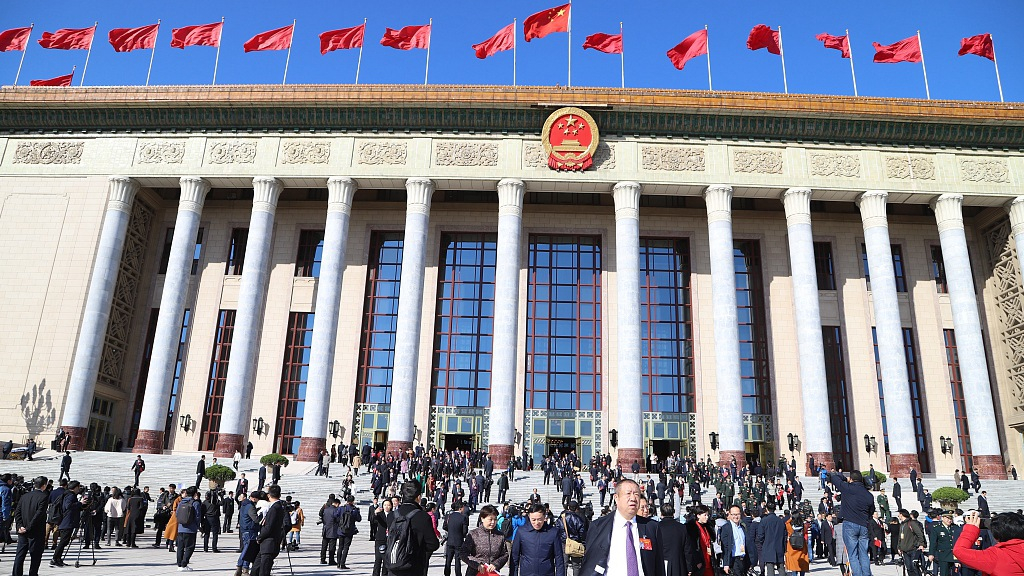

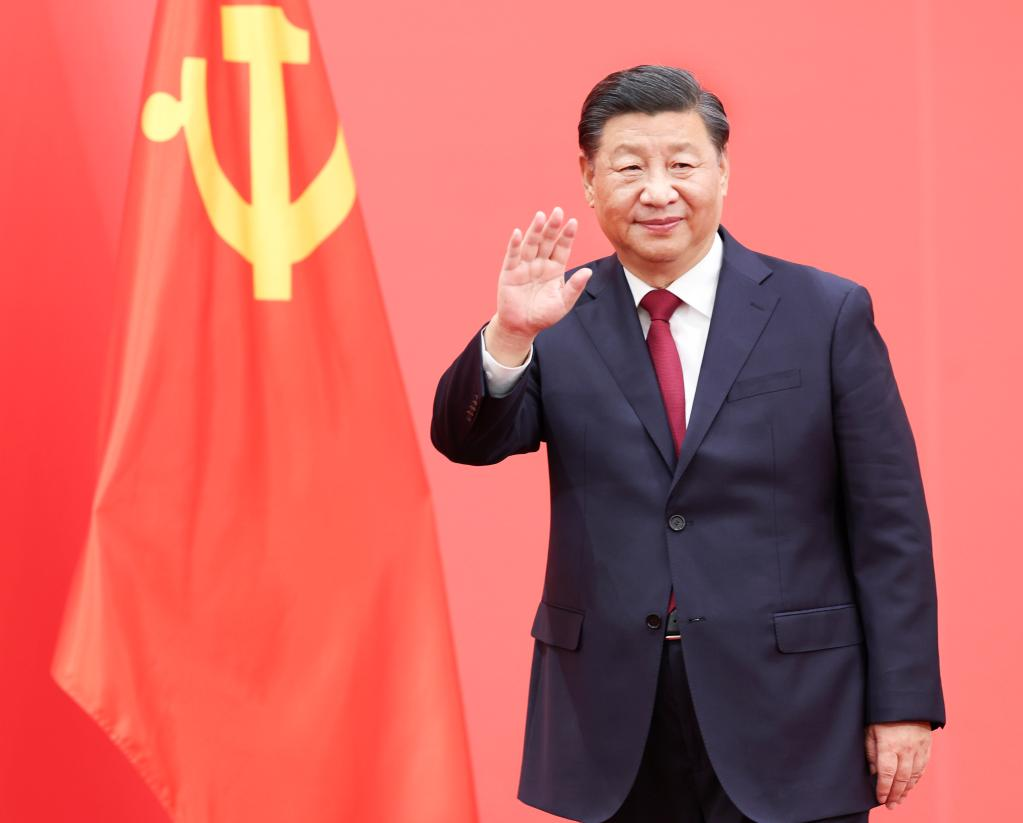



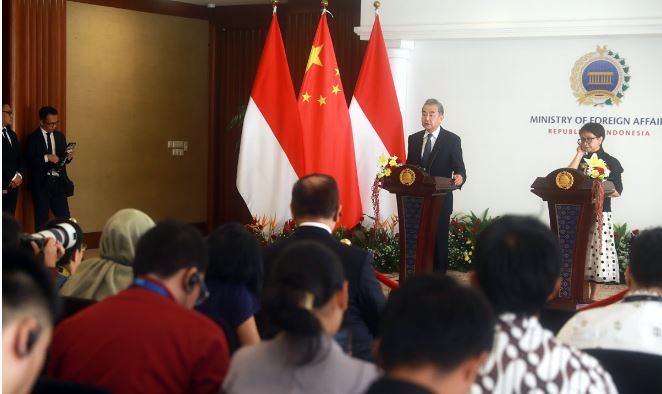
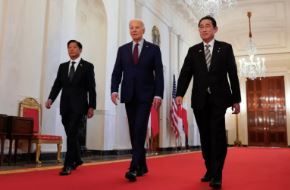
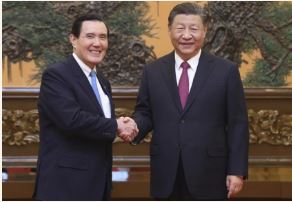
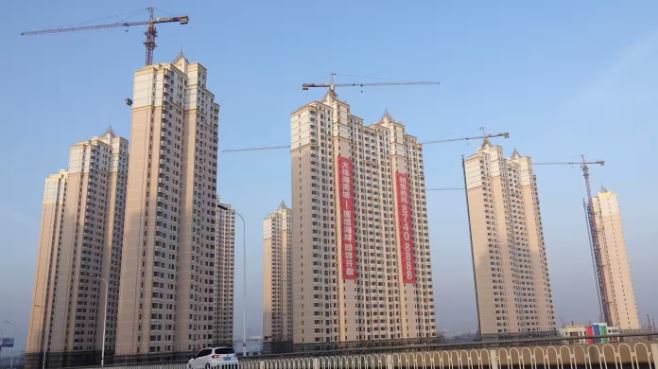
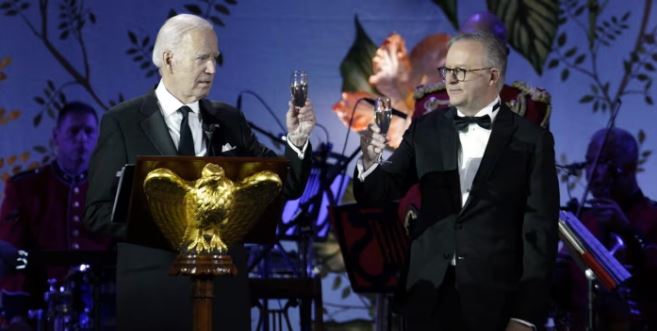

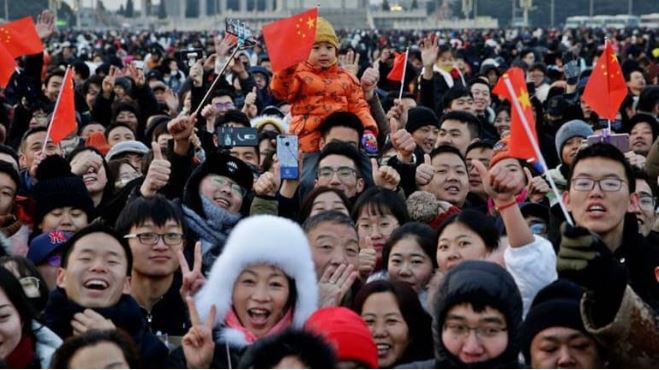
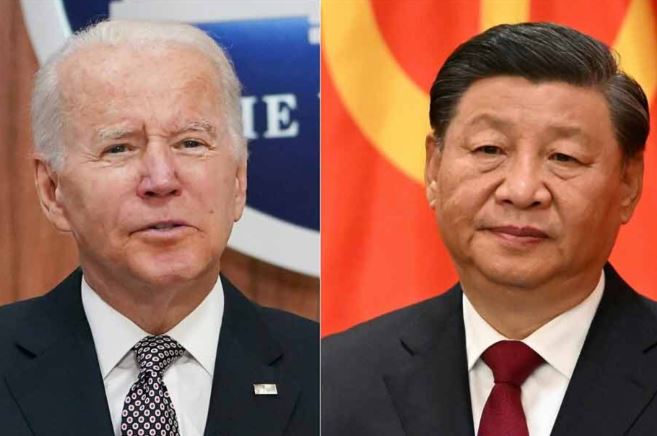
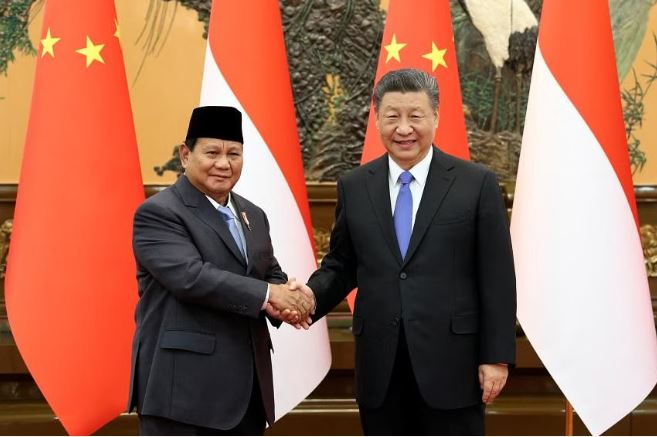
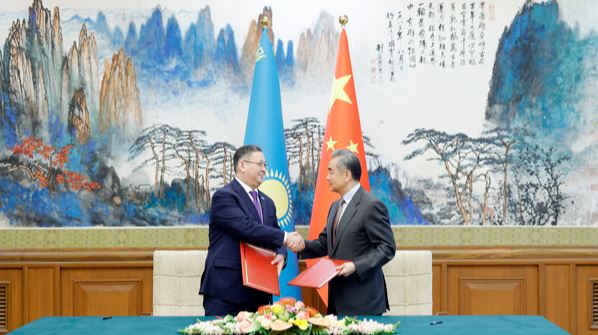
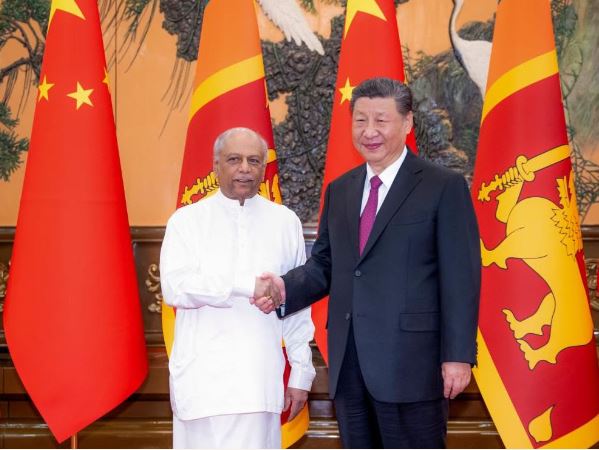
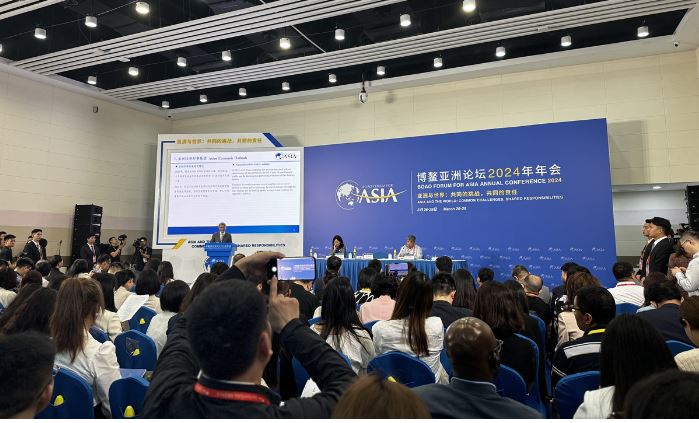
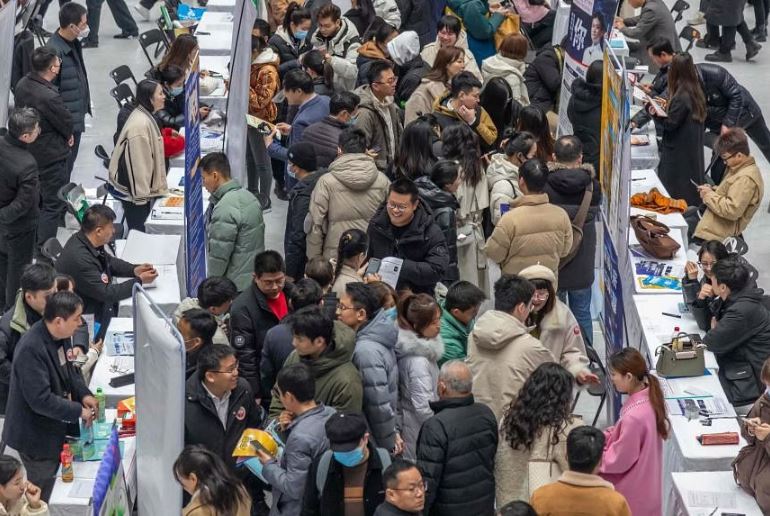

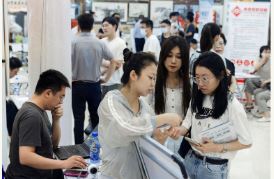


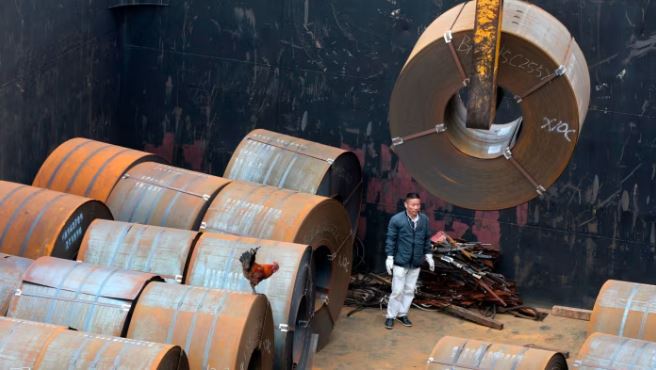
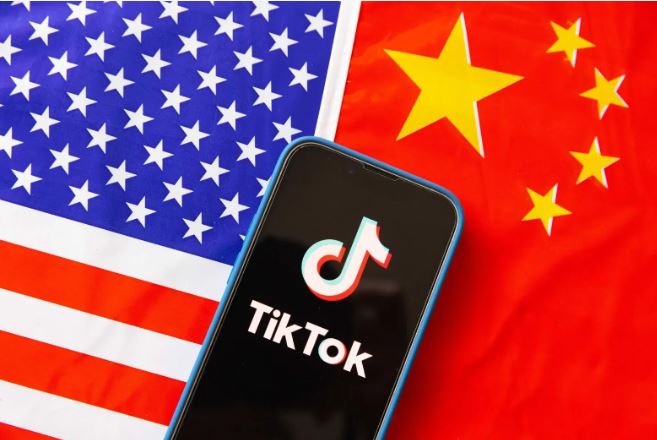
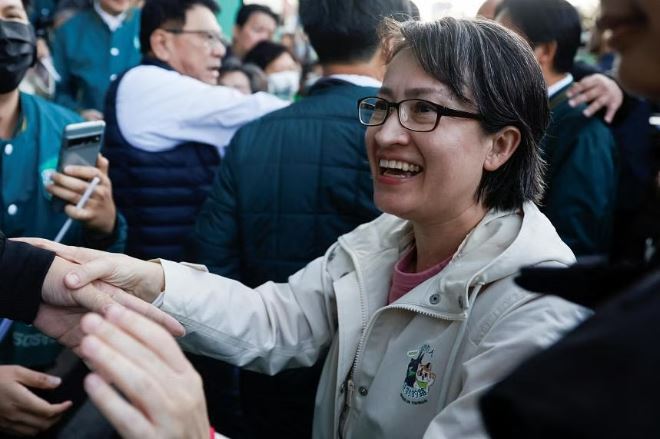
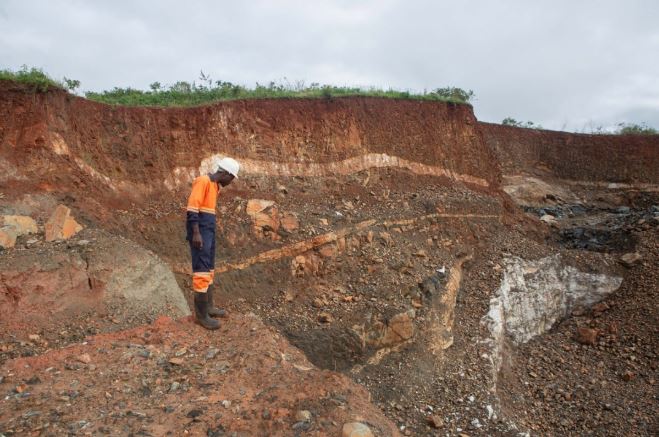
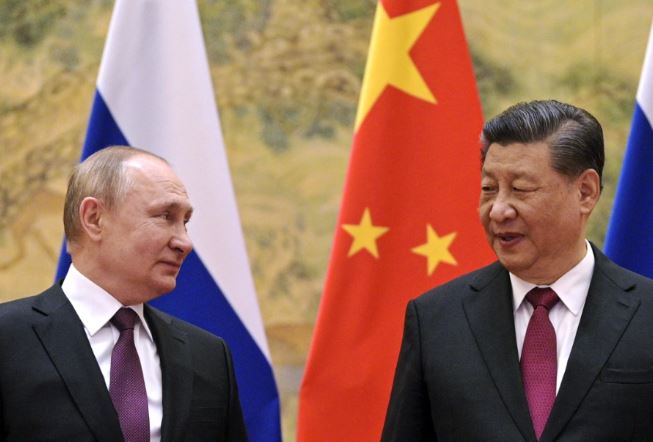
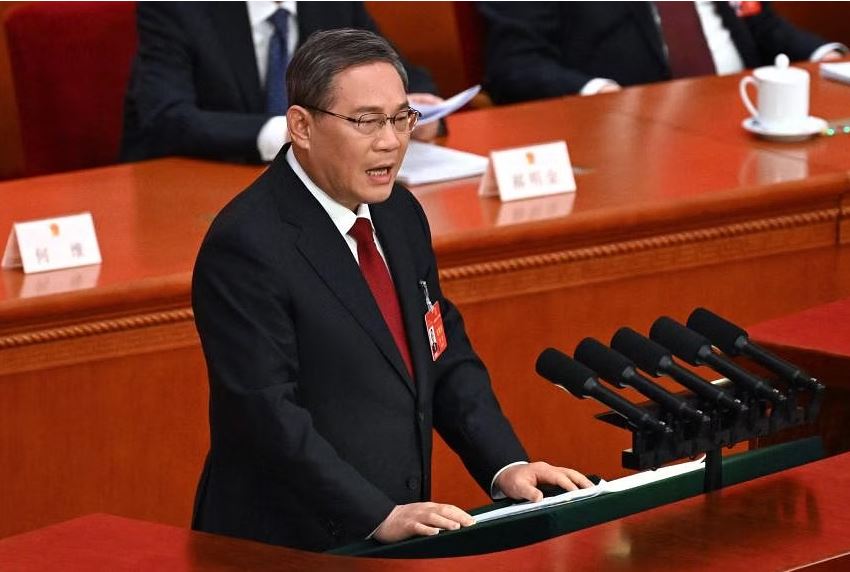
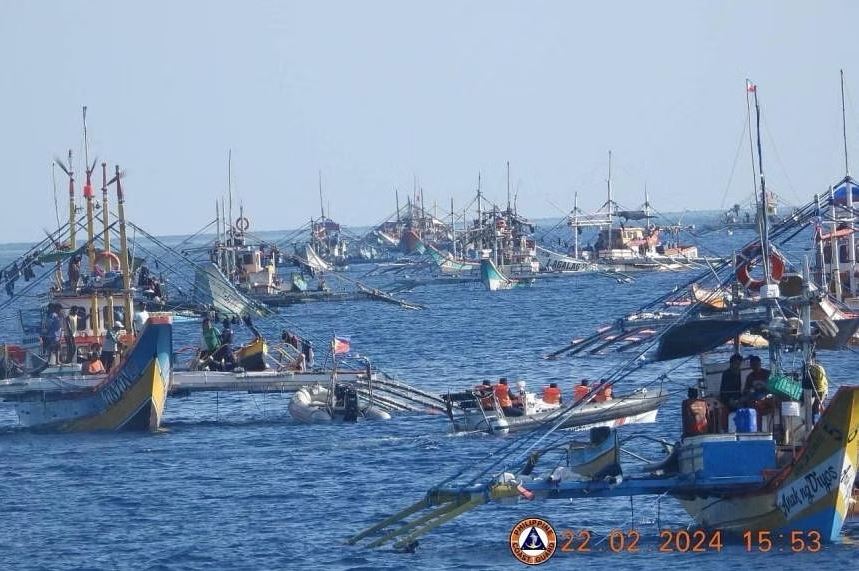
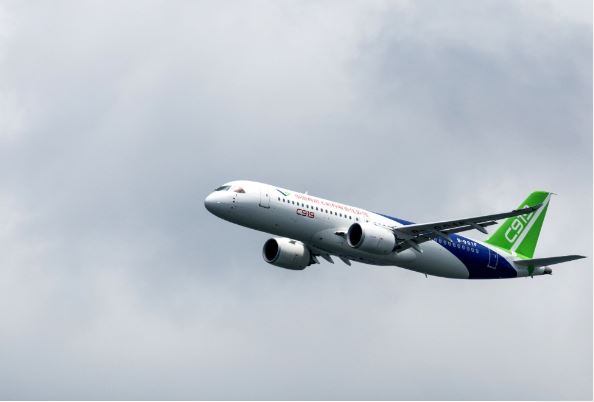
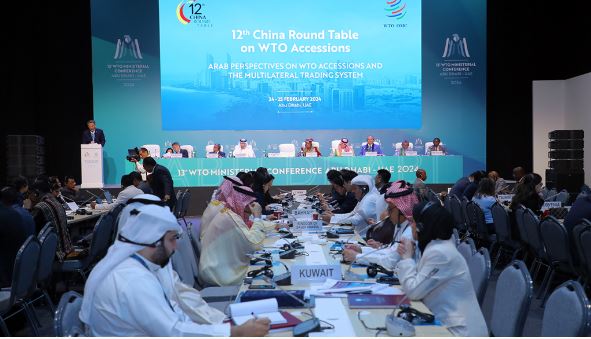
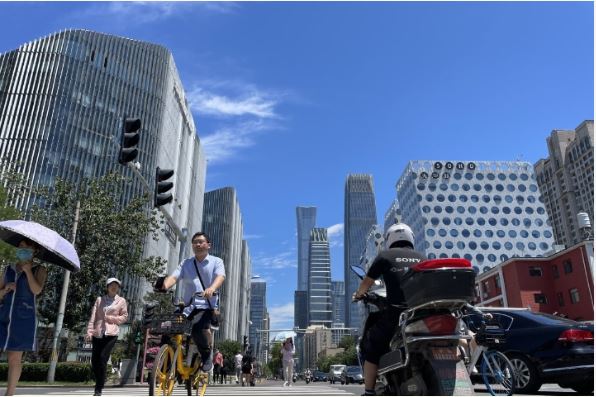
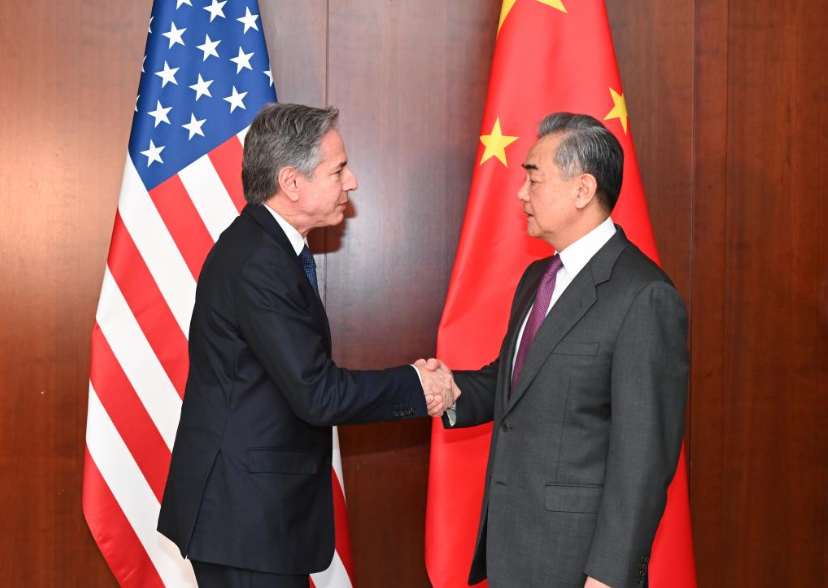
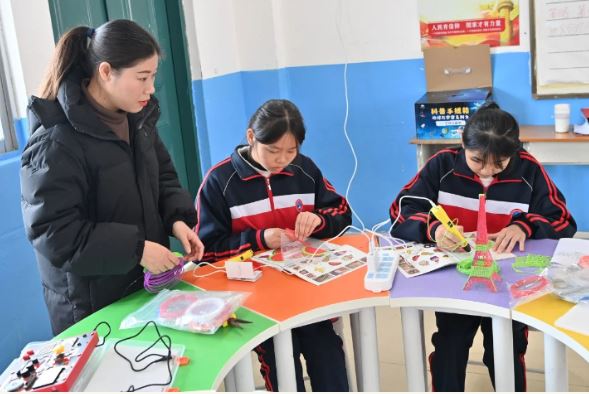
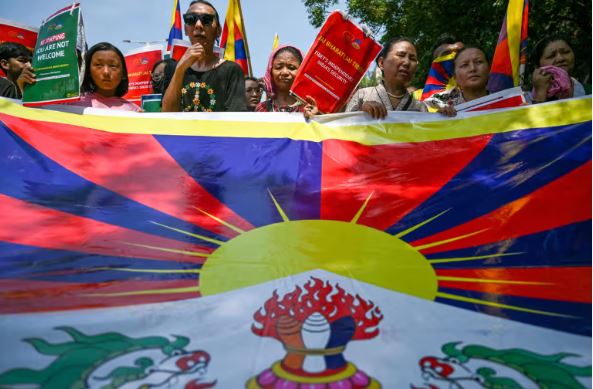
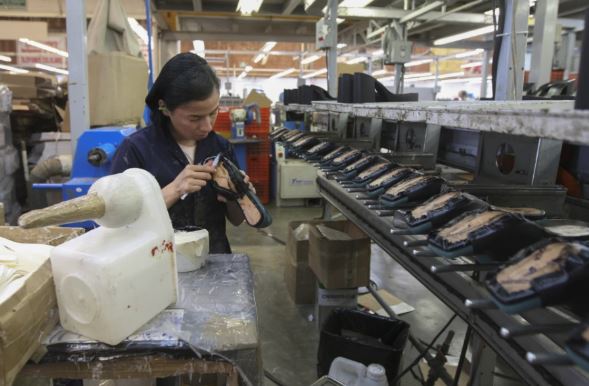
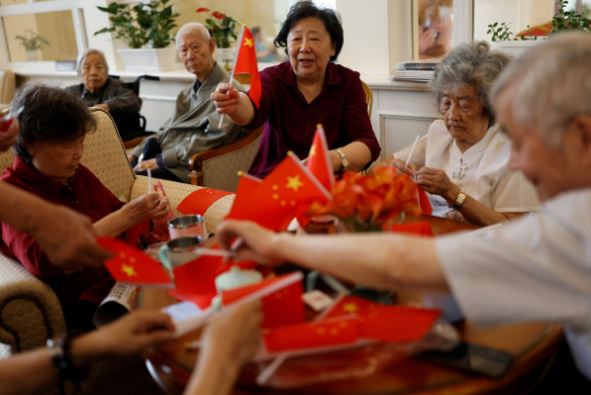
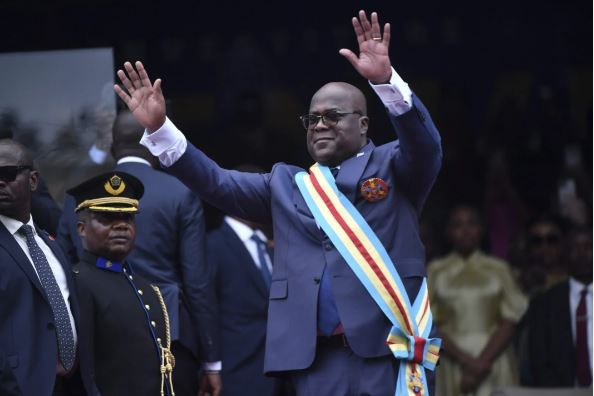

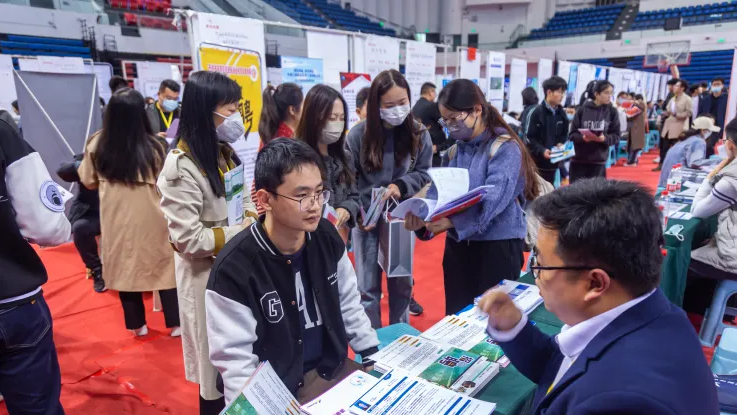
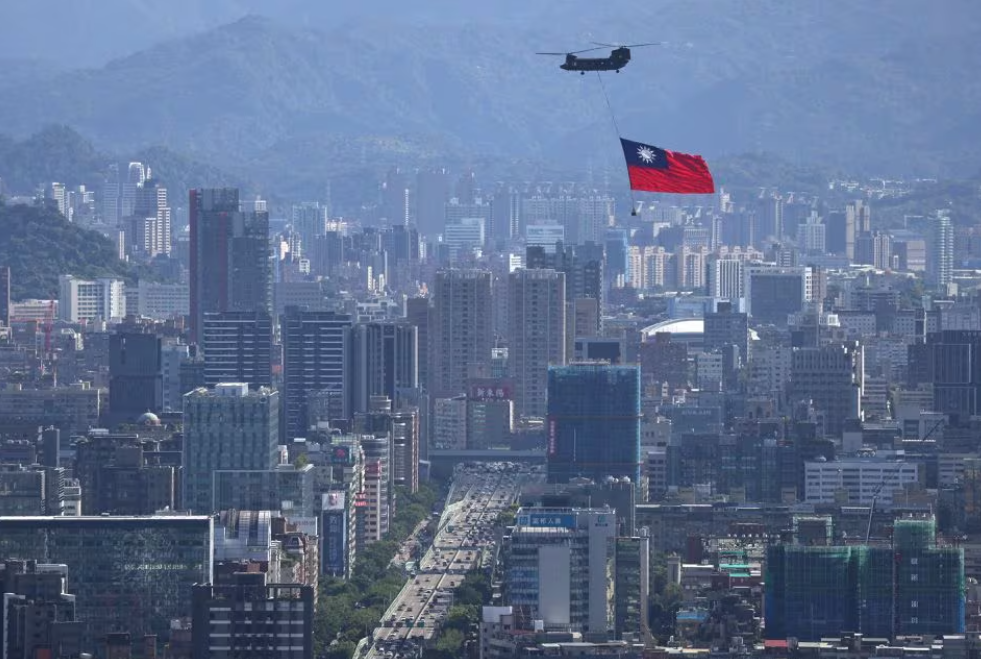
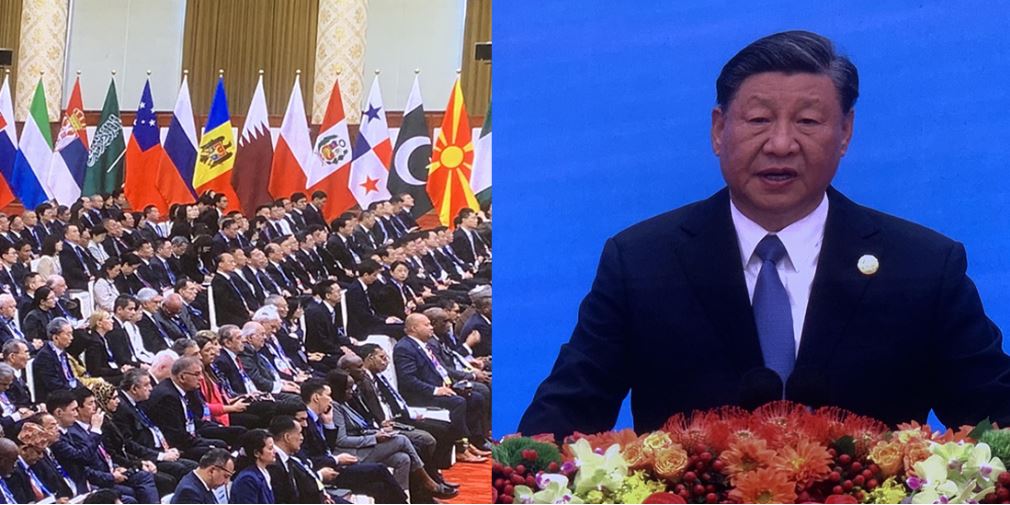
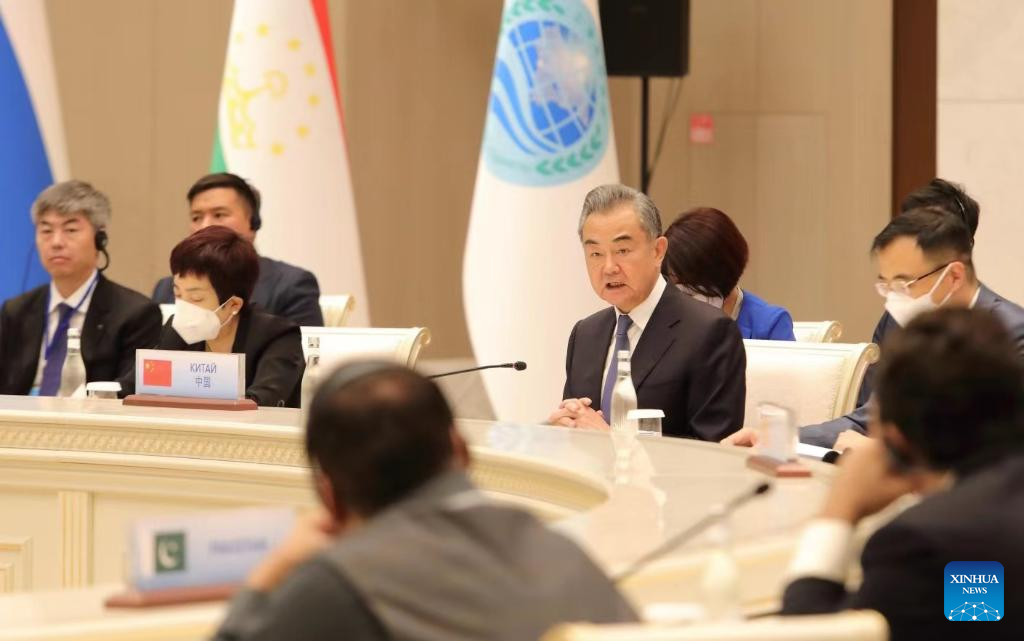
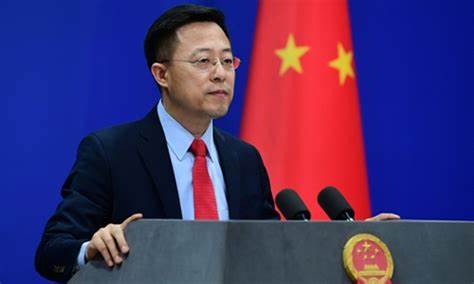
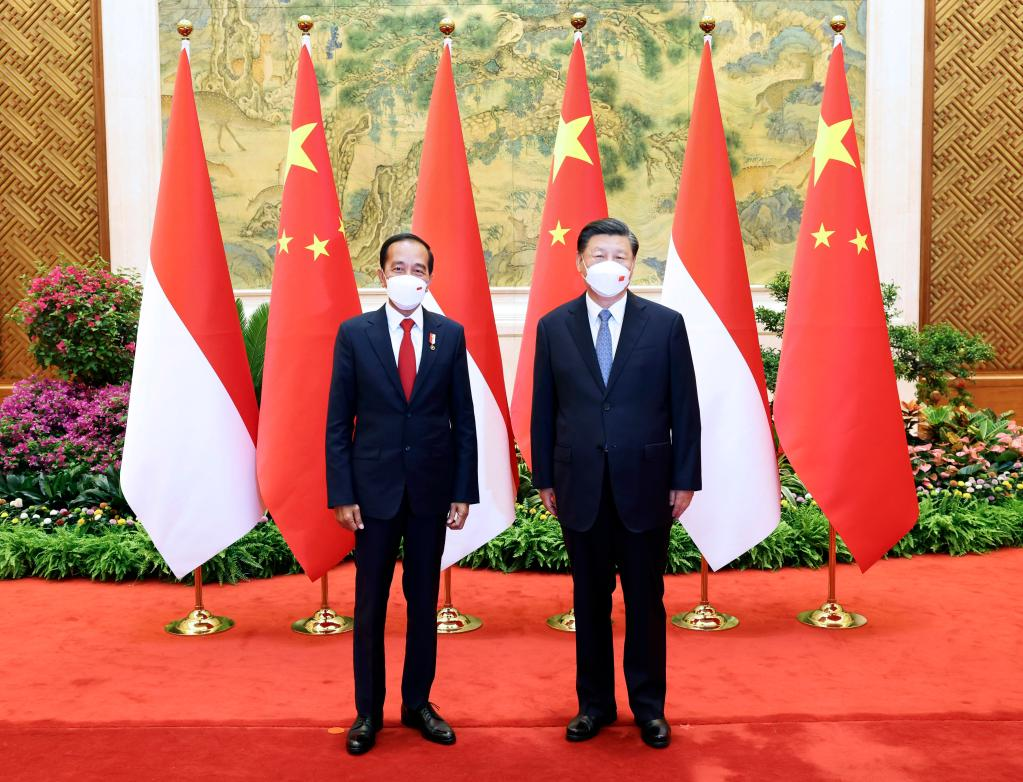
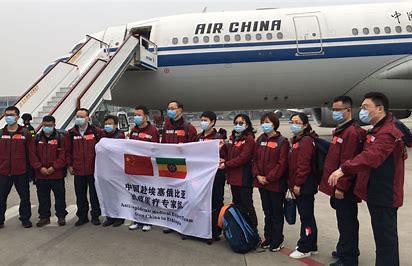
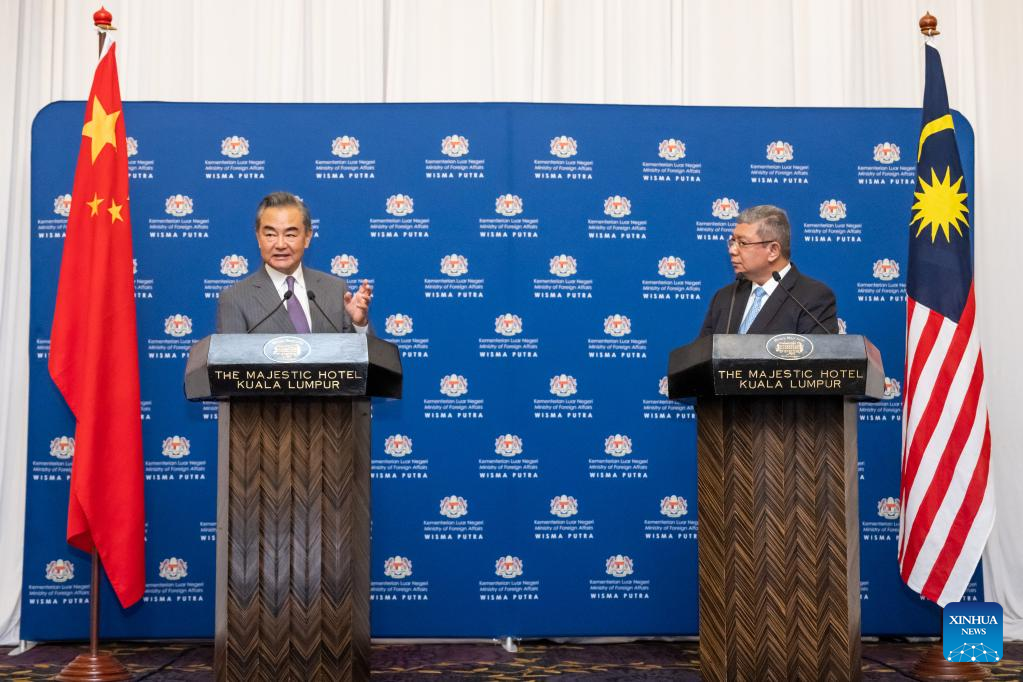
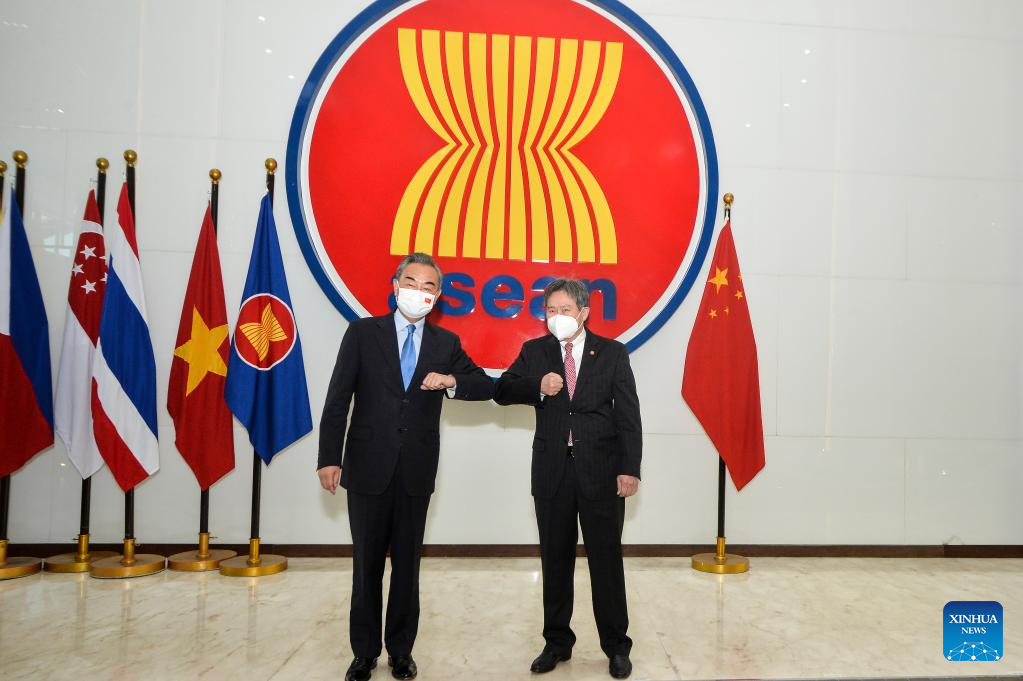
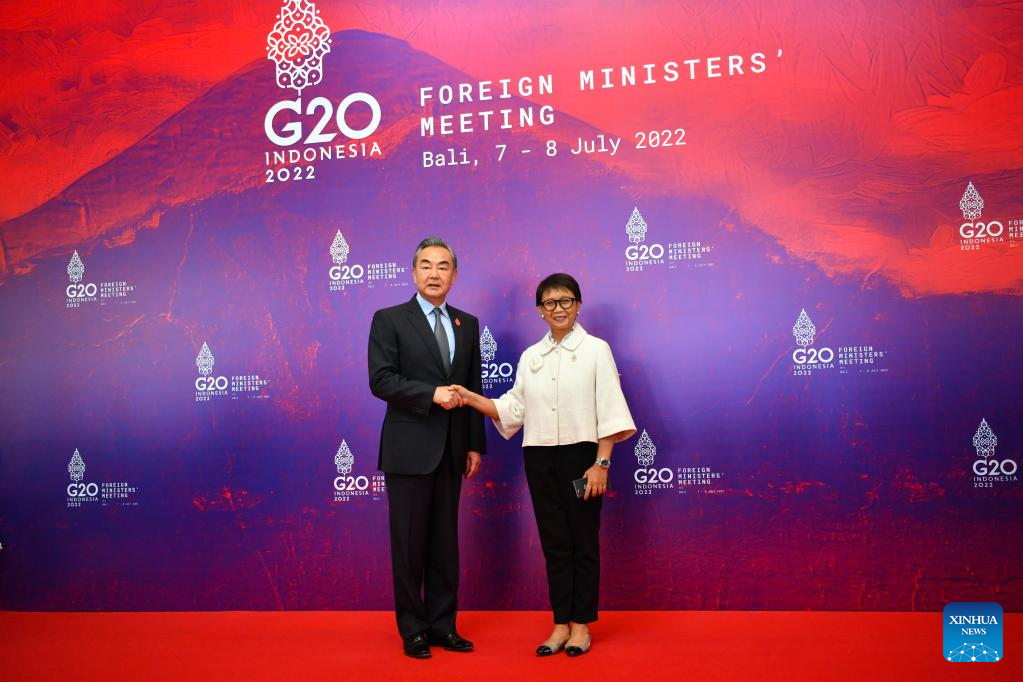
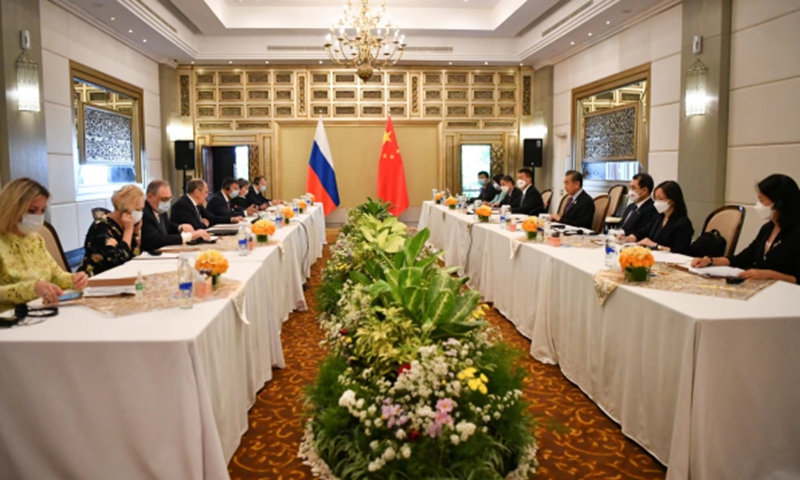


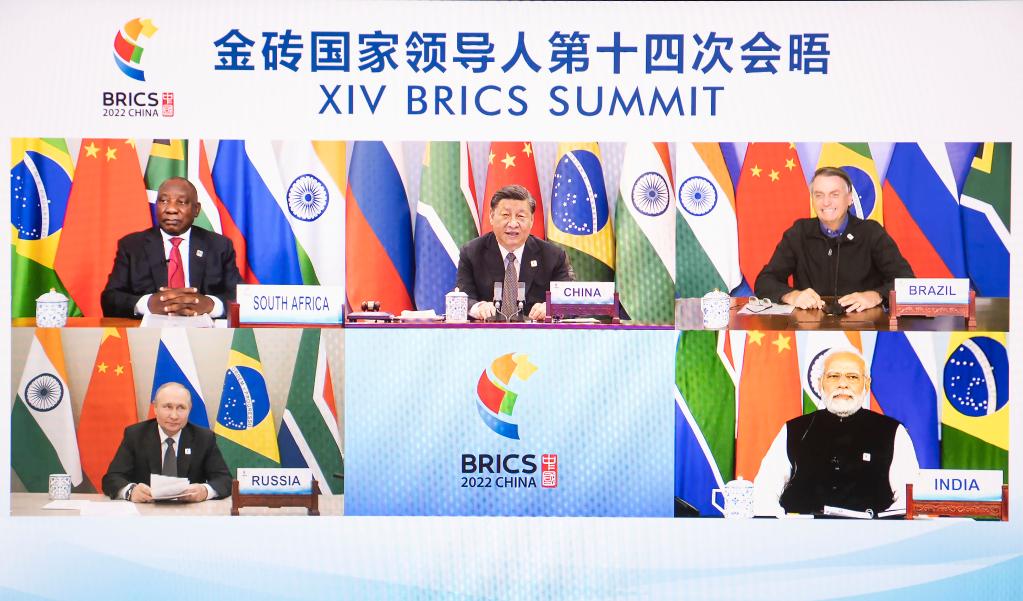
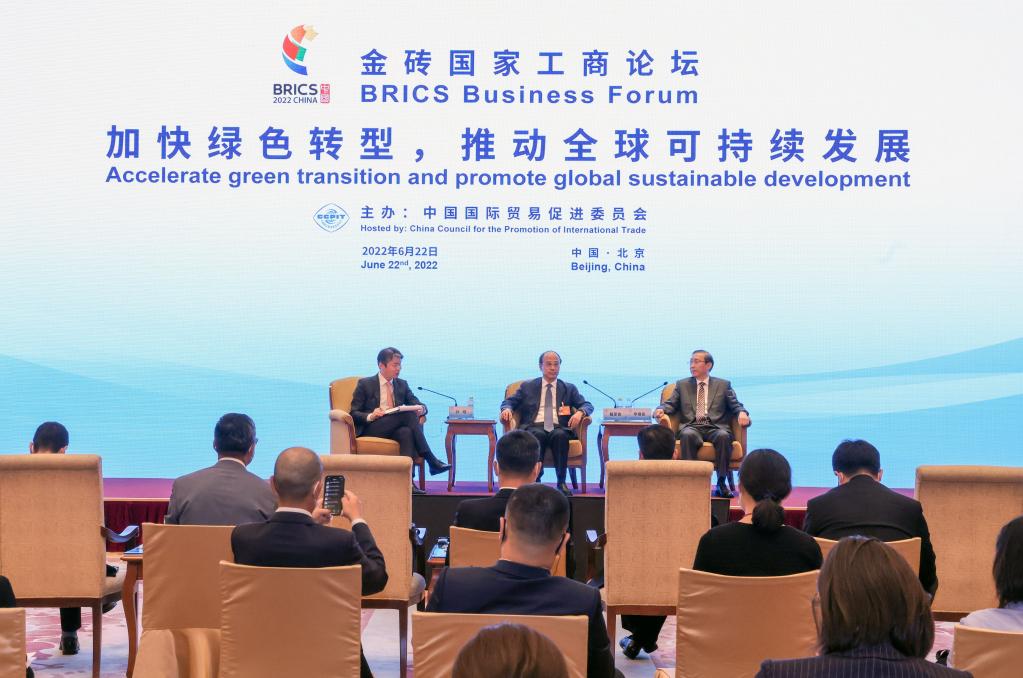
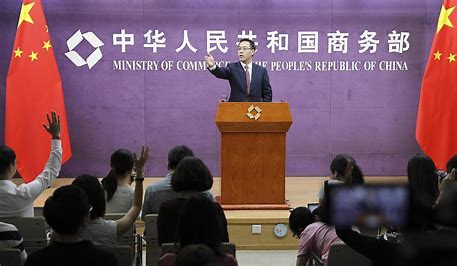
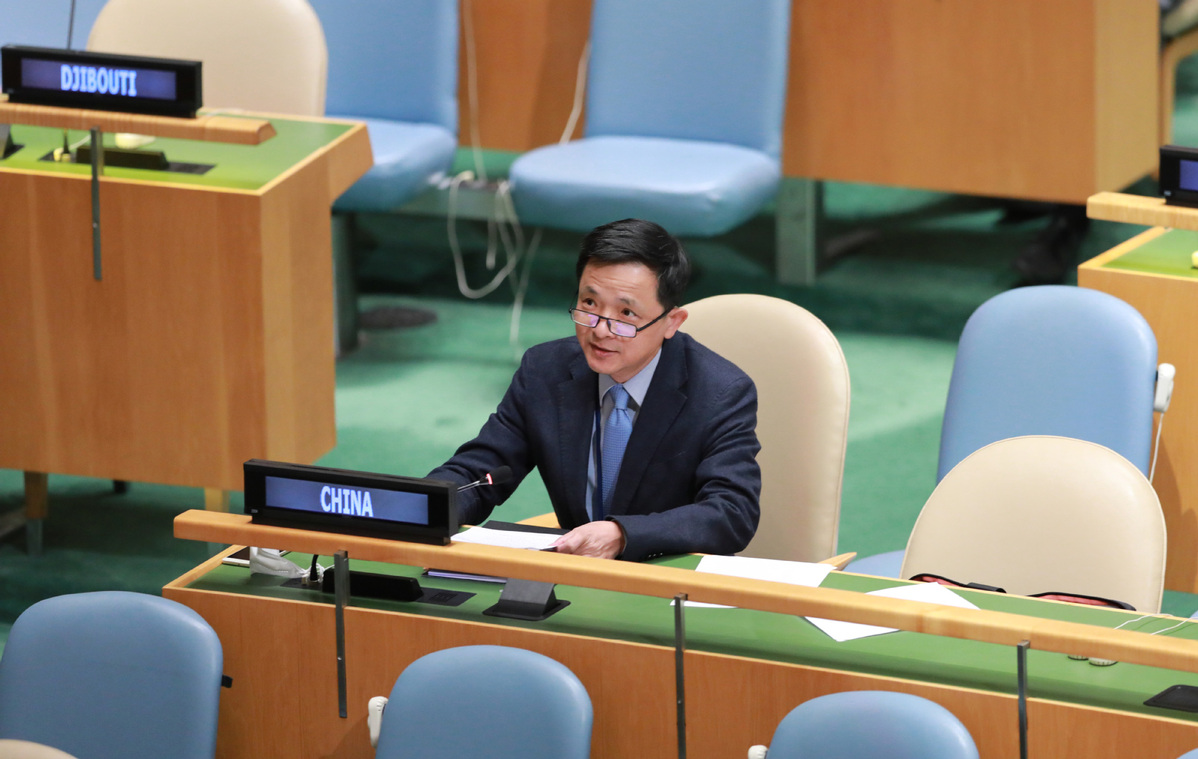
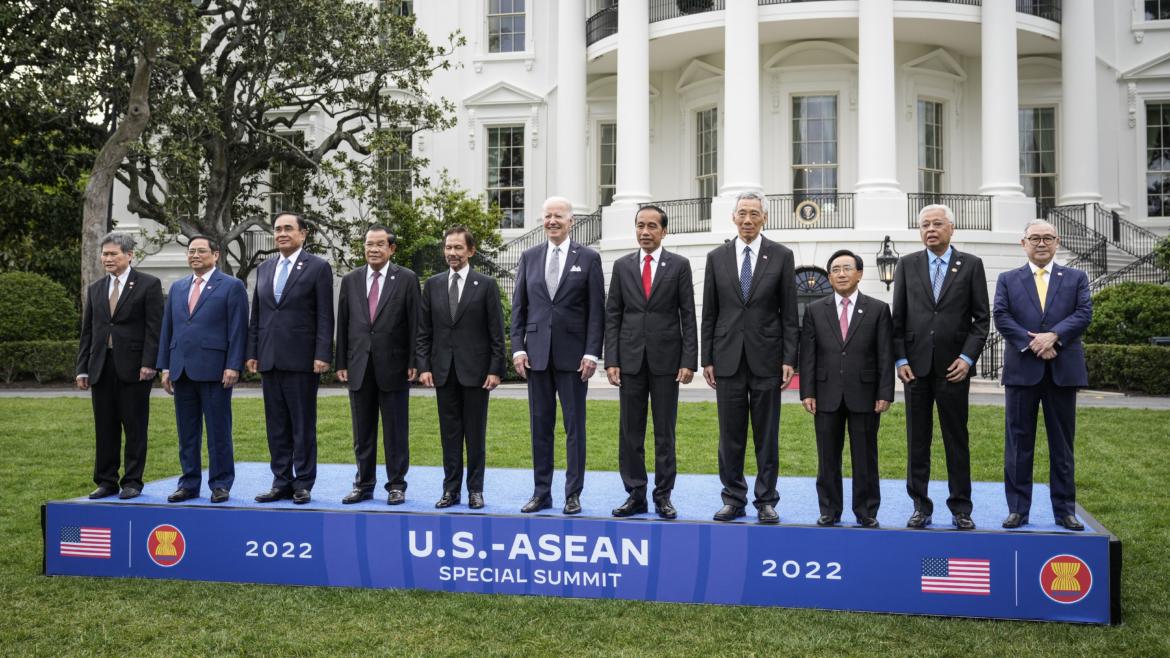
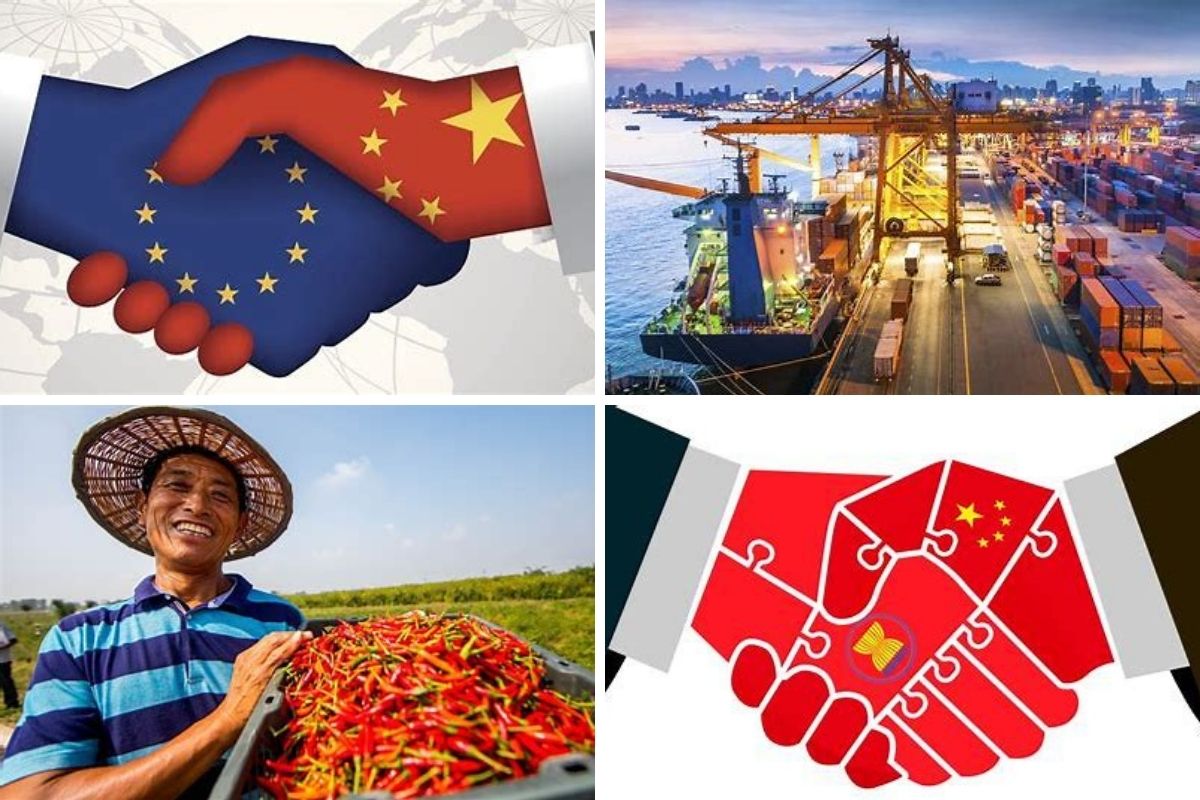

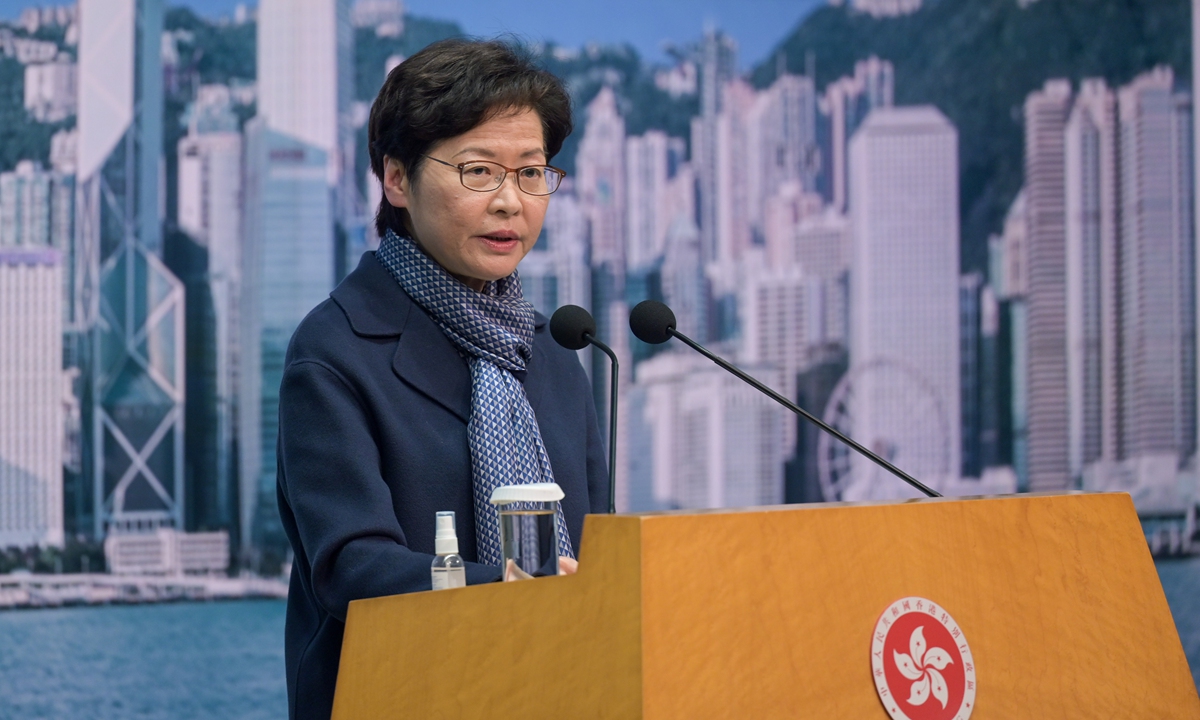
.png)
.jpg)
.jpg)
.jpg)
.jpg)
.jpg)
.jpg)
.jpg)
.jpg)
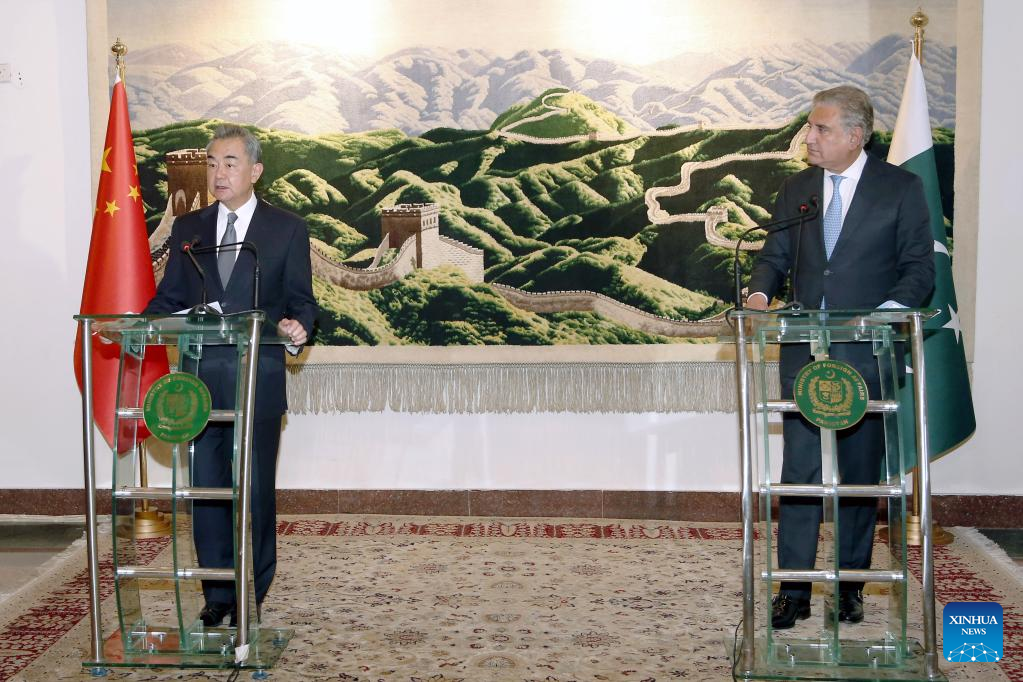
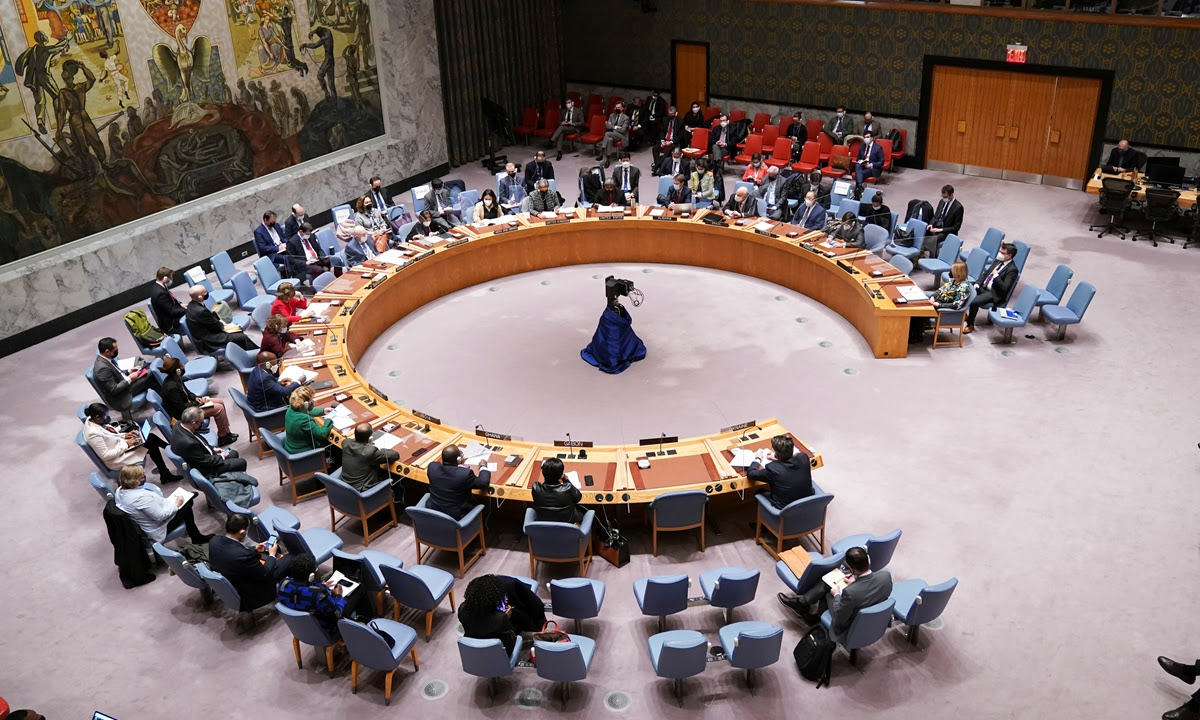
.jpg)
.png)
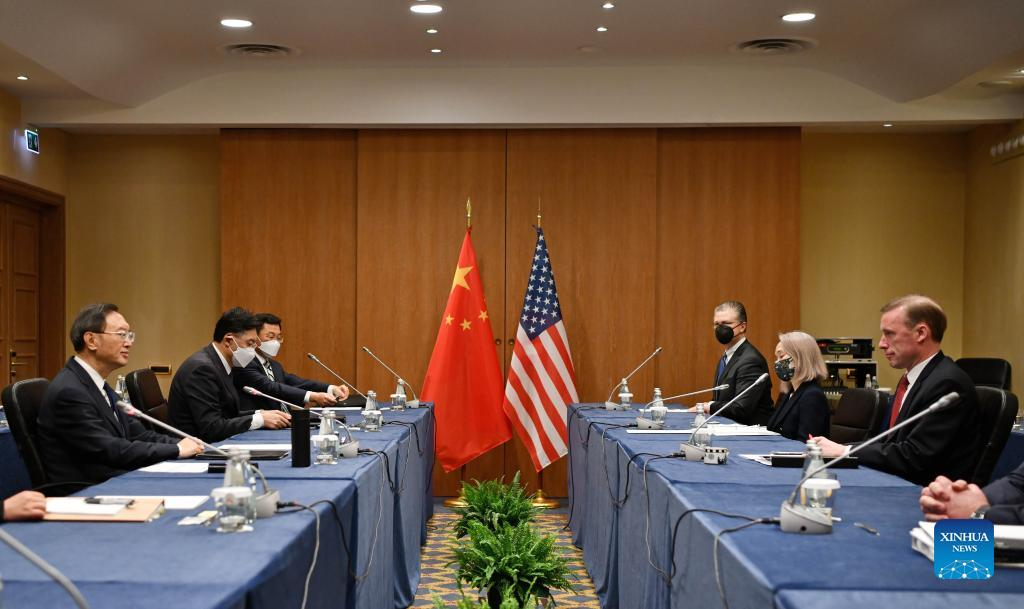
.jpg)
.jpg)
.jpg)
.jpg)
.jpg)
.jpg)
.jpg)

.jpg)
.jpg)
.jpg)
.jpg)
.jpg)
.jpg)
.jpg)
.jpg)
.jpg)
.png)
.jpg)
.jpg)
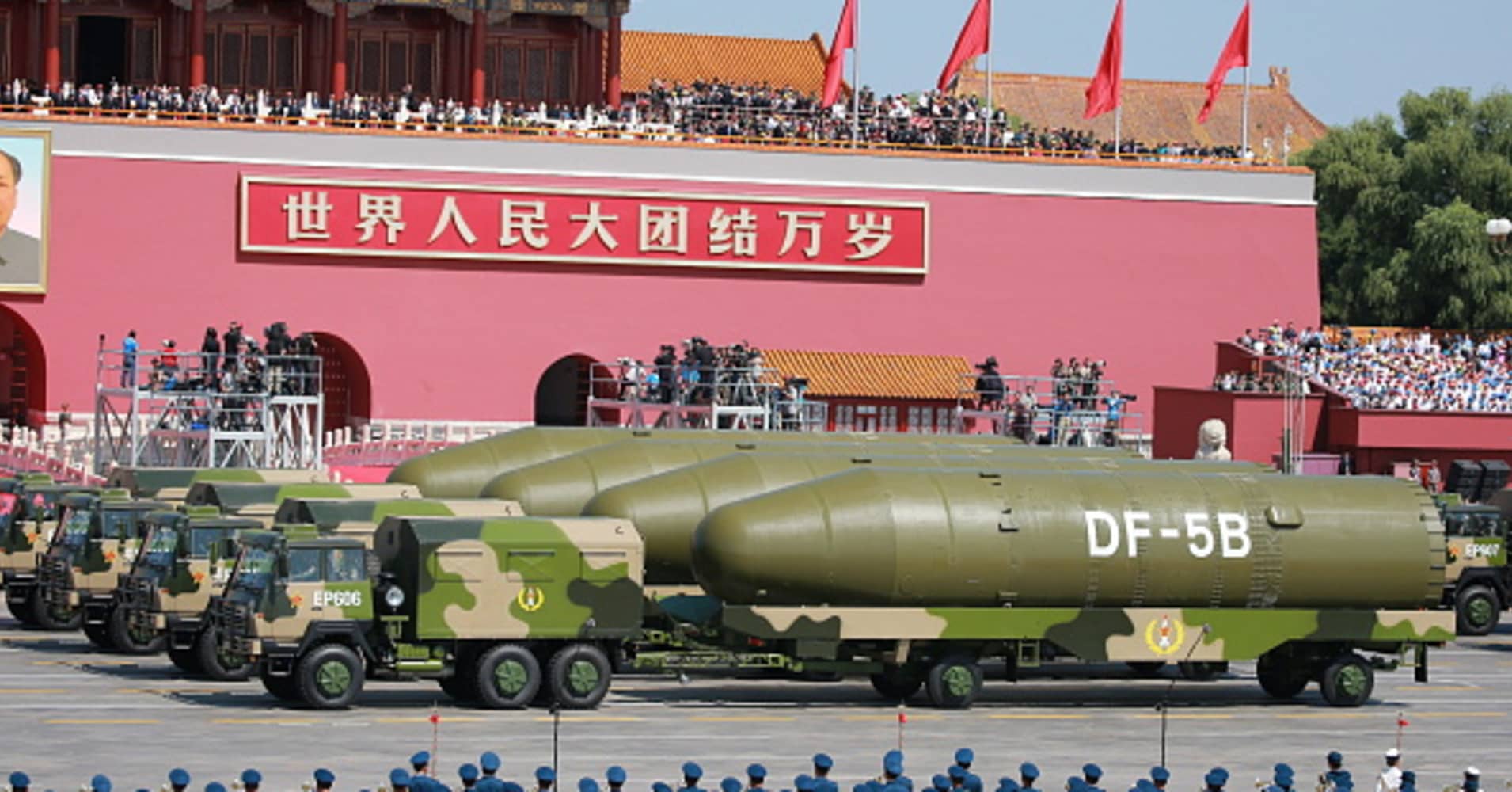
.png)
.jpg)
.jpg)
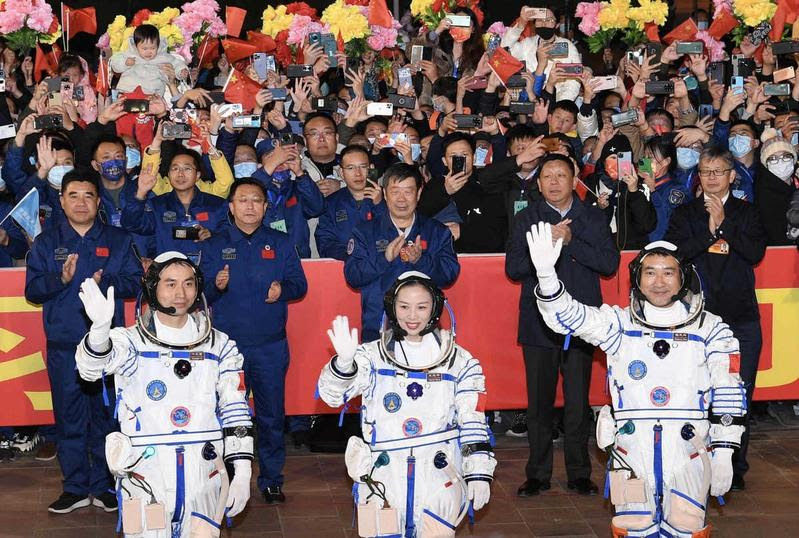

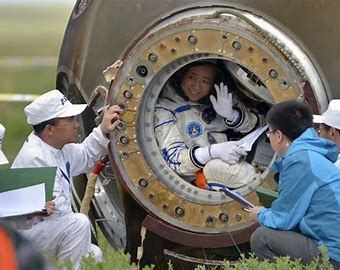

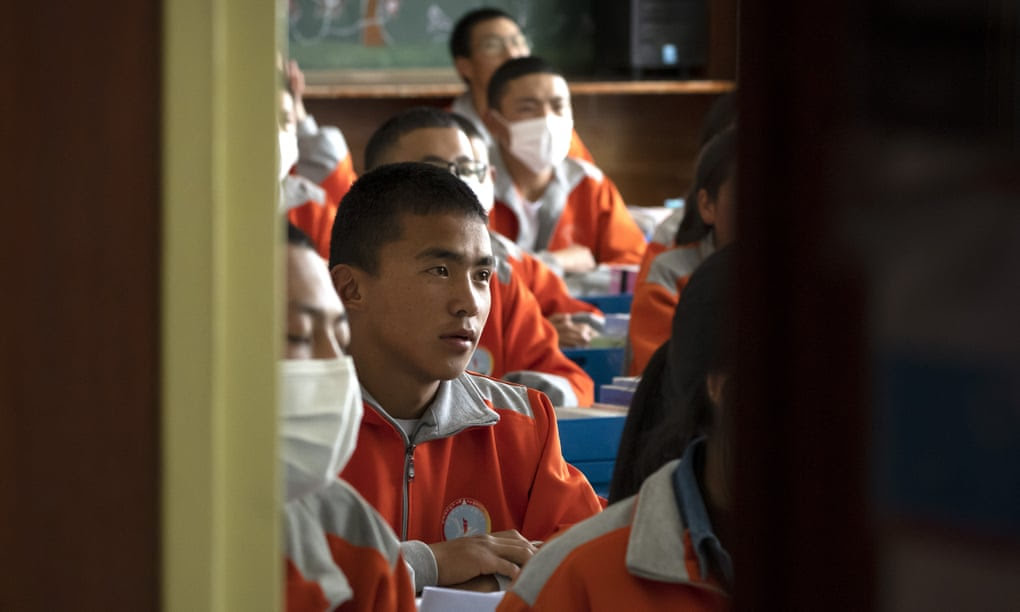
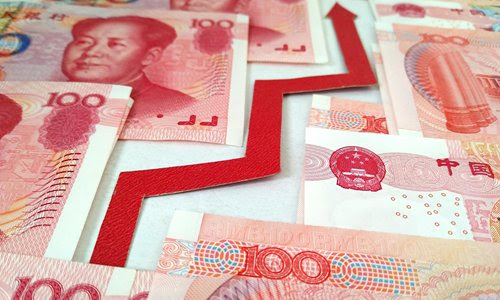
.jpg)
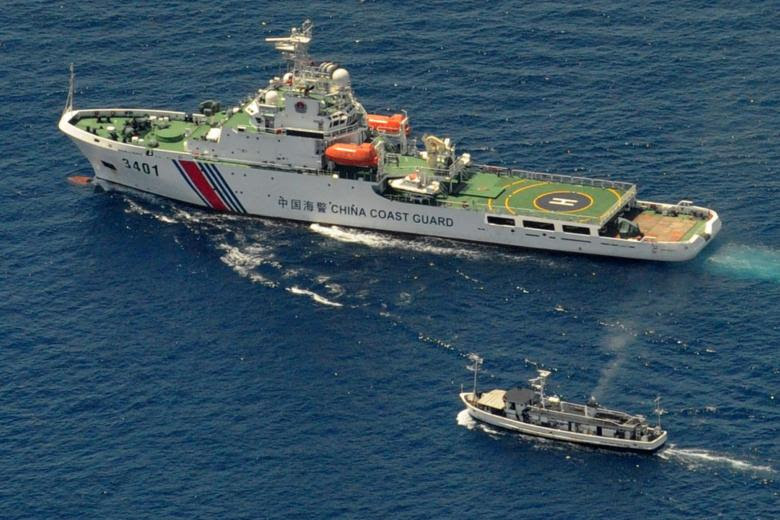
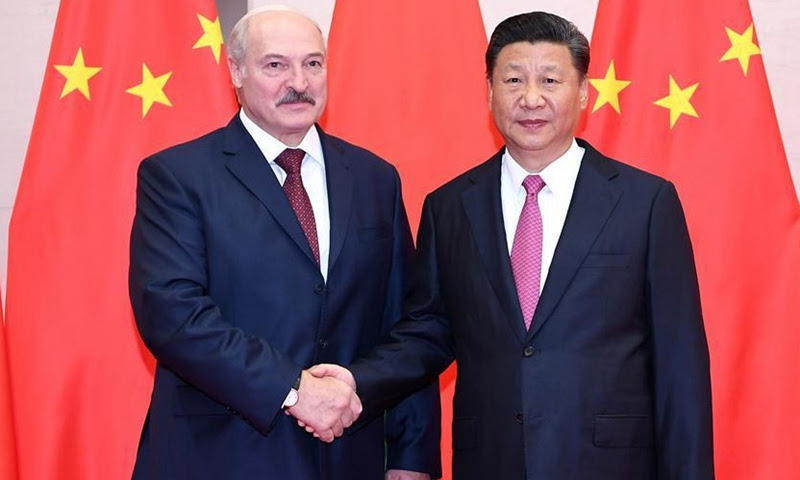
.jpg)
.jpg)
.jpg)
.jpg)
.jpg)
.jpg)
.jpg)
.jpg)

.jpg)
.jpg)
.jpg)
.jpg)
.jpg)
.jpg)
.jpg)
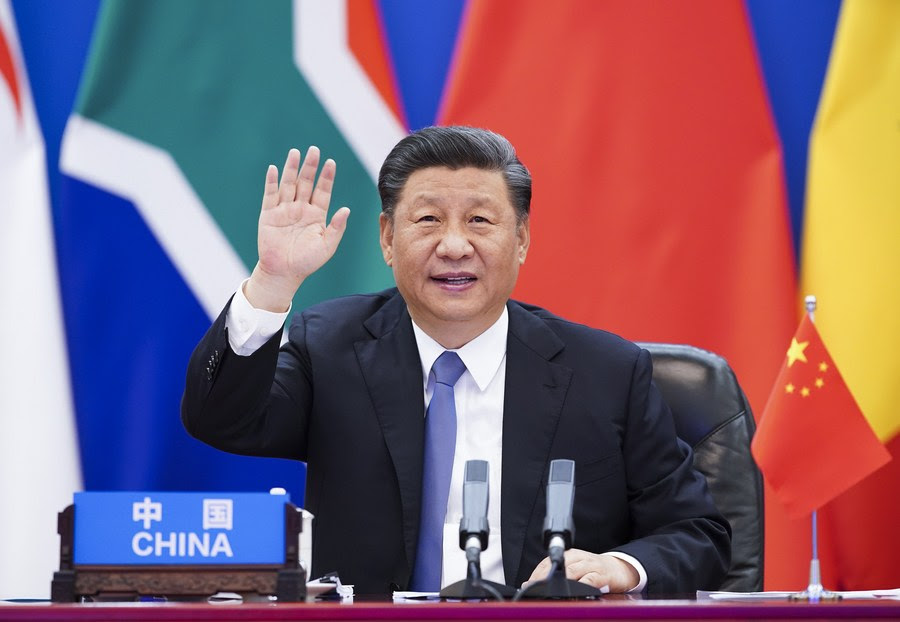
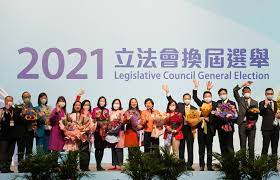
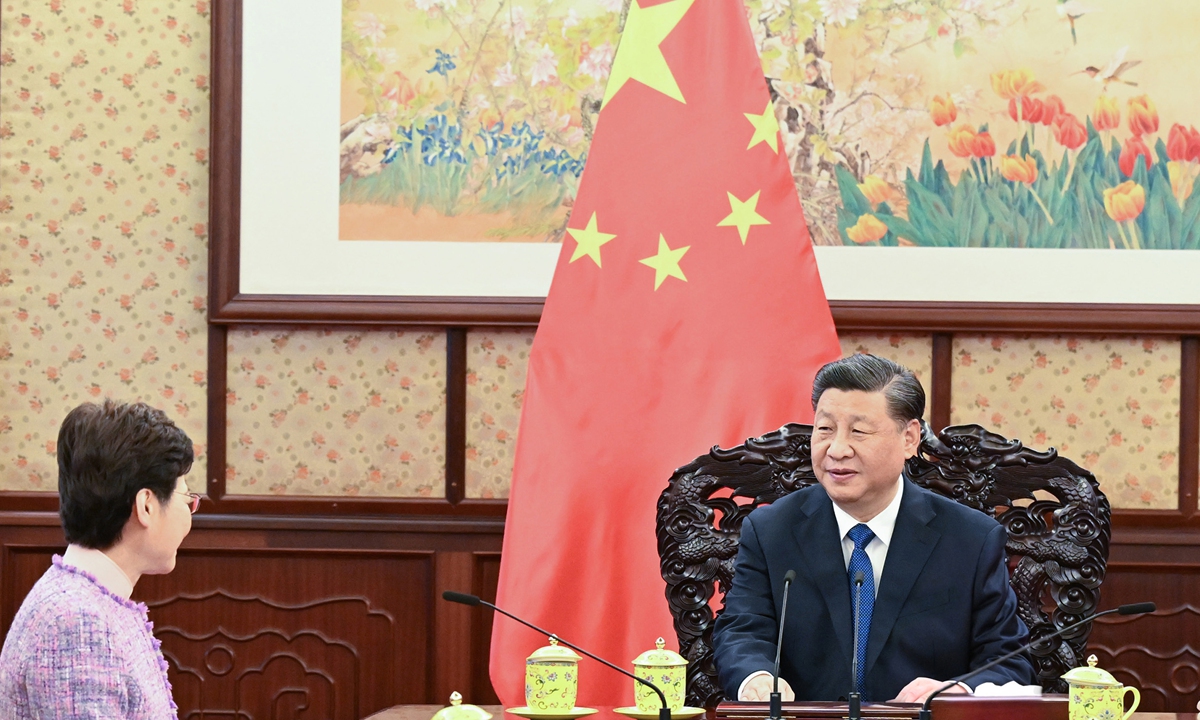

.jpeg)
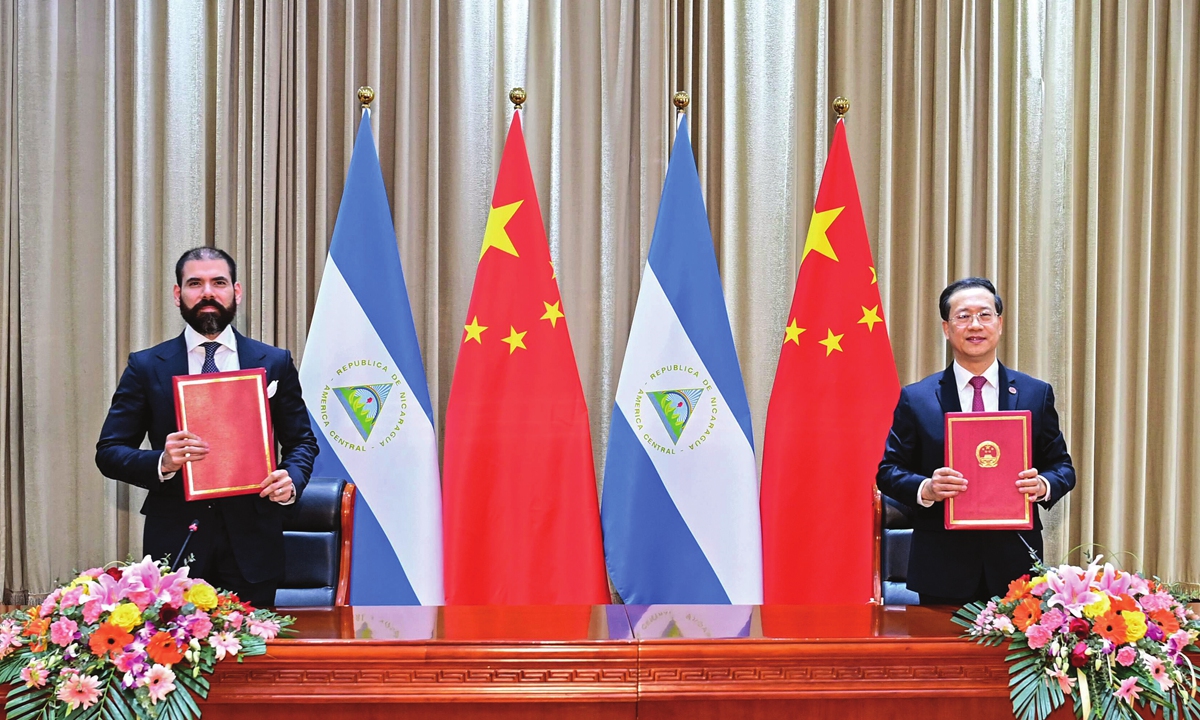


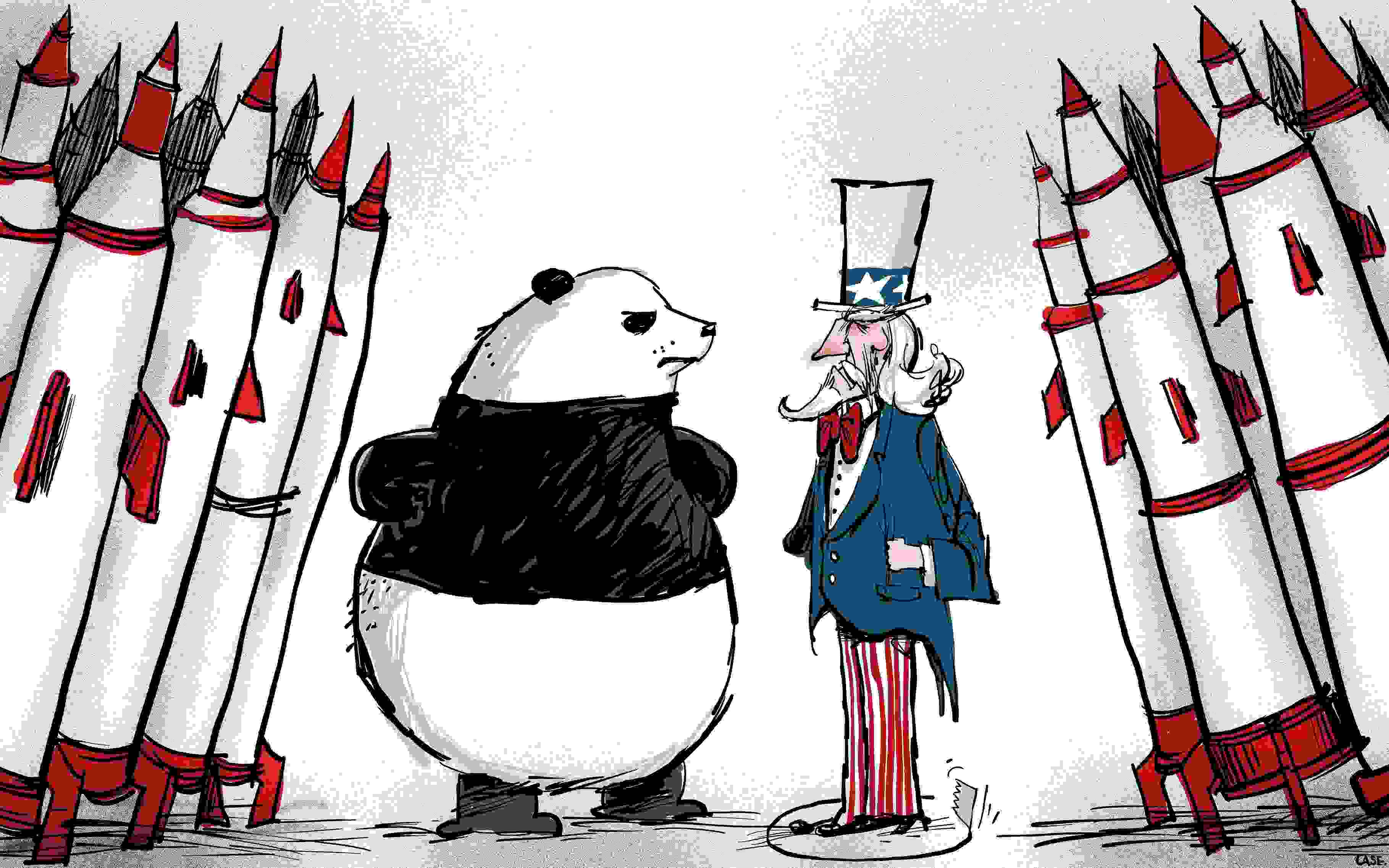
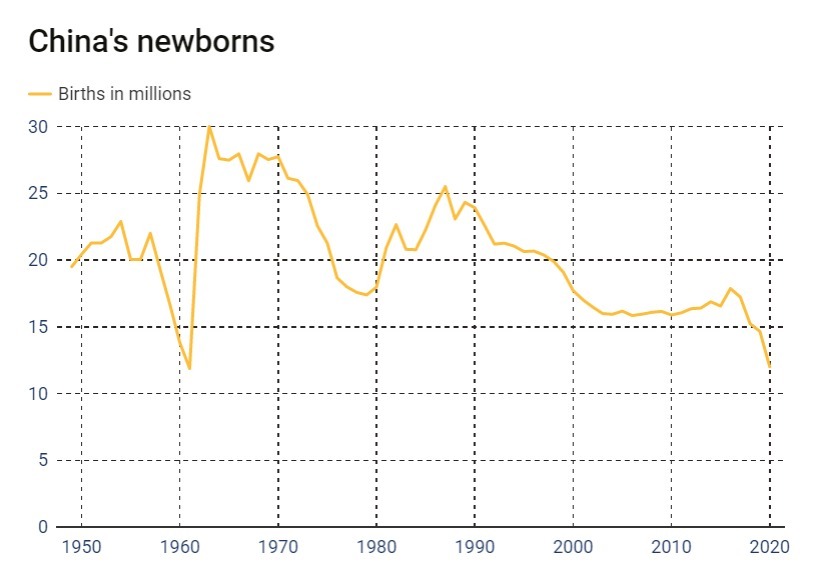
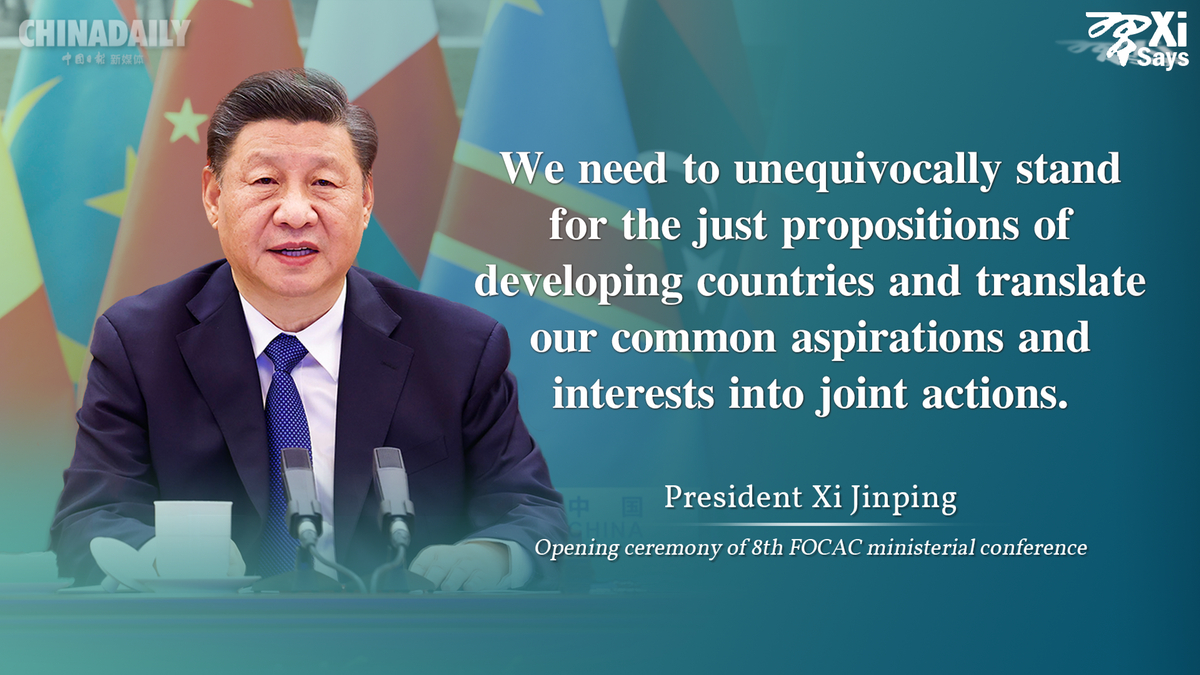
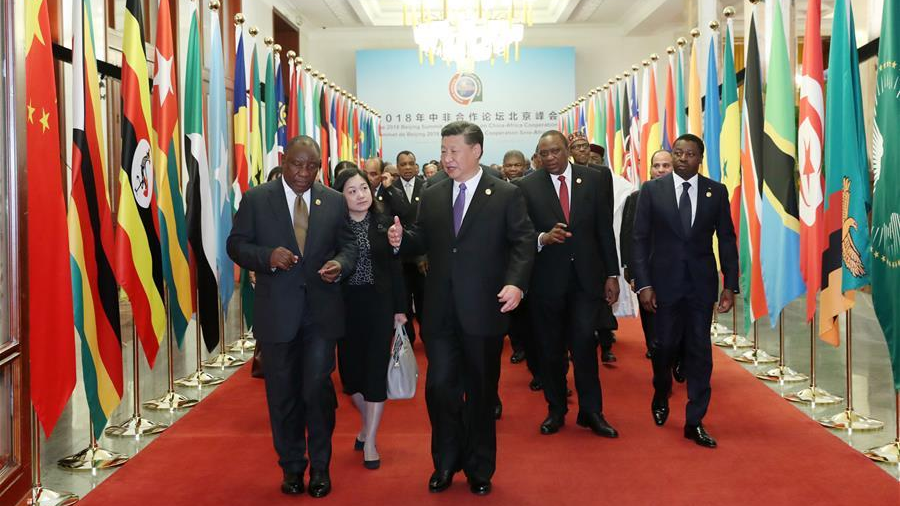

.jpeg)