Photo : Reuters
Photo : Reuters
In Brief
INTERNAL
Extreme weather events in China disrupt its industrial output and retail sales
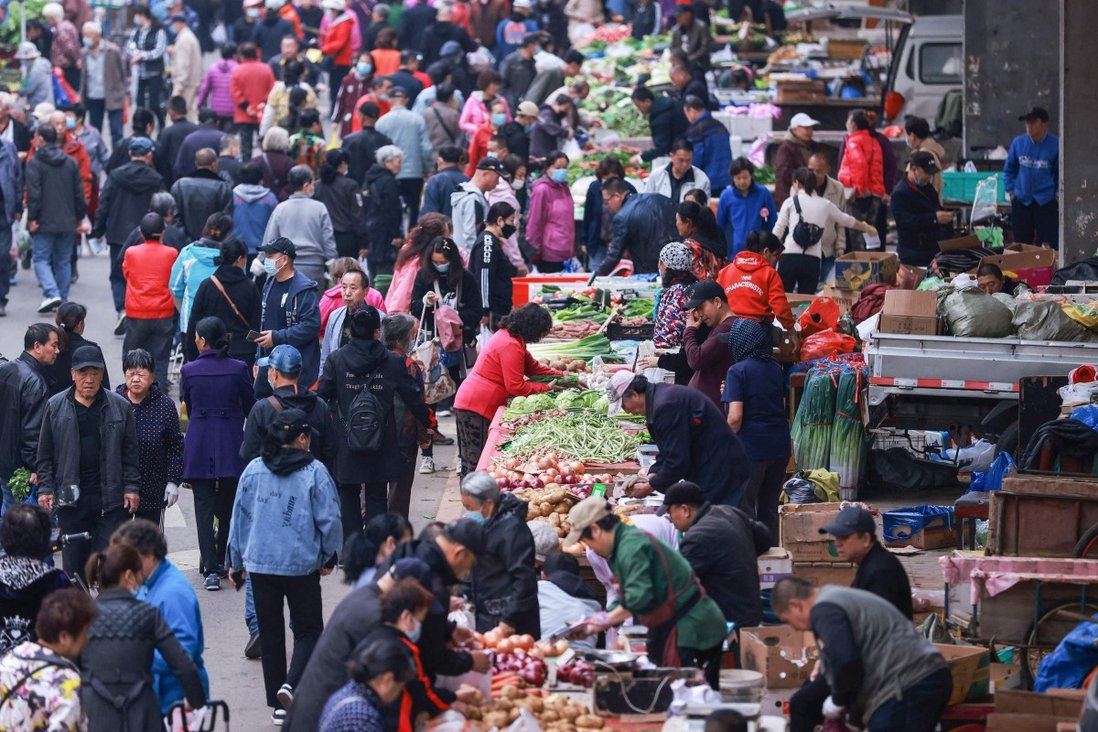
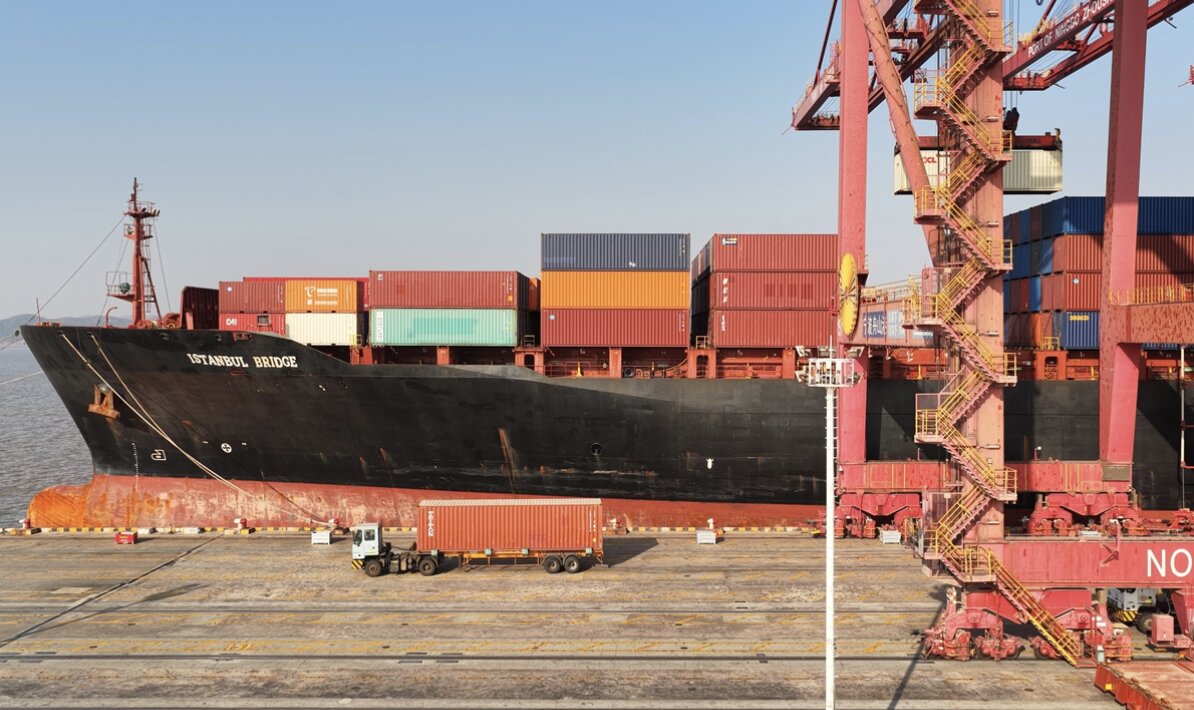
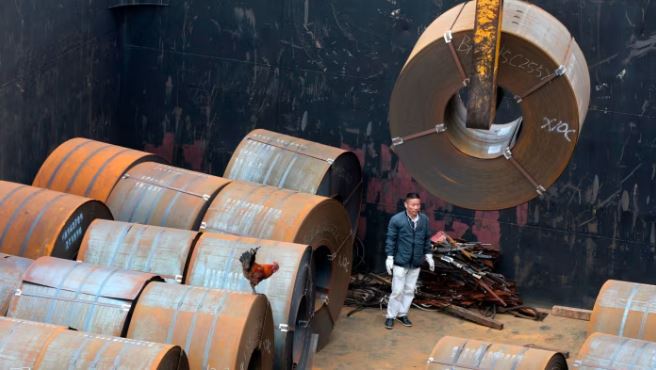
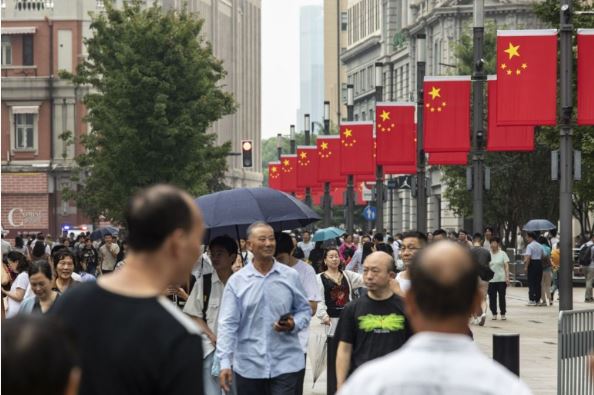
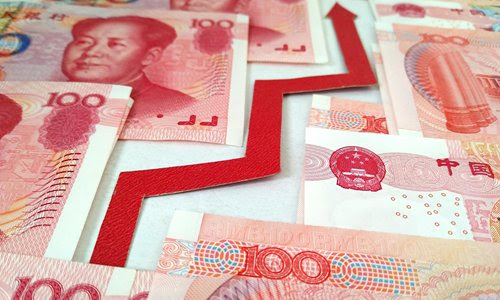
On 17 August, Reuters reported that China’s industrial output and retail sales are at a three-and-a-half-year low, following disruptions caused by extreme weather events. In a report released by China’s National Bureau of Statistics (NBS), factory output grew 4.5 percent in July, compared to 5.3 percent in June, while retail sales grew only around 0.6 percent in July, compared to 1 percent in June. NBS Spokesperson Fu Linghui stated that they are working on ‘adjustments’ to bolster domestic demand. Industry experts and analysts claim that extreme weather events have hampered industrial output and retail sales. Three typhoons struck China last month, which resulted in millions being evacuated from China’s eastern and southern manufacturing hubs. Fu added that despite these disruptions, China is still on track to achieve a growth rate between 4.5 and 5 percent this year, with exports continuing to rise month-on-month, reaching USD 100 billion in trade surplus in July.
(“China's recovery sputters as consumption, output lose steam,” Reuters, 17 August 2026)
https://www.reuters.com/world/china/chinas-industrial-output-slows-july-retail-sales-miss-forecasts-2026-08-17/
Editorial: "China’s New Laws Are Ensnaring Western Companies," Foreign Policy, 17 August 2026
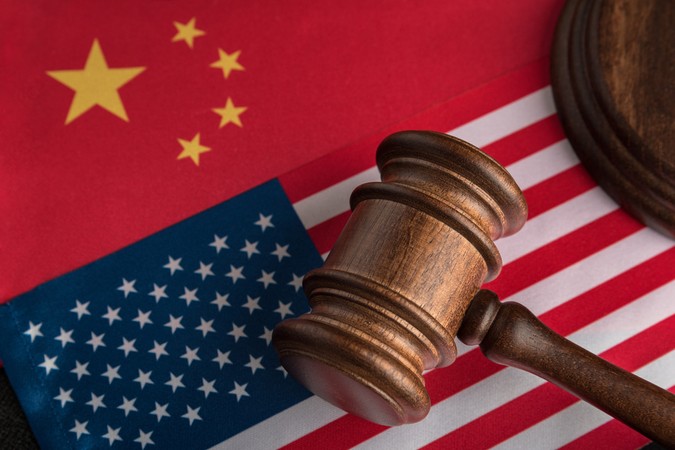
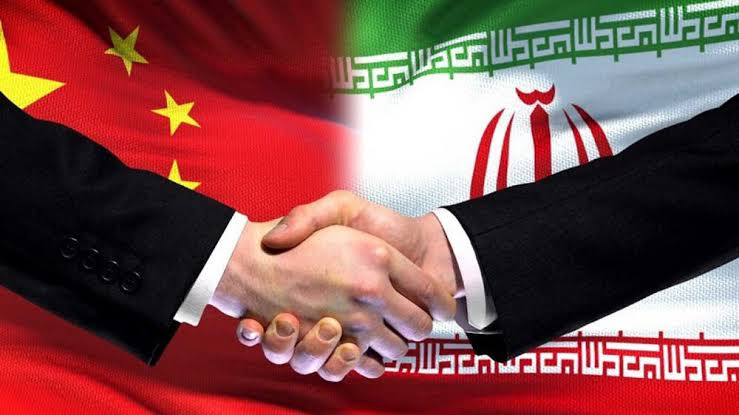
On 17 August, In an editorial published by Foreign Policy, Maria Shagina, senior fellow at the International Institute for Strategic Studies analyzed China’s latest legislations which are aimed to undercut US and European sanctions. Laws such as the Export Control Law (2020), the Unreliable Entity List (2020), the Anti-Foreign Sanctions Law (2021), the Blocking Rules (2021), the Counter-Extraterritorial Regulation (2026), and the Supply Chain Security Provisions (2026) were introduced to resist Western ‘extraterritoriality’ and replicate it with extraterritorial regulation of its own. Extraterritoriality is the assertion of a state's legal or regulatory authority over persons, firms, or conduct located outside its territorial borders, such that foreign parties become subject to its laws despite lacking a traditional territorial nexus. The new laws penalize these companies who abide by the sanctions, and complying with China would violate Western sanctions. The main piece of legislation against these sanctions is the Anti-Foreign Sanctions Law, allowing Chinese citizens and firms to sue another person or a company that complies with Western sanctions. China has also begun to block Chinese entities who comply with foreign laws unrelated with sanctions. The Rules on Counteracting Unjustified Extraterritorial Application of Foreign Legislation and Other Measures was triggered for the first time in May, where Beijing prohibited five Chinese petrochemical companies from complying with US sanctions for their alleged purchases of Iranian crude oil. Western companies tended to cancel contracts or refuse payments in order to comply with these sanctions, but these laws increase legal exposure of executives and offices operating in China. Therefore, Shagina concludes by stating that “he key question for companies is no longer simply whether they are exposed to U.S. or EU sanctions risk. It is whether any response to that risk creates liability in China.”
(“China’s New Laws Are Ensnaring Western Companies,” Foreign Policy, 17 August 2026)
TECHNOLOGY
Editorial: "China’s space race has a new problem: finding room for failure," South China Morning Post, 18 August 2026
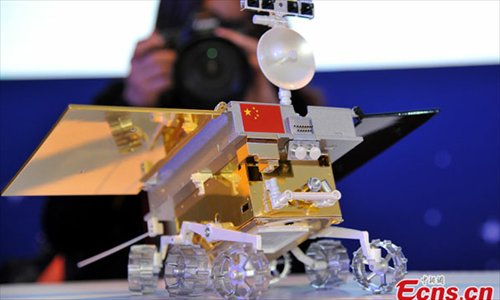
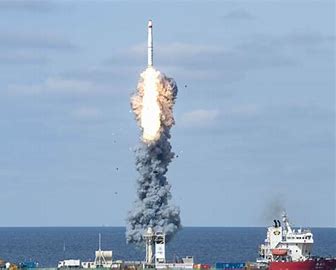
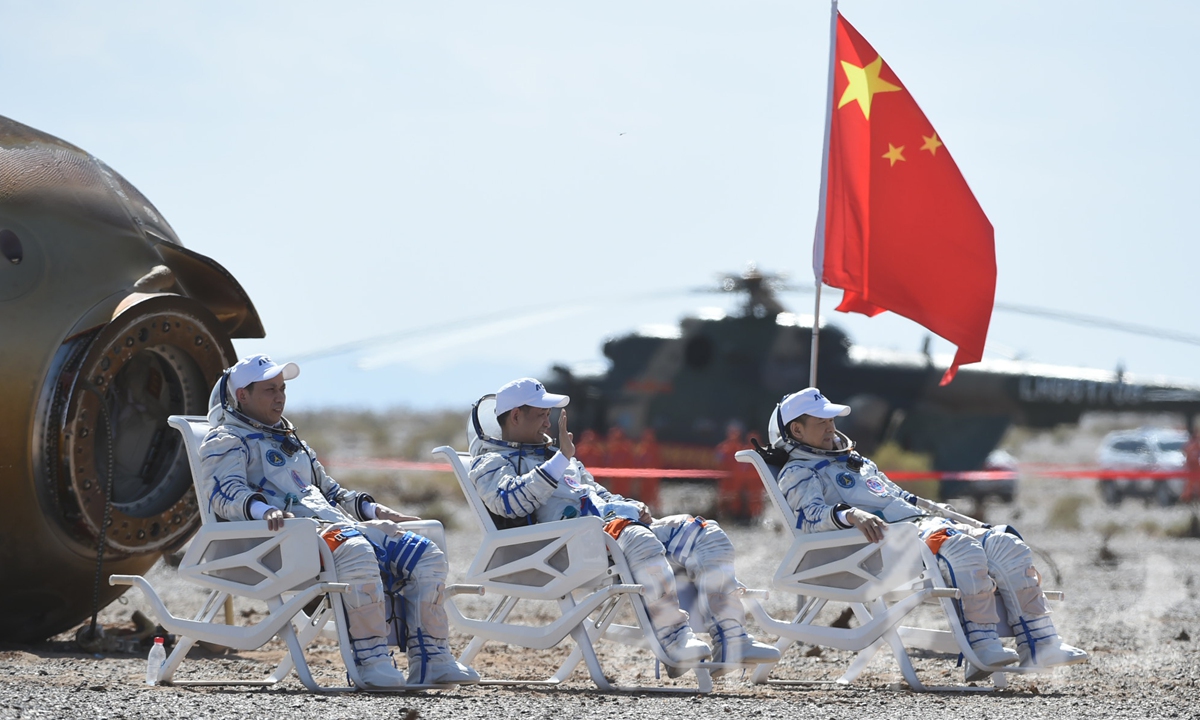
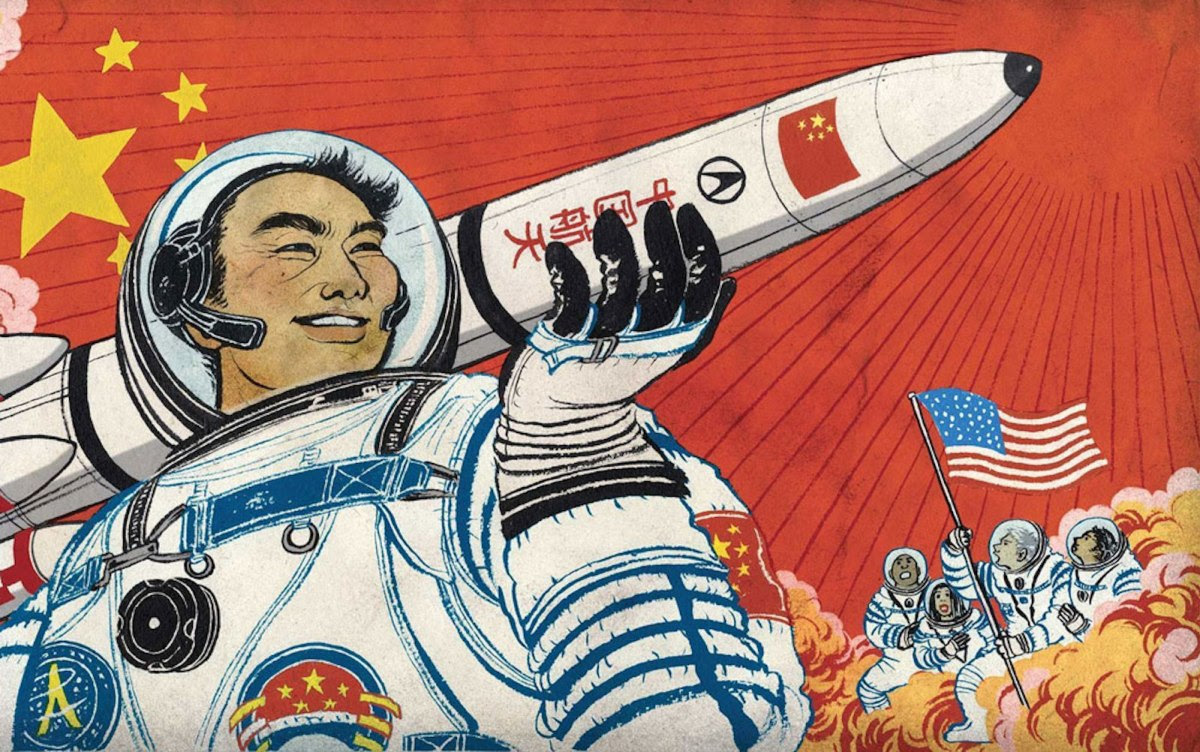
On 18 August, in an editorial published by the SCMP, Tang Meng Kit, freelance analyst and aerospace engineer analysed China’s space rocket failures and their quick dismissals. Tang lists out the three recent failures, namely the Long March-7A’s disintegration, the Long March-3B’s upper stage explosion, and a commercial firm Galactic Energy’s Ceres-2. For the 7A, and 3B rocket failures, China Aerospace Science and Technology Corporation (CASC) has not revealed the exact details on the failures, with only speculations from third-party analyses pointing towards the YF-100 and YF-75 rocket engines being the source of the failures. This would mark the Long March-7A’s second failure since 2020. The destruction of an experimental satellite, the Shijian-32 in January led to the 3B and 7A being grounded, due to both utilizing the YF-75 upper-stage engines for five months. But they both returned to service in June, with the 7A flying three consecutive missions in three weeks, with the latest launch on August 10 being a failure. China is aiming to target 140 orbital launches by the end of this year, with 56 attempts so far and four failures. As a result, two questions arise- does the 140 launch targets leave little room for a full investigation by the CASC and outside observers or that the schedule depends on these rockets’ ability to return to service quickly?
(“China’s space race has a new problem: finding room for failure,” SCMP, 18 August 2026)
Editorial: "China Wants to Shape What the World’s A.I. Knows," The New York Times, 17 August 2026
On 17 August, in an editorial published by The New York Times, David Pierson and Berry Wang state that China is seeking to become a major supplier of the training data that powers AI systems globally, in a bid to inject its own narratives into how chatbots answer politically sensitive questions. China sees the West’s training models being inherently biased towards a ‘Western worldview,’ where answers on topics such as human rights and Taiwan have a pro-West tilt. As such, China’s National Data Administration unveiled a blueprint to make the country a “data powerhouse” by the end of 2028, by building curated datasets across two-dozen domains. Experts and analysts state that one of the reasons why Chinese AI-firms rely heavily on “distillation,” is that local data is often fragmented and siloed across agencies and companies. Therefore, there is an increased push by policymakers and the state to gather increasingly sophisticated data. The Chinese state also requires its AI firms to stay within government-approved messaging and narratives, with a large difference being noted on answers of politically sensitive questions asked to Western models like ChatGPT and Claude, and Chinese models such as DeepSeek. China is also seeking to build low-cost AI models, which perform on the level of Western models, to make it an attractive option for the developing and third-world nations.
(“China Wants to Shape What the World’s A.I. Knows,” The New York Times, 17 August 2026)
Editorial: “China's biggest weakness on AI,” The Korea Times, 18 August 2026
On 18 August, in an editorial published by The Korea Times, Carl Benedikt Frey, an associate professor and director of the Future of Work Program at the Oxford Martin School, stated that China is slowing its AI rollout to prevent social instability. A weak social safety net makes workers in the country vulnerable to structural, AI-driven displacement in a slowing economy. This reflects that social safety nets, rather than authoritarian force, will likely determine the winner of the global AI race by mitigating labor unrest caused by automation. It states that China acts as a "deployment machine," and its lack of a robust welfare cushion makes rapid AI adoption politically risky. While historical Western welfare systems cushioned industrial shifts, China's lack of similar protections forces a reliance on tighter, protective regulations to manage labor disruption. The ultimate success of AI integration hinges on strengthening, rather than neglecting, worker security.
(“China's biggest weakness on AI,” The Korea Times, 18 August 2026)
CHINA AND THE POLAR REGIONS
China and Russia build Arctic route to bypass chokepoints
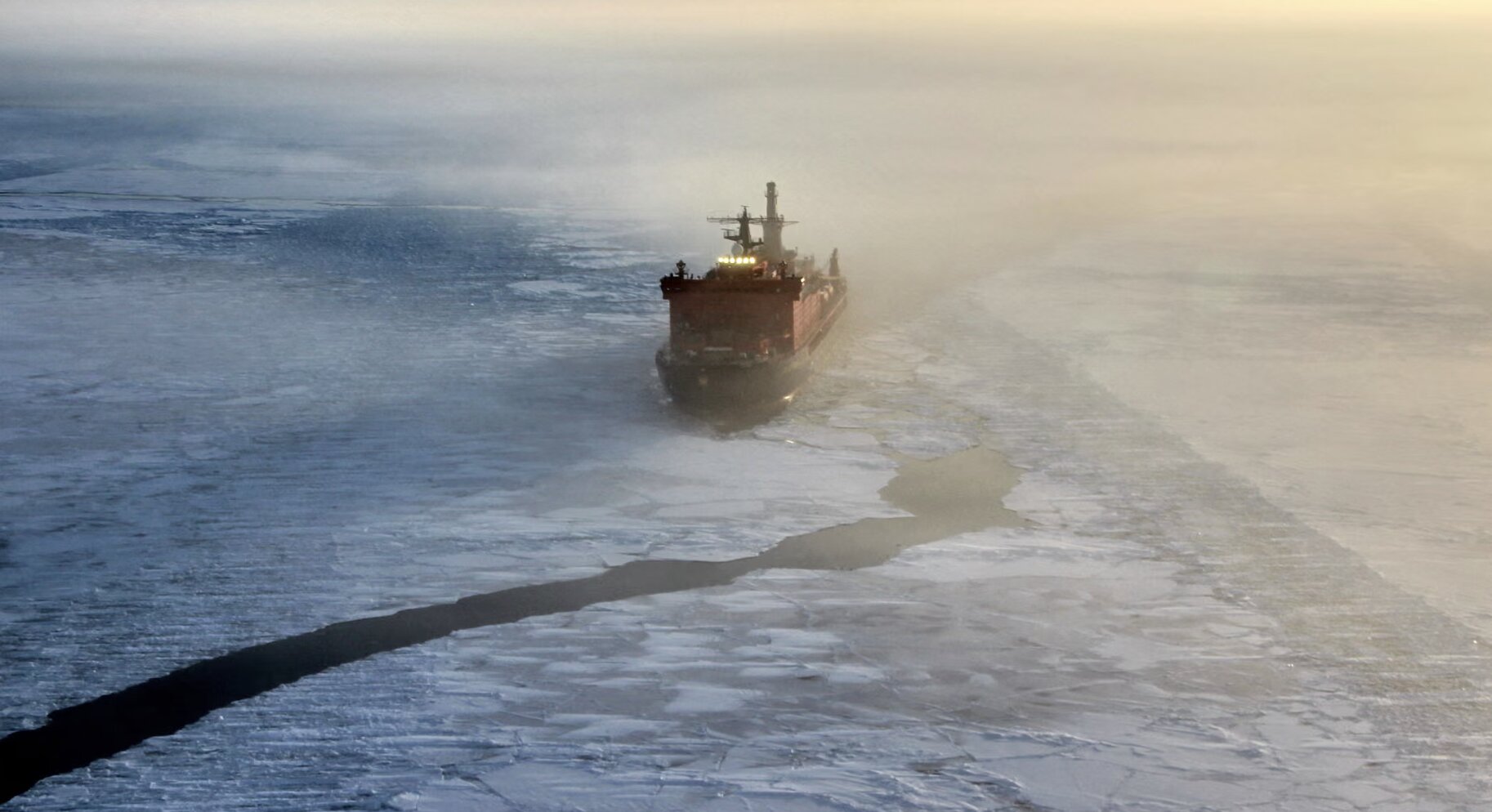
On 17 August, SCMP reported that China is heavily investing in Russia's Northern Sea Route (NSR) to secure a strategic alternative to traditional trade corridors. This comes as the country is driven by climate change and geopolitical conflicts. As Arctic ice melts, the 5,600km route offers a viable, shorter path that bypasses conventional, high-risk chokepoints like the Red Sea, cutting transit times between Asia and Europe by nearly 50 per cent. Beijing views this "Polar Silk Road" as a critical component for energy security, facilitating the import of Russian liquefied natural gas (LNG), while simultaneously mitigating risks from potential Western naval blockades. Through intensified cooperation, including joint coastguard patrols and the development of logistical infrastructure, China and Russia are actively transforming this once seasonal passage into a functional commercial artery. This strategic shift not only reconfigures global shipping routes but also deepens the economic and geopolitical alliance between Beijing and Moscow in the high north.
(“Why the Arctic sea route has become so important for China and Russia,” SCMP, 17 August 2026)
https://www.scmp.com/news/china/politics/article/3364278/why-arctic-sea-route-has-become-so-important-china-and-russia?module=top_story&pgtype=section
CHINA AND SOUTH ASIA
CPEC can strengthen Pakistan’s role in China-Middle East connectivity
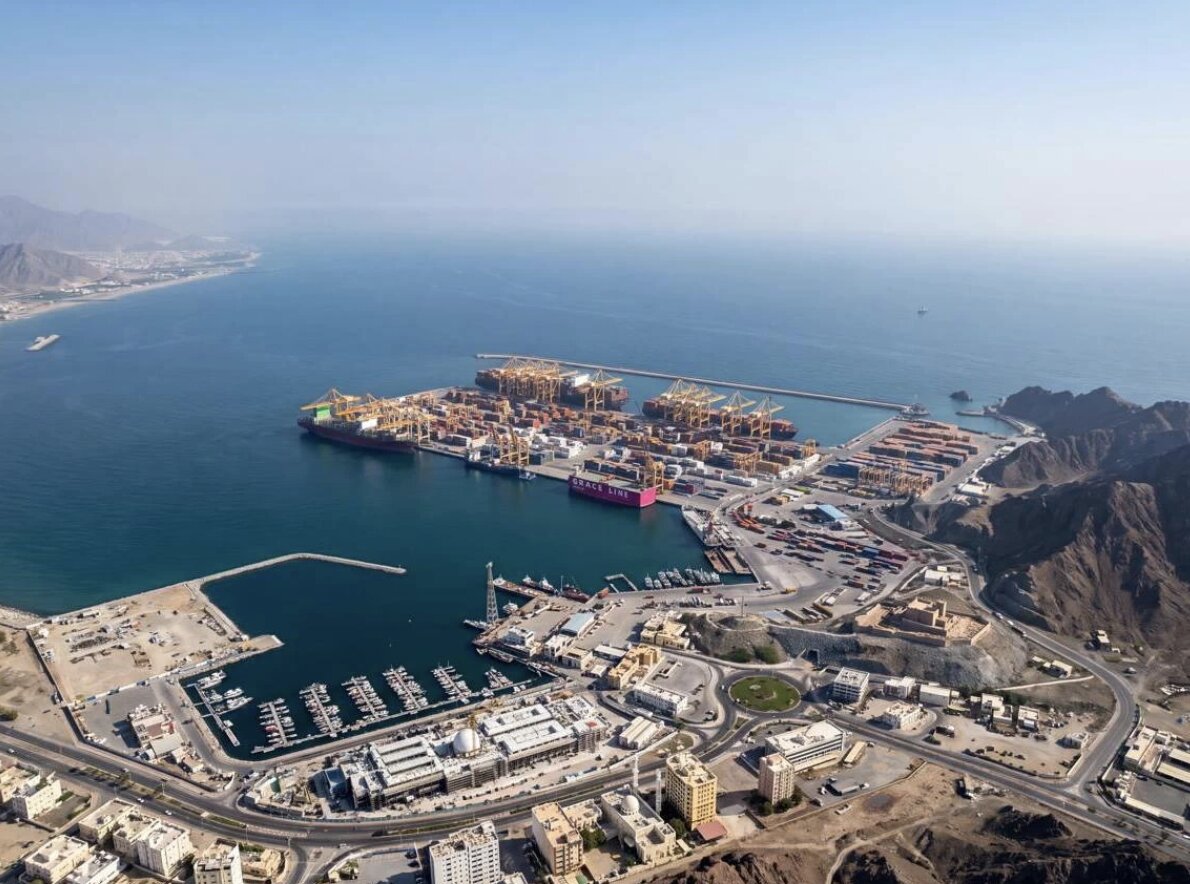
On 18 August, APP reported that experts at an Institute of Regional Studies event in Islamabad discussed China’s growing engagement with the Middle East and Pakistan’s potential role in strengthening connectivity between China and the region. The discussion highlighted China’s expanding economic and diplomatic engagement with the Middle East beyond energy, including trade, investment, technology and strategic partnerships. Speakers also pointed to China’s role in the 2023 Saudi-Iran rapprochement and its efforts to support peace among Palestinian factions. Shakeel Ahmed Ramay said Pakistan could use its strategic location to facilitate greater cooperation between China and the Middle East. He said Pakistan should focus on its national interests while developing relations with China and other major partners. The speakers also highlighted CPEC as an opportunity for Pakistan to become a regional connectivity hub linking China with the Middle East. They discussed Pakistan’s potential to develop trilateral trade with China and Iran, while using its agricultural capacity and geographical position to support wider regional economic cooperation. The event also noted China’s growing presence in the Middle East through the BRI, energy partnerships, technology markets, and economic cooperation.
("Pakistan’s foreign policy focus needs shift from balancing US, China ties to prioritizing national interests: Ramay," APP News, 18 August 2026)
https://www.app.com.pk/national/pakistans-foreign-policy-focus-needs-shift-from-balancing-us-china-ties-to-prioritizing-national-interests-ramay/
Beijing seeks action against telecom fraud involving Chinese nationals
On 18 August, Daily Excelsior reported that China has called for stronger international cooperation to tackle telecom and online fraud after around 100 Chinese nationals were detained in Pakistan in connection with alleged cyber-related activities. The report said Chinese authorities are seeking cooperation from Pakistan to address cases involving telecom fraud networks and protect Chinese citizens from criminal activities. The issue comes amid growing concerns over Chinese nationals being involved in fraudulent online operations in Pakistan. The development highlights the need for greater China-Pakistan cooperation on cybercrime and law enforcement, alongside their wider bilateral security relationship.
("China seeks global cooperation against telecom frauds as 100 Chinese held in Pakistan," Daily Excelsior, 18 August 2026)
https://www.dailyexcelsior.com/china-seeks-global-cooperation-against-telecom-frauds-as-100-chinese-held-in-pakistan/
Regional Indian politicians allege China has seized patrol points in Arunachal Pradesh
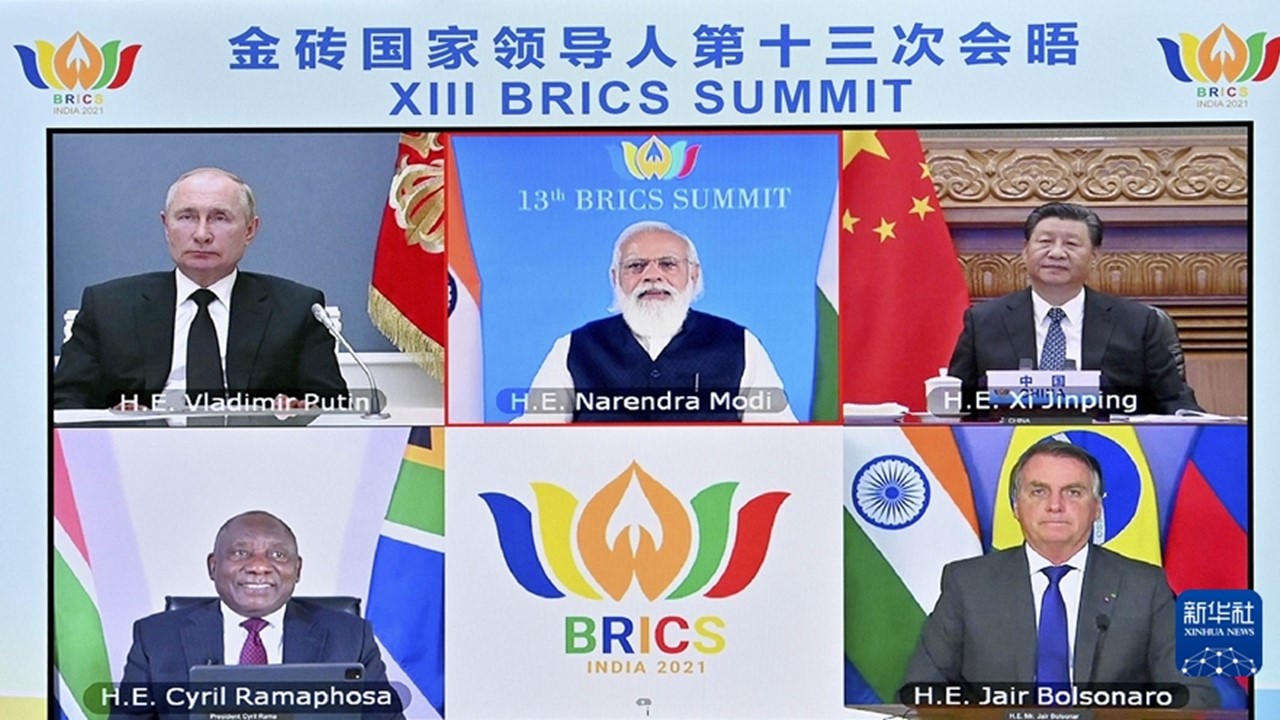
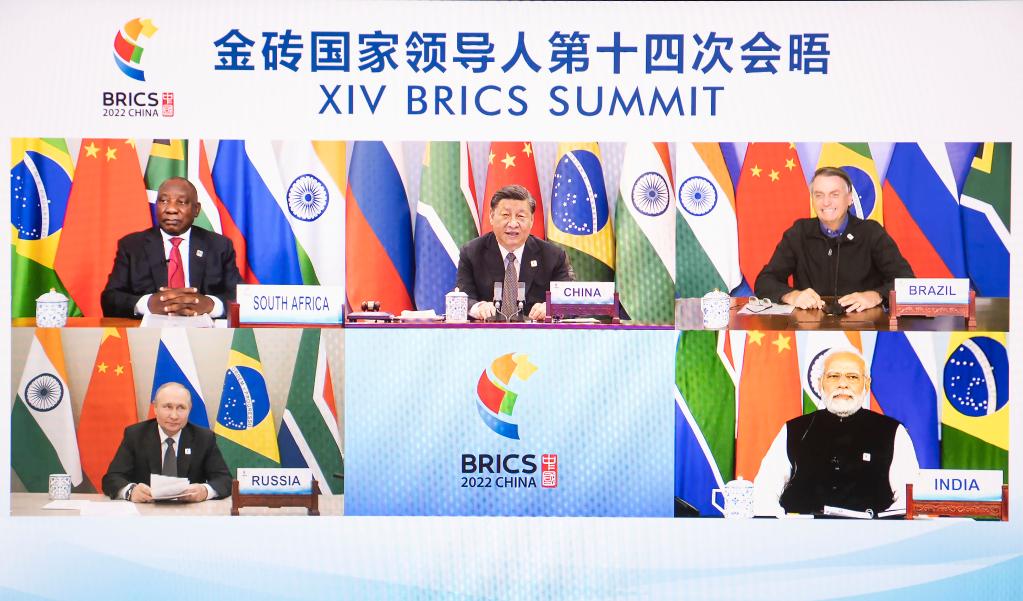
On 17 and 18 August, Al Jazeera and Ratopati reported that a fact-finding team of regional politicians allied with India's Prime Minister Narendra Modi had found that China had encroached on Indian territory and denied the Indian army access to key patrolling points in Arunachal Pradesh's remote Upper Subansiri district. The People's Party of Arunachal Pradesh said its four-member team found that Indian forces were unable to patrol the Taksing area from April to October due to floods and landslides, while Chinese forces remained active throughout the period. The report also said Indian forces had abandoned the Shera 5 border patrolling point after a confrontation with China's People's Liberation Army in 2023, and that the local Nah Welfare Society had written to government officials saying encroachment had increased significantly. India's army called media reports on the encroachment incorrect and without basis, while India's Foreign Ministry said border issues were considered most serious. China's Foreign Ministry said the border situation was generally stable. The findings come weeks before China's President Xi Jinping is expected to visit India for the BRICS summit on 12-13 September.
("China Accused of Encroaching on Indian Territory in Arunachal Pradesh," Ratopati, 18 August 2026; "How China-India border tensions are rising again over encroachment claims," Al Jazeera, 17 August 2026)
https://english.ratopati.com/story/75133/is-china-encroaching-on-indian-territory-in-arunachal-pradesh
https://www.aljazeera.com/news/2026/8/17/is-china-encroaching-upon-indian-territory-in-arunachal-pradesh-2
Editorial
Vikas Bhardwaj, "Russia’s India Route, China’s BRI and Pakistan’s Dilemma: A New Battle for Eurasian Connectivity," India Narrative, 18 August 2026
"Seen from Delhi, none of this was ever really about a railway. India rejected the Belt and Road on sovereignty grounds in a formal 2017 statement objecting specifically to a route crossing Pakistan-administered Kashmir, and has not wavered since (Ministry of External Affairs 2017). That position reads less like stubbornness now than foresight, given how thin the 2026 financing data shows Beijing’s actual commitment to be ... India’s position does not depend on Khusnullin’s railway ever being laid. Pakistan gains diplomatic standing this year without gaining a corridor that answers to its own economy, let alone India’s. China gains rhetorical continuity without gaining fresh capital discipline. Russia gains options without relinquishing Beijing. Of the four capitals tested against the evidence in this account, only India gains structurally under every scenario: a widening set of routes, each individually replaceable, none individually decisive. That asymmetry, and not the fate of one unrouted line through four contested borders, is the finding worth carrying forward."
























.png)
.jpg)
.jpg)
.jpg)
.jpg)
.jpg)
.jpg)
.jpg)
.jpg)
.jpg)
.png)
.jpg)
.jpg)
.jpg)
.jpg)
.jpg)
.jpg)
.jpg)

.jpg)
.jpg)
.jpg)
.jpg)
.jpg)
.jpg)
.jpg)
.jpg)
.jpg)
.png)
.jpg)
.jpg)
.png)
.jpg)
.jpg)


.jpg)
.jpg)
.jpg)
.jpg)
.jpg)
.jpg)
.jpg)
.jpg)
.jpg)

.jpg)
.jpg)
.jpg)
.jpg)
.jpg)
.jpg)
.jpg)

.jpeg)



.jpeg)