Justice Yahya Afridi wants separate bench to hear cases on constitutional interpretation I Pakistan to request USD One billion from the IMF
In Brief
POLITICS
BNP leaders charged under PPC and ATA
On 25 October, The News International reported that the Islamabad police have filed FIRs against Balochistan National Party (Mengal) (BNP) leaders, including its chief, Akhtar Mengal, and five other party leaders on 23 October. They were filed under the seven charges of the Anti-Terrorism Act (ATA) and sections 506-II, 452, 353, 186, 148, and 149 of the Pakistan Penal Code (PPC). This case was filed after the joint secretary of the Senate Secretariat, Jameel Ahmed Khoso lodged a complaint accusing the party chief of indulging in illegal activities at a Senate session. According to the complaint, the BNP leaders had illegally entered the Senate’s visitors’ gallery on 22 October while being armed. The complaint further stated that the BNP leaders tried to influence Senate members Qasim Ronjho and Naseema Ehsan to oppose the passage of the 26th Constitutional Amendment t during the session. Further, after the 26th Constitutional Amendment was passed, the BNP leaders pressed upon Qasim Ronjho to hold a press conference. (Nasir Iqbal, “BNPM chief, leaders booked under ATA,” The News International, 25 October 2024)
Bushra Bibi released from jail following bail
On 24 October, the former first lady and ex-prime minister Imran Khan’s wife, Bushra Bibi was released from the Adiala Jail after she was granted bail by the Islamabad High Court (IHC) in the fresh Toshakhana case. A release order in this regard was issued by the Special Judge, Shahrukh Arjumand. Both Bushra Bibi and Imran Khan have been imprisoned in the same jail, where the former was taken into custody on 31 January 2024. The latter has been incarcerated since 5 August 2023. Though the couple was acquitted in the Iddat case on 13 July 2024, they were apprehended again in a new Toshakhana case, in which Bushra was granted bail by the IHC.
In this new Toshakhana reference, the Federal Investigation Agency (FIA) had alleged that the couple retained an expensive Bvlgari jewellery set gifted by “a foreign leader — including a necklace, earrings, bracelets, and rings — at a low price, saying it caused significant loss to the exchequer.” While the PTI has hailed Bushra Bibi’s release after nine months, Senator Faisal Vawda has alleged that her release is part of a deal. PTI has rejected these claims and its Chairman Barrister Gohar Ali Khan emphasized that BIBi was released on merit. (Tahir Nasser, “Imran’s wife Bushra Bibi freed after nearly 9 months following bail in new Toshakhana case,” Dawn, 24 October 2024; Khalid Iqbal, Mumtaz Alvi & Shakeel Anjum, “Bushra Bibi released, PTI denies deal,” The News International, 25 October 2024)
JI targets PTI and the government over 26th Constitutional Amendment
On 24 October, The Express Tribune reported that JI chief Hafiz Naeem-ur-Rehman has voiced his party’s condemnation against the government for passing the 26th constitutional amendment. He claimed that his party had also alerted the PTI to not be involved in the passing of the amendment. He informed that his party would file a petition against the amendment. It further questioned PTI’s collaboration with Maulana Fazlur Rehman, submission of names for the Special Parliamentary Committee, and the reason for the former’s approval of the amendment. He further stated that those who took money to vote in favor of the amendment will not be remembered fondly in history.
On another note, JUI-F has announced that it will celebrate ‘Youm-e-Tashakhur’ across the country which also comes amid passing of the 26th Constitutional amendment. JUI-F spokesperson Aslam Ghauri thanked the Almighty for enabling them to include provisions in the amendment that would make the constitution more Islamic. With the passing of the amendment that will alter Article 38(f), the government aims to eradicate the concept of Riba (interest) by 1 January 2028. (“JI to file petition against 26th Constitutional Amendment,” The Express Tribune, 24 October 2024; “JUI-F to celebrate constitutional amendement with nationwide ‘Youm-e-Tashakur’ on Friday,” The Express Tribune, 24 October 2024)
JUDICIARY
Justice Yahya Afridi wants separate bench to hear cases on constitutional interpretation
On 24 October, while hearing a case linked to the right to pre-emption, the would-be Chief Justice, Yahya Afridi disclosed the establishment of a separate division to hear cases which challenged existing laws or required constitutional interpretation, based on a notification issued to the registrar’s office. Justice Shahid Waheed who was also a part of three-judge bench hearing the case added that since the case called for constitutional interpretation, it should be heard by the constitutional bench. This development comes as many Supreme Court benches have transferred the cases to the constitutional benches, as per the 26th Constitutional Amendment which states that all cases calling for constitutional interpretation or filed under Article 184 (3) will be heard by the above-mentioned constitutional bench after the new Chief Justice of Pakistan (CJP) has taken oath. On the same day, the outgoing CJP Faez Isa welcomed the inclusion of a clause related to environmental protection in the recently passed 26th Constitutional Amendment while hearing a case linked to the protection of forests in Khyber Pakhtunkhwa (KP). (Nasir Iqbal, “Policy for fresh benches on anvil: CJP-designate Yahya Afridi,” Dawn, 25 October 2024; “CJP hails environment clause in 26th Amendment,” The News International, 25 October 2024)
“As Chief Justice Qazi Faez Isa retires, Pakistan’s judicial system finds itself at a critical juncture,” highlights an editorial in Dawn
On 25 October, an editorial titled “CJ Isa’s tenure” in The News International reflected upon the outgoing Chief Justice of Pakistan (CJP), Faez Isa’s term as the Chief Justice of the apex court. The editorial observed that the Justice Isa will be remembered for his contribution to the judiciary and the “polarizing effect” it has had. He will be remembered for his decisions on cases of significant importance to the country from introducing the telecast of proceedings to appointing the first female registrar of the Supreme Court, leading a divided court as well as a “struggle between political and institutional challenges.” He played a role in breaking traditions by even calling for a full court on his first day in office and dividing judicial powers equally in the bench via the implementation of the Supreme Court (Practice and Procedure) Act 2023. This reflected the CJP’s bias for a collective decision-making process. Some of his notable rulings have challenged the status quo, promoted gender justice and even revisited previous cases to correct the past wrongs. Nevertheless, he’s also been at the helm of controversy for not granting the Pakistan Tehreek-e-Insaaf (PTI) a party symbol. His decision eventually snowballed and led to a political campaign against the CJ as rumors of his term’s extension through the 26th Constitutional amendment were spread. In this manner, the editorial observed how Justice Isa's “legacy” was “tarnished” by political “machinations” from within and outside the judiciary. However, experts argue that his decisions were not in line with personal biases. The editorial also emphasized that the judiciary is functioning at a point in time where trust must be restored in public courts and the reforms introduced by Justice Isa are “expanded” in order to preserve and strengthen the judicial power to deliver justice in an efficient and impartial manner. (“CJ Isa’s tenure,” The News International, 25 October 2024)
ECONOMY
Pakistan to request USD one billion from the IMF: Finance Minister
On 23 October, Dawn reported on an interview conducted by Reuters with Finance Minister Muhammad Aurangzeb. In the meeting, the finance minister revealed that the country was planning to formally request the International Monetary Fund (IMF) to advance a USD 1 billion loan to manage external shocks. Recently, the IMF had approved a USD 7 billion bailout for Pakistan to help it protect itself from external shocks and has also made funding for Pakistan through its Resilience and Sustainability Trust (RST).
On the sidelines of the IMF/World Bank autumn meetings, Aurangzeb also spoke with AFP, stating that the county was anticipating the finalization of Pakistan International Airlines’ privatization and the outsourcing of Islamabad’s international airport. The delay in this process was due to two reasons, namely, the need for macroeconomic stability and creating a favorable environment for investment. Speaking on the country’s brink of default, Aurangzeb projected the country’s progress on its current account deficit, the stabilization of the rupee and an increase in its foreign exchange reserve. Referring to the privatization of State-Owned Enterprises (SOEs) and the expansion of the tax base in accordance with the IMF’s demands, Aurangzeb asked: “Tax, power, SOE: There’s leakage, there’s theft, there’s corruption, right?” He added: “We have to deal with all of that.” Responding to the government’s unseriousness in broadening its tax base, he stated that those who haven’t filed taxes will also have to do so as those who already contribute to the tax revenue have arrived at a “saturation point.” Hence, “this cannot go forward,” he said. He added that the government was committed towards taxing particular sectors of the economy. Additionally, the minister invited US firms to invest in Pakistan, persuading them to benefit from Pakistan’s investment-friendly policies and the Special Investment Facilitation Council (SIFC). (Nasir Iqbal, “Pakistan formally requests $1bn from IMF: finance minister ,” Dawn, 24 October 2024; Wahid Ali Syed, “Pakistan seeks USD 1 billion from IMF climate change fund,” The News International, 25 October 2024)
Government begins work on rationalization of PSDPs
On 24 October, a report published by Dawn revealed that in compliance with the International Monetary Fund’s (IMF) instructions linked to the Extended Fund Facility, the government has started “rationalizing” the Public Sector Development Programme (PSDP) and even chalked out a plan for financing and identifying future plans of similar nature. Among the many instructions imposed by the IMF, it recommended measures to promote the portfolio management of PSDPs by “conducting a one-time review to prioritize and rationalize ongoing and approved PSDP projects and integrating the current expenditures associated with new projects into the decision-making process”. While chairing a special committee meeting which was constituted by the Prime Minister, Planning Minister Ahsan Iqbal, asked the committee to prepare plans that deal with minimal “essential requirements” of ministries to maintain timely disbursements. He also emphasized on all PSDP projects being completed within the given timeframe to avoid going beyond cost and time estimates. The government had submitted in writing that by December 2024, the government would identify which projects would align with their priorities and even determine which projects which can be capped or cancelled. It added that the government has agreed upon “the need to improve PSDP project management to prevent the unsustainable growth of the throw-forward and are continuing efforts to expand training coverage to all relevant federal agencies on the e-PADS.” (Khaleeq Kiani, “Govt begins ‘rationalising’ PSDP projects ,” Dawn, 25 October 2024)
“Pakistan is calling out for greater infrastructural support from the government” argues an editorial in The Nation
An editorial in The Nation titled “Local Innovation” discussed the potential and the achievements of Pakistan’s startups. The editorial stated that despite economic problems, the country’s startups have managed to secure foreign funding. For instance, Lahore’s CoLabs secured a funding of USD 2 million to expand its operation in the Middle East. Another example which the editorial referenced is Naya Pay which has been included in the list of “top 100 emerging players” in Fintech. The editorial suggested that the government must take note this success and analyze how correct investment can further expand the range of achievements of the Startups. The editorial also called for the need to introduce structural modifications so that an environment could be created where startups can thrive. (“Local Innovation,” The Nation, 25 October 2024)
SECURITY
Punjab’s Counter Terrorism Department neutralizes ten terrorists in Mianwali
On 24 October, The Express Tribune reported that a key intelligence-led operation was carried out in the Mula Khel area of Mianwali, Punjab after receiving inputs on the presence of 10 to 15 terrorists in the area. Punjab’s Counter Terrorism Department (CTD) successfully neutralized ten terrorists with some being hit by their own fire. The CTD revealed that these terrorists were planning a big attack in Punjab and the department is engaged in a search operation to identify the dead terrorists. (“Ten terrorists killed in Mianwali as CTD foils terror plot in Punjab IBO,” The Express Tribune, 24 October, 2024)
Nine terrorists neutralized in Bajaur
On 24 October, The Express Tribune reported that security forces in Bajaur district managed to neutralize nine terrorists in which two were suicide bombers and one was a known notorious terrorist ring-leader, Saeed who is also referred to as Qureshi Ustad. Security forces managed to confiscate “weapons, ammunition and explosives” from the hideout of the terrorists who were known to be involved in other attacks against civilians and security officials. Separately, the Counter-Terrorism Department detained three alleged terrorists who are associated with the Fitna al-Khawarij group. The arrests were a response to the attack on a police check post in Sohrab Goth whose responsibility was claimed by Fitnatul Khawarij. The CTD has also confiscated three pistols which will be sent for forensic testing. Further, it also claimed that the detained terrorists were assigned to carry out more attacks.(“Security forces kill nine terrorists, including two suicide bombers in Bajaur,” The Express Tribune, 24 October, 2024)
EXTERNAL
Foreign Office terms observation from UNHR chief, US congress members on judicial independence baseless
On 25 October, Dawn reported that the Foreign Office (FO) has suggested that the High Commissioner for Human Rights stop its baseless allegations regarding the passing of the 26th constitutional amendment and look into cases where there is an abuse of human rights and where laws have been passed to tyrannize the inhabitants of the occupied land. This is in response to UN High Commissioner for Human Rights Volker Turk’s apprehension over constitutional amendments which he had pointed out were passed in a rush without consulting the public. He had also argued that this could curtail the autonomy of the judiciary. FO also advised the US Congress that instead of getting involved in Pakistan’s domestic issues, it must work towards promotion of US-Pakistanties. This response came in after more than 60 members of US Congress had demanded that President Joe Biden must call for the release of Imran Khan. (Baqir Sajjad Syed, ”FO criticizes ‘uninformed, undiplomatic’ comments,” Dawn, 25 October 2024)
China unhappy with the delays in Gwadar, funding for railway project
On 25 October, The News International reported that China has voiced its concern over the delay in transfer of 97 acres of land in Gwadar which is still in the control of Pakistan Navy and Pakistan Pakistan Coast Guard owing to the security protocols and the unsureness in the funding for Main Line-1 railway project. These issues are in addition to China’s demand of increasing joint security for CPEC projects. China has complained about Gwadar port’s land being not cleared in spite of the fact that the government had handed over the port ten years back to the Chinese. Pakistan does not see it as an act of inattentiveness but because of the difficulties associated with such a huge project. China has been demanding for a joint intelligence system where intelligence data would be shared smoothly between Pakistani and Chinese authorities. Disagreements have also emerged between Pakistan and China over the first phase of ML-1 railway project where the former wants the letter to fund Phase I from Karachi to Sukkur or Multan. On the other hand, the Chinese are only willing to fund the first phase from Karachi to Hyderabad. (“China sounds alarm on Gwadar delays, ML-1 funding,” The News International, 25 October, 2024)
INDIA VIEW
“The state should have thought twice about inviting Zakir Naik” argues an editorial in Dawn
An editorial in Dawn titled “Controversial guest,” discussed the visit of controversial Indian Islamic preacher Zakir Naik. The editorial mentioned the complaints from the minority community of Pakistan such as the letter to the President from Church of Pakistan official Rev Azad Marshall who accused him of causing pain and distress to Pakistani Christians. The Reverend argued that Zakir Naik’s preachings are contradictory to the beliefs of Mohammad Ali Jinnah and is an insult to his 11 August 1947 address where he had declared that all communities in Pakistan are to be seen as equal before the law. The editorial questioned the government’s rationale behind inviting a controversial figure like Zakir Naik whose style of discussing religious issues in “rapid fire style” could have potentially led to disruption in communal harmony. It further argued that the government should have given more thought before inviting him as Pakistan is already filled with people who often give rise to communal tensions through their speeches. (“Controversial guest,” Dawn, 25 October, 2024)
ENVIRONMENT
India and Pakistan must engage in climate diplomacy to tackle the common problem of winter smog and air pollution, suggests an editorial in Dawn
On 25 October, an editorial titled “Yearly trouble” in Dawn discussed the deteriorating air quality in Pakistan due to inadequate agricultural policies. The editorial noted how Lahore hit 394 on the Air Quality Index, making it the most polluted city in the world. Even India faces similar troubles as the onset of winter smog traps pollutants from industrial, vehicular and burning of crop residue emissions. The editorial noted how both countries are unable to curb the burning of crop residue despite a “well-established link between stubble burning and deteriorating air quality.” Though farmers are being arrested for carrying these practices, it does not address the root cause of the issue which is inadequate policy in this sector. Despite the introduction of an Anti-Smog Squad in Pakistan, it is still in its nascent stage. Even the promotion of alternatives for residue management in India are hindered by financial constraints. Hence, the editorial observed: “What is missing from both countries’ approaches is a strategy that not only penalises harmful practices but also provides long-term solutions.” The editorial suggested the establishment of climate diplomacy between the neighboring countries to benefit from joint initiatives that focus on “sharing technological advancements, including affordable super-seeders, and coordinating to monitor and control air quality.” (“Yearly trouble,” Dawn, 25 October 2024)
 |
|
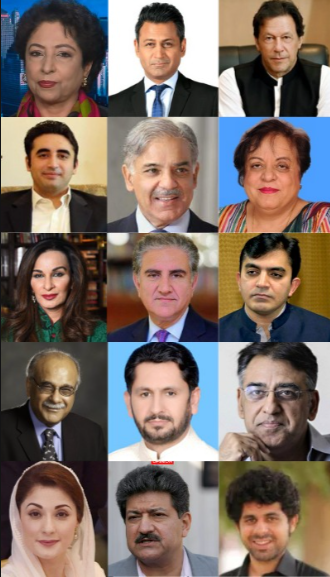
Bushra Bibi created records of corruption everywhere during her tenure, Imran Khan is responsible for all this.
- PMLN Digital
The job of our court is to protect democracy, to protect the constitution, to block the path of the dictator. I want to ask whether the court has ever fulfilled its responsibility in the history of Pakistan.
Chairman Pakistan People's Party Bilawal Bhutto Zardari
- PPP
The way Qazi Faiz Isa weakened the Supreme Court and disrespected the position of the Chief Justice for the sake of the chair, played the role of a tout of the establishment and PMLN-PPP and left a black mark on the Supreme Court that will not be erased for decades.
First, Qazi Faiz Isa kept silent on the letter of serious interference by 6 judges of Islamabad High Court and the most senior judge of the Supreme Court at that time, Justice Mansoor Ali Shah, about the interference of the executive and its institutions in the affairs of the Supreme Court. The only person responsible is Faiz Isa.
- PTI
|
|
|
|
"We have failed to treat Pakistan as a divine trust."
- An opinion in Dawn, ‘Divine ‘amanat’'
|
|
|