In Brief
ECONOMY
PM expresses hope for some “good news” from IMF amid reforms to budget
On 25 June, Prime Minister Shehbaz Sharif affirmed in the National Assembly that the federal budget for FY25 was prepared in collaboration with the International Monetary Fund (IMF). He stated this following the announcement of significant amendment proposals by Finance Minister Muhammad Aurangzeb. Sharif explained that the government “had to prepare the budget jointly with the IMF” due to prevailing circumstances and ground realities, and expressed hope for “good news” from the IMF.
Earlier, Aurangzeb departed from reform measures he had announced during his budget speech on 12 June, following government pressure from industrialists which caused it to dole out taxpayer money to appease public sector employees in the parliament. The original budget had intended to revive zero sales tax on local sales of export industries and stationery items. To counter the revenue loss, the government reduced allocations for the Public Sector Development Programme (PSDP) by PKR 250 billion, which will be shown against the Public Private Partnership (PPP) at PKR 350 billion instead of PKR 100 billion. Apart from the PSDP amendment, the budget will have three other changes in the form of relaxations for hybrid vehicles, stationery items, and the Export Facilitation Scheme 2021. Aurangzeb referred to the “national financial pact” and advocated for provincial contribution to expenses of national importance, reduction in provincial expenses, and increased provincial resource mobilization for national financial stability. He stated that the budget was “based on a homegrown reform plan through which the government wanted to take the country out of the current economic situation for which structural reforms are needed.” Aurangzeb affirmed the government’s commitment to reforms under this plan, including the tax-to-GDP ratio to 13 per cent, privatization, and ending subsidies creating price distortions.
With regard to tax, he announces changes to fines for late and non-filers of income tax, along with the continuation of reduced sales tax at the existing level for hybrid electric vehicles in Schedule 8. Aurangzeb asserted that the “time has come to take strict action against retailers who do not participate in the FBR’s Tajir Dost Scheme,” adding that the government was fast-tracking FBR reforms. Tax rates on traders, shopkeepers, retailers, and distributors who are non-filers under Sections 236G and 236H will also be increased from 1 July. (Khaleeq Kiani, “PM Shehbaz confirms IMF role in budget prep,” Dawn, 26 June 2024)
FY25 budget to focus on reducing fiscal deficit, says finance minister
On 25 June, Finance Minister Muhammad Aurangzeb said the budget for 2025 focuses on the reduction of fiscal deficit by prioritizing measures that enhance the government’s revenues and reduce unnecessary expenditures. He quoted Prime Minister Shehbaz Sharif and said that in FY25, the process of simplicity and austerity would continue. On the same day, the PPP, which had decided to boycott the budget discussion, decided to vote for the finance bill despite certain reservations. PPP leader Naveed Qamar said if the party decided not to vote for the budget, “it would amount to dismantling the government and paving the way for instability in the country.” Members of MQM-P also expressed concern over the decision to impose taxes on the salaried and middle-class people, arguing that this would lead to more inflation. Multiple treasury members accused Aurangzeb of not knowing “of ground realities.” (“Budget for next year aimed at reducing fiscal deficit: Aurangzeb,” Dawn, 25 June 2024)
SECURITY
Defence Minister calls on judiciary to support ‘Vision Azm-i-Istehkam’
On 25 June, Defence Minister Khawaja Asif publicly disclosed the government’s expectations from the judiciary on ‘Vision Azm-i-Istehkam’ and urged the courts to not provide any relief to those arrested under this action. Vision Azm-i-Istehkam has been dubbed a “reinvigorated and re-energized national counter-terrorism campaign” by the government. Asif stressed that this operation needs support from “judiciary, security forces, parliament and the media” as it is a “national crisis, addressing which is not just the army’s responsibility, but all institutions.” He assured that the action is not politically motivated, saying that the government would try to “create consensus and address the reservations” voiced by the opposition. In turn, he asked the PTI, JUI-F, and the ANP to take a stand for Pakistan and not indulge in politics on this matter. Asif emphasized that the government only wants “to end the rising wave of terrorism that has arisen over the past few months.”
On the same day, Prime Minister Shehbaz Sharif clarified that the proposed counterterrorism campaign, Vision Azm-i-Istehkam, will incorporate intensifying Intelligence Operations (IBOs) instead of a “new and organized” military offensive. The PM office issued a statement saying the campaign would not be a “kinetic large-scale military operation, and detailed that Sharif “took the cabinet members into confidence regarding the misunderstandings and speculations regarding ‘Vision Azm-i-Istehkam’.” Quoting Sharif, the statement added that the campaign is an “overall national vision of a multifaceted cooperation of various security agencies and the entire state system.” It further clarified that the operation would not result in displacement, and only intends to “decisively root out the remnants of terrorists, crime and terrorism nexus, and violent extremism from the country.” ((Zulqernain Tahir, “‘No relief’: Khawaja Asif spells out what govt wants from courts,” Dawn, 26 June 2024; “Ongoing IBOs to be intensified under ‘Vision Azm-i-Istehkam’ rather than new military op: PM Shehbaz,” Dawn, 25 June 2024)
JUDICIARY
Friction emerges between Supreme Court judges over PTI’s petition on election rigging
On 26 June, The Express Tribune reported that Supreme Court (SC) Judge Justice Athar Minallah raised concerns over the delay in addressing the PTI’s petition on rigging in the general elections, as the discord among the judges deepened. During the reserved seats case hearing, Minallah urged the counsel for the Election Commission of Pakistan (ECP) to submit the details of complaints and asserted: “We cannot sit in a bubble.” In response, the Chief Justice of Pakistan (CJP), Qazi Faez Isa, contended that this issue was not related to the hearing. Later, Justice Syed Mansoor Ali Shah questioned the ECP’s decision to declare PTI candidates as independent. Minallah criticized the court “for burying its head in the sand and ignoring grave violations.” He stressed the pending petitions on “rigged election.” Lawyer Abdul Moiz Jaferii blamed CJP Isa and questioned “Why he is showing conservatism about taking a holistic approach to investigating the collusive designs of the state concerning the elections is beyond any rational explanation?” Similarly, some judges questioned Minallah for talking about rigged elections in the reserved seats case. (Hasnaat Malik, “Judicial divide: SC split widens over election rigging plea,” The Express Tribune, 26 June 2024)
AF-PAK
Foreign Minister urges for a stable Afghanistan that benefits both
On 25 June, Foreign Minister Ishaq Dar said during his address at the Institute of Strategic Studies that a peaceful and stable Afghanistan would benefit both countries and help promote prosperity in Central Asia and beyond. Highlighting the importance of dialogue, the avoidance of bloc politics, and adherence to the UN Charter, he emphasized Pakistan’s commitment to maintaining peaceful and good neighbourly relations with all countries. He underlined Pakistan’s cooperation with Afghanistan since the Taliban takeover in August 2021, arguing that Afghan soil should not be used for terrorism against any state, urging Afghan authorities to address Pakistan’s concerns. Speaking on India, he noted Pakistan’s desire for good relations based on mutual respect and a peaceful resolution of the Jammu and Kashmir dispute. Dar emphasized: “We will maintain strategic stability in South Asia and respond decisively to any ill-considered military actions by the Hindutva-driven government in New Delhi.” Criticizing India’s actions on 5 August 2019 in J&K, he urged India to create an environment conducive to holding meaningful talks. Additionally, he called on South Asian countries to prioritize poverty and low human development rankings and urged for revoking for stalled South Asian Association for Regional Cooperation (SAARC). Apart from this, he discussed China’s partnership with Pakistan as being significant for its foreign policy. He also highlighted Pakistan’s aim for partnership with Iran, Gulf nations, Turkey, Central Asian states, and Azerbaijan. Further, Dar underlined stable relations with the US, Russia, the EU, Japan, and ASEAN. (“Ishaq Dar says peaceful, stable Afghanistan to benefit both countries,” The Express Tribune, 25 June 2024)
POK
PoK government presents a budget of over PKR 220 billion for the fiscal year 2024 to 2025
On 25 June, the Pakistan Occupied Kashmir (POK) government announced its budget for FY25, amounting to over PKR 220 billion. This amount includes the development sector of PKR 44 billion. The budget was presented by Finance Minister Abdul Majid Khan, who highlighted the key aspects of the budget. He disclosed that the estimated income stood at PKR 201.17 billion, with contributions expected from federal grants (PKR 105 billion), inland revenue (PKR 75 billion), and PKR 0.45 billion from the forest department. The exceeding revenue of PKR 20 billion will be coming from various other sectors such as the AJK Transport Authority, Armed Services Board, Law and Order (Administration of Justice), Police (Interior), prisons, communication, roads, and education. The total expenditure is estimated at around PKR 220.033 billion. In addition, the agricultural sector was allocated PKR0.9 billion, PKR 0.15 for Civil Defence and SDMA, PKR 0.075 billion for Fisheries/Wildlife, and PKR three billion for health. (“AJK govt announces over Rs220b budget,” The Express Tribune, 26 June 2024)
 |
|
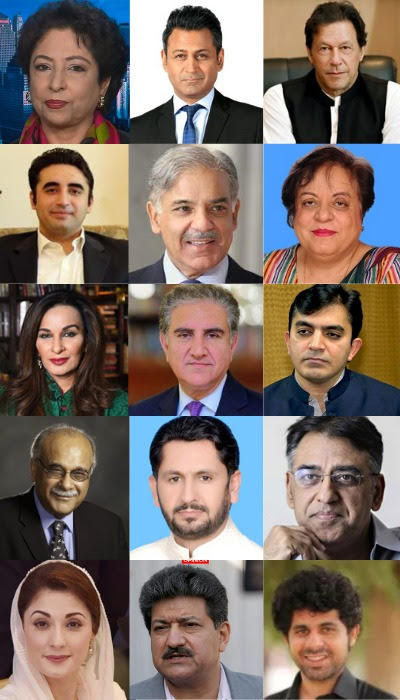
Before the formation of the government, an agreement was reached between the Pakistan People's Party and the Muslim League-N, according to which the PSDP of the four provinces should be formed in consultation with us. But unfortunately, the government did not follow this condition, if this condition was followed, better results would have come out.
-PPP
Termination of terrorism from Pakistan and establishment of law and order has always been the policy of Tehreek-e-Insaaf. During the Pakistan Tehreek-e-Insaf government, there was a major reduction in terrorism. We strengthened the police and CTD institutions in Khyber Pakhtunkhwa, as a result of which there was a clear reduction in terrorism in Khyber Pakhtunkhwa and subsequently in the entire country.
- Imran Khan
Balochistan has seen an alarming increase in polio cases in the last few months, 5 out of 6 polio cases in Pakistan have occurred in Balochistan. We are going to launch a campaign against polio virus in the entire Balochistan along with international partners. It is our responsibility to administer polio drops to every child of Balochistan in the coming six months. To make this campaign successful, we request scholars, social workers and parents to play their role and save their future from disability.
- Sarfraz Bugti
|
|
|
|
Rafia Zakaria, ‘Cruelty to animals’
Dawn, 26 June 2024
“In that case, it was alleged that a landowner, enraged by a camel that had been foraging in his field, cut off the poor animal’s leg. The female camel was only eight months old. The camel’s poor owner named the landlord as the culprit, but said that the police were trying to protect him. Earlier, the police had arrested six suspects but said they could not find proof of the landlord’s involvement in this act of barbarity. The case only gained prominence when a video of the maimed camel went viral on social media. The Sindh government is said to be working with an NGO to provide an artificial limb to the injured camel.”
Talat Masood, ‘Exploring ways for a better future’
The Express Tribune, 26 June 2024
“It is expected that the leadership on both sides of the aisle will prioritise the uplift of the poor and downtrodden. Pakistan can maximise its progress and exploit its potential provided the government focuses on the uplift of the poor and create conditions that could transform their lives. Hopefully, the present and future government’s focus will be on good governance and uplift of the masses. These have been the central planks of political party’s election manifesto but remained largely unrealised. What is disappointing is that there is not sufficient focus on interior Sindh that still remains a deprived region where at places even basic necessities are hard to get. Regrettably, similar hardships are faced by people in Balochistan and in certain places in Khyber-Pakhtunkhwa.”
Dr Khalid Waleed, ‘Budget FY25 through the Laffer Curve’
The News International, 26 June 2024
“The Laffer Curve suggests that there exists an optimal tax rate that maximizes government revenue, beyond which further increases in rates can actually lead to decreased revenue due to reduced economic activity and increased tax avoidance. Pakistan's new budget aims to collect Rs12.97 trillion in taxes, a substantial 30 per cent increase from the previous fiscal year, with direct taxes projected to be 30 per cent higher and indirect taxes 45 per cent higher than in FY24. However, this strategy raises concerns about its potential effectiveness and economic impact. The multiplier effect of tax imposition can be fatal for sustainability, equitability and inclusivity, for instance, the levy on LPG has been increased in this budget, which will create bottlenecks in attaining SDG-7 progress of Pakistan and overall inflation targeting in Pakistan.”
Editorial, ‘Extremist threat’
Dawn, 26 June 2024
“While the military and civil law-enforcement agencies battle militants in the field, a similar campaign should be waged to deradicalise society, as both terrorism and extremism are joined at the hip, and feed off each other. Just over the past few months, we have witnessed lynchings based on doubtful allegations of blasphemy, as well as the persecution of minority communities for practising their faith even within the privacy of their homes. Thus, while the state takes on what it calls the ‘remnants’ of terrorist outfits, it should not ignore the extremism threat. There may be some realisation of this at the top, as a recent statement from the PM Office, while discussing Azm-i-Istehkam, specifically mentions the need to implement the revised National Action Plan.”
Editorial, ‘How torture thrives’
The News International, 26 June 2024
“In December 1997, UN General Assembly proclaimed June 26 as the United Nations International Day in Support of Victims of Torture, aiming to emphasize the total eradication of torture and the effective implementation of the Convention against Torture and Other Cruel, Inhuman or Degrading Treatment or Punishment. As such, torture is a crime under international law and the UN and most other global and national legal and humanitarian bodies all hold that there is never an excuse to justify the use of cruel, degrading and unusual punishment. This stand is backed up by the fact that torture is not an effective tool at extracting reliable information. As per the United Nations Human Rights Office of the High Commissioner, at least one former US counterterror official has stated that torture is worse than ineffective and is actually counterproductive given that the information it produces is often corrupted and can lead to flawed decisions and policies at the highest levels. Other officials such as the lead investigative interviewer of Anders Breivik, who in 2011 carried out a terrorist attack in Norway that killed 77 people, have claimed that creating a safe and comfortable environment makes suspects more talkative and increases the likelihood that they will reveal incriminating information.”
|
|