In Focus
PM Shehbaz Sharif at SCO
On 4 July, Prime Minister Shehbaz Sharif addressed the 24th summit of the Council of Heads of State of Shanghai Cooperation Organization (SCO). In his speech, he covered all major issues of regional and international importance, including “terrorism and extremism, Islamophobia, instability in Afghanistan, poverty, climate change, regional connectivity and resolution of disputes.”
On Terrorism
Reiterating SCO objectives of “peace and prosperity,” he emphasized the need for a concerted effort towards fighting terrorism. Urging the international community to “meaningfully engage” with the Taliban regime in Afghanistan, PM Sharif stressed that “lasting peace and stability in Afghanistan” is the “linchpin to achieving the SCO objectives.” In this regard, he stated “Recent terror activities have been a matter of great concern for all of us. Terrorism and extremism by individuals, groups or states must be fought collectively in a comprehensive fashion. Terrorism in all its forms and manifestations, including state terrorism, must be condemned in clear and unambiguous terms. There can neither be any justification for killing innocent people nor should the bogey of terrorism be used for political point-scoring.” An editorial in The News International analyzed PM Sharif’s focus on terrorism in the SCO address and argued that this can be viewed as “a categorical message to India and other states that sponsor and support terrorism.” The editorial highlighted that Pakistan has accused India time and again of supporting terror activities in the country and so the message was a clear signal for India given the presence of Indian Foreign Minister S Jaishankar at the summit.
Referring to the arrest of two Tehreek-e-Taliban Pakistan (TTP) members and their confession of alleged Indian involvement in financing militant groups that carry out attacks in Pakistan, the editorial pointed out that Pakistan has furnished evidence while India has failed to do so. The editorial also highlighted the likelihood of “collusion” between India and Afghan Taliban citing their alleged financial support and providing safe haven respectively to the TTP. The editorial concluded that in its fight against terror, Pakistan needs not only to send an unambiguous message to both India and Afghan Taliban but also needs the support of the international community.
On Regional Connectivity and Economic Cooperation
Underscoring the importance of regional connectivity, PM Sharif stated “SCO leaders have repeatedly underscored the importance of investing in connectivity in the SCO region through transport corridors and reliable supply chains. Promoting the use of national currencies within SCO can help avoid international financial shock. Pakistan supports the proposal of an SCO alternative development fund mechanism to give impetus to various stalled initiatives.” PM Sharif highlighted the importance of Pakistan’s “ideal geostrategic location,” and stressed that China-Pakistan Economic Corridor (CPEC) “supplemented the SCO’s vision of regional connectivity and economic integration.”
Separately, on the sidelines of the summit, Prime Minister Shehbaz Sharif met several others leaders to discuss economic cooperation and regional connectivity. He met Russian President Vladimir Putin and they discussed “financial and banking connectivity for easing bilateral trade flows.” President Putin responded positively to PM Sharif’s suggestion of “reviving and expanding trade under a barter system.” Further, the two leaders discussed the possibility of enhancing cooperation in energy and agriculture. Additionally, PM Sharif called on the Central Asian states to work together on rail and road connectivity in exchange for access to the Karachi port. Earlier at a Pakistan-Turkiye-Azerbaijan Trilateral Summit held on the sidelines of the SCO Summit, PM Sharif had offered to host “a regional connectivity summit to provide trade corridors to Central Asia.”
An editorial in Dawn attributed PM Sharif’s efforts to initiate and further economic cooperation with countries present at the SCO summit “to his desire to end Pakistan’s growing trade isolation.” The editorial highlighted that despite Pakistan’s advantageous geographic location and its potential to become “ideal trade conduit,” it remains “the least integrated economy regionally.” The editorial has argued that is because the policymakers in Pakistan are of a “trade isolationist” mindset. Further, Pakistan is not a member of any “effective regional trading bloc” and the ones that it is part of- the Economic Cooperation Organisation and the South Asian Free Trade Area- have been “dormant” since their inception. Except China, Pakistan’s trade links will its neighbors remains “dismal.” The editorial has cited various reasons for this: Several factors have impeded Pakistan’s economic integration within the region but political and territorial disputes with neighboring countries, imagined and real security concerns, a narrow band of exportable products, and reliance on the West for both trade and aid are among the main reasons for our continued economic isolation.
What next for Pakistan and SCO?
On 4 July, Foreign Office spokesperson Mumtaz Zahra Baloch revealed that Pakistan will host the SCO Heads of Governments Meeting scheduled from 15- 16 October 2024. This is because Pakistan “holds the rotating Chairmanship of the SCO Council of Heads of Government (CHG), which is the SCO’s second-highest decision-making forum.”
In her weekly briefing, Baloch also clarified that Pakistan did not intend to be a part of any “bloc” or join “bloc” politics. In this regard, she stated “I would first like to clarify that Pakistan has repeatedly said that we are not part of any bloc. We do not believe in bloc politics.” She further stated “We believe in good relations with all countries on the basis of mutual respect, mutual confidence and non-interference in each other's domestic affairs.” Referring to Pakistan’s historical relationship with the SCO, Baloch clarified “Pakistan's membership of SCO is not recent. Pakistan has been a member of SCO for several years now. It is a multilateral organization. It is a regional organization that is focused on promoting regional cooperation and connectivity and finding common solution to common problems, including in security, economic and connectivity issues.” She was responding to a question on whether Pakistan would join China and Russia bloc. Earlier, Russian President Vladimir Putin had proposed “a new Euroasia security pact” to end external military presence in the region.” Similarly, Chinese President Xi Jinping had called for an “end to external meddling,” most likely referencing the United States.
References
Baqir Sajjad Syed, “Pakistan to host SCO leaders in October,” Dawn, 5 July 2024
Ayaz Akbar Yousafzai, “Shehbaz asks Kabul to take tough line on terror,” The News International, 5 July 2024
“Trade cooperation,” Dawn, 5 July, 2024
“State of terror,” The News International, 5 July 2024
Kamran Yousaf, “Pakistan won’t become part of ‘bloc’ politics, says FO,” The Express Tribune, 4 July 2024
In Brief
ECONOMY
Consumers to face tariff hike of PKR 5.72 per unit
On 5 July, Dawn reported that the National Electric Power Regulatory Authority (Nepra) called for a public hearing on 8 July with regard to a PKR 5.72 per unit increase in the average national tariff, resulting in more than PKR 700 billion in additional burden to electricity consumers during FY24. The sale rate for poor protected consumers would be heavily impacted by this increase, with a rise of over 51 per cent. This hike, which was effective from 1 July as part of the IMF’s “prior action and structural benchmark,” affects all Discos and K-Electric. Earlier on 14 June, a 20 per cent increase in the uniform national tariff had already been announced by Nepra, to ensure PKR 3.8 trillion to ten Discos during FY25. In the case of certain lifeline consumers, the government has come up with minor subsidies and spread out the remaining revenue requirements to other consumer categories. Thus, for “protected consumers” using up to 100 united per month, the tariff was raised by 51 per cent, and for protected consumers using up to 200 units per month, the tariff rose by 41 per cent. For the “unprotected category,” a tariff increase of more than 43 per cent has been suggested. Consumer categories would face a PKR 1,250 per kilowatt fixed capacity charge, on top of which commercial and general services tariff would increase by 17 per cent. A formal notification is expected by 10 July after the power regulator concludes its process. (Khaleeq Kiani, “Another major power tariff hike looms for consumers,” Dawn, 5 July 2024)
Power minister announces privatization of all Discos
On 4 July, the Federal Minister for Power, Awais Ahmed Khan Laghari, stated that all power distribution companies (Discos) would be privatized within a year and a half. While expressing commitment to “fixing the system to provide relief to consumers” as distribution companies caused PKR 600 billion in loss, Khan informed that the tariff categories had been revised. Lifeline customers and protected customers will pay PKR 7.65 and PKR 20.48 per unit respectively, while consumers in the third category will pay PKR 42 per unit and subsequent category consumers using 300 to 700 units would pay higher rates. (“All Discos to be privatised, says energy minister,” Dawn, 5 July 2024)
Treasury bills, inflows in equity market, and foreign exchange reserves reach record highs
On 5 July, Dawn cited data from the State Bank, which depicted a USD 232 million jump in the inflow of treasury bills during the first 21 days of June, while the net inflow in the equity market reached a ten-year high. Total inflows in FY24 currently stand at USD 706.4 million. The head of research at Arif Habib Limited, Tahir Abbas, stated that this development is due to “high returns on t-bills and exchange rate stability.” He added that the “outlook of exchange rate is stable since talks with the IMF are moving in the right direction and hopes for a new agreement are high.” Abbas projected that if the rupee does not depreciate, “the 20 per cent return on t-bills is the highest in the developing world.” Inflows from the equity market have also reached a new high after ten years, at USD 140 million in the financial year 2024. The foreign exchange reserves have also risen by almost half a billion, from USD 494 million to USD 9.389 billion, owing to receipts from multilateral parties. (Shahid Iqbal, “T-bills, equity see record inflows in FY24,” Dawn, 5 July 2024)
Pakistan Economy Watch president blames IPPs for increase in electricity bills
On 5 July, The Express Tribune cited the President of the Pakistan Economy Watch (PEW), Dr Murtaza Mughal, who claimed that Independent Power Producers (IPP) are a threat to Pakistanis and have destroyed the economy, making national development impossible. He advised the government to buy all IPPs from their owners to solve this, for which at least USD five billion would be required that can be arranged by taking loans from international institutions. Mughal explained that the interest on this loan would be nothing compared to the payments made to the IPPs and that the country would be saved from major consequences if IPPs were bought. He pointed out that in May, the energy sector’s circular debt had reached PKR 2,310 billion while payments to the IPPs had reached PKR 1,800 billion. Since the IPP bill is the third largest debt owed to the government, the role of private power producers is a significant reason for the major increase in electricity bills in Pakistan. (“‘IPPs have destroyed country’s economy’,” The Express Tribune, 5 July 2024)
Sindh CM highlights major provincial development initiatives taken by PPP
On 4 July, the Chief Minister of Sindh, Syed Murad Ali Shah, under the banner of the Sindh Vision highlighted the PPP’s development initiatives in the province over the last 15 years. The power generation based on Thar coal was 3,240 MW, with Thar Coal Block-I and Block-II alone having the power to ensure Pakistan’s energy security by generating power from local sources, thus saving foreign exchange. The economic security of Pakistan could also be guaranteed through ongoing projects such as the Keti Bandar Park of 10,000 MW and the Dhabeji special economic zones. With regard to housing initiatives for those affected by Sindh floods, he said that the focus is on reconstructing houses for 14 million people and that the validation of two million houses has been completed with 150,000 houses being fully constructed. PKR 112 billion has been secured for the construction of 2.1 million houses, and the initiative as a whole bolstered women’s empowerment, generated more than a million jobs, and facilitated financial inclusion. On health, Shah stated that every child in Sindh is within 30 minutes of free emergency care thanks to the PPP’s partnership with the Child Life Foundation, and in 2023-24, more than a million children received emergency care. New chest pain units, surgical bed complexes, neurology wards, and psychiatry wards have been established. Under the Sindh Institute of Urology and Transplantation (SIUT), 1,500 beds, 82 departments, and 3,943 employees are in place. From 2011 to 2024, 3.7 million patients have benefitted from SIUT’s 12 centres in Sindh. Shah added that his government established Pakistan’s first and largest autism centre, allocated PKR 12 billion for social protection for FY25, undertook major development projects in Karachi, and established nine new universities. (“Thar Coal Block I, II to ensure entire country’s energy security: CM,” The News International, 5 July 2024)
Bank of Punjab announces plans to expand “footprint into Bahrain and the UAE”
On 4 July, in a note submitted to the Pakistan Stock Exchange, the Board of Directors of the Bank of Punjab approved the business plan to establish a wholesale banking unit (WBU) in Bahrain and a representative office in the UAE to enhance its regional presence and tap into new markets in the Middle East. This establishment is subject to approval from the State Bank of Pakistan (SBP), after which the Bank of Punjab will initiate the necessary procedures. A spokesperson from the bank stated: “These strategic initiatives are aimed at strengthening our presence in key markets and better serving our customers by offering a broader range of financial services.” (“Bank of Punjab plans expansion into Bahrain and UAE, pending regulatory approvals,” The News International, 5 July 2024)
The “unpredictability” of government policies affects “ordinary people,” argues opinion in The News
On 5 July, in an opinion in The News International titled ‘What’s the deal with our solar policy?’ Usama Abdul Rauf noted how the discourse surrounding net metering and solar panel utilization calls on policymakers to “prioritize coherence and foresight in decision-making processes.” The narrative is primarily shaped by the “volatility in inherent policy shifts,” which are exacerbated by the recent government directives in which a 17 per cent tax was scrapped on solar panels. Though it “seemed like a win,” the government now wants to sell extra solar energy back to the grid and make a 50 per cent cut in prices. This “abrupt reversal” showcases why investor confidence remains fragile, seeing as the “government is passing its problems onto everyday people.” Net metering consumers, who mostly come from the middle class, feel the ramifications of this unpredictability the most as they had taken loans to install net metering systems and “alleviate the burden of soaring electricity costs.” Thus the prospect of a 50 per cent reduction in earnings is both a “financial setback” and also a “disheartening blow to their aspirations for energy independence and financial stability.” On the other hand, IPPs get “sweet deals” and “preferential treatment” from the government, getting PKR two trillion for capacity payments while their plants lay dormant. The “asymmetrical nature of governmental largesse in the energy sector” is also highlighted in the concessionary terms given to Chinese IPPs. Rauf pointed out that in the next few years, the deals with IPPs must be rethought as these companies have “held a lot of sway” over Pakistan’s energy sector, and it is time to “ensure that ordinary people aren’t unfairly burdened.” The unpredictability of policies creates a risk of businesses deciding to move their operations outside Pakistan. To prevent this, the opinion advised negotiating fairer deals with IPPs, encouraging local investment in the energy sector, and preventing monopolies. (Usama Abdul Rauf, “What’s the deal with our solar policy?” The News International, 5 July 2024)
Government has chosen the “short-term path” instead of the “sustainable one,” argues opinion in Dawn
On 5 July, an opinion in Dawn titled ‘Taxing the Taxed’ by Faisal Bari expressed “huge disappointment” over the new budget, as it is the “same old story” of taxing those already in the net while “appeasing those who are strong.” The government has taken the “easy route” by increasing taxes for the salaried class, remaining unable to tax retailers, agriculturists, real estate owners, and speculators who have “always evaded taxation.” With the salaried class paying 35 per cent in taxes, the “inequity of the system has only increased.” Bari questioned whether private citizens of Pakistan are not citizens, giving the context of a tax exemption given to defence forces and government employees. He also questioned whether the government looked into the Dubai Leaks case, accusing the state of turning “predatory” by not looking after the interests of its citizens. As per the budget, the government has done nothing to cut its expenses and has increased most “non-productive expenditures” in the form of subsidies to privileged sector groups despite the poor struggling to pay their electricity bills. Bari lamented that despite paying high amounts of tax, “citizens get load-shedding and lectures from the government about the virtue of sacrifice.” The opinion contended that if the poor were given decent education and healthcare, one could argue that the tax money was being spent well. However, 26 million children are out of school, 40 per cent of children are malnourished, and Pakistan remains one of the two countries that has been unable to eradicate polio. Bari acknowledged that the government needs to raise revenue to improve the economy, but asserted that this will not happen if those who are already in the next continue getting taxed. (Faisal Bari, “Taxing the Taxed,” Dawn, 5 July 2024)
SECURITY
Security forces in GB kill terrorist involved in Chilas bus attack
On 4 July, security forces said that they killed an alleged terrorist in an operation, which also led to the death of four Gilgit-Baltistan (GB) scouts personnel and two civilians in Deral Valley, Diamer district. GB Interior Minister Shams Lone said that forces carried out an intelligence-based operation to arrest three wanted terrorists, who were suspected of being involved in an attack last year, which killed nine people in Diamer. According to the GB government spokesperson, Faizullah Faraq, in the joint operation conducted by the army and GB scouts, Shah Faisal, the suspected mastermind of the attack, was killed. Zahidullah, his accomplice, was injured, and the third terrorist was still on the loose. Zahidullah and the two injured civilians were sent to a government hospital in Deral. Dawn cited Lone who said that the situation is normal in the region, while Faraq told Dawn that the Karakoram Highway and Babusar Road were shut as “precautionary measures.” (Jamie Nagri, “Terrorists involved in Chilas bus attack killed in GB”, Dawn, 5 July 2024)
PROVINCES
Punjab: Government wants social media to be shut from Muharram 6 to 11 to control hate content
On 5 July, Dawn reported that the Punjab government asked the interior ministry to shut down social media apps from Muharram 6 to 11, to control the dissemination of hate material and misinformation, thus avoiding sectarian violence. As per sources, the government decided to make this request after getting reports that ‘external forces’ were sharing hate content and memes, including elements across the border. Both the Standing Committee of Cabinet on Law and Order (SCCLO) and the Punjab Home Department said that most hate content was disseminated through social media apps which could be used in spite of an internet suspension. After an SCCLO meeting on 4 July, the Home Department in a letter to the interior ministry requested “social media platforms — Facebook, WhatsApp, Instagram, YouTube, Twitter, TikTok, etc. — be suspended across the province from Muharram 6 to 11 to control hate material, misinformation and to avoid sectarian violence.” A source added that after the government found that there were more reports of hate material being shared, it realized that the “simple suspension of internet and mobile jamming may not work in the current circumstances.” SCCLO member and Cabinet Minister Syed Ashiq Hussain Kirmani said that the “dissemination of hate content creates bad blood and spoils the overall environment particularly during Muharram.” (Mansoor Malik, “Punjab govt wants social media gagged for six days of Muharram”, Dawn, 5 July 2024)
 |
|
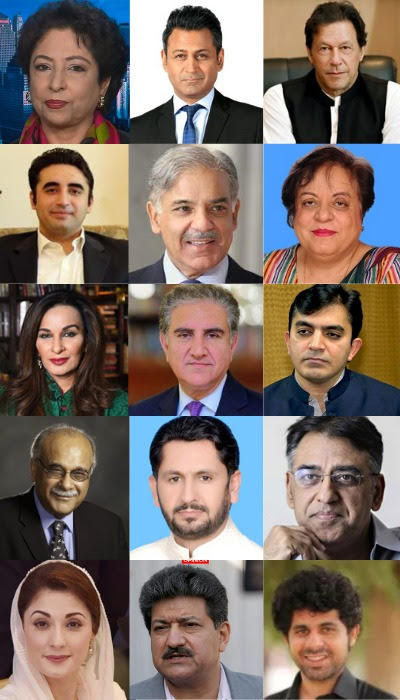
Concluded a very productive visit to Astana. Reiterated Pakistan’s strong commitment to SCO’s principles, vision and goals. Shared Pakistan’s perspective with SCO leaders on important regional and global issues as well as exchanging views to further enhance our bilateral relations with our friends and neighbors. We look forward to hosting the SCO family at the Council of Heads of Government meeting in October 2024. Thank you Astana!
- Shehbaz Sharif
History has been made! Nobody has done this before. PM Shehbaz Sharif advocates for Gaza at the SCO summit in “unambiguous” terms. He also stated that Israel must be held accountable. 37,000 people have been martyred and 2 million people have been displaced.
- Saad Kaiser
In its first year, SIFC has revitalized Pakistan's mining and minerals sector through strategic initiatives, policy reforms, and welfare schemes for miners. These efforts include establishing the Mines and Minerals Division, resolving pending cases, and fostering public-private partnerships for feasibility studies. The government's decision to overhaul policies in the pink rock salt sector aims to attract $13 billion in investments. Proactive measures have already boosted revenue by 24%, exceeding expectations and setting the stage for continued economic growth.
- Balochistan Current Affairs
|
|
|
|
“We must recognise the historical roots of our predicament.”
-An opinion in Dawn, ‘Patrons vs people’
|
|
|