CWA # 2327
PR Explainer
The Moscow Consultations and the Afghanistan-Pakistan Conflict:
Why did it fail? Why are the Af-Pak tensions escalating?
|
Advik Sunanda Mohan
30 October 2026
|
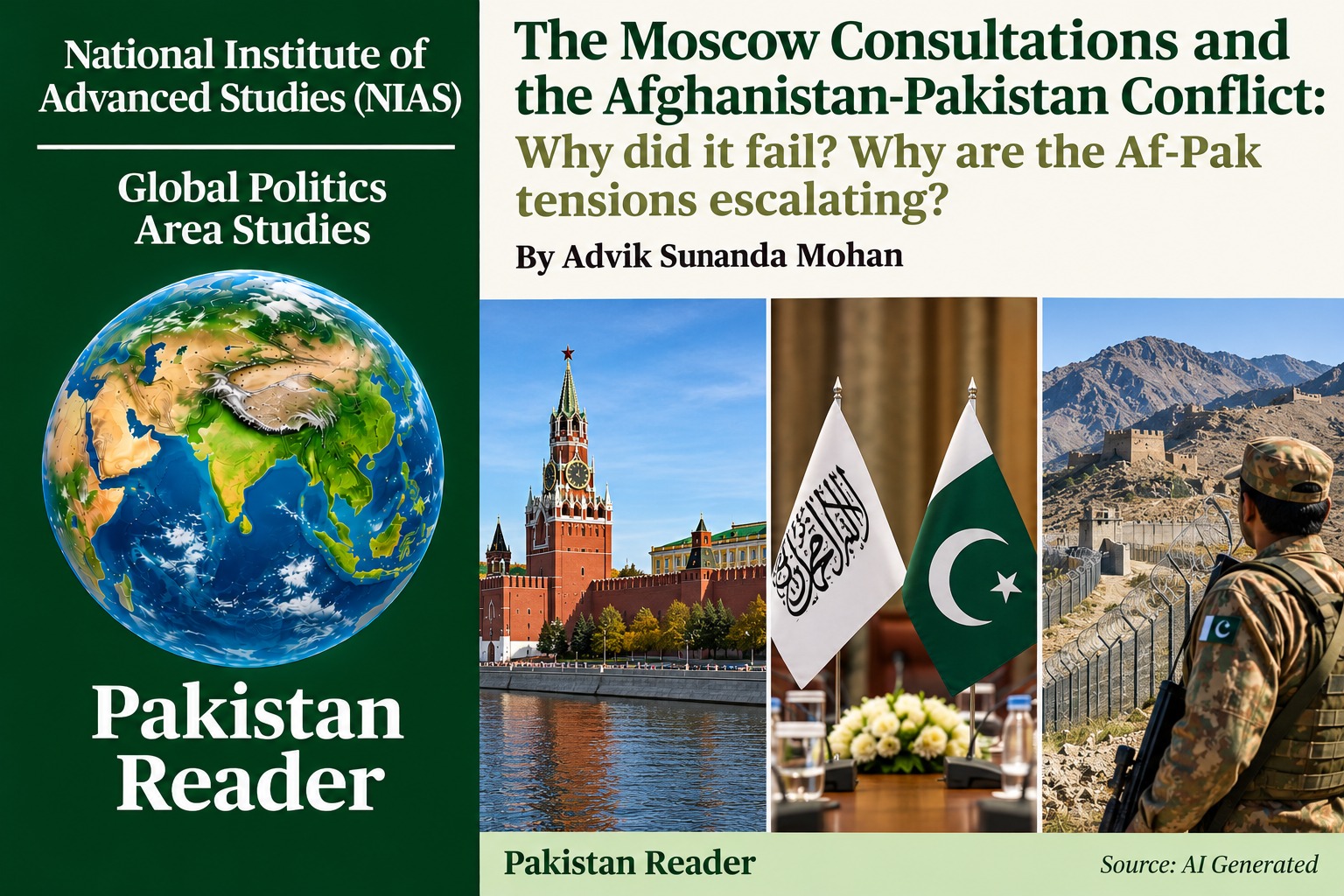
On 05 October, the eighth summit of the Moscow Format Consultations on Afghanistan was held in Moscow. The session was chaired jointly by Russian Foreign Minister Sergey Lavrov and Russian Special Envoy to Afghanistan Zamir Kabulov. 10 member states, namely Afghanistan, Pakistan, Russia, China, India, Iran, Kazakhstan, Kyrgyzstan, Tajikistan, and Uzbekistan attended the summit. Additionally, Belarus and Egypt attended in the capacity of guest delegations. The summit ended without a joint statement or declaration for the first time in its history. Kabulov said that the Afghan delegation’s objection to being referred to in a terrorism-related context was the reason for the failure. According to Kabulov, Afghanistan’s position was that the situation had changed owing to its ongoing conflict with Pakistan.
What is the Moscow Consultations on Afghanistan about?
The Moscow Format on Consultations on Afghanistan is a regional dialogue started by Russia in 2017 with the objective of promoting political dialogue, stability, and joint counterterrorism efforts in Afghanistan. It consists of 11 participating countries, including India, China and Iran. The platform brings regional stakeholders together to discuss meaningful solutions for crises in Afghanistan. Past meetings of the forum have focused on various issues, including counterterrorism efforts, regional connectivity initiatives, and the narcotics trade. They managed to produce joint communiques and statements emphasising joint action in countering these issues. The Moscow Format also proved to be a success in providing a venue for dialogue between the differing political groupings in Afghanistan, when representatives from the Afghan government and the Taliban participated in discussions at the 2018 and 2019 meetings. Another success of the Moscow Format has been in providing an alternative, non-Western grouping of regional powers to discuss matters connected to Afghanistan and reach a consensus. The key agenda item for the latest edition was resolving the tensions between Pakistan and Afghanistan.
What is the interest of member states in the Moscow Format?
Three key common points of focus for all the member states have been counterterrorism, controlling the narcotics networks and ensuring effective trade and regional connectivity. Neighbouring states such as China and the Central Asian states have been worried about the impact of regional terrorist groups like Islamic State-Khorasan Province (IS-K) using Afghanistan as a base to carry out terrorist attacks. The continuing involvement helps in ensuring that Afghan territory is not used by terror groups to target neighbouring states. Similarly, China views involvement in Afghanistan as integral towards preserving itself from terror attacks and protecting its substantial investments in neighbouring Belt and Road Initiative infrastructure. From the perspective of controlling narcotics networks, these discussions help member states engage directly with Afghan governments to deal with issues like illegal smuggling of drugs and enforcement of border security. Additionally, economic and trade ties, alongside ensuring regional connectivity, are a key point of discussion with Afghan authorities. Different member states have their own interests as well. For instance, Iran and Pakistan share a common interest in ensuring that terror networks in Afghanistan do not target neighbouring Baluchistan province. Islamabad has concerns that the Tehreek- i- Taliban Pakistan (TTP) operates in Afghanistan. The guarantee of an atmosphere of security which does not contribute towards an increase in the number of Afghan refugees entering these countries is another key point. India’s interest lies in ensuring it maintains a strategic presence in Afghanistan, without being sidelined entirely in favour of Pakistan.
Why are the Af-Pak tensions escalating?
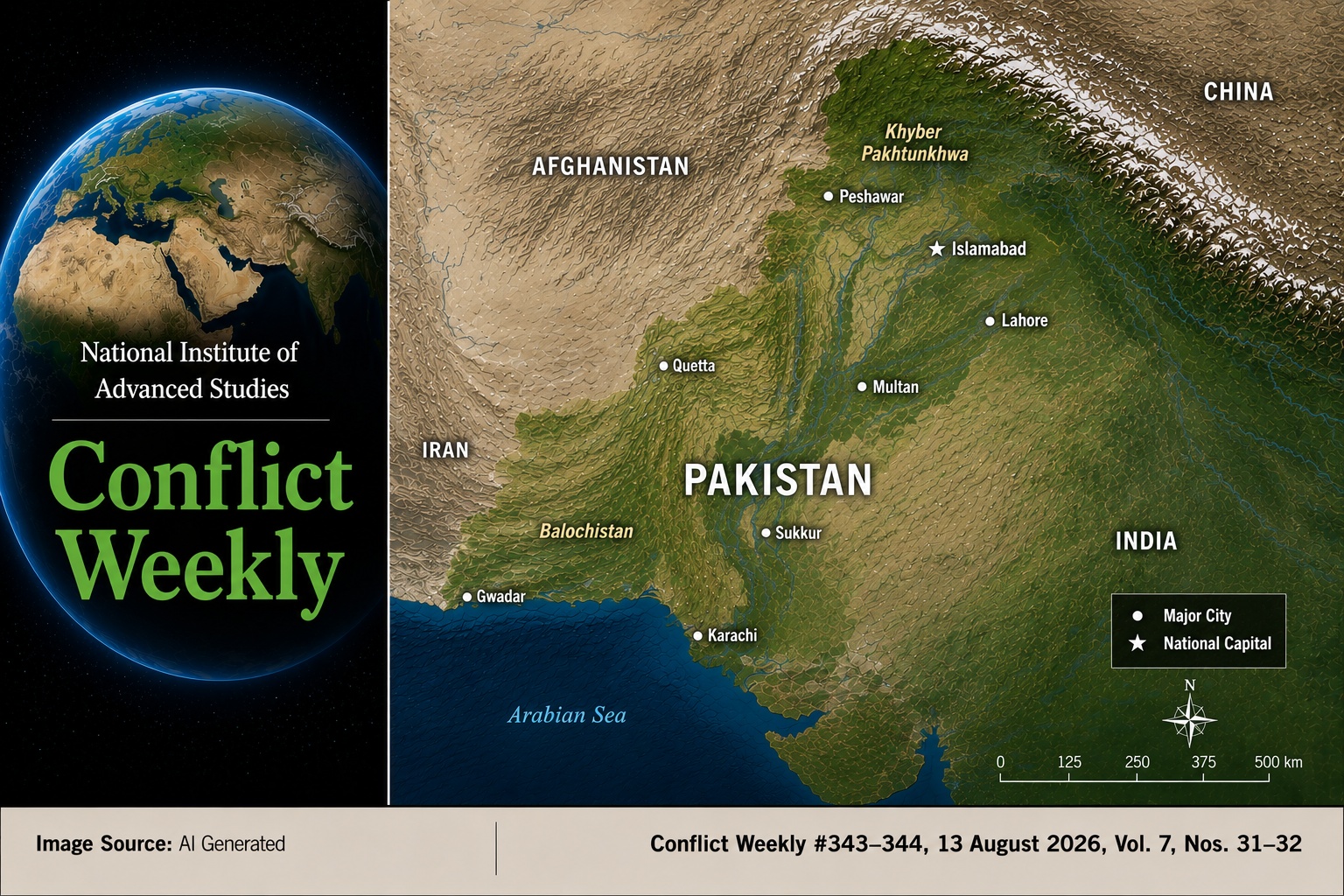
The recent meeting of the Moscow Consultations was overshadowed by the ongoing open conflict between two member states in Pakistan and Afghanistan, which began in February. Hostilities appear to have intensified after a brief lull. After the Kohat attack on 18 September left 31 dead, Pakistan has intensified attacks against supposed militant targets inside Afghanistan. Afghanistan has accused Pakistan of sending fighters to destabilise the country. The Defence Ministry claimed that 28 fighters crossed the Pakistan border to enter Afghanistan. Pakistan has faced allegations from Kabul of targeting Afghan civilians. The recent developments indicate a fundamental lack of trust between the two countries.
This mutual mistrust was on display during the recent Moscow Consultations. For the first time in the history of the dialogue, there was no joint communique or statement agreed upon. According to Russian Special Representative to Afghanistan Zamir Kabulov, Kabul objected to reportedly being mentioned too many times in the context of national security. The Afghan government’s position was that in light of the ongoing conflict with Pakistan, the language being used was outdated and did not take Afghanistan’s interests into account. Pakistan’s position is that Afghanistan is responsible for terrorist attacks on Pakistani territory. The government has repeatedly alleged that Afghanistan is providing refuge to terrorist groups such as the Tehreek-i-Taliban Pakistan (TTP), which is responsible for terrorist attacks on Pakistani territory. Islamabad believes that its national security is at risk from Afghan support for these groups. On the other hand, Afghanistan considers itself to be a victim of violence perpetuated by the Pakistani government and army. Kabul positions the debate in terms of its sovereignty under threat. According to Afghanistan, attacks by Pakistan have resulted in civilian casualties and significant damage to the Afghan economy. The government perspective is that there need to be assurances for Afghan sovereignty. This creates a difference between Pakistan’s security position on the one side, and Afghanistan’s emphasis on sovereignty. With this fundamental divide, concrete action through the Moscow Dialogue appears difficult until the concerns are met.
References
“Moscow consultations end without joint statement because of differences between Pak, Afghanistan,” Hindustan Times, 06 October 2026
“Moscow Format has become a talk-shop. Afghanistan is receding from global agenda,” The Print, 07 October 2026
About the author
Advik Sunanda Mohan is a postgraduate student at the Paris School of International Affairs, Sciences Po. He is currently a Research Intern at the National Institute of Advanced Studies.