CWA # 2328
PR Explainer
The Makkah Defence Pact:
Defence commitments, Economic dependence, Parliamentary oversight and Relations with Iran

|
Radhika M Agarwal
30 October 2026
|
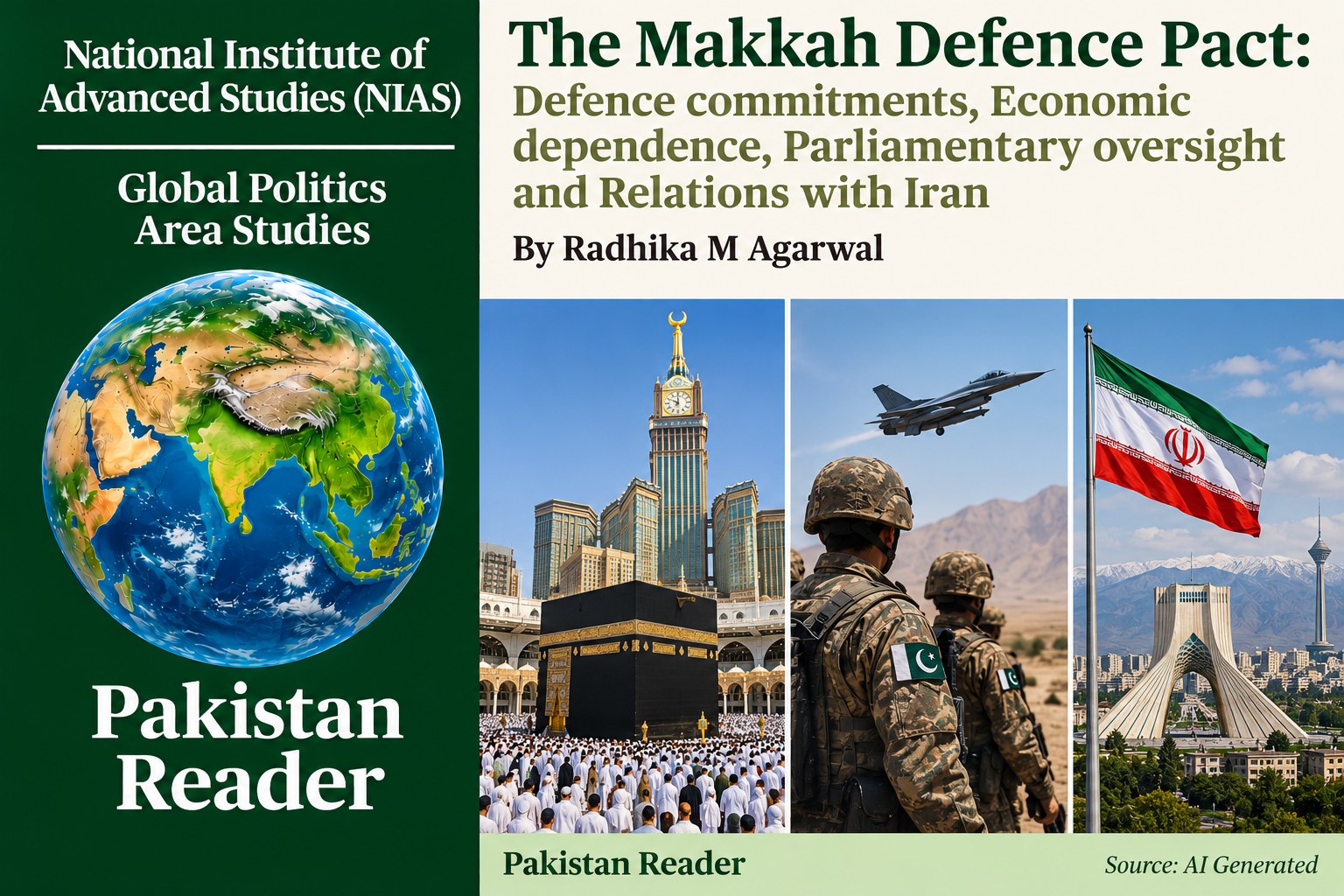
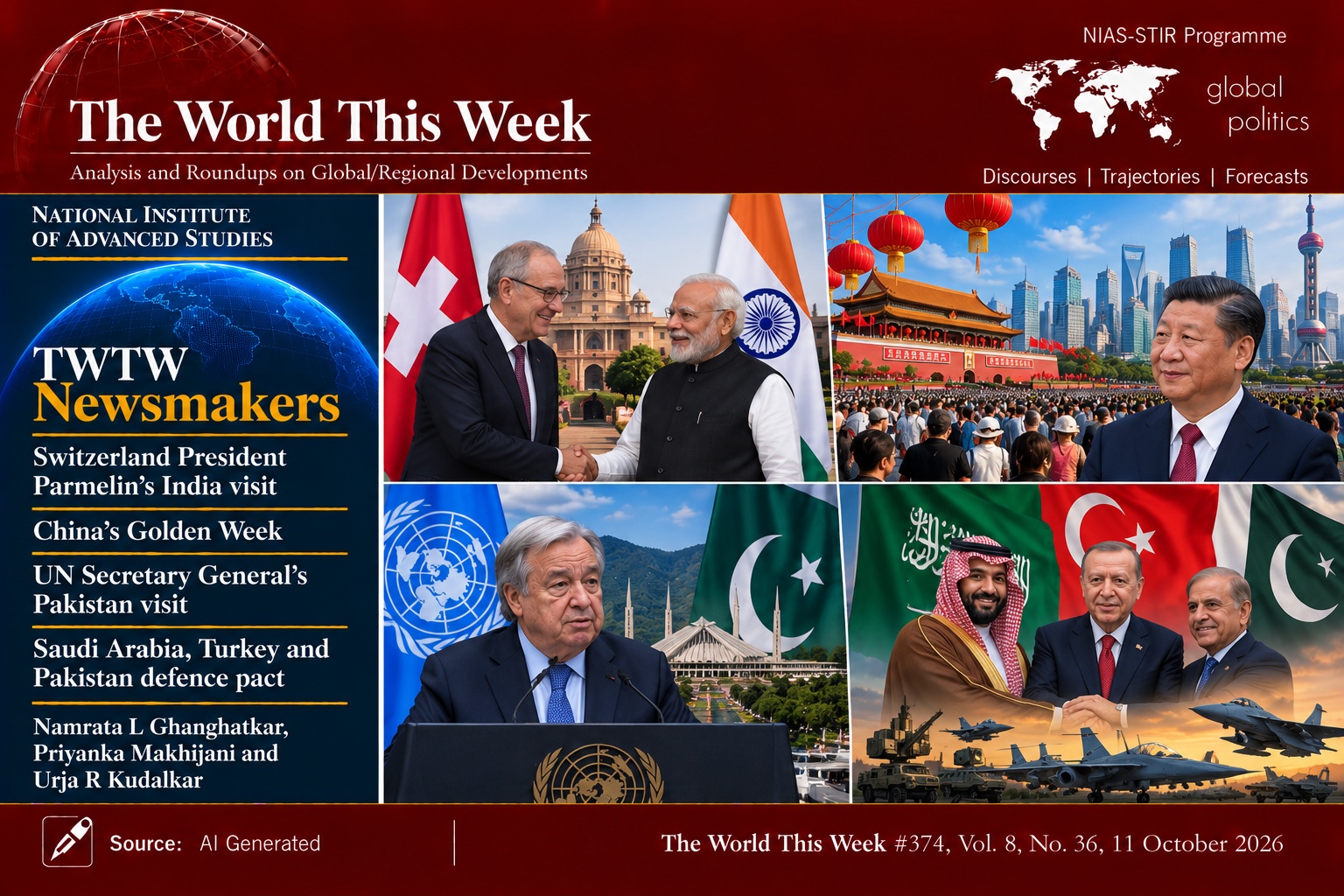
On 07 August, Pakistan, Saudi Arabia and Türkiye signed the Makkah Joint Defence Agreement, agreeing to treat an armed attack on one as an attack on all. Supporters present it as a defensive step forward; sceptics ask whether it writes Pakistan's reliance on Riyadh into a treaty or leaves the country exposed in Yemen and in its dealings with Iran. No credible poll on the pact exists, and the only survey located covered the earlier bilateral agreement.
What does the pact require, and what has changed since signing?
The full text surfaced only on 20 October, when Türkiye sent it to its parliament. It promises immediate assistance, yet Article 2 leaves each party to judge the scope and nature of that help once it has assessed the need. Article 16 brings the agreement into force after the last ratification and rules out withdrawal for ten years. On 5 October, the committee met in Riyadh, appointed Lieutenant General (retd) Nauman Mahmood of Pakistan as secretary-general and agreed to rapid deployment "in accordance with the approved arrangements and the national legislation of the parties". The duty is conditional, and the institutions have moved faster than the ratifications.
Is it a foreign-policy success or another Saudi agreement?
Pakistan presents the pact as collective deterrence and recognition of its standing, and the military describes it as formalising a decades-old relationship. Both are official framings, not proof of change. What has materialised is institutional: a Riyadh secretariat under a Pakistani, a ministerial committee, and a legal basis for defence-industrial work under Article 7. Domestic commentary divides over scope rather than purpose: some welcome the pact in action, others back defending the kingdom but not fighting in Yemen. Türkiye is the real addition to the September 2025 agreement, but its contribution is prospective, since Foreign Minister Hakan Fidan has ruled out sending Turkish troops to attack. The institution is new. The strategic gain has yet to be shown.
Does it free Pakistan from dependence?
The money cannot be credited to the pact. Saudi Arabia's three-year rollover of a USD 5 billion deposit, to December 2028, was announced on 29 July, and a 15-year, USD 6.7 billion oil facility was still under discussion on 14 October. Foreign direct investment fell 34 per cent in 2025–26, before the pact. Autonomy is a separate question. The Foreign Office treats the commitments as executive business, which has been described as a departure from 2015, when parliament set Yemen policy. Pakistan People's Party chairman Bilawal Bhutto Zardari and Jamiat Ulema-e-Islam (F) chief Maulana Fazlur Rehman welcomed the pact, and the sources reviewed show no opposition statement against it, though Pakistan Tehreek-e-Insaf's position was not found. Dependence looks unchanged, and parliament has no stated role.
Can Pakistan keep Iran onside?
So far, yes. Iranian Foreign Ministry spokesman Esmaeil Baghaei said on 10 August that he saw no reason to think the pact targets it, and the text names no threat. Official lines diverge: in September, strikes on the Houthis were called hypothetical, yet on 8 October Defence Minister Khawaja Asif said nothing in the pact bars direct involvement. Against that, Iranian President Masoud Pezeshkian thanked Chief of Defence Forces Field Marshal Asim Munir for his 20 October visit. The channel is intact, and the risk remains prospective.
What would prove that the pact works?
Announced: rapid deployment, a secretariat, joint industry. Done: committee meetings, a secretary-general, and Pakistani personnel who, the military says, have served in the kingdom for decades. Still pending: Türkiye's ratification, a Saudi headquarters agreement, the protocols Article 8 requires, and Turkish parliamentary permission for troops abroad. Three things would settle the question: Turkish ratification and deposit, a Pakistani parliamentary debate that fixes deployment limits, and a concluded Saudi oil or industrial deal that can be tied to the pact.
To conclude, the evidence best supports a strategic opportunity whose benefits are unproven. The documented gains are institutional: a committee, a Pakistani-led secretariat and a framework for industrial cooperation. No economic return can yet be attributed to the pact, since the financing predates it. The main risk lies in how Article 2's discretion is used and who authorises it. The Iranian channel holds, and the India balance has not shifted. Unresolved are Pakistan's deployment, parliament's role, and the pact's entry into force. The decisive test is whether Pakistan can decline combat in Yemen, under its own legislature and Article 2, without losing either Riyadh or Tehran.
References
“Turkiye moves to ratify Mecca defence pact,” Al Jazeera, 20 October 2026
“'Closely following development': India reacts to Turkey-Pakistan-Saudi defence deal,” Tribune India, 07 August 2026
“CDF Munir-Pezeshkian meeting raises peace hopes,” Dawn, 21 October 2026
“Defence accord draws cross-party praise,” The Express Tribune, 09 August 2026
“India-Saudi Arabia: Economic and commercial brief,” Embassy of India, Riyadh
“Foreign direct investment in Pakistan falls 34% to $1.64 billion in FY26,” Profit, 18 July 2026
“Govt seeks 15-year Saudi oil facility,” The Express Tribune, 14 October 2026
“Public perceptions on Pakistan's recent diplomatic & security developments,” IPOR, 2025
“Iran downplays concerns over Makkah pact,” The Express Tribune, 11 August 2026
“KSA rolled over $5 billion for three years, SBP governor says,” The Express Tribune, 29 July 2026
“Makkah alliance binds partners to decade-long pact,” Dawn, 21 October 2026
“Makkah Pact in action,” The Express Tribune, 07 October 2026
“No stipulation in Makkah pact bars 'direct involvement' in case of threat to a member: Asif,” Dawn, 08 October 2026
“Pak-Iran border reopens as CDF visits Tehran,” The Express Tribune, 21 October 2026
“Pakistan plays down Yemen war role,” The Express Tribune, 11 September 2026
“Pakistan, Turkiye, Saudi Arabia agree to rapid force deployment,” Dawn, 05 October 2026
“Parliament's place,” Dawn, 11 October 2026
“Pakistan military confirms deployment of forces to Saudi Arabia,” Arab News, 08 October 2026
“Turkey submits Saudi-Pakistan defence pact to parliament,” The Express Tribune, 20 October 2026
“Saudi deployment,” Dawn, 07 October 2026
“Emergency meeting of the Strategic Political and Defense Committee,” Saudi Press Agency, 05 October 2026
“Saudi-Pakistan-Türkiye defence pact: New security challenge for India?,” Free Press Journal
“Text of the Makkah defence agreement,” Dawn, 21 October 2026
“'What has the Mecca Pact done...?' Here's what S. Jaishankar said,” The Week, 22 August 2026
About the author
Radhika M Agarwal is currently an intern at the National Institute of Advanced Studies and is a postgraduate student in the department of Politics and International Relations at Pandit Deendayal Energy University, Gandhinagar.