CWA # 2347
CRPR Explainers
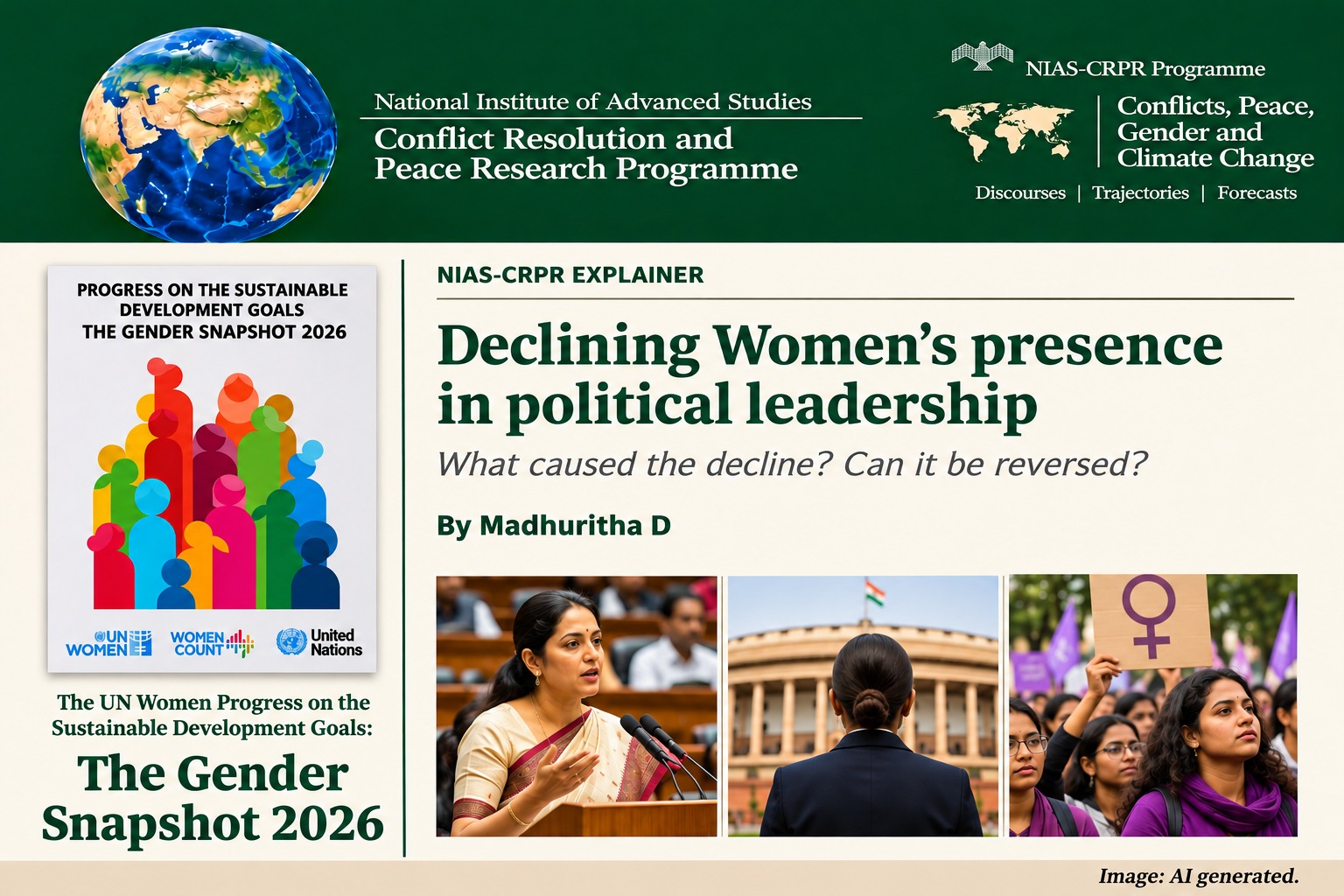
Declining Women's presence in political leadership:
What caused the decline? Can it be reversed?
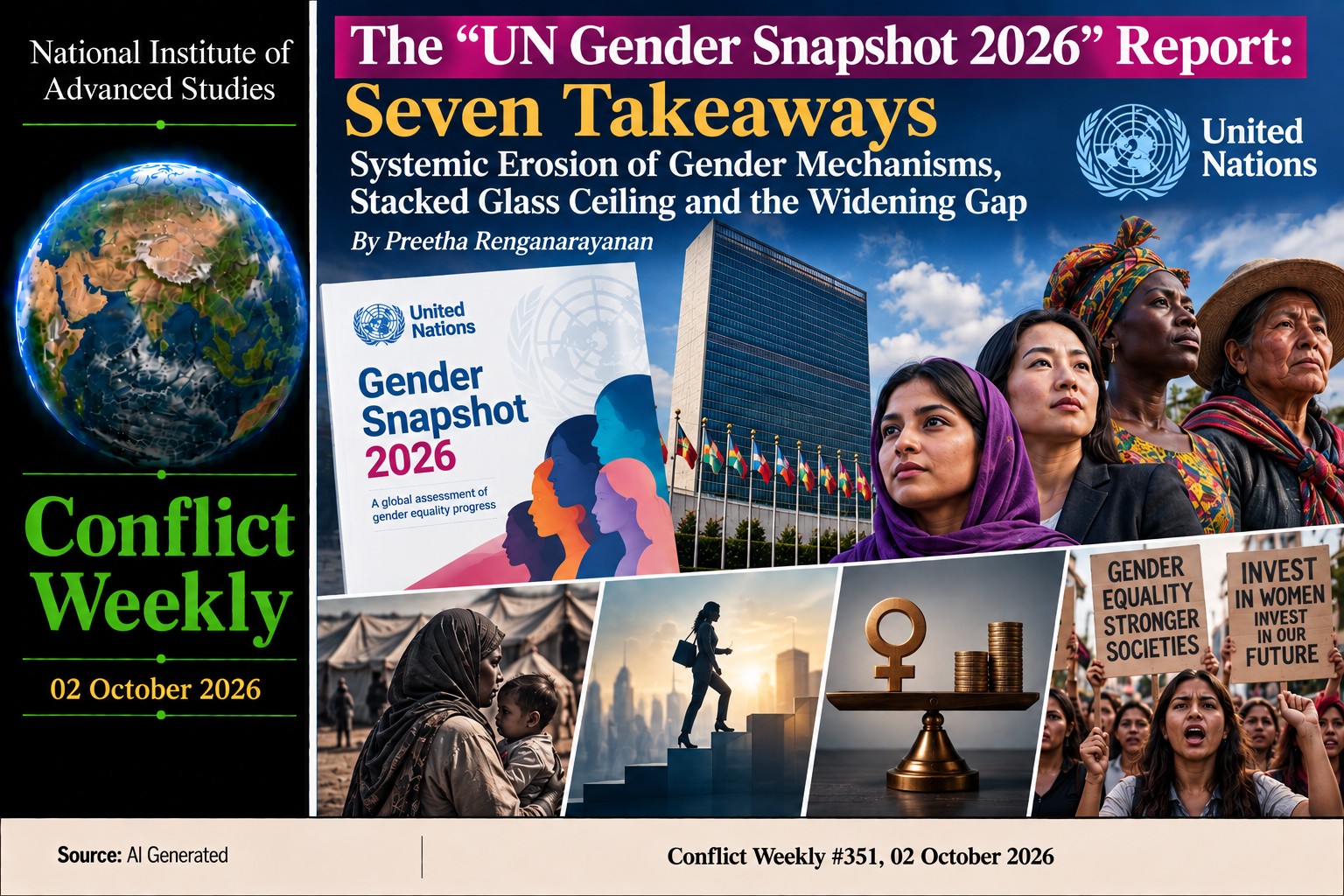
Review of the report titled "The UN Women Progress on the Sustainable Development Goals: The Gender Snapshot 2026."

|
Madhuritha D
23 November 2026
|
“Gender-sensitive rules and budgeting will reduce the disproportionate spending of women candidates. This enables the participation of women from different classes and communities, providing a wide range of experience-based legislators and leaders.”
According to the UN Gender Snapshot 2026, progress toward gender parity has stagnated and reversed. The report notes that this decline is significant in the political sphere, as the deterioration follows years of positive momentum. The drop extends to national parliaments, local governments, parliamentary forums and ministry portfolios.
This review discusses the reasons behind the regression, its impact, and the ways to bring the movement for gender equality back on track.
What happened to the political space for women in leadership?
During the recent years, the progress of gender parity in political leadership has been derailed. With women’s position in national parliaments declining to 22.4 percent, the report notes that it will take until 2089 to achieve gender parity in the field. This includes the share of women’s representation declining in 54 countries worldwide.
The level of representation in local governments remains higher than in national parliaments, however, rising only 0.1 percent from 2025. The report states that it includes a drop in 27 countries, along with up to a 3 percent decrease in 11 countries. It proves that progress without addressing the persisting barriers will result in stagnation.
Women’s parliamentary leadership also faces a setback. It highlights that only 54 women have served as speakers globally, contributing to a 4 percentage-point decline from last year and the first-ever drop in 21 years. Moreover, women chaired over two-thirds of parliamentary committees on gender equality and nearly half of youth committees, but fewer than one in five committees on defence and finances. Neglect of women in mainstream committees and ministries shows that there is no real power even after entering national parliaments and forums.
What has caused the decline recently?
First, the continuous violence against women in politics deters them from running for office. According to data from UN Women, 8 in 10 parliamentary election candidates and 6 in 10 local government candidates experience violence and harassment in multiple forms. Men in higher positions in national forums and political parties are often the major perpetrators.
Second, public intimidation of women in power, as well as candidates, discourages them from holding their positions and participating in elections. This is further escalated by digital technology along with the declining acceptance of women as equals among the younger generations of men.
Third, a decrease in gender parity mechanisms and institutions leads to this setback. According to UN Women (2025), in 2020, there were approximately 80 ministries, decreasing to 76 in 2024 and 74 in 2025.
Fourth, the absence of electoral quotas constrains women from entering governments. According to the Gender Snapshot, 93 countries had legislated electoral quotas for women for single- or lower-house parliaments, which is not even half of the total countries. The traditional norms and patriarchal structure highlight its necessity, where women are not considered to fit in leadership positions.
Fifth, the cost of running for office is disproportionate. Women candidates spend, at times, more than 100 times the national average per capita income, according to the 2026 report. This wipes out the opportunity for women from middle-class and poorer backgrounds, forcing them to stay on the receiving end, which will put a particular class and caste in power.
How does it affect governance, policymaking, and women themselves?
First, women are most likely to focus on welfare and progressive policy measures. According to an Inter-Parliamentary Union report (2008), they are also more likely to advocate measures in the areas of health and reproduction, childcare, education, welfare, and the environment, and are generally less militaristic and more supportive of non-violence and peace. The absence of women’s experiences, along with the restraint on advocacy for vulnerable communities, leads to less discussion on what is actually needed for society.
Second, when male parliamentarians emphasise their party stance and ideology, women in national forums focus on smooth negotiations and gender-based policies that bring people-centric governance rather than being in ideological silos. This party-focused division delays the implementation of most-needed policies, weakening governance and preventing timely action on issues that directly affect citizens' lives.
Third, the Gender Snapshot 2026 states that there are 28 women heads of state in 2026, which is an increase from 20 in 2020. However, considering this as a primary element would undermine the intersectionality of vulnerability and the widely existing heterogeneous community. Without adequate representation of women and their experiences, there will always be missed perspectives, unequal opportunities, and misuse of funds.
What can be done to reverse this decline?
To begin with, electoral quotas for women are globally tested and proven effective. There is a 16-point percentage rise in national parliaments and a 17-point percentage rise in local governments in countries with effective gender quotas, as highlighted by the Gender Snapshot 2026. This makes way for more women in decision-making bodies along with new ideas, a refined approach, and different lenses to look at age-old problems.
Gender-sensitive rules and budgeting will reduce the disproportionate spending of women candidates. This enables the participation of women from different classes and communities, providing a wide range of experience-based legislators and leaders. Further, a code of conduct enforcing the elimination of public intimidation will enable women in power to be more focused on welfare and national interests rather than defending their positions.
Training for newly elected parliamentarians and local government leaders, and workshops and guidance for those who are already in power enable women to make decisions by themselves instead of men in their families being in real control of the office.
About the author
Madhuritha D is a postgraduate student in the Department of Political Science, Madras Christian College, Chennai.