CWA # 2351
CRPR Explainers
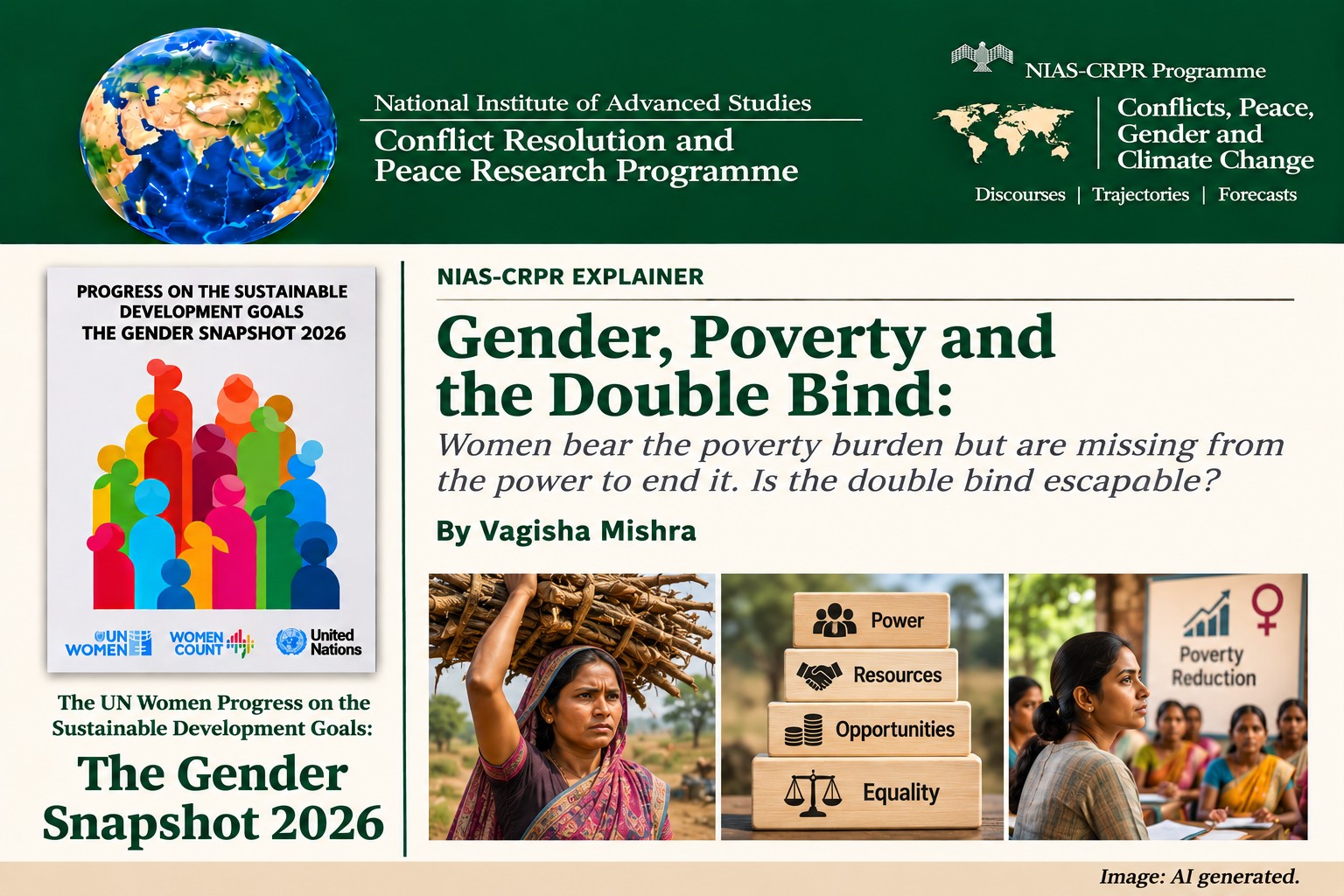
Gender, Poverty and the Double Bind:
Women bear the poverty burden but are missing from the power to end it. Is the double bind escapable?
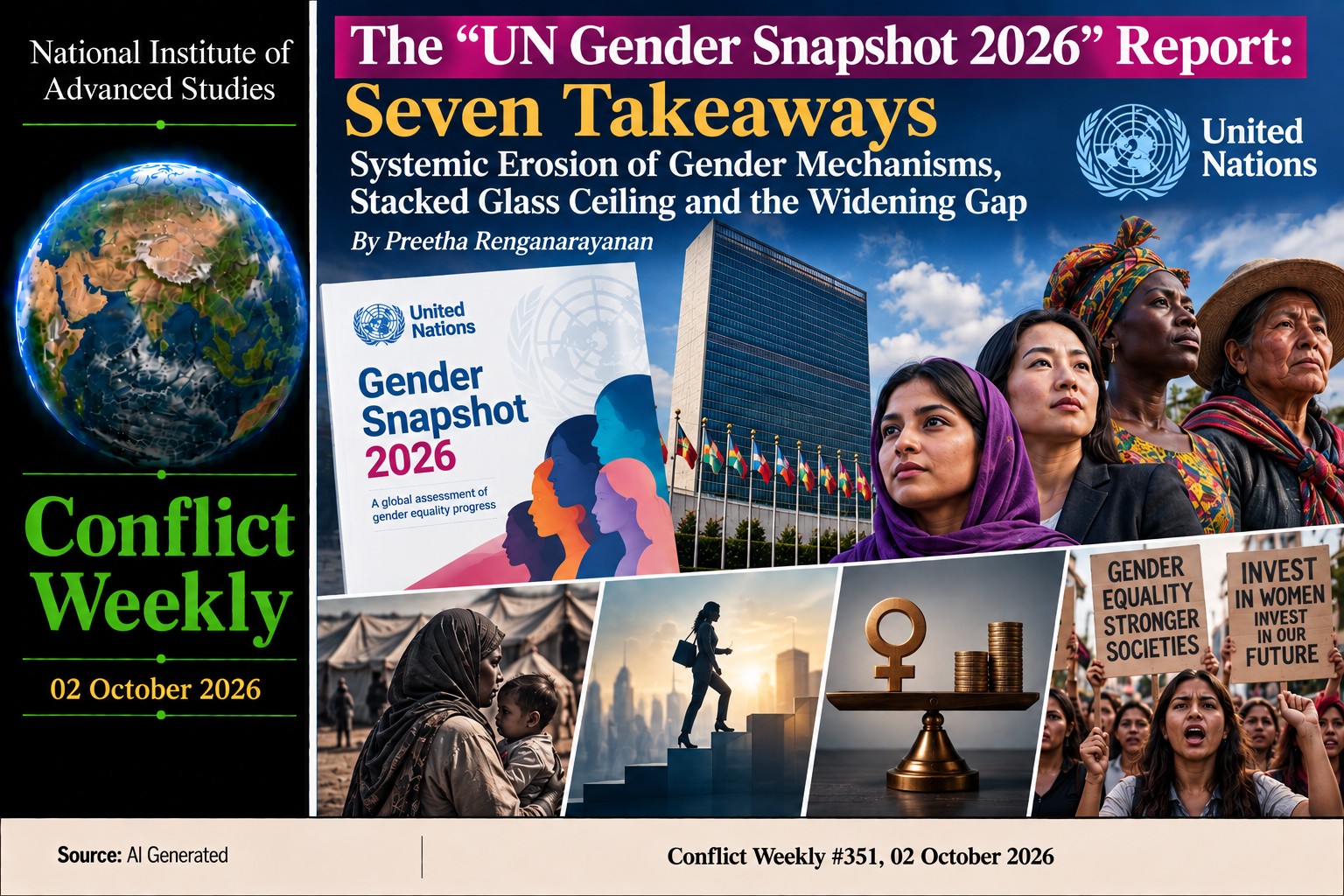
Review of the report titled "The UN Women Progress on the Sustainable Development Goals: The Gender Snapshot 2026."
|
Vagisha Mishra
25 November 2026
|
“In both the Global North and Global South, many women who reach the highest decision-making positions come from privileged socioeconomic backgrounds and elite educational institutions. Thus, they lack lived experience of poverty, and applying a purely gendered interpretation to women in poverty risks undermining meaningful representation that can bring about productive change”
A double bind is a situation where a person or group is trapped between two clashing realities, making it almost impossible to escape them. There is a cause and an effect. Burdens of unpaid care work, lower wages, and limited access to resources and education leading to a disproportionate experience of poverty, act as a cause. Exclusion, where women are underrepresented in the key economic and political decision making spaces, becomes its effect. This double bind is not experienced by women as a homogeneous group but is largely influenced by the structural identities that women from different backgrounds carry across generations.
The Gender Snapshot 2026 highlights that women face higher poverty rates than men, with 9.9 percent of women and 9.5 percent of men living in extreme poverty (as of 2024). The poverty gap is largest among young adults, where women's poverty rate exceeds men's by almost two percentage points. This forms the first part of the bind. The second part shows how women hold 19 percent of the ministerial positions responsible for economic portfolios, compared with 40 percent of those responsible for social protection. Even after reaching positions of power—or while trying to get there—63 percent of women candidates for local government experience violence during their campaigns, and 50 percent of female local government members face violence while in office. This highlights the underrepresentation of women in roles that shape poverty reduction policies.
What does the Gender Snapshot 2026 reveal about poverty faced by women? And why are women disproportionately vulnerable to poverty?
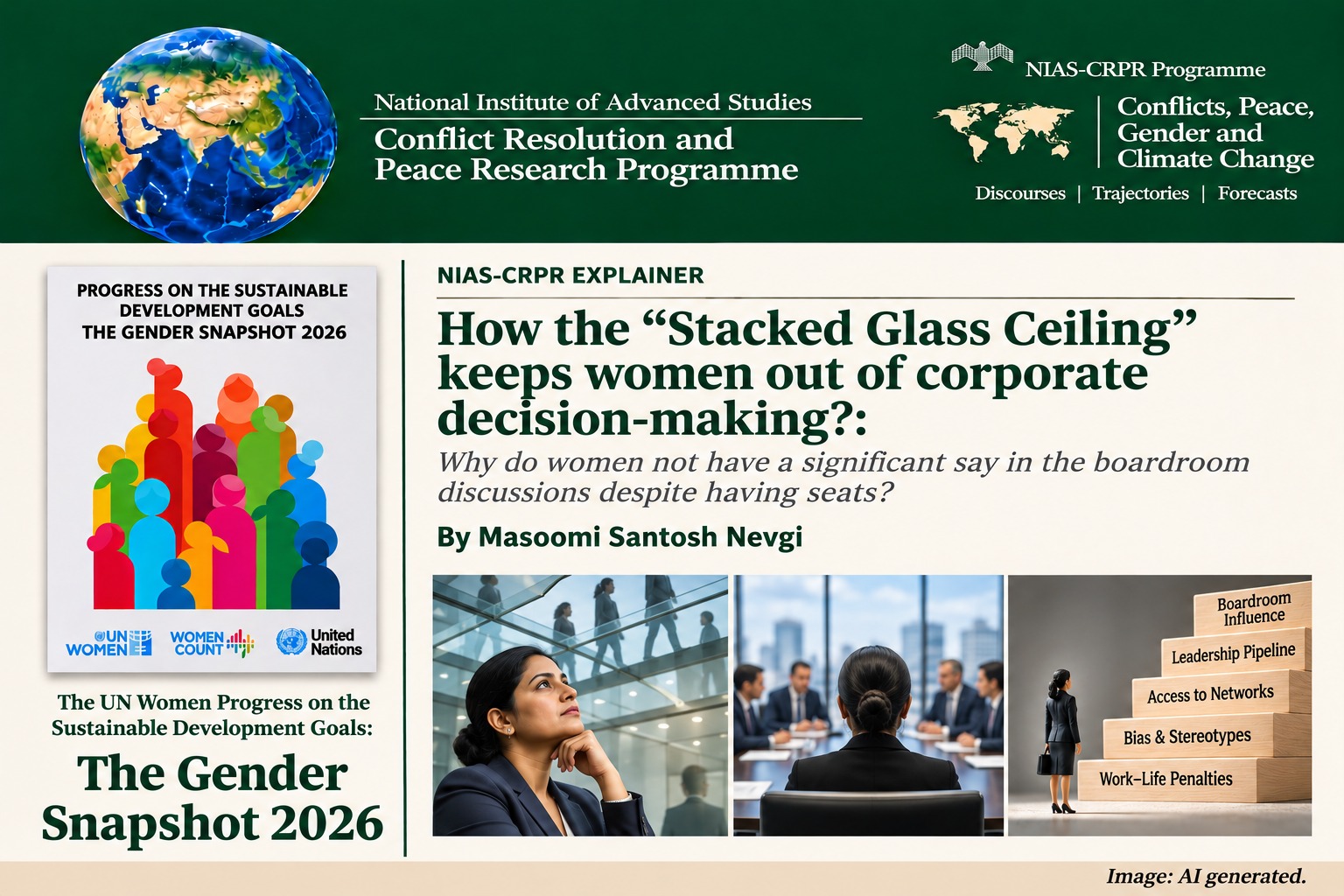
The Gender Snapshot 2026 reported that women hold about 22 percent of cabinet positions globally, while 27.4 percent of national parliamentary seats. Moreover, nine in 10 defense minister roles and eight in 10 finance minister roles are held by men. When it comes to judicial roles, women serve as 31 out of 175 chief justices worldwide. The report focused more on descriptive representation—which is also very disproportionate—rather than substantive representation, which would ensure the interests, concerns, and lived experiences of different groups of women. This homogenizing tendency of considering women across class, caste, race, ethnicity, and indigeneity as a unified group reproduces a gendered solution to structural problems that are collectivist in nature.
Women experience inequality and poverty differently depending on their race, caste, class, and position in the Global South. A prominent example is Bangladesh under Sheikh Hasina, particularly the 2023 protests led by female garment workers. Although the garment industry became a major driver of the country's economic growth, this did not translate into decent wages or working conditions for its predominantly female workforce. Furthermore, many workers and labor organizers faced criminal charges, intimidation, and violence. This demonstrates that having women leaders, even at the highest levels of government, does not guarantee justice. In this context, NGOs, labor unions, and civil society organizations played a major role in the workers' struggle.
What happens when numbers are more important than meaningful representation?
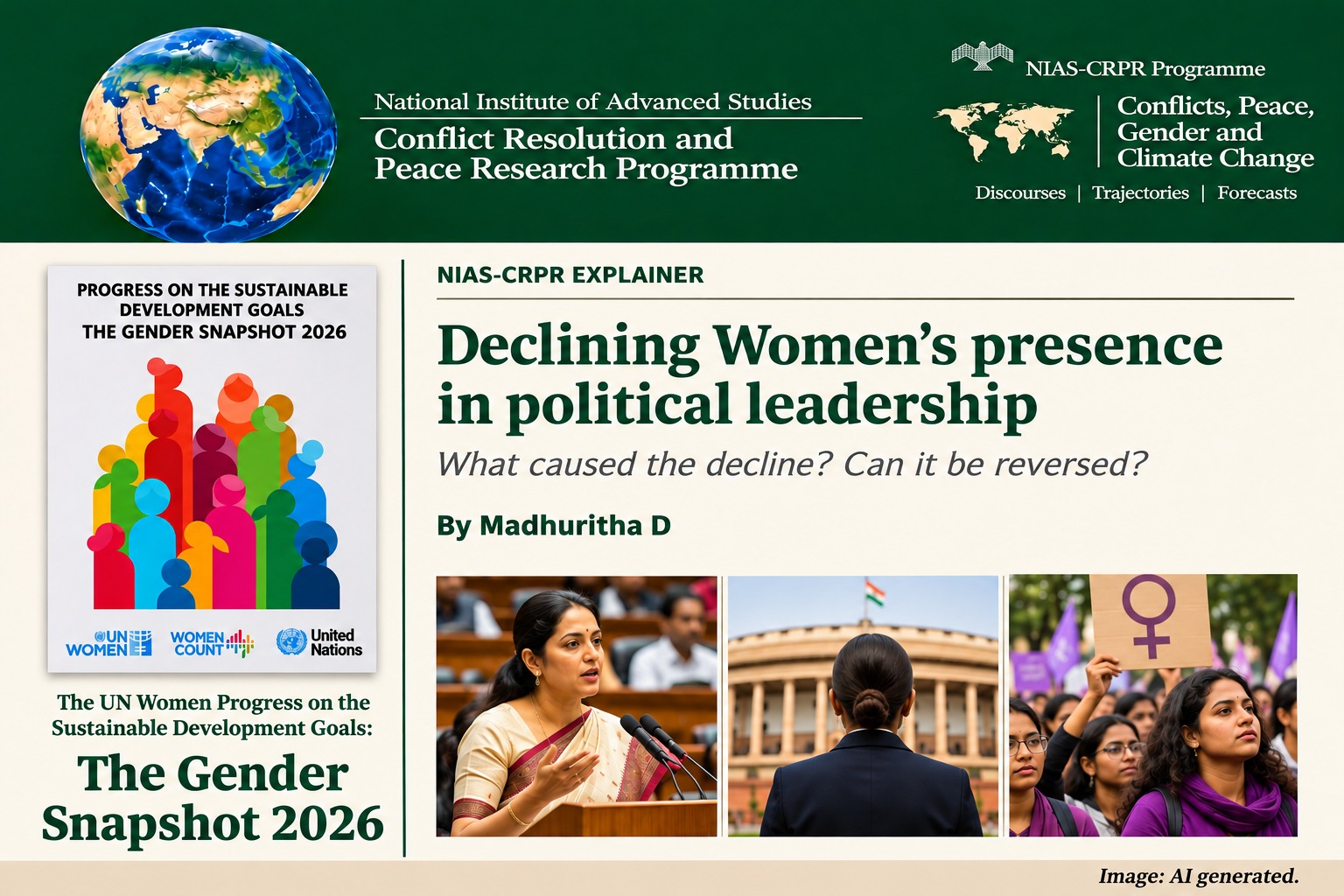
The vast majority of women experiencing absolute poverty reside in the Global South, whereas women in the Global North face lower levels of poverty and inequality, which are largely limited to wage gaps, caregiving burdens, and pockets of economic hardship. In both the Global North and Global South, many women who reach the highest decision-making positions come from privileged socioeconomic backgrounds and elite educational institutions. Thus, they lack lived experience of poverty, and applying a purely gendered interpretation to women in poverty risks undermining meaningful representation that can bring about productive change.
Is the double bind escapable?
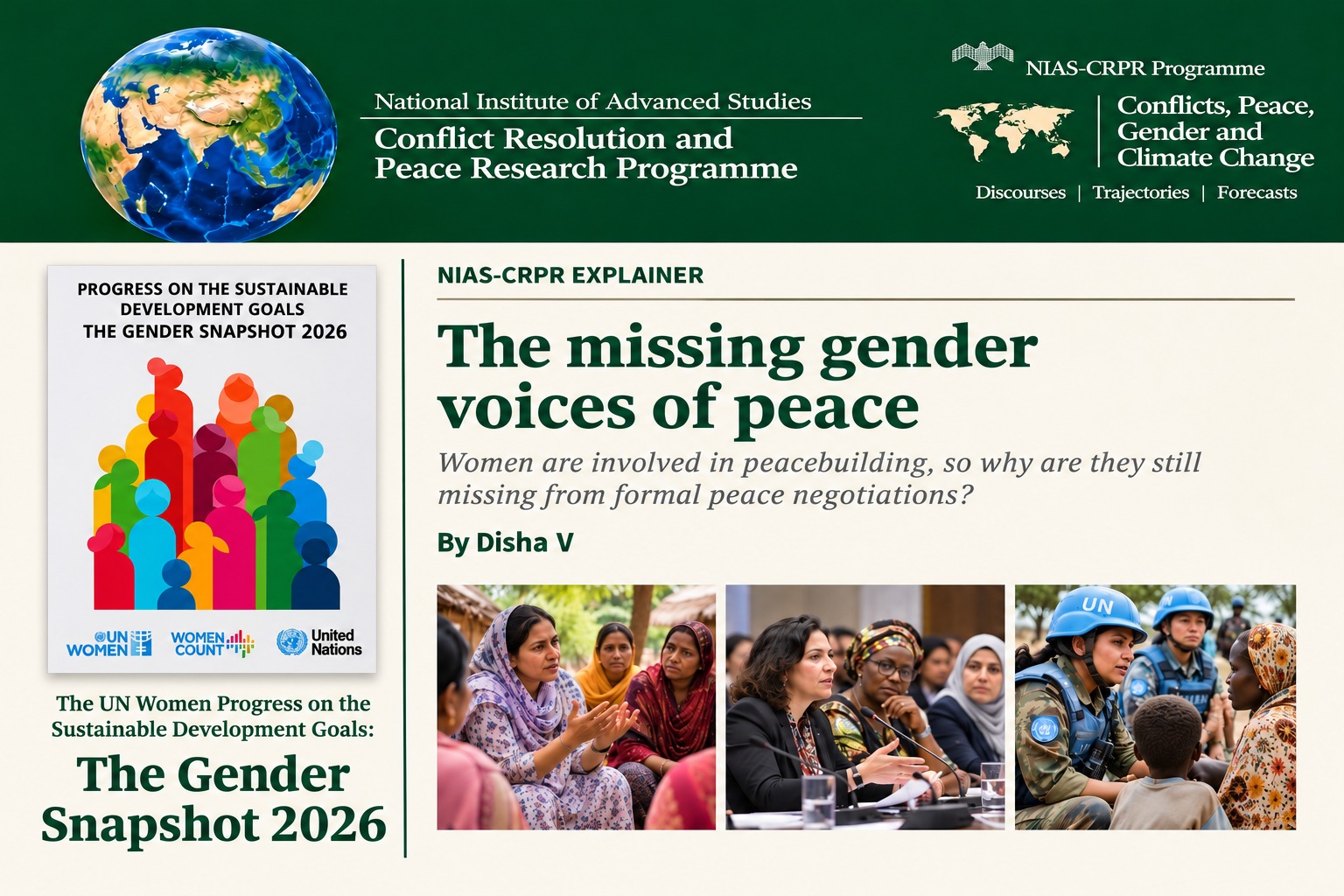
United Nations Security Council Resolution 1325 (UNSCR 1325) recognized the instrumental role of civil society—especially women-led and feminist organizations—in securing women’s equal participation in peace and decision-making. Drawing from the same document, this double bind can be escaped if decision-making, instead of resting on a single representative, becomes a participative and collective process where women and other marginalized people build solidarity, fight for better legislation, and uphold the spirit of democratic decision-making to advance justice. An example is the Rohith Vemula Act campaign in Karnataka, India, that shows how civil society organizations, lawyers, students, and academicians came together to demand institutional reforms that protect marginalized communities in higher educational institutions. Although the Bill has yet to be enacted, it clearly demonstrates collective action to bring in progressive laws.
Moving ahead with symbolic gender representation and towards a meaningful inclusion of women from marginalized communities and poverty- stricken regions in decision making can amplify their lived experiences and enable their participation in shaping economic and social policies. Achieving a genuine redistribution of power calls for a more vibrant environment in which civil societies and NGOs can take the forefront of the struggle.
References
United Nations, "Women, Peace and Security," Office of the Special Adviser on Gender Issues and Advancement of Women, https://www.un.org/womenwatch/osagi/wps/.
UN Women, “Progress on the Sustainable Development Goals: The Gender Snapshot 2026,” 15 September 2026, https://unstats.un.org/sdgs/gender-snapshot/2026/.
Aruna Kashyap, “What Does the EU Due Diligence Directive Mean for Bangladesh?,” Human Rights Watch, 3 June 2024, https://www.hrw.org/news/2024/06/03/what-does-eu-due-diligence-directive-mean-bangladesh.
Amnesty International, “Bangladesh: Garment Workers Must Receive Rights-Based Compensation and Justice Immediately,” 1 May 2024 https://www.amnesty.org/en/latest/news/2024/05/bangladesh-garment-workers-must-receive-rights-based-compensation-and-justice-immediately/.
Campaign for Rohith Act, “Campaign for Rohith Act,” https://campaign4rohithact.wordpress.com/.
About the author
Vagisha Mishra is an undergraduate student in the Department of Political Science, Economics and Sociology at Mount Carmel (Deemed to be University), Bengaluru.