CWA # 1702
Global Politics Explainer
Eleven PIC sign a joint statement with China
Who are the PIC? What is the state of their relationship with Beijing? What is their geo-strategic significance?
Located in the heart of the Indo-Pacific, PICs offer China opportunities to expand its regional influence and counterbalance the United States and Australia

|
Lekshmi MK
7 June 2025
|
Photo Source: Google Maps
On 29 May 2025, a joint statement was issued during the Third China–Pacific Island Countries Foreign Ministers’ Meeting in Xiamen, China. During the discussions, China's allegiance with Pacific Island Countries (PICs) reflected the One-China principle and the extension of the Belt and Road Initiative. The PICs support China’s approach for strategic partnership, mutual development and regional stability.
Who are the Pacific Island Countries?
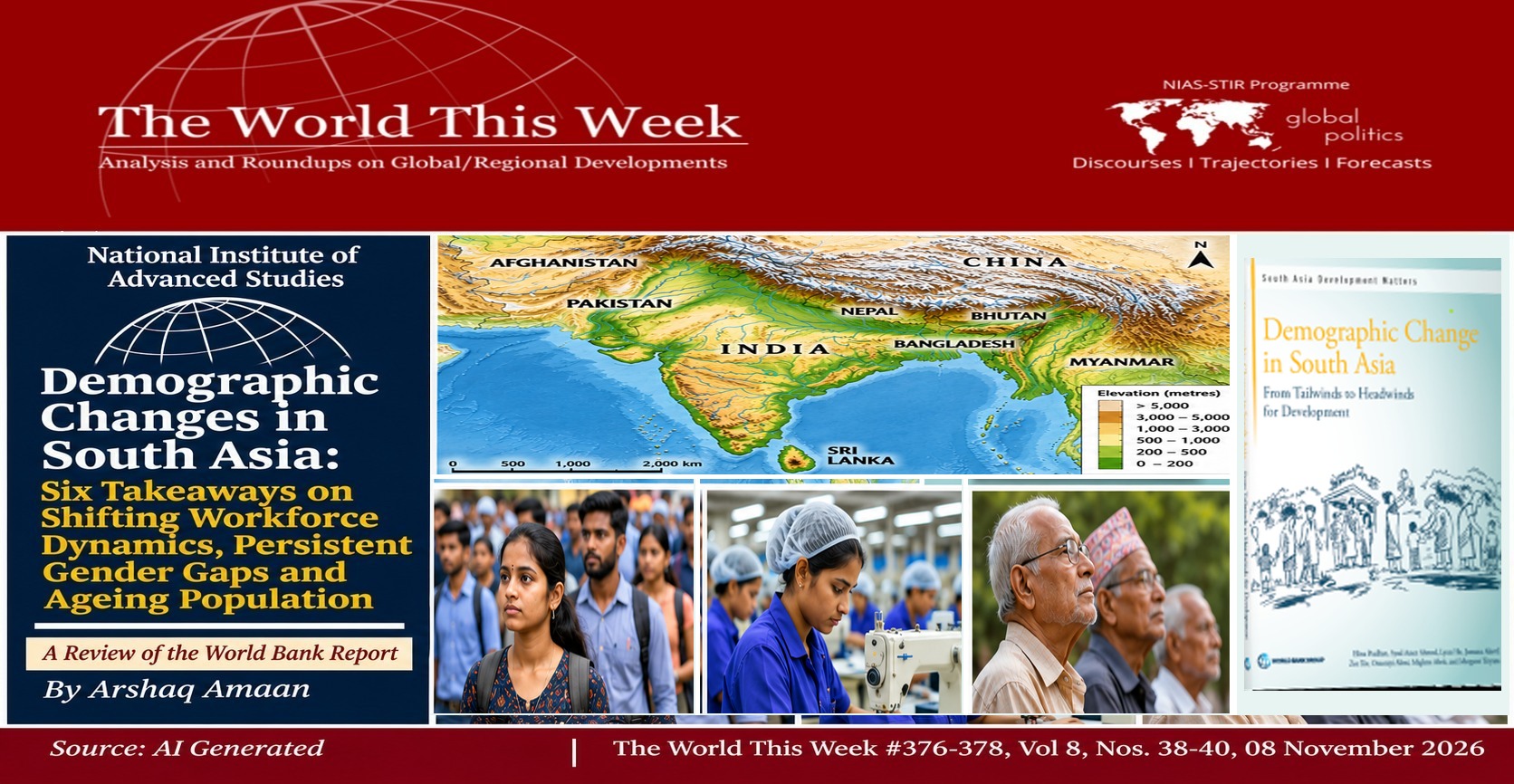
First, the Pacific Island Countries (PICs) comprise fourteen countries located in the Pacific Ocean. Three ethnogeographic groupings of PICs are Melanesia, Micronesia and Polynesia. Melanesia comprises Fiji, Papua New Guinea, Solomon Islands, and Vanuatu; Micronesia comprises Palau, the Marshall Islands, the Federated States of Micronesia, and Nauru; and Polynesia comprises Samoa, Tonga, Tuvalu, Cook Islands, Niue, and Kiribati.
Second, eleven out of the fourteen PICs are independent and democratic countries. The Cook Islands and Niue are self-governing in association with New Zealand. The Federated States of Micronesia, Palau, and the Marshall Islands are independent but have an association with the United States. PICs diaspora is significant in New Zealand, Australia, the United States, France and the United Kingdom, despite their smaller population.
Third, the Pacific Island Countries are members of the Pacific Islands Forum (PIF), which serves as an intergovernmental organisation that unites Pacific nations. This forum serves to address pressing challenges, promote cooperation, and enhnce shared economic, political, and social goals.
What is the history of PIC-China relations?
The political relations commenced in the late 1970s and 1980s, when China established diplomatic ties with Pacific Island Countries (PICs). China later became a Dialogue Partner of the Pacific Islands Forum in 1990. In 2006, the relationship was formalised through the China–Pacific Island Countries Foreign Ministers’ Meetings. In 2019, the second meeting emphasised cooperation under the Belt and Road Initiative (BRI). The third meeting, held in May 2025 in Xiamen, was attended by 11 of the 14 PICs, excluding Papua New Guinea, Tuvalu, and Vanuatu. PICs expressed their support to China's One-China principle by acknowledging Taiwan as part of China. PICs welcomed China’s initiatives, aligning it with their own regional strategies like the 2050 Blue Pacific Continent vision.
Second, the economic relations between China and PICs. Between 1992 and 2021, the trade value between China and PICs increased from USD 153 million to 5.3 billion. By the end of 2021, China's investment in PICs increased to 2.72 billion USD. China has implemented plant projects, grant loans, technical assistance and aiding in building infrastructure such as roads, bridges, hospitals, schools and stadiums. At the 2025 meeting, China pledged support for 200 "small but beautiful" development projects, two million USD in climate assistance, enhanced disaster management, and greater access to its markets. It also proposed cooperation in law enforcement, education, health, tourism, and media diplomacy. China emphasised that its aid is given without political conditions.
Third, cultural relations. As most of the influence were dominated by the Anglo-Pacific and Franco-Pacific relationships, informal people-to-people interactions were minimal before 1970s. China is expanding cooperation in education, health, law enforcement, tourism, media, and public diplomacy. PICs have shown interest in deepening cultural ties and human resource exchanges, supporting mutual understanding and partnership.
What is China’s interest in PICs and vice versa?
First, strategic interests. PICs located in the heart of the Indo-Pacific offer China opportunities to expand its regional influence and counterbalance the United States and Australia. Engaging with China, diversifying the international partnerships for the PICs. This diversification reduces the over-reliance on any single bloc and enhances the multipolar approach. Second, economic interests. Access to natural resources is a significant incentive for China. The development assistance and infrastructure financing provided by China help guarantee access to natural resources like fisheries, timber, and deep-sea minerals. PICs are gaining from increased connectivity, jobs, market access under China's BRI. Additionally, PICs are exporting seafood and agricultural products to provide China's growing consumer base. Third, political interests. China seeks diplomatic support from the PICs, especially on sensitive issues like Taiwan. Despite being small, each PIC has a vote in international organisations like the UN, and their support bolsters China’s global standing and legitimacy. China presents itself as a reliable development partner, often providing aid without political conditions. This appeals to many PICs, who see China as offering viable alternatives to traditional donors. PICs gain international visibility by engaging with China. PICs use their votes to gain extra benefits in multilateral organisations and global governance.
How are the rest responding to the China–PIC relationship?
China's growing engagement with Pacific Island Countries (PICs) is prompting responses from several other nations. The US sees this relationship as an "imminent threat" from China. US has increased aid, diplomatic visits and defense cooperation with PICs to counter global repercussions. Australia and New Zealand emphasise greater transparency from China regarding its military activities by expressing their concerns over China's military buildup. To counter the Chinese influence. France wants to strengthen regional ties through defense and cultural diplomacy.
References
Britannica Editors, "Pacific Islands," Encyclopaedia Britannica, Britannica, 27 May 2024.
Ministry of Foreign Affairs of the People's Republic of China, "Joint Statement of the Third China–Pacific Island Countries Foreign Ministers’ Meeting," Ministry of Foreign Affairs of the People's Republic of China, 29 May 2025.
Xinhua News Agency, "Full text: Joint Statement of the Third China–Pacific Island Countries Foreign Ministers’ Meeting," Global Times, 29 May 2025.
Stephen Dziedzic, "Pacific Island nations support China's Taiwan claims at high-profile foreign ministers' meeting," ABC News, 29 May 2025
Cleo Paskal, "At Foreign Ministers’ Meeting, China–Pacific Islands Relations Steam Ahead," The Diplomat, 2 June 2025.
Reuters, "New Zealand's foreign minister raises concerns over China's Tasman Sea drills," Reuters, 26 February 2025.
About the author
Lekshmi MK is a postgraduate student in the Department of Political Science at Madras Christian College. She is currently a research intern at the National Institute of Advanced Studies (NIAS).