CWA # 2339
Global Politics Explainer
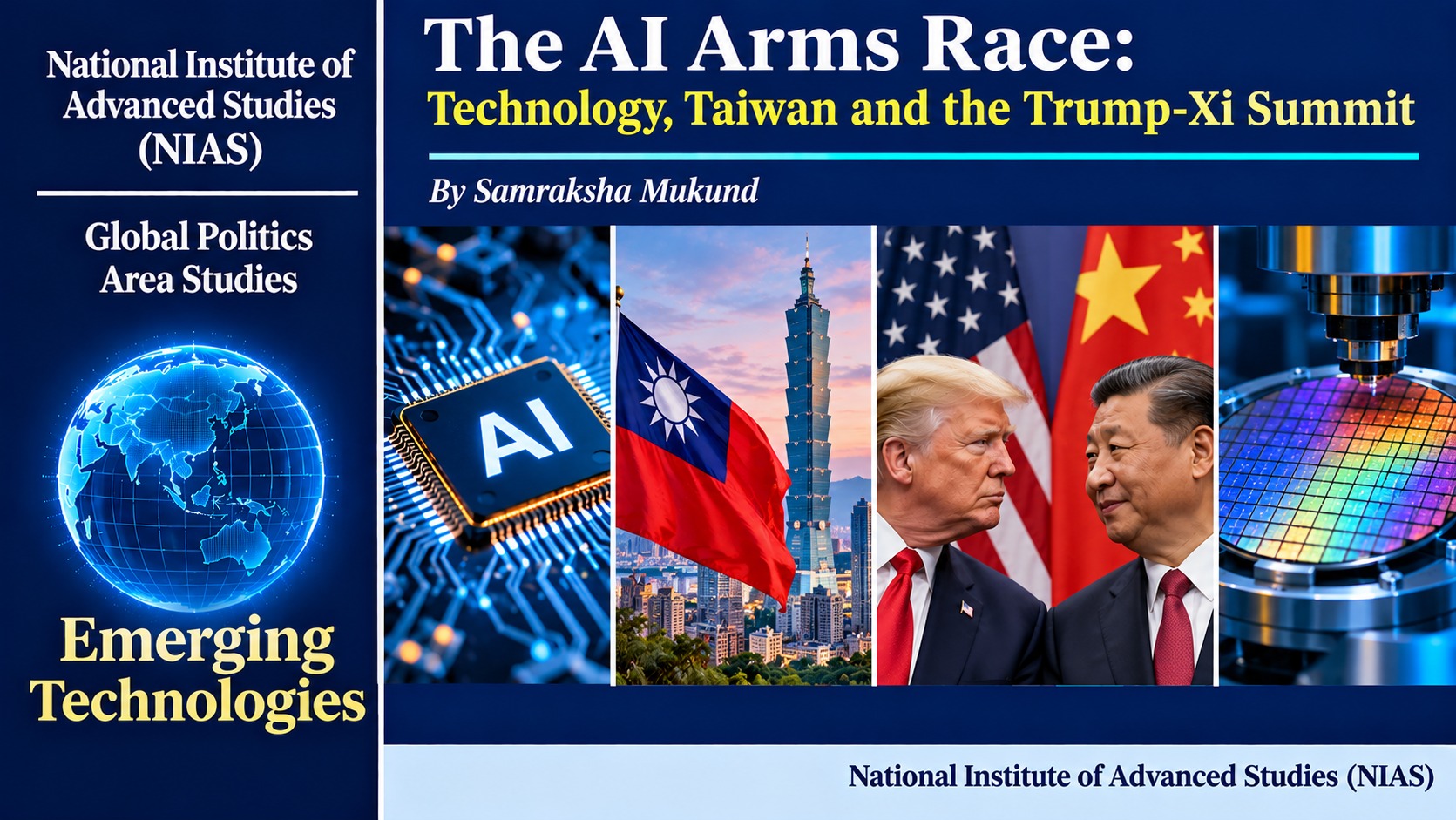
The AI Arms Race:
Technology, Taiwan and the Trump-Xi Summit
How is artificial intelligence reshaping US-China strategic competition and what does the Trump-Xi summit reveal about the road ahead?

|
Samraksha Mukund
11 November 2026
|
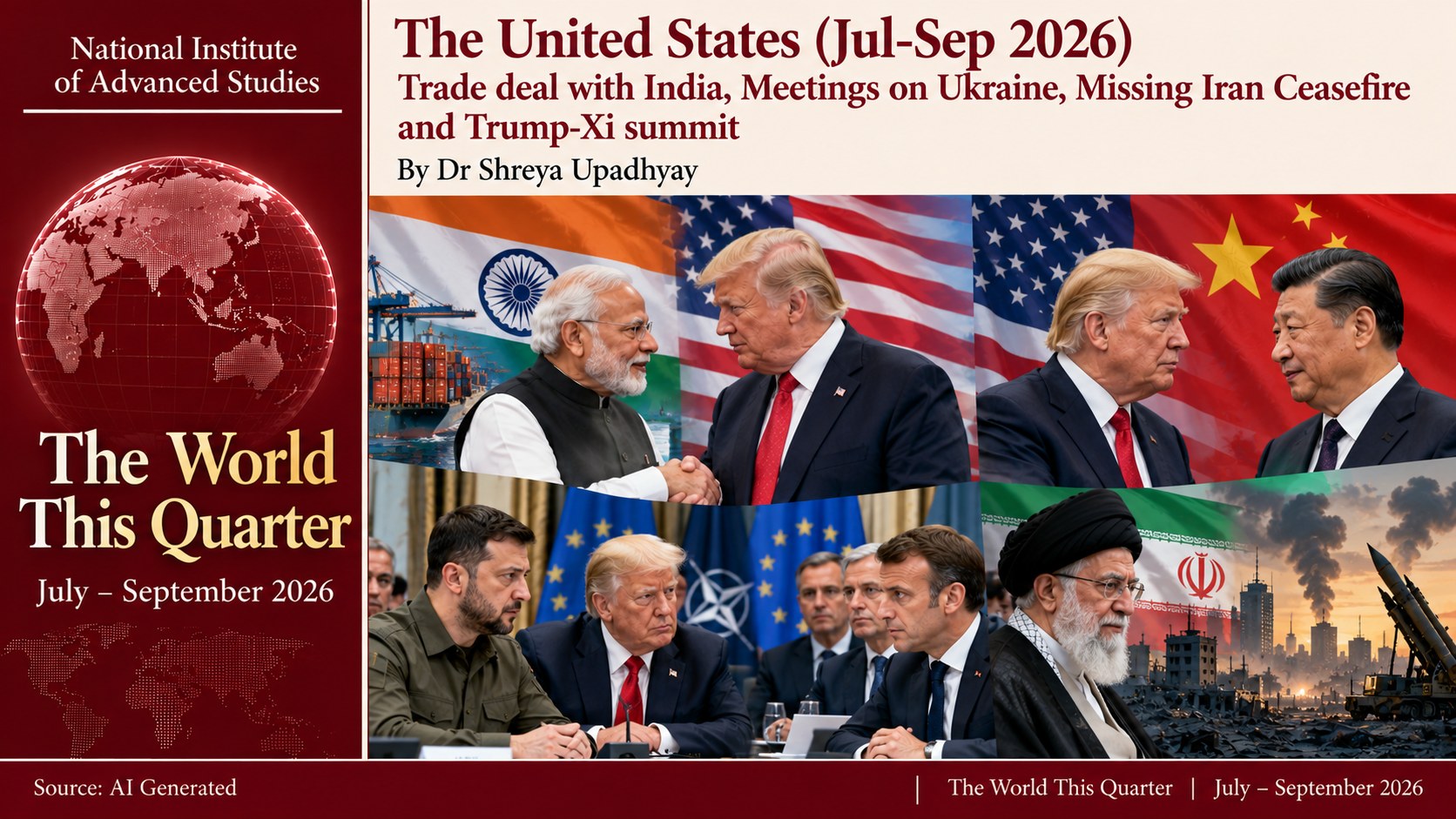
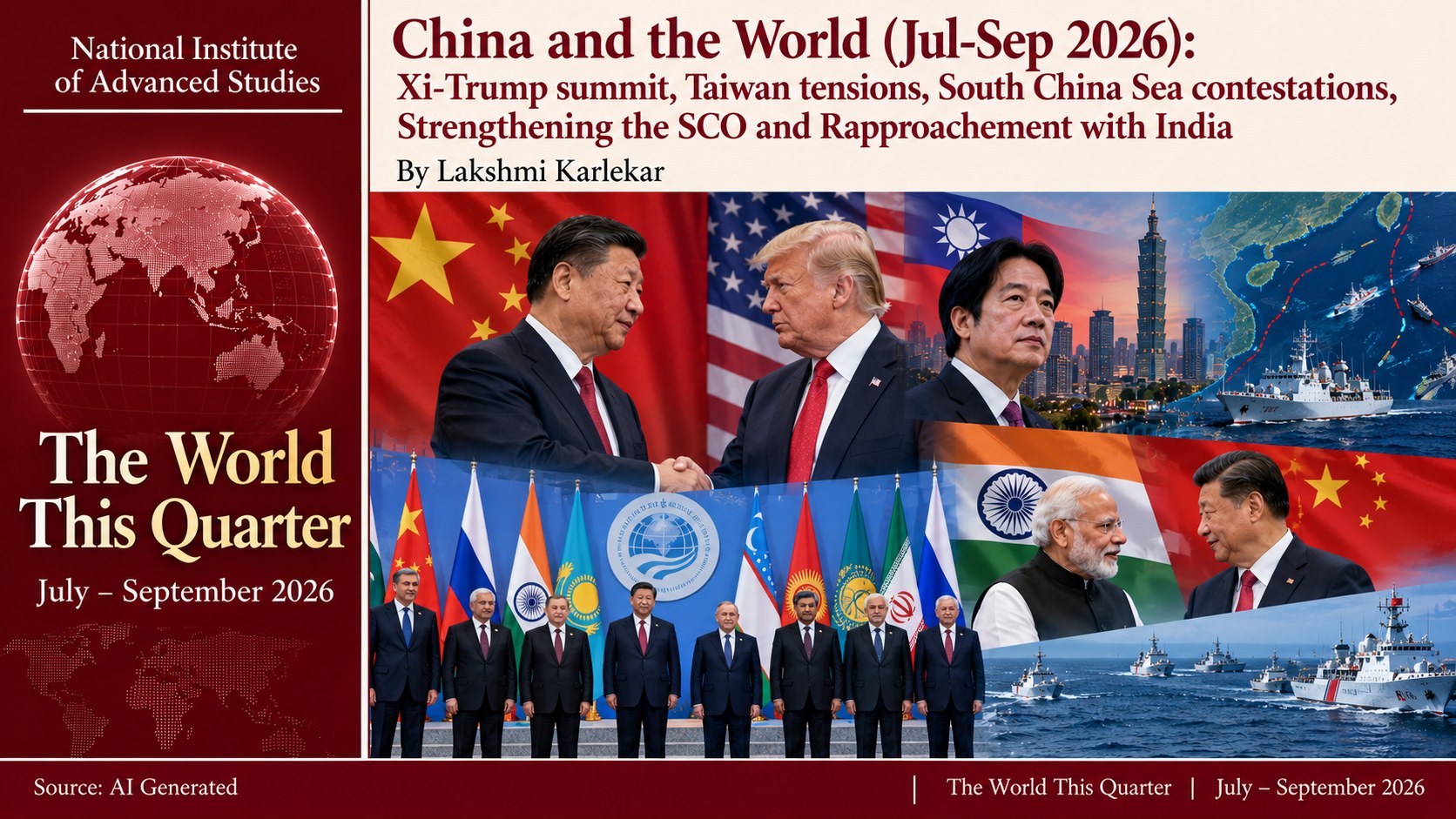
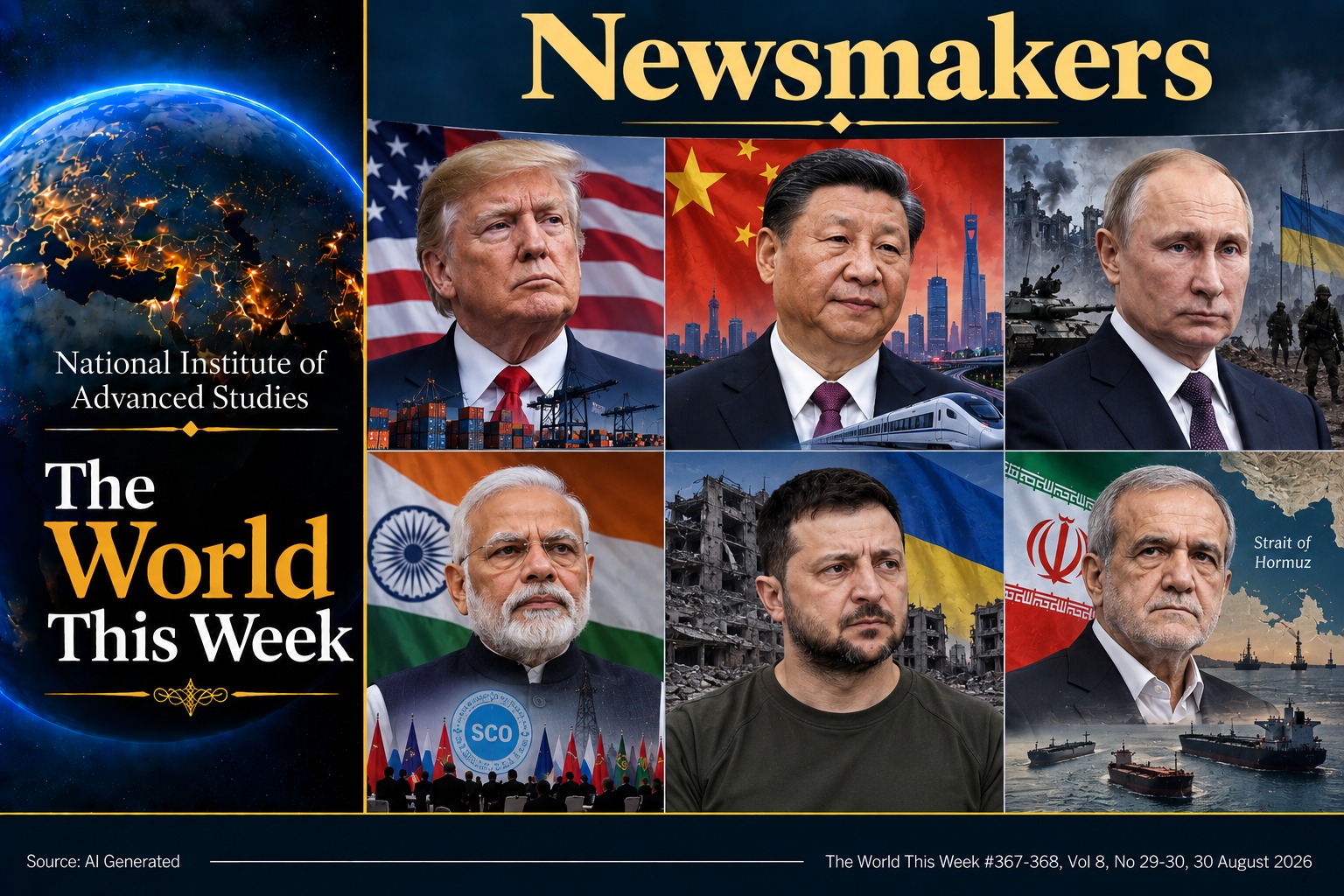
Washington, between 23-25 September 2026, hosted a historic three-day diplomatic Trump-Xi Summit. Key topics of discussion reportedly included the three T's: technology, trade and Taiwan. While these areas hold significant individual importance, they, together, form the baseline of the 'AI stack': an emerging field of strategic competition not only between the said states, but also globally. The emergent rhetoric of an “AI arms race” presupposes such technology to be sovereign strategic assets with implications for national security and power. Such narrativization was seen to be a common theme in the statements of the two leaders.
While President Xi acknowledged the strong AI capabilities of both states and advocated for "people-centred" and "human-controlled" models pushing for a collaborative approach with the US, President Trump maintained that Washington would not "put on brakes" in developing AI capabilities, and that he "would rather not integrate." Despite this decisive divergence, the US and China, in this Summit, have agreed to reduce tariffs on 30 billion USD worth of nonsensitive goods and establish a bilateral dialogue on AI (referred to as “super intelligence” in the US fact sheet). There, however, have been no breakthrough agreements.
What is the dominant rhetoric around AI capabilities and where does US-China competition in the development of new models stand?
The US and China do not directly produce Artificial Intelligence systems but collaborate actively with private actors in the development of frontier models—adapted for state use or otherwise. The language around these capabilities remains state centric with commercial actors developing tailor-made “AI sovereignty” solutions for their home countries to maintain resilience and independence from foreign “control,” making competition is evident.
As per Stanford’s 2025 AI index report, China’s AI models had “rapidly closed” the quality gap in performance differences, achieving near parity in 2024 while leading in AI publications and patents. The report maintained that the US led in producing notable AI models with 40 new launches, outpacing China’s 15. The 2026 report, on the other hand, said that China had effectively closed the performance gap and that the US continues to produce more top-tier models. The report added that US private investment reached 285.9 billion USD in 2025, roughly 23 times higher than its direct reported counterpart in China (12.4 billion USD). Interestingly, despite stiff competition, private investment in each other’s models has been mutual.
What are the AI aspirations of the US and China? How are these systems deployed, and why are they framed as strategic imperatives?
Both superpowers share strong ambition for AI. Unrestrained development, for example, has been a priority since even before the Summit. In response to Anthropic CEO Amodei’s essay “We Must Pace the Frontier”, President Trump called it a “sick conspiracy” and a “hoax,” while China’s Foreign Ministry warned that “narratives of threat” hinder global AI governance.
The common reluctance to “pace” the process of developing and deploying AI amid active mutual competition is indicative of its role as a strategic imperative. China’s AI in the Military market represents a structural shift in modernization as mandates prioritize it as a core enabler of multi-domain operations and next-generation warfare capabilities. The US is rapidly moving toward its “AI-first” fighting force. Recent updates include the Pentagon rolling out specialised versions of ChatGPT and Grok for nearly 3 million US military and civilian personnel.
US-based AI models like ChatGPT, Gemini, and Grok are unavailable for public use in China. Meanwhile, the US has imposed export controls on foreign nationals’ access to Anthropic’s Fable model and is intensifying efforts to curb alleged “distillation attacks” by China’s AI labs. While President Xi has pushed back against the rhetoric of “overstretching national security” in the past, the US side, more recently, had reportedly requested that AI model distillation be discussed at the Summit.
Why does Taiwan remain central to the US-China strategic competition?
The US is catching up to the full-stack approach to AI development. The state dinner for President Xi hosted representatives of Nvidia, AMD, Apple, and SpaceX as table leaders. Altman was not at the table and Amodei was absent altogether. While Amodei’s absence reinforced President Trump’s stance of not “putting on brakes,” it can also be read as a tilt toward chips and manufacturing.
Taiwanese companies hold a 68 percent market share in the manufacture of semiconductors. A single foundry: TSMC, fabricates almost every leading AI chip, making the global AI hardware supply asymmetrically dependent on Taipei. Washington restricts their sales using the "foreign direct product rule," forcing foreign companies to align with US rules if the goods they are exporting contain US parts, or are derived from US technology. China, which claims sovereignty over Taiwan, amid US export controls reportedly imports over 400 billion USD worth of semiconductors.
At the Summit, President Xi urged President Trump to “persist” in opposing Taiwan’s independence to “maintain bilateral relations”, suggesting that Beijing’s notice of a perceived shift in the US policy. This comes after President Trump withheld 14 billion USD worth of arms, suggesting that it was a “very good negotiating chip” after his summit in Beijing during May.
How could the Trump-Xi summit shape the future trajectory of US-China AI competition?
The superpowers’ prioritization of “AI sovereignty” is clear in the agreements during the summit or their absence of thereof. While the lack of landmark consensus is indicative of both actors maintaining their interests, it does not take away from the importance of the discussions had in the process.
The US-China trade truce reflects strategic restraint rather than substantive reconciliation. Washington’s tariffs pause and Beijing’s continued rare-earth magnet exports preserve economic stability while limiting escalation. Yet, U.S. semiconductor export controls and capital constraints continue to contribute to the restriction of China's AI development, even as open-weight models enable domestic innovation via distillation. The Summit and the proposed AI dialogue signals the acknowledgement of mutual risks, not technological convergence. Both powers seek cooperation without compromising strategic advantage.
References
https://www.reuters.com/business/retail-consumer/trump-xi-meet-investors-play-both-sides-ai-divide-2026-09-22/
https://www.theguardian.com/technology/2026/sep/25/trump-xi-ai-arms-race
https://www.reuters.com/world/china/china-us-agree-30-billion-tariff-cut-ai-dialogue-during-xi-visit-2026-09-26/
https://www.aljazeera.com/news/2026/9/26/trump-rejects-combining-us-china-ai-efforts https://www.fmprc.gov.cn/mfa_eng./xw/zyxw/202609/t20260925_12031181.html?utm
https://hai.stanford.edu/ai-index/2025-ai-index-report
https://hai.stanford.edu/ai-index/2026-ai-index-report
https://www.brookings.edu/articles/competing-ai-strategies-for-the-us-and-china/
https://www.theguardian.com/technology/2026/sep/25/trump-xi-ai-arms-race
https://www.bcg.com/publications/2026/us-and-china-ai-strategy-causing-global-ai-divide
https://www.whitehouse.gov/fact-sheets/2026/09/fact-sheet-president-donald-j-trump-advances-a-fair-and-reciprocal-relationship-with-china-while-hosting-historic-state-visit/
https://www.bbc.com/news/articles/c6gqdgg8w59xo
https://www.cfr.org/articles/the-limits-of-trump-and-xis-photo-op-summit
https://www.war.gov/News/Releases/Release/Article/4475177/classified-networks-ai-agreements/
https://www.defenseone.com/technology/2026/08/us-military-chatgpt/415719/
https://www.researchandmarkets.com/reports/6232644/china-ai-in-military-market-strategic-insights
https://english.www.gov.cn/news/202411/17/content_WS6739505bc6d0868f4e8ed141.html
https://www.pbs.org/newshour/world/china-and-u-s-agree-to-establish-ai-safety-channel-and-continue-trade-and-military-talks
https://asiasociety.org/policy-institute/what-actually-happened-xi-trump-summit
https://www.cfr.org/articles/will-chinas-reliance-taiwanese-chips-prevent-war
https://www.reuters.com/world/china/taiwans-us-envoy-says-ties-robust-after-trump-xi-summit-2026-10-07/
About the author
Samraksha Mukund is an undergraduate student at the Department of International Studies, Political Science, and History at CHRIST (Deemed to be University).