CWA # 2348
CRPR Explainers
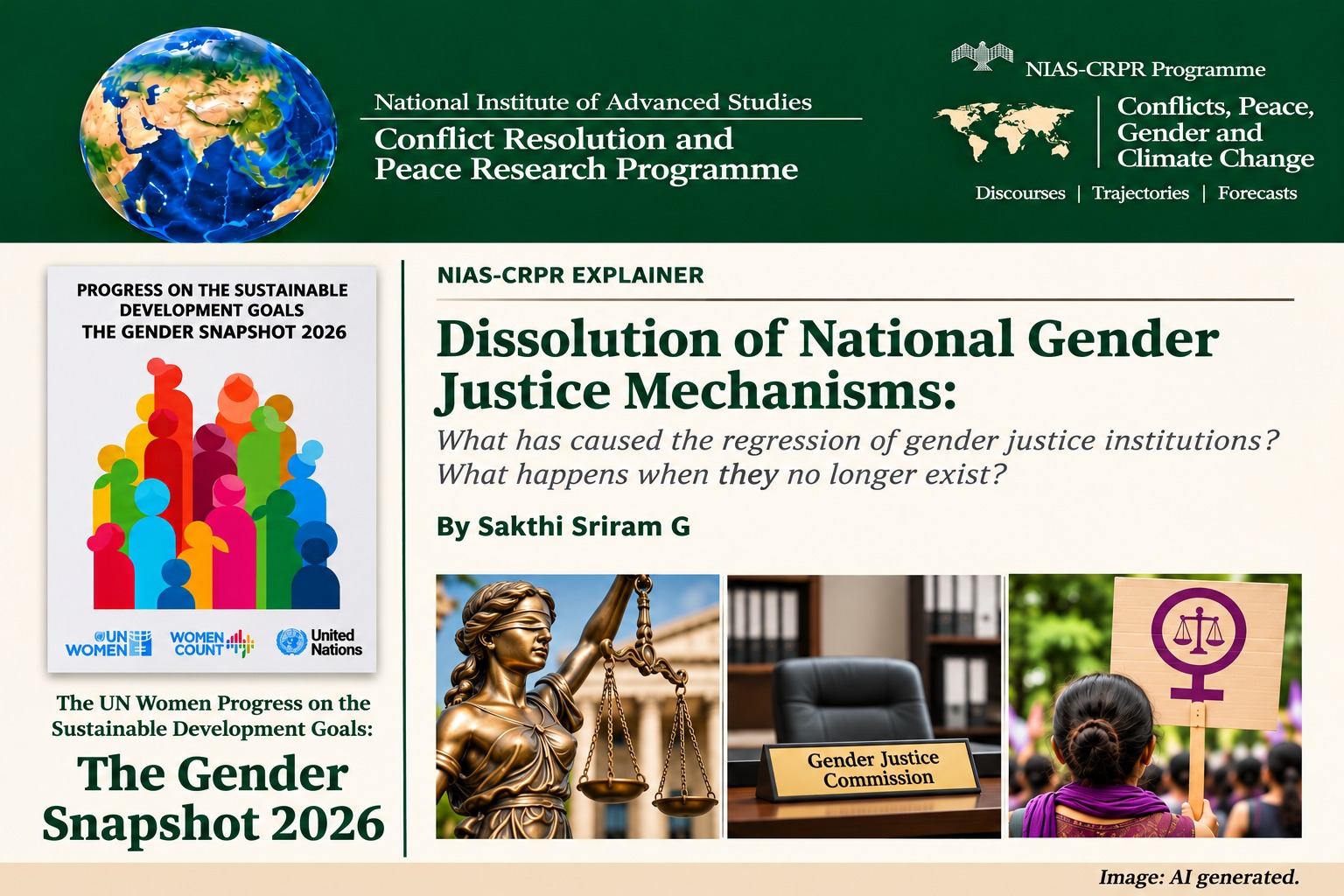
Dissolution of National Gender Justice Mechanisms:
What has caused the regression of gender justice institutions? What happens when they no longer exist?
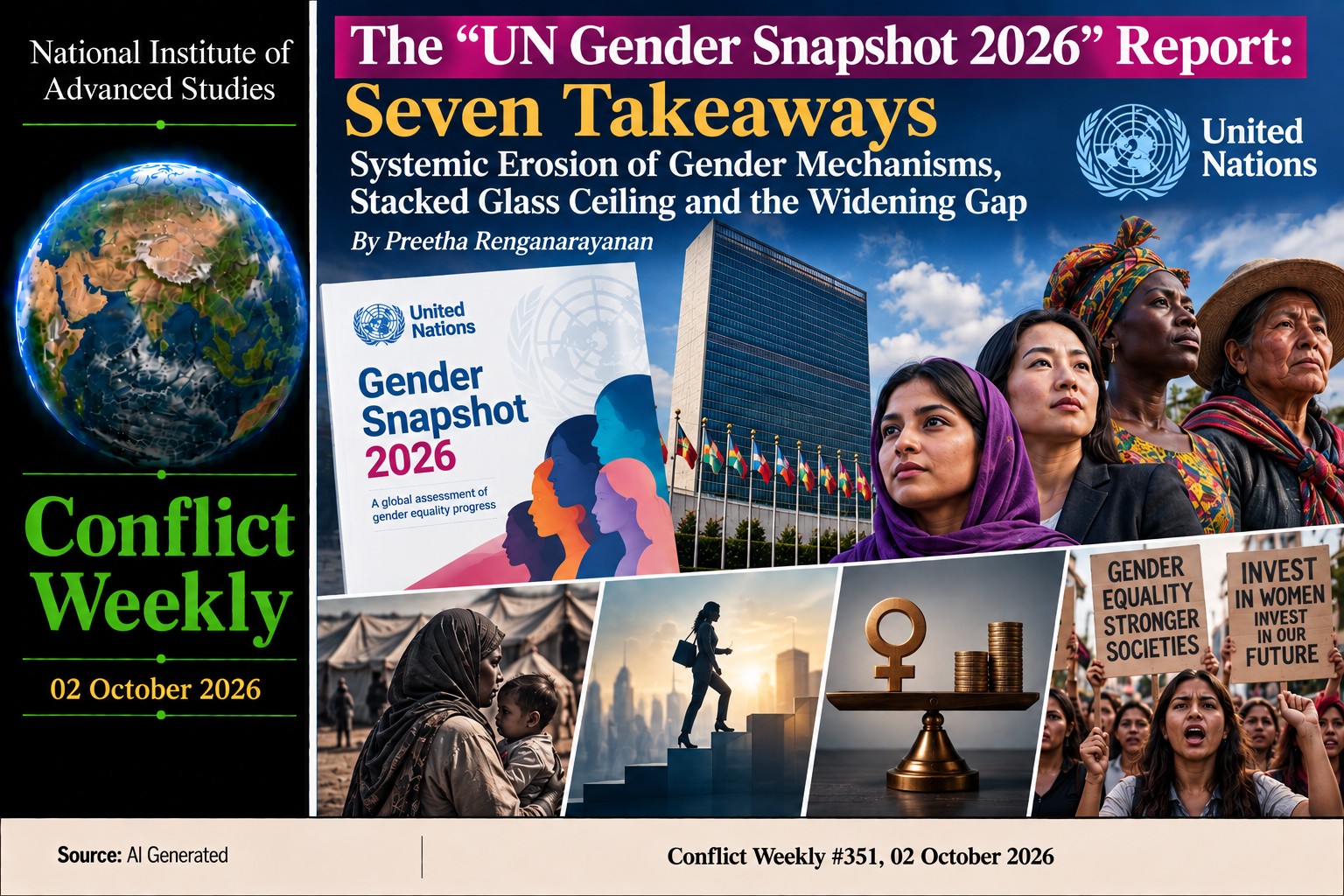
Review of the report titled "The UN Women Progress on the Sustainable Development Goals: The Gender Snapshot 2026."

|
Sakthi Sriram G
23 November 2026
|
“The rise of feminist movements has fuelled the rise of anti-feminist thinking to suppress women's movements, with a huge impact on electoral politics in certain countries.”
The UN Gender Snapshot 2026, jointly released by UN Women and the UN Department of Social and Economic Affairs (UN DESA), shows that gender justice mechanisms are receding worldwide, with nearly one in three (32 percent) countries experiencing erosion of institutional power in the past two years. Improvements to these mechanisms remain on paper but not in practice, revealing implementation gaps among governments.
This review discusses the reasons behind this regression, its impact, and ways to help the movement revive institutions with the goal of equality, along with case studies of Afghanistan, Turkey, Argentina, Poland and the USA.
Gender justice mechanisms: What has shifted, dismantled, or disappeared? And why?
The world has witnessed the rise of right-wing populism, which has severely affected women's ability to capture power, and the role of gender justice mechanisms has been dismantled, resulting in anti-feminist movements regardless of the government. Targeted funding cuts affected millions of vulnerable women, and more than 120 million require humanitarian assistance. A lack of gender mainstreaming played a significant role in the decline of gender justice mechanisms, often leading to their dismantling and a reduced focus on women's perspectives in policy formulation, implementation, and evaluation.
Afghanistan dismantled the Independent Human Rights Commission, the Independent Bar Association, and the Elimination of Violence Against Women (EVAM), resulting in anti-women perspectives in the policy process and security. The Istanbul Convention and Turkey's exit from it are seen as evidence that the normalisation of homosexuality was not supported by Turkey’s government. Poland has very stringent abortion laws, which have affected many women by limiting their rights and not providing them with that back. Institutional misogyny often allocated ministries to women that related to family care and rest. Still, women were largely excluded from important national security portfolios like defence, finance, foreign affairs, etc., which limited their knowledge and influence in government institutions.
What factors contribute to the weakening or disappearance of gender justice mechanisms?
The rise of feminist movements has fuelled the rise of anti-feminist thinking to suppress women's movements, with a huge impact on electoral politics in certain countries. For instance, Argentina dissolved the Ministry of Women, Gender and Diversity by downgrading it to an undersecretariat, which resulted in an increase in the rate of femicide in that country, and violence against women increased to 26.8 percent.
What are the consequences of losing institutional support for gender equality?
If women were neglected in the process of gender justice by supporting and being in the gender institutions, it resulted in gender disparity, and men were no longer speaking on behalf of women for their development. The increase in gender inequality resulted in restrictions in education, employment, and movement, which became a barrier to women's upliftment, and in the case of Afghanistan, the gender justice disparity rose to 76 percent, the highest in the world. These will play a major role in the decline of democracy and accountability among governments regarding women, which resulted in weak women's protection and rights. The running costs in elections and the gender-based violence against the candidates, both offline and online, rose to 87 percent, compared to men, who were 76 percent. The lack of women leaders and bureaucrats in policymaking, implementation, and evaluation has been significantly reduced, which will affect future generations by conditioning the idea of patriarchy.
How can stronger and lasting safeguards for equality be created?
To build a better, more responsible gender justice mechanism, it is better to constitutionalise and give statutory status to women's bodies, along with autonomy, which would provide better legitimacy. Budget became a major drawback to implementing the idea of parity, so guaranteeing and allocating budgets for women’s bodies would improve accountability. Promoting reservation and quota systems in elections and bureaucracy would help women run for office with legal support, strengthening gender justice mechanisms when women hold power. The UN Gender Snapshot 2026 provides data showing that, under a quota system, the percentage of women in Parliament rose from 23.4 to 39.5 percent, compared with a non-quota system. In the same quota system in local bodies, the percentage rose from 24.9 to 42.4 percent, showing that quotas can be an effective way to improve women's representation in decision-making bodies. Huge investments in education and awareness would help society move toward rejecting the conditioning of the patriarchy and help future generations have a better society. Monitoring and review processes have to improve to ensure parity and development in gender justice institutions.
About the author
Sakthi Sriram G is a postgraduate student in the Department of Political Science, Madras Christian College, Chennai.