CWA # 2349
CRPR Explainers
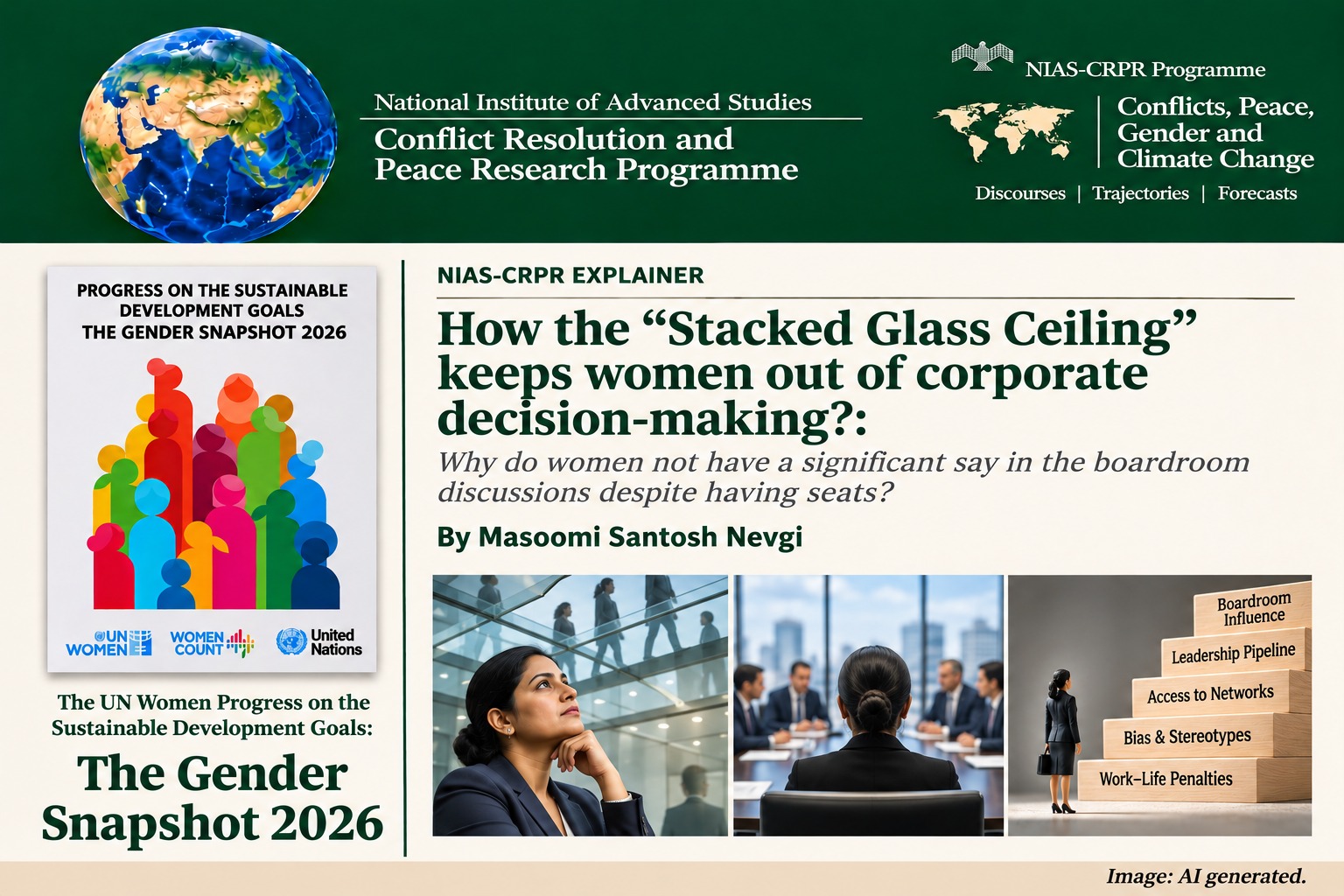
How the "Stacked Glass Ceiling" keeps women out of corporate decision-making?:
Why do women not have a significant say in the boardroom discussions despite having seats?
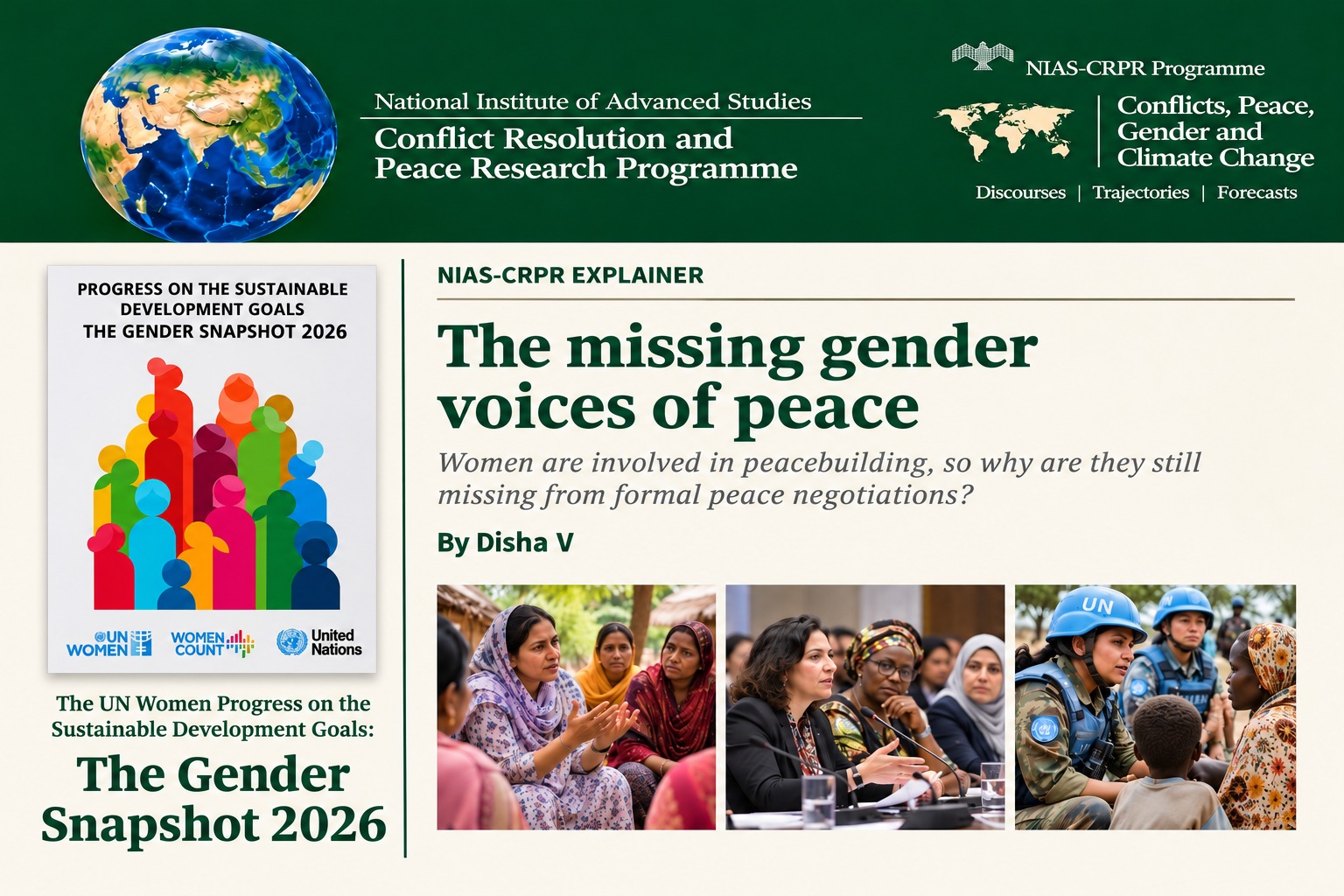
Review of the report titled "The UN Women Progress on the Sustainable Development Goals: The Gender Snapshot 2026."

|
Masoomi Santosh Nevgi
23 November 2026
|
“Corporate decision-making power concentrates in a few leadership positions, so women's presence on boards does not necessarily translate into steering strategy and governance.”
According to the Gender Snapshot 2026, released by UN Women and UN DESA, reaching the boardroom does not guarantee influence. Research on S&P 1500 boards found that women gained ‘inner circle’ multi-board seats, but this access was decoupled from committee participation and wider influence. This raises a wider question: have efforts to close the gender gap measured women's presence while overlooking their power?
How does the "stacked glass ceiling" differ from the classic glass ceiling, and why does the gap between having a seat and having authority matter for measuring gender equality?
A stacked glass ceiling means several barriers compounding one another rather than one barrier at the top. The term is a label and the evidence suggests that there are layers that reinforce each other. Evidence from the UK indicates that women are more likely to join boards during underperformance or turmoil, and their directorships are shorter and more precarious than men's. Boards also appear to manage the optics of independence through such appointments. There is also a difference in pay and no acknowledgement of unpaid work. Women board members earn on average 67.6 percent less than men. Women also do 2.5 times as many hours of unpaid care work. That is a ‘sticky floor’ feeding the hierarchy from the bottom.
Why do women hold less decision-making power, and why does this power gap widen from 70.0 percent in smaller firms to 82.8 percent in the largest ones?
Corporate decision-making power concentrates in a few leadership positions, so women's presence on boards does not necessarily translate into steering strategy and governance. Women board members have less decision-making power than their representation in 71.8 percent of publicly traded companies globally. The gap rises from 70.0 percent in smaller companies to 82.8 percent in the largest. The report gives no single cause. Power in large firms is held tightly in a few top posts such as chair, CEO and key committees. Those are the posts least touched by headline representation, which is why a second glass ceiling appears even when seat counts improve.
If women directors are more likely to hold advanced degrees but less likely to have been CEOs and are paid far less, is the barrier about merit or about access to networks, prior roles and institutional capital?
The data points away from a merit problem. Women directors are more likely than men to hold advanced degrees (40.5 percent against 33.5 per cent) but less likely to have been CEOs before (29.1 percent against 41.5 percent). Prior CEO experience is itself a product of earlier access, so using it as the test of "merit" is circular and lands up with a deadlock; we are measuring the output of the inequality in the earlier stages itself.
Affluent families can protect even modestly skilled children from downward mobility through opportunity hoarding, such as informal internships and legacy admissions. Top rungs are finite, so cushioning for incumbents means blocking for entrants. The logic of the glass floor fits here (gender) even though it was initially made for class; seats held by networked incumbents are seats unavailable to women.
Does the corporate pattern mirror what is happening in politics, courts and public administration, where women chair most gender equality committees but few defence or finance committees?
Yes. Women are less likely to be allocated financial and economic portfolios, showing a gap in appointment decisions that reflects institutional bias. They chair 68.5 percent of gender equality committees but only 18.4 percent of defence and 17.2 percent of finance committees. This is horizontal segregation; women are steered toward welfare, health and education and away from budgets and security. It reflects stereotyped perceptions of competence more than technical expertise. Women comprise the majority of judges (51.2 percent) and registrars (57.5 percent) but only 31 of 175 chief justices and 29.0 percent of prosecutors. Women are underrepresented in public service relative to their population share in 62.1 percent of countries with data (82 of 132). This is vertical segregation, and the two forms combine into a pyramid: women are plentiful in the lower rooms and scarce where final decisions are taken. Because the same shape appears in firms, courts and ministries, the cause lies in how institutions allocate authority.
Can quotas and governance reforms turn seats into real influence, and who will push for them when funding to women's rights organisations has fallen by 28 percent?
Strong quotas are linked to women's share of seats being about 16 percentage points higher in national parliaments and 17 in local governments. Seats alone have limits, though. Quotas bring women into decision-making bodies but do not decide who gets the most powerful jobs, and findings of access without influence shows the same limit in boardrooms. Reform should therefore target power directly: track chairs, committee roles and pay, since the merit paradox is strongest where managers have discretion. National mechanisms have advanced women's rights, and research across 70 countries over four decades finds a significant positive correlation between such a mechanism and higher levels of democracy.
A 2026 survey of 855 women-led and women's rights organisations across 52 crisis-affected countries found that nearly half had six months or less of allocated operating funding, and two in five considered closing within a year. This follows a 28 percent fall in funding between 2023 and 2024. The Snapshot also finds that one in three gender equality mechanisms has lost institutional power in two years. Without funded advocacy, quotas and national mechanisms risk stopping at headcount.
About the author
Masoomi Santosh Nevgi is an undergraduate student in the department of International Relations and Peace Studies, Public Policy and Journalism at St. Joseph’s University, Bengaluru.