CWA # 2135
TWTW Note
Shangri-La Dialogue 2026:
Who said what
|
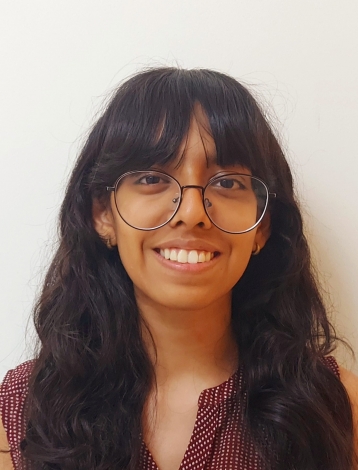
Madhura Meenakshi Tanikella
7 June 2026
|
During 29-31 May, the 23rd Shangri-La Dialogue was held in Singapore, bringing together defence ministers, military leaders, and security experts from across the Indo-Pacific and beyond. Discussions focused on regional security, maritime stability, military modernization, and the evolving balance of power in the Indo-Pacific. Concerns over China's growing military capabilities, maritime security in the South China Sea, defence partnerships such as AUKUS, and the need for stronger regional cooperation featured prominently. Vietnam's President To Lam delivered the keynote address, while several countries used the forum for high-level bilateral defence engagements.
Tô Lam, President, Viet Nam
On 29 May, President Tô Lam delivered the keynote address of the 23rd Shangri-La Dialogue, warning that the world is facing an interconnected crisis of international order, economic development, and strategic trust. He noted that economic competition, geopolitical competition, and emerging technologies are increasing the risk of conflict and instability. He called for stronger crisis-prevention mechanisms, ASEAN-centred regional cooperation, responsible governance of emerging technologies, human security and societal resilience, and preventive diplomacy as recommendations for creating a peaceful Indo-Pacific. Finally asserting that “peace, stability and development” are foundational principles for all peoples, and that they “carry meaning only when translated into concrete actions.”
Pete Hegseth, Secretary of War, United States
On 30 May, Secretary of War Pete Hegseth, at the first plenary session on the United States’ Strategy for Peace in the Indo-Pacific, opened his speech with Operation Midnight Hammer and Epic Fury as a realistic approach to America’s national Defence, further discussing the 2026 US National Defence Strategy as America First but not “America alone.” He warned that China’s military buildup poses a challenge to the balance of power in the region, undermining regional security. He argued that the United States, in the case of the Indo-Pacific, aims to sustain equilibrium, preserve stability, and safeguard American interests in the region, highlighting the recent Trump-Xi meeting in Beijing. He asserted that burden sharing among allies in the Pacific was necessary, along with strengthening military capabilities and defence spending, and in this regard, appreciating nations like South Korea, the Philippines, Japan, Australia, Singapore, Thailand, Vietnam, and India. Finally, he highlighted the ideas of “peace through strength,” saying that “Those who long for peace must prepare for war.”
Dr José Ramos-Horta, President, Timor-Leste
On 30 May, President José Ramos-Horta delivered a special address at the 23rd Shangri-La Dialogue, where he argued that the current international security architecture is “irrelevant,” that preserving the rules-based order requires restraint and dialogue, and that the current conflicts are a failure of global leadership. He highlighted ASEAN as a good example of bringing together nations with vast differences, building trust between nations, and delivering mutual benefits. He asserted the importance of preventive diplomacy, proposed exploring a “zone of peace” in the South China Sea, and argued the importance of rules being applied consistently. Lastly, he also discussed the dangers of climate change, food insecurity, and weak resilience as threats to security, calling for a “third path” focused on cooperation.
Gilberto Teodoro Jr, Secretary of National Defence, the Philippines
On 31 May, Secretary of National Defence Gilberto Teodoro Jr, at the sixth plenary session on Evolving Security Partnerships in a Fragmenting World, contended that “we are in a period of transition” caused by strained institutions and diverging priorities, and that the international order is changing. In his statement, he noted the tenth anniversary of the Arbitral Award of the South China Sea, affirming the importance of adhering to the 1982 United Nations Convention on the Law of the Sea (UNCLOS), criticizing China’s rejection of the ruling, and warning against coercive behaviour, foreign interference, and economic manipulation. Furthermore, he presented a “vision of the Philippines” as the “Archipelagic Sentinel,” “Guardian of the Freedom of the Seas,” and “indispensable to Southeast Asia and the Indo-Pacific.” He highlighted the importance of international law, ASEAN-centrality, deterrence, and enhanced regional cooperation with partners such as Australia, Japan, and the United States. Lastly, he called on countries to protect human life, to protect migrant workers from Asian countries, and asserted that “in a fragmenting world, convergence is not merely an option.”
Richard Marles, Deputy Prime Minister and Minister for Defence, Australia
On 30 May, Deputy Prime Minister Richard Marles, at the third plenary session on Asia’s Maritime Security Disorder, warned that maritime security is deteriorating because of attacks against subsea critical infrastructure, noting events in the Baltic Sea and Indo-Pacific, the closure of the Strait of Hormuz, the militarisation of the South China Sea, and shadow fleets operating in grey zones. He argued that the post-Cold War assumption that economic interdependence ensures security is no longer valid, calling for stronger maritime capabilities, regional cooperation, and protection of critical infrastructure. Additionally, he noted the importance of the “stabilisation of the Australia–China relationship.” On the international rules-based order, he noted its imperfections, however, arguing that “we are so much better off with it than without it.” Lastly, he closed his statement by illustrating Australia’s investment in ensuring security, cooperation, and peace in the region.
Chan Chun Sing, Minister for Defence and Coordinating Minister for Public Services, Singapore
On 31 May, Minister for Defence Chan Chun Sing, at the sixth plenary session on Evolving Security Partnerships in a Fragmenting World, presented Singapore’s perspective on the nature of conflict as extending beyond geography, military firepower, and “beyond the here right now.” This, he explained, was because of countries being hyper-connected across borders, citing the example of the supply chain disruptions caused by the conflict in the Middle East, a result of multidimensional systems of power like economic leverage, and because conflicts are about the setting of frameworks for tomorrow’s contests. He called for strengthening international rules and institutions, developing flexible issue-based partnerships, and building domestic cohesion as security measures against evolving conflict, presenting examples like the ASEAN Defence Ministers’ Meeting (ADMM) and Singapore’s work with the Netherlands and South Korea to convene global discussions on military-AI governance. Lastly, stating that the goal for countries remains the same, “to build a better future for the next generation.”
Meng Xiangqing, Professor; Member, National Committee of the Chinese People’s Political Consultative Conference, National Defense University, People’s Liberation Army, China
On 30 May, Professor Meng Xiangqing, at the simultaneous special session one, on Managing Threats to Strategic Stability, warned that strategic stability is under threat due to nuclear risks, weakening arms-control mechanisms, the militarization of emerging technologies such as AI, and disorder in global governance resulting from disrupted multilateral mechanisms. He criticized AUKUS, conveyed concerns over Japan’s security posture, and noted the challenge to traditional rules of engagement and ethics of war, highlighting the importance of stronger multilateralism, inclusive co-governance, greater representation for developing countries, expansion of BRICS, SCO, and ASEAN, a renewed commitment to non-proliferation, and human control over warfare and weapons.
Cui Tiankai, Former Vice Minister, Ministry of Foreign Affairs, China
On 30 May, Former Vice Minister Cui Tiankai, at the simultaneous special session two, on Enhancing Littoral Security in Asia, noted the diversity of challenges in the context of littoral security. He argued that these challenges must be resolved through respect for sovereignty, peaceful negotiation, and inclusive partnerships rather than military alliances or bloc politics. He stressed that for a free and open Asia-Pacific, confrontational blocs and exclusive security arrangements divide the region and deprive other countries of the right to development. Additionally, he expressed concern about instability in the Strait of Hormuz, noting its impact on China. Finally, concluding by saying that “if anyone tries to have total and absolute freedom at the expense of others’ freedom, then there is no freedom for anyone.”
Koizumi Shinjirō, Minister of Defence, Japan
On 31 May, Minister of Defence Koizumi Shinjirō, at the sixth plenary session on Managing Regional Tensions Amid Global Competition, highlighted that the Indo-Pacific is “ the world’s centre of growth,” which is currently facing challenges such as economic coercion, disinformation, and complex competition. He reaffirmed Japan’s vision of a free and open Indo-Pacific (noting the implications of an “unfree and closed” Strait of Hormuz), stressing that all nations must be free to choose their own future without coercion, while calling for stronger deterrence, defence cooperation, transparency, and dialogue. Against Japan being labeled “new militarism,” he asserted Japan’s lack of nuclear weapons and strategic bombers, respect for international law and the United Nations, “path as a peace-loving nation” valued by the international community, and its continued cooperation with Australia, the Philippines, the United Kingdom, the Quad, and ASEAN.
Catherine Vautrin, Minister for the Armed Forces and Veterans, France
On 30 May, Minister for the Armed Forces and Veterans Catherine Vautrin, at the third plenary session on Asia’s Maritime Security Disorder, argued that maritime security is central to economic resilience and global stability, citing France’s presence in the Red Sea through Operation Aspides, the La Pérouse exercise, and the battle against piracy in the Indian Ocean through Operation Atalanta. She warned of the growing threats to maritime security from shadow fleets (discussing Russian shadow fleets), geopolitical tensions, targeting of critical underwater infrastructure, organized crime, drug trafficking, and climate change. Lastly, she asserted that France, as “a nation of the Indo-Pacific committed to its strategic autonomy,” is committed to free and open maritime areas and to ensuring the sovereignty of every state.
Rajesh Kumar Singh, Defence Secretary, Ministry of Defence, India
On 30 May, Defence Secretary Rajesh Kumar Singh, at the simultaneous special session three, on Building Defence Industrial Resilience, argued that in a time of geopolitical uncertainty, vulnerabilities caused by conflicts and strategic competition, defence preparedness is necessary. He highlighted how, for India, this has meant self-reliance and trusted interdependence, diversified manufacturing networks, and reforms in defence production, innovation, and exports – this, he argued, has transformed India into an emerging, dependable defence manufacturing and maintenance hub. Speaking on the Indo-Pacific, he asserted the importance of cooperative frameworks, secure sea lanes, stable supply chains, ASEAN-centrality, multilateral mechanisms, and inclusive and reliable partnerships. Lastly, stating that “resilient defence industries must support peace and stability and not deepen divisions.”
Apart from these statements, representatives from Greece, Malaysia, Pakistan, the Netherlands, the UK, Canada, Poland, Germany, New Zealand, Lithuania, Qatar, South Korea, Norway, NATO, ASEAN, and SCO made statements as well.
About the author
Madhura Meenakshi Tanikella is an undergraduate from the Department of Political Science, School of Liberal Arts, Alliance University, Bengaluru. She is currently an intern at NIAS.

