CWA # 2265
TWTW Profile
The SCO Summit 2026:
Who said what
The World This Week #369, Vol 8, No 31, 06 September 2026
|
Sreemaya Nair
6 September 2026
|
Sadyr Japarov, President, Kyrgyzstan
From 31 August to 01 September, Kyrgyzstan’s President, Sadyr Japarov, hosted the 26th annual meeting of the SCO in Bishkek under the theme "25 Years of the SCO: Together for Sustainable Peace, Development, and Prosperity.” He called for the rapid operationalisation of the Tashkent-based Universal Centre for Countering Security Threats and the Anti-Drug Centre in Dushanbe, Tajikistan, to enhance regional security. On the economic side of things, Japarov pressed for proper action to launch the long-negotiated SCO Development Bank, formally offering Bishkek as its headquarters and inviting members to utilise Kyrgyzstan's Tamchy Special Financial Investment Territory for joint ventures. He also highlighted the China-Kyrgyzstan-Uzbekistan (CKU) railway as a transformative corridor and cautioned that unequal access to technology must not create new global divisions.
Xi Jinping, President, China
On 01 September, China’s President, Xi Jinping, addressed the summit, focusing on transitioning the SCO toward "higher-quality development" and guiding global reform. He introduced a four-point proposal for the bloc: putting development first through inclusive economic globalisation, taking security as a key goal, cementing everlasting people-to-people ties, and striving for more equitable global governance. To substantiate these aims, Xi pledged concrete Chinese contributions, including establishing a China-SCO port economic cooperation centre in Tianjin, implementing 100 technology projects, launching an international AI application cooperation centre, and expanding photovoltaic and wind capacity in partner nations. Speaking at the "SCO Plus," an extended meeting of the Shangai Corporation Organisation, Xi declared the rise of the Global South and the trend toward a multipolar world is irreversible.
Vladimir Putin, President, Russia
On 01 September, Russia’s President, Vladimir Putin, highlighted the SCO's 25-year evolution into an independent, influential centre of a multipolar world, accounting for nearly half of the global population and over one-third of global GDP. He supported the institutional package amending the SCO Charter and the launching of the Universal Security and Anti-Drug Centres. Putin emphasised the rapid expansion of commercial ties within the bloc, noting that Russia's trade with SCO nations exceeded USD 400 billion, with national currencies used in over 98 per cent of mutual settlements. He strongly advocated for the financial independence of the proposed SCO Development Bank, arguing it must remain insulated from the financial systems of Western nations that weaponize economic tools for unilateral advantage. Recalling that 01 September marked the anniversary of the start of WWII, Putin urged members to prevent a return to the global practice of instigating armed conflicts. In his bilateral meeting with India’s Prime Minister Narendra Modi, Putin stated that Russia is actively moving along a path toward ending the conflict in Ukraine and seeking a peaceful, lasting settlement.
Narendra Modi, Prime Minister, India
On 01 September, India’s PM Modi, reiterated India’s vision for the SCO from last year, based upon on three key pillars: Security, Connectivity, and Opportunity. Under the security pillar, he issued a stern message on counterterrorism, urging the bloc to dismantle the "entire ecosystem" of terror financing, recruitment, radicalisation, and safe havens. He asserted that "double standards" are unacceptable and demanded a clear message to states utilising terrorism as state policy that it cannot be a strategic asset. Regarding connectivity, Modi maintained that projects must strictly respect the sovereignty and territorial integrity of all nations—refusing once again to endorse China's Belt and Road Initiative (BRI) . Lastly, under the opportunity pillar, he advocated for youth-focused programs and announced that India would host the inaugural edition of the SCO Civilisation Dialogue.
Masoud Pezeshkian, President, Iran
On 01 September, Iran’s President, Masoud Pezeshkian, expressed gratitude to the SCO member states for collectively condemning the military strikes on Iranian territory in the final Bishkek Declaration and expressing condolences for the tragic death of Supreme Leader Seyyed Ali Khamenei. Pezeshkian warned the United States that negotiation and diplomacy are meaningless without good faith and respect for commitments, pointing to repeated US violations of the Islamabad MoU. On the practical side, Pezeshkian proposed concrete economic alternatives, including joint payment mechanisms, alternative financial networks, trade and investment insurance, and the creation of an SCO energy consortium to help member states navigate geopolitical and economic pressures.
Shehbaz Sharif, Prime Minister, Pakistan
On 01 September, Pakistan’s PM Shehbaz Sharif, proposed an action plan centred on "Connectivity, Innovation, and Shared Prosperity" upon its rotational chairmanship next year. Sharif placed a strong emphasis on water security, declaring that shared water resources must never be weaponised, coerced, or exploited for leverage, and called for unconditional adherence to water treaties in both letter and spirit. On regional security, he highlighted Pakistan’s heavy sacrifice of over 90,000 lives and USD 150 billion in fighting terrorism. He warned that lasting peace will remain out of reach if terrorist groups continue to use Afghan soil to attack neighbouring states. Sharif defended Pakistan's trilateral Mecca Joint Defence Agreement, also known as the Makkah Pact, as purely defensive and non-divisive. He also highlighted Pakistan's role as a trusted mediator in regional de-escalation, pointing to its facilitation of the Islamabad MoU between the US and Iran. On the developmental agenda, Sharif proposed the establishment of a sovereign AI infrastructure and governance framework and pushed for the quick operationalisation of the SCO Development Bank.
Aleksandr Lukashenko, President, Belarus
On 01 September, Belarus’ President, Aleksandr Lukashenko, presented a highly proactive stance on the role of the bloc in global affairs. He congratulated Kyrgyzstan on its UN Security Council seat. Lukashenko strongly backed President Xi’s view that no major global decisions should be made without SCO approval. He complained that the organization had remained silent when Western sanctions were imposed on member states and when unprovoked military aggression occurred against Iran, urging the SCO to move beyond "agreements of intentions" to concrete collective actions. Lukashenko promoted the joint development of a "Eurasian Charter of Diversity and Multipolarity in the 21st Century".
Shavkat Mirziyoyev, President, Uzbekistan
On 01 September, Uzbekistan’s President, Shavkat Mirziyoyev, focused on long-term integration, proposing the launch of a new strategic blueprint titled "SCO 2040: A Space for Shared Development". To benefit regional entrepreneurs and investors, he proposed the development of an SCO Industrial Cooperation Map—a single digital platform integrating special economic zones, production chains, and logistics. He called on the Council of Heads of Government to assemble a pipeline of joint transport, energy, and digital infrastructure projects. On the climate front, he advocated for a unified SCO initiative on food, water, and energy security, proposing a SCO technical cooperation programme on water and energy efficiency till 2035. Additionally, he urged the revival of dialogue with Afghanistan as a fundamental condition for regional security.
Kassym-Jomart Tokayev, President, Kazakhstan
On 01 September, Kazakhstan’s President, Kassym-Jomart Tokayev, emphasized that the SCO continues to operate outside the logic of military-political blocs, aligning instead with the non-confrontational "Shanghai Spirit". He expressed concern that regional conflicts were extending beyond immediate zones and disrupting global shipping, energy, and transport. To build tangible economic ties, Tokayev proposed establishing SCO cross-border trade zones at existing border cooperation centers to test simplified trade, digital transit, and payment mechanisms. He supported the creation of the SCO Development Bank and offered a rival bid for Kazakhstan to host its headquarters in Astana. On environmental security, he called for the establishment of an International Water Organization and an SCO Water Issues Analysis Centre.
Emomali Rahmon, President, Tajikistan
On 01 September, Tajikistan’s President, Emomali Rahmon, supported the anti-drug track, noting that Tajik-based regulations for the executive committee of the SCO Anti-Drug Centre in Dushanbe would institutionalize the fight against synthetic narcotics.
About the author
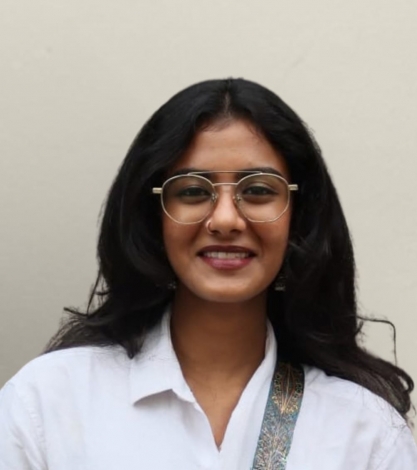
Sreemaya Nair is a postgraduate student at the Department of Defence and Strategic Studies, University of Madras, Chennai. She is also a Research Assistant at the National Institute of Advanced Studies (NIAS).

