CWA # 2269
Global Politics Explainer
France and Syria:
What does President Macron's visit signal for Syria and the region?
|
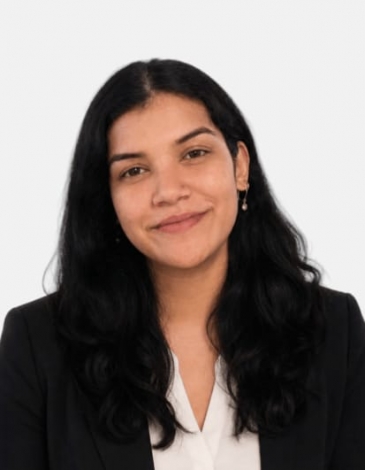
Urja R Kudalkar
30 September 2026
|
In July, France’s President Emmanuel Macron visited Damascus, meeting Syria’s President Ahmad al-Sharaa at the Presidential Palace. Sixteen agreements and memoranda of understanding were signed that day, spanning ports, aviation, healthcare, water, energy, and central bank reform, with Foreign Ministers Asaad al-Shaibani and Jean-Noël Barrot signing a framework declaration on comprehensive cooperation fourteen months after France's initial commercial entry into Syria. France also returned 23 ancient Syrian artefacts it had held for 15 years a goodwill gesture before any economic terms were discussed, setting the tone for a partnership framed on trust as much as trade.
1. Why is France pushing investment in Syria?
The thirty-year, EUR 230 million Latakia port concession, now expanded by an additional EUR 200 million just fourteen months later, shows how quickly French commercial control has. This is an asymmetry dressed in the language of equal partnership. On the surface, this strategic partnership appears mutually beneficial. Syria gains French expertise through the CMA CGM port concession, healthcare and water support via Expertise France, and technical assistance in rebuilding its central bank. France, in turn, gains long-term commercial access to sectors that will define Syria's economy for decades. This reveals that this mutuality is uneven. Syria negotiates from urgency rather than strength, the government still faces ethnic tensions, security threats, and a severe economic crisis that pressures its stability, leaving little room to bargain hard. This shows France negotiates from comfort, free to walk away if terms sour.
2. What does the "strategic partnership" deliver for both countries?
Syria's banking system currently lacks correspondent relationships with major international banks, meaning trade finance and large-scale financing cannot move through Syrian institutions on ordinary commercial terms, and the country remains on the FATF grey list, which raises compliance costs and deters investment further. French companies are typically risk-averse, which makes this pace of engagement, inconsistent with normal caution. Samy Akil of The Syria Report frames Macron's visit as part of a long-term strategic calculation, an effort to secure position before Gulf States, who has greater financial capacity for large-scale reconstruction absorb first. Because Syria cannot afford to wait and the window for favourable terms is open now rather than later and France is betting that today's political and reputational capital will outweigh tomorrow's financial risk.
3. What does France stand to gain by supporting institutional security and stability?
France is backing Syria's institutional and financial recovery, including restoring banking services and reviving the labour market as part of a long-term plan to position itself as the key link between the EU and Damascus, ensuring future EU-Syria policy reflects French priorities. Benjamin Feve of Karam Shaar Advisory noted France can theoretically help across sectors including banking and public administration, though French firms remain risk-averse due to unclear investment rules and weak banking connections. As a result, France's role may focus less on big investment and more on laying groundwork through better laws, clearer procedures, and reliable institutions exactly what central bank support aims to build. Security analyst Joshua Landis linked this directly to counterterrorism, in exchange for intelligence-sharing and cooperation against Daesh, France and the US have moved to support institutional security and stability in Syria because a functioning central bank and banking system reduce financial risk for French investors while giving Paris continued leverage over Syria's economic direction
4. Will France be able to sustain its position in Syria?
The United States controls sanctions policy and access to the global financial system, giving it leverage, no European country can match, while Gulf countries possess both the political will and the financial firepower for large-scale reconstruction. Saudi Arabia has already begun seven billion dollars in projects, Qatar is investing in Damascus airport and power generation, and the UAE has pledged roughly eight hundred million dollars toward Tartous port development all moving faster and spending more than France ever will. France's genuine strength lies elsewhere, in technical credibility and normative influence: institution-building expertise, EU regulatory alignment, and a Western identity distinct from Gulf or Turkish patronage. Realistically France will have influence but will not as a dominant power.
References
“What France hopes to gain from re-engaging with Syria,” Arab News, 10 July 2026
https://www.arabnews.com/node/2650437/middle-east
“Syria, France sign agreements during Macron visit,” Enab Baladi, 07 July 2026
https://english.enabbaladi.net/archives/2026/07/syria-france-sign-agreements-during-macron-visit/
“France stands by Syria's side': Macron 'most enthusiastic in Europe' to repair ties,” France, 07 July 2026
https://www.france24.com/en/france-stands-by-syria-s-side-macron-most-enthusiastic-in-europe-to-repair-ties
“Potential for French investment in Syria following Damascus visit by Emmanuel Macron,” Jerusalem Post, 11 July 2026.
https://www.jpost.com/middle-east/article-902147
“Syria, France sign broad partnership agreements during Macron's Damascus visit,” Syrian Arab News Agency, 07 July 2026
https://sana.sy/en/syria/2327943/
About the author
Urja R Kudalkar is a post graduate student at Department of Public Policy, Ramaiah University of Applied Sciences. She is currently interning at National Institute of Advanced Studies (NIAS), Bengaluru.

